Climate considerations in Cherryland
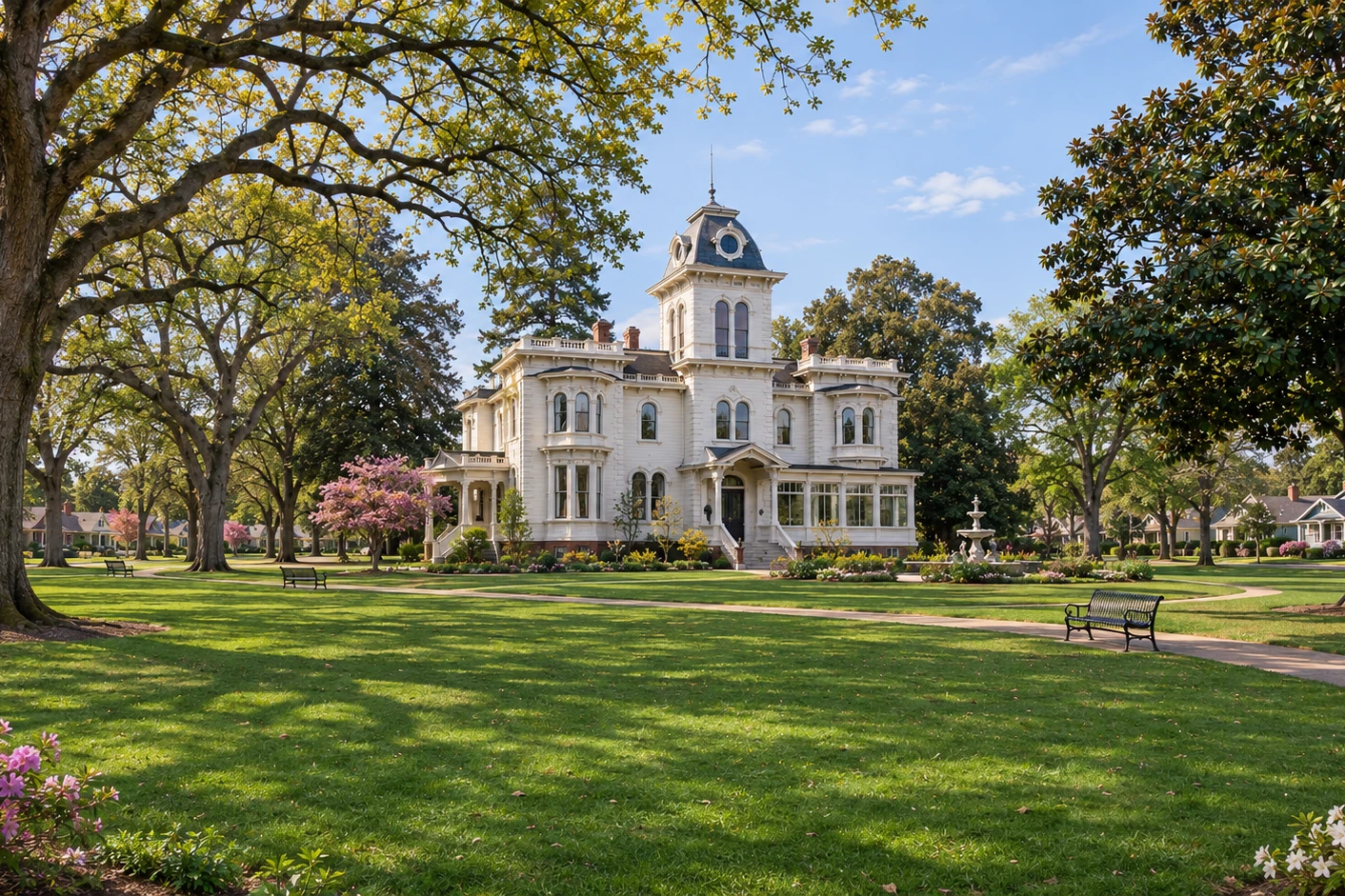
Cherryland sits on the flat bay plain at the foot of the hills, with a mild marine-influenced climate — cool summers, mild winters, and roughly 20 inches of rain between November and March. There is no long hot dry stretch, so moisture that gets into framing tends to stay there and decay progresses slowly beneath surfaces that still look sound. Mature trees left from the community’s orchard and estate past shade many lots and slow drying further. The ground is level, so water does not run away on its own; it goes wherever grading and buildings send it. On a long narrow lot with several structures on it, that makes drainage one of the first things worth checking.
Several homes, one lot
Cherryland began as orchard land divided into deep lots, and over the decades many of those lots have filled in behind the original house. A typical property might now have the front house, a cottage at the back, and a unit above a detached garage, each reached by its own stairs, porch, or small balcony. Owners of lots like this often are not sure whether SB 721 applies. The law is written around buildings that contain three or more multifamily dwelling units, not around the number of homes on a lot, so how the units are arranged — three in one building, or one in each of three — makes a difference. Whether a particular property is covered is a question for the owner to confirm with counsel or the County, and we will not make that call for you. What we do is walk the whole lot, list each building, the units it contains, and every elevated element that serves them, and put it in writing. That turns an uncertain question into a quick one, and it shows which stairs and balconies need attention regardless of the legal answer.
When the lot next door changes
Cherryland has seen a fair amount of newer townhome and infill construction on deep lots beside older homes. New buildings, paving, and grading on one lot can change where water goes after a storm, and on flat ground some of it can end up on the older property next door. Owners usually notice it as a back yard that holds water where it never used to, or as posts and stairs at the rear starting to rot. This is not a matter of anyone doing anything wrong, and we do not approach it that way; it is a drainage condition that needs a practical answer on your side of the fence. During the assessment we look at where water is arriving from as well as where your own runoff goes, and we route it to somewhere it can leave rather than letting it collect around footings and stair stringers.
Unincorporated: county jurisdiction
Cherryland is a Census Designated Place, not a city, so there is no local building department. Permits for structural work on decks, stairs, and balconies go through the County Building Department, and SB 721 and SB 326 inspection reports are filed with County Code Enforcement. Many properties also share a ZIP code with the incorporated city next door, which can make it unclear which office to approach. We confirm the authority from the record before filing anything and handle the county process end to end.
Common building stock we work on
Cherryland’s housing is mixed in age and form. Older single-family homes from the 1920s through the 1950s sit on the deep lots, many with back cottages, garage units, and decks added over the decades, each with connection details and railing geometry from whenever it was built. Small apartment buildings from the 1950s through the 1970s along the main streets form much of the SB 721 inventory, with original waterproofing and hardware well past service life. Newer townhome infill, often under HOA management, falls under SB 326 and sits beside the older stock. Our certified construction crew scopes every project building by building, to the era and the code in effect when each part was built.
Neighborhoods served
Our certified Cherryland crew covers North Cherryland, South Cherryland, the Meekland Avenue corridor, the Hampton Road area, the Western Boulevard area, the Haviland Avenue area, the Medford Avenue area, the Liberty Street area, the Cherry Way area, the estate park area, and the wider Cherryland community. ZIP code 94541 covers most of the community.
What we typically see
Across our Cherryland inspections, our company most often documents: (1) lots with several dwellings in separate buildings where the owner did not know whether SB 721 applied — a Cherryland-specific question created by how the deep orchard lots have filled in; (2) exterior stairs to back cottages and garage units with rotted stringers and loose handrails, often the only route to that unit; (3) rear yards and footings taking water that now arrives from newer construction next door; (4) slow concealed water damage under mature trees in a climate that never dries a structure out; (5) original waterproofing and hardware at end of service life on the small apartment buildings; (6) railings on pre-2000 structures that fall short of the current CRC 42-inch height and 4-inch sphere rule. Every finding is captured in a written assessment with prioritized repair, replacement, or restoration scope.
Emergency response & remodeling
For Cherryland properties with acute safety issues — a stair to a back unit that has started to move, sagging framing, loose railings, visible rot at load-bearing connections, red-tagged structures, or storm damage — our emergency repair crew responds within 24–48 hours with temporary shoring and code-compliant stabilization. Where a stair is a tenant’s only way in, we keep a temporary route in place throughout. We also handle full deck, stair, and balcony replacement on multi-home lots, planned building by building.