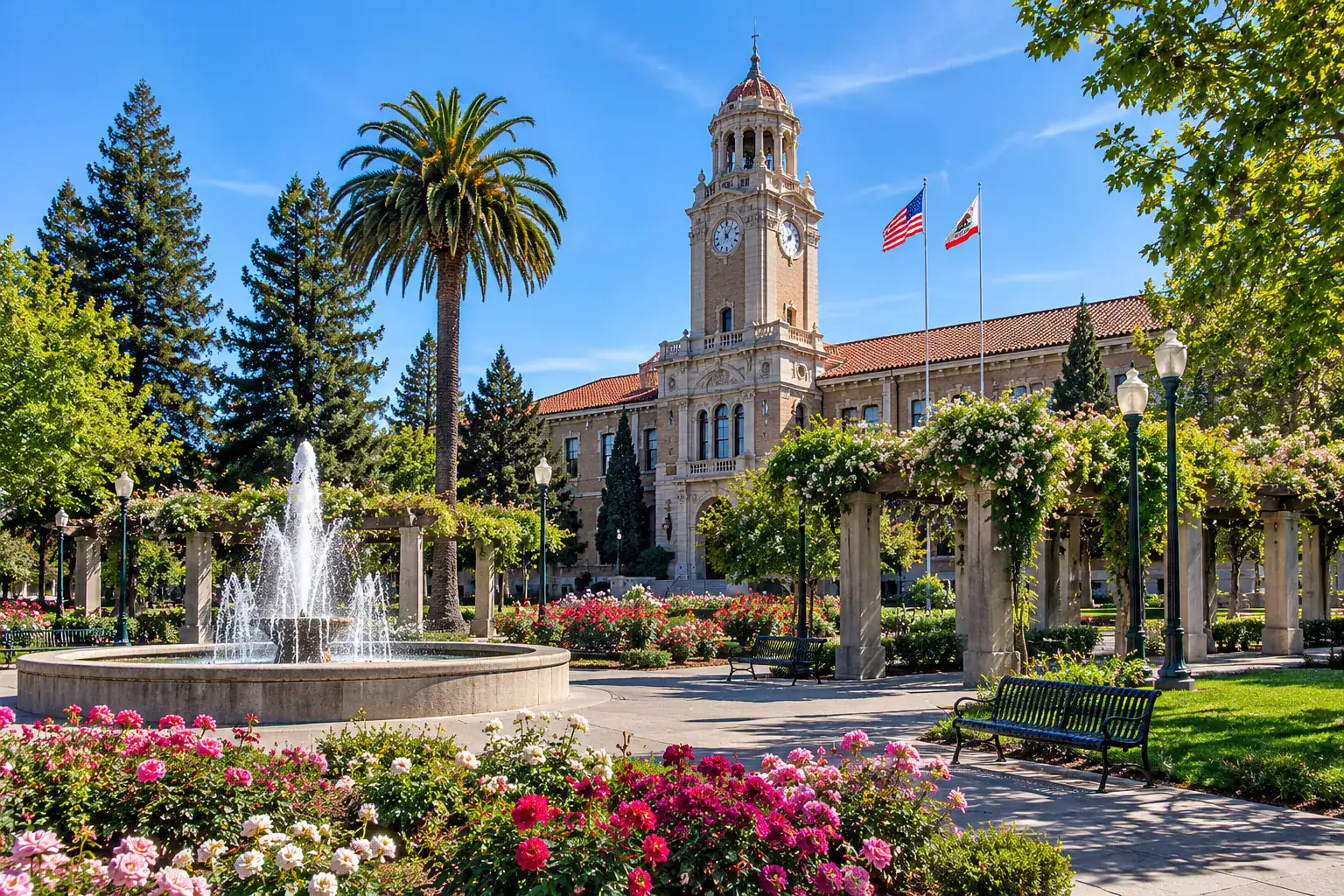
Climate considerations in Santa Rosa
Santa Rosa’s wine-country climate is one of the wettest stress profiles for elevated wood structures in Northern California. Annual rainfall typically runs 30–40 inches — nearly twice that of Sacramento — concentrated between November and March, with western neighborhoods near Annadel State Park receiving even more moisture. Cool, fog-influenced summers slow drying cycles and accelerate fungal growth on shaded and west-facing balconies. The combination of saturated winters and slow-drying summers makes dry rot, joist deterioration, and waterproofing membrane failure the dominant repair drivers in Sonoma County. For Santa Rosa property owners, annual fall inspection ahead of the rainy season and a disciplined waterproofing, sealing, and refinishing schedule are not optional maintenance — they’re essential to building longevity and liability protection.
Wildfire zone & WUI compliance
The 2017 Tubbs Fire devastated Coffey Park and Fountaingrove; the 2019 Kincade Fire pushed compliance demands further across northern Sonoma County. Properties rebuilt or modified in designated Wildland-Urban Interface (WUI) zones must meet California Chapter 7A building standards — including fire-resistant decking materials, ember-resistant venting, non-combustible framing details, and Class A fire-rated assemblies. Our licensed construction firm handles new WUI-compliant deck installation, retrofit of older balconies for fire-zone restoration, and certified material selection for property owners rebuilding or upgrading in fire-prone neighborhoods.
Common building stock we work on
Santa Rosa’s building stock spans more than a century, each era with its own repair signature. Pre-1940 Victorian and Craftsman homes around Railroad Square and the downtown core typically need railing replacement, ledger restoration, and refinishing of original wood balconies. 1950s–1980s apartment complexes along Mendocino Avenue, in Roseland, and across Bennett Valley fall under heavy SB 721 scrutiny — many show aging fasteners, undersized connections, and waterproofing systems decades past service life. 1990s–2010s condominium and townhouse developments in Fountaingrove and on the city’s outskirts fall under SB 326. Post-2017 rebuilds in Coffey Park, Fountaingrove, and Mark West Springs are newer construction but require periodic WUI re-verification and disciplined waterproofing maintenance due to local moisture loads. Our certified construction crew scopes every project to the era, original materials, and code in effect at installation.
Neighborhoods served
Our certified Santa Rosa crew covers Railroad Square, Downtown Santa Rosa, Fountaingrove, Bennett Valley, Roseland, Coffey Park, Mark West Springs, Rincon Valley, Montgomery Village, Junior College, West End, and the wider Sonoma County wine country including Windsor, Healdsburg, Sebastopol, and Rohnert Park. ZIP codes include 95401, 95403, 95404, 95405, 95407, and 95409.
What we typically see
Across our Santa Rosa-area inspections, our company most often documents: (1) dry rot and fungal growth at joists, ledgers, and post bases caused by the region’s heavy winter rainfall — the leading cause of catastrophic balcony failure in Sonoma County; (2) waterproofing membrane failure and standing-water damage from inadequate drainage on multi-family walkways and elevated decks; (3) flashing and sealant breakdown at deck-to-wall connections after repeated wet/dry cycles; (4) railings on pre-2000 buildings that fall short of the current CRC 42-inch height and 4-inch sphere rule; (5) termite damage at concealed framing in older Victorian and Craftsman structures; (6) older decks in WUI zones using combustible materials that no longer meet Chapter 7A fire-resistance requirements. Every finding is captured in a written assessment with prioritized repair, replacement, or restoration recommendations.
Emergency response, remodeling & restoration
For Santa Rosa buildings with acute safety issues — sagging framing, loose railings, visible rot at load-bearing connections, or post-storm damage — our emergency repair crew responds within 24–48 hours with temporary shoring and code-compliant stabilization. We also handle full balcony and deck remodeling, post-fire restoration, and WUI-compliant rebuilds for property owners modernizing the look and function of older outdoor spaces while bringing the structure up to current safety and fire-zone code.