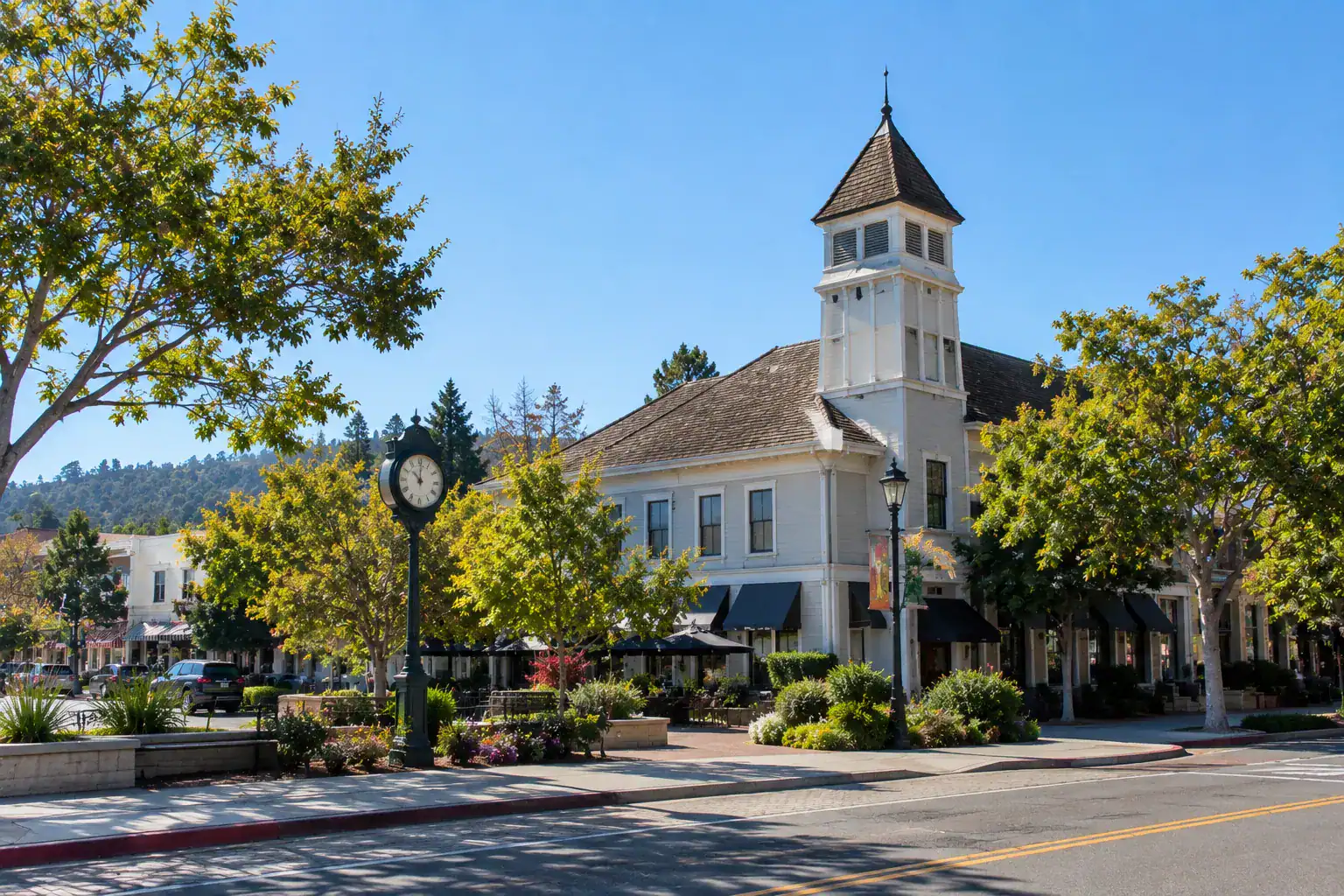
Climate considerations in Saratoga
Saratoga’s foothill climate is gentler in temperature than the valley floor but harder on shaded wood structures than the rainfall numbers suggest. Annual precipitation runs 20–25 inches concentrated November–March, and the prestigious tree canopy — towering oak and redwood — that defines the city’s character also creates the two primary accelerators of wood decay: trapped moisture and restricted airflow. Decks shaded for most of the day dry slowly after winter rain, and morning dew lingers well into spring. Concealed water damage at ledgers and post bases and waterproofing membrane fatigue both develop faster in Saratoga’s shaded environments than on exposed sites. Scheduled inspection and disciplined waterproofing maintenance are not optional for Saratoga properties.
Hillside terrain & drainage
Many Saratoga properties sit on sloped lots in the western foothills, where rainfall concentrates runoff toward downhill structures and post bases. Without proper drainage detailing, hillside decks experience accelerated soil erosion at footings, post-base rot from prolonged moisture exposure, and progressive movement at slope-anchored framing. Every hillside deck repair we perform in Saratoga includes a drainage assessment — and where conditions warrant, we install French drains, scuppers, deck-edge scupper systems, and graded drainage to direct water away from structural elements. The longer-term result is decks that last decades rather than seasons.
Premium materials & aesthetic standards
Saratoga properties expect premium-grade materials and craftsmanship that match the architectural quality of the homes themselves. The City of Saratoga maintains strict aesthetic standards for properties in hillside and foothill areas, and our design and repair work respects both natural site context and architectural integrity. We routinely specify Ipe and other dense tropical hardwoods (50+ year service life), marine-grade stainless fasteners and hardware, custom-milled trim to match existing detailing, and waterproofing systems engineered for long-term performance. Premium materials cost more upfront, but the lifecycle math on a Saratoga property favors them by a wide margin.
Common building stock we work on
Saratoga’s residential stock skews heavily toward single-family hillside and foothill homes — many with custom-built elevated decks, long spans, and view-oriented railings. Multi-family residential is concentrated near The Village, Saratoga Avenue, and Quito Village, where 1980s–2000s townhome and condominium developments fall under SB 326 scrutiny. Hillside single-family decks frequently require structural connection upgrades, post-base remediation, and full drainage redesign during major repairs. Our certified construction crew scopes every project to the era, original materials, and code in effect at installation.
Neighborhoods served
Our certified Saratoga crew covers The Village (Big Basin Way), Saratoga Avenue corridor, Quito Village, Argonaut, Saratoga Heights, Saratoga Hills, Mt. Eden, Brookwood, Pierce Road area, Bohlman Road area, and the wider western foothill neighborhoods. ZIP codes include 95070 and 95071.
What we typically see
Across our Saratoga projects, our company most often encounters: (1) concealed water damage on shaded balconies and decks beneath mature tree canopy — a Saratoga-specific concern from sustained moisture and restricted airflow; (2) post-base deterioration and soil erosion on hillside properties without adequate drainage detailing; (3) ledger flashing breakdown and concealed water intrusion at deck-to-house interfaces; (4) railings on older custom decks that pre-date the current CRC 42-inch height and 4-inch sphere rule; (5) original builder-grade fasteners no longer meeting current standards on 1980s–2000s townhome stock; (6) waterproofing membrane fatigue on multi-story balconies. Every finding is captured in a written assessment with prioritized repair, replacement, or restoration scope.
Emergency response & remodeling
For Saratoga properties with acute safety issues — sagging framing, loose railings, visible rot at load-bearing connections, hillside deck movement, or storm-driven damage — our emergency repair crew responds within 24–48 hours with temporary shoring and code-compliant stabilization. We also handle full balcony and deck remodeling for owners modernizing the look and function of older outdoor spaces while bringing the structure up to current safety code and premium finish standards.