SB 721 deadline has passed. Penalties run $100–$500/day per building — schedule your inspection today. SB 721 past due Get compliant 
  • Licensed California Contractor · Insured & Bonded
  • Mon–Fri 7am–6pm · Sat 8am–2pm

California Balcony Resource Center

Balconies 101: California Balcony Safety, Compliance & Maintenance Guide

Everything California property owners, HOA boards, and managers need to stay compliant, prevent costly damage, and keep tenants safe — including SB 721 and SB 326 deadlines, inspection requirements, and waterproofing best practices.

SB 721 or SB 326 — which California law applies to your building?

Two different laws govern balcony and deck inspections in California. The one that applies to you depends on who owns and manages the building.

SB 721

Apartments & Multifamily Rentals (3+ units)

If you own or manage a non-HOA building with three or more dwelling units, SB 721 requires inspection of every Exterior Elevated Element (EEE) — balconies, decks, walkways, stairways, and railings — by a licensed contractor.

  • First inspection deadline: January 1, 2026
  • Re-inspection every 6 years thereafter
  • Penalties: $100–$500/day per building until corrected; possible liens
SB 326

HOA-Managed Condos & Townhomes

If your building is governed by a Homeowners Association, SB 326 applies instead. The HOA — not individual owners — is responsible for inspection of common-area EEEs by a licensed structural engineer or architect.

  • First inspection deadline: January 1, 2025 (already in effect)
  • Re-inspection every 9 years thereafter
  • Inspector must visually inspect at least 95% of EEEs

→ Read the full SB 721 vs SB 326 comparison

Browse by topic

Every article on this page is written and reviewed by California-licensed contractors who handle balcony and deck repair every day.

California Balcony Laws (SB 721 & SB 326)

What the law actually requires, when inspections are due, what penalties apply if you miss the deadline, and the difference between the two statutes that cover most California buildings.

Maintenance & Waterproofing

How to spot waterproofing failure before it becomes structural damage, how long sealants and membranes actually last in California's climate, and the maintenance schedule that keeps a balcony out of the SB 721 fail column.

HOA & Property Manager Resources

Whether the HOA or the unit owner pays for a given repair, how code enforcement gets involved when issues are ignored, and how to handle inspections without disrupting tenants or owners.

Damage & Warning Signs

Water intrusion, dry rot, and termite damage are the three most common reasons a California balcony fails inspection. Catch them early, and a balcony lasts decades; ignore them, and you're rebuilding the structure.

What Does Code Enforcement Do In California?

/

Code enforcement in California plays a crucial role in maintaining community standards and public safety. These local government officials are responsible for ensuring compliance with various municipal codes, ordinances, and regulations related to property maintenance, zoning, and public health. Their duties encompass a wide range ...

Read more

What Is The Law SB326 In California?

/

Senate Bill 326 (SB 326) is a crucial law in California that aims to enhance the safety of multi-family residential buildings. It requires homeowners’ associations (HOAs) to conduct regular inspections of exterior elevated elements (EEEs) like balconies and decks to prevent structural failures. This legislation ...

Read more

How To Avoid Water Damage In Your Rental Property

/

Water damage can wreak havoc on your rental property, causing costly repairs and unhappy tenants. As a landlord, it’s crucial to take proactive steps to protect your investment. Regular inspections and maintenance are key to preventing water damage in your rental property. Addressing potential issues ...

Read more

HOA

Is HOA Responsible for Balcony Repairs?

/

Balcony repairs often spark confusion in condo and homeowners’ associations. While HOAs are typically responsible for maintaining common areas, balcony repairs fall into a gray area that depends on your specific governing documents. In most cases, the HOA handles structural elements of balconies, including support ...

Read more

When Is The SB721 Compliance Deadline?

/

California landlords, listen up! The deadline for SB721 balcony inspections has been extended. The new compliance date is January 1, 2026. This gives you extra time to ensure your multi-family properties meet safety standards. SB721 requires thorough inspections of exterior elevated elements like balconies and walkways in ...

Read more

What Is The Law SB721 In California?

/

Senate Bill 721, also known as the California balcony inspection law, was enacted in 2018 to enhance safety standards for elevated exterior elements in multi-family residential buildings. The law requires regular inspections of balconies, decks, stairways, and similar structures in buildings with three or more dwelling ...

Read more

Free 5-minute consultation

Not sure where to start?

Tell us about your building. We'll review your situation, tell you which California law applies, and recommend next steps. No commitment, no pressure.

Prefer to call? (916) 848-2728

Service Contact Form

Balcony & deck FAQ — California

The 10 questions California property owners and HOA boards ask us most often.

What is California's SB 721 law and who must comply?

SB 721 (Health & Safety Code §17973) requires owners of any non-HOA building with three or more multi-family dwelling units to inspect every Exterior Elevated Element — balconies, decks, walkways, stairways, and railings more than six feet above ground that rely on wood or wood-based products for structural support. Inspections must be performed by a licensed contractor, architect, or structural engineer.

What is SB 326 and how is it different from SB 721?

SB 326 (Civil Code §5551) covers the same kind of elevated elements but applies only to condominium and townhome buildings governed by an HOA. The HOA — not individual owners — is responsible for inspection, the inspector must be a licensed structural engineer or architect, and the cycle is every 9 years (versus every 6 years under SB 721).

When is the SB 721 inspection deadline?

The first SB 721 inspection must be completed by January 1, 2026, and then re-performed every 6 years. SB 326's first cycle deadline (January 1, 2025) has already passed, so HOA-managed buildings should already have an initial inspection on record.

How often do balconies need to be inspected in California?

SB 721 buildings: every 6 years. SB 326 buildings: every 9 years. Local jurisdictions can require more frequent inspections — for example, San Francisco's Section 604 program covers a broader set of buildings on a different cycle. Routine owner-side visual checks are recommended every 6 months to catch waterproofing failure early.

Who is qualified to perform an SB 721 or SB 326 inspection?

SB 721: a California-licensed general contractor (Class A or B) holding the appropriate active license, a licensed architect, a structural engineer, or a certified building inspector. SB 326: must be a licensed structural engineer or architect. The inspector cannot be the same person who later performs the repair work for SB 326.

How long does balcony waterproofing last?

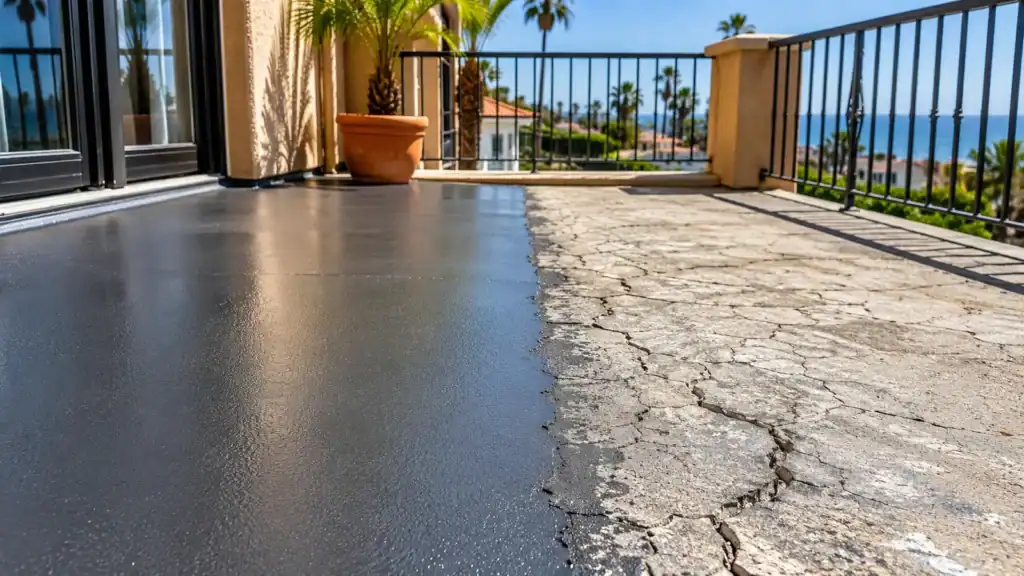
A properly installed waterproof membrane on a wood-framed California balcony typically lasts 10–20 years. UV exposure, foot traffic, planters, and freeze-thaw cycles in inland climates all shorten that lifespan. Sealants and coatings need touch-up every 3–5 years even when the membrane underneath is sound.

What are the most common signs my balcony needs repair?

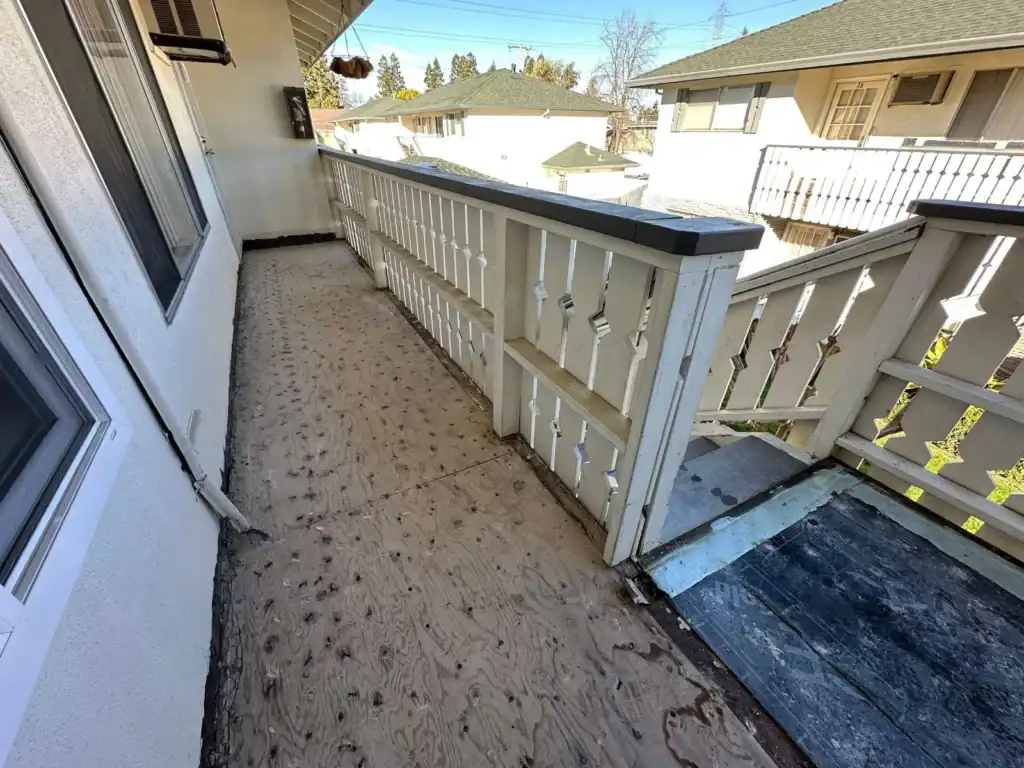
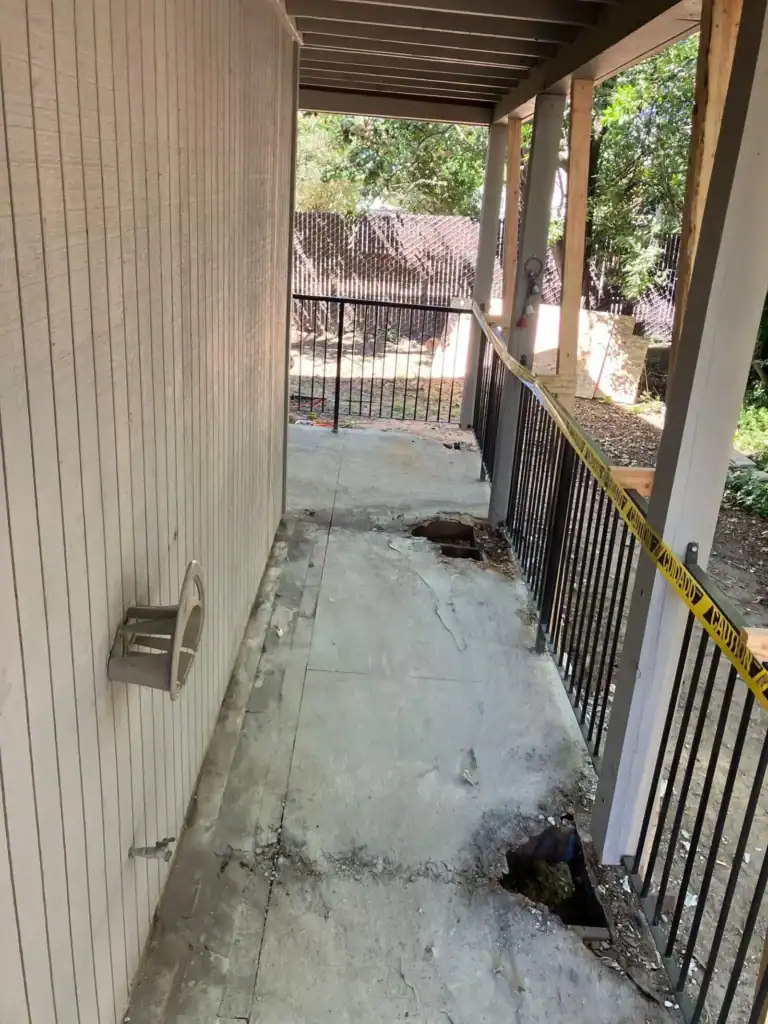
Soft or spongy decking, peeling or cracked waterproof coating, water stains on the ceiling of the unit below, exposed nail heads, rust on metal flashing, loose railings, and visible wood rot at the wall connection. Any of these warrants a professional inspection — not a DIY patch.

Is the HOA responsible for balcony repairs in a condo?

In most California HOAs, structural repair of common-area balconies is the association's responsibility, while interior surface finishes belong to the unit owner. The exact split lives in your CC&Rs and the recorded condo plan. SB 326 inspections are always paid for and arranged by the HOA.

What happens if I miss the SB 721 or SB 326 inspection deadline?

Local enforcement can issue notices of violation with civil penalties of $100–$500 per day per building until corrected. Unrecorded inspection reports can become a lien against the property. In addition, owners face full liability exposure for any injury caused by an EEE failure that an inspection would have caught.

How much does a balcony inspection or repair cost in California?

An SB 721 inspection on a small multifamily building typically runs $400–$1,200 per building depending on number of EEEs. Repair cost varies hugely — a single waterproofing recoat may be $1,500–$4,000, while full structural rebuild of a damaged balcony can exceed $20,000. Free estimates are standard before any work is committed.

Reviewed by

Tom Marsden — California Balcony & Deck Specialist

Tom leads inspections and repair planning for California Decks & Balcony, focused on SB 721, SB 326, and city-specific compliance work. Every article on this page is reviewed by our California-licensed contracting team before publication.

Last updated: April 2026 · Reviewed for SB 721 / SB 326 accuracy

Serving California — From Sacramento to San Diego

Free on-site consultations across the state. Talk to a licensed California balcony specialist today.

  • Sacramento
  • North Highlands
  • Roseville
  • Folsom
  • Elk Grove
  • Stockton
  • San Francisco
  • San Jose
  • Oakland
  • Los Angeles
  • San Diego
📞
Call Now!