Climate considerations in Fremont
Fremont’s footprint stretches from bay-edge marshlands to the Mission Peak ridgeline, producing a wide range of microclimates within a single city. Properties near the bayshore — and especially in the Centerville and Niles areas — see persistent fog moisture and salt-laden air that accelerates corrosion of metal fasteners, joist hangers, and anchor bolts. Inland and ridge-adjacent properties experience drier conditions but heavier seasonal thermal cycling. Annual rainfall (around 15–18 inches concentrated November–March) is moderate citywide, but the combination of bay fog at the western edge and warmer afternoon sun at the eastern foothills creates wet-dry transitions that drive sealant fatigue and waterproofing membrane wear. Scheduled inspection and disciplined waterproofing maintenance are essential.
Salt-air corrosion & concealed hardware
Bayshore proximity is the defining repair concern for many Fremont properties. Salt-laden moisture accelerates corrosion of metal connectors and fasteners that may appear structurally sound from the surface — joist hangers, ledger bolts, post anchors, and railing connections can all be deeply corroded while the visible surface still looks intact. Our certified construction firm always opens the assembly to check hidden metal hardware during inspection, specifies corrosion-resistant fasteners (hot-dip galvanized or stainless steel) on all bayshore-adjacent repair work, and details ventilation pathways to reduce trapped moisture. This is not optional maintenance for Fremont bayshore properties; it’s the difference between a deck that lasts decades and one that fails before expected service life.
Five historic districts
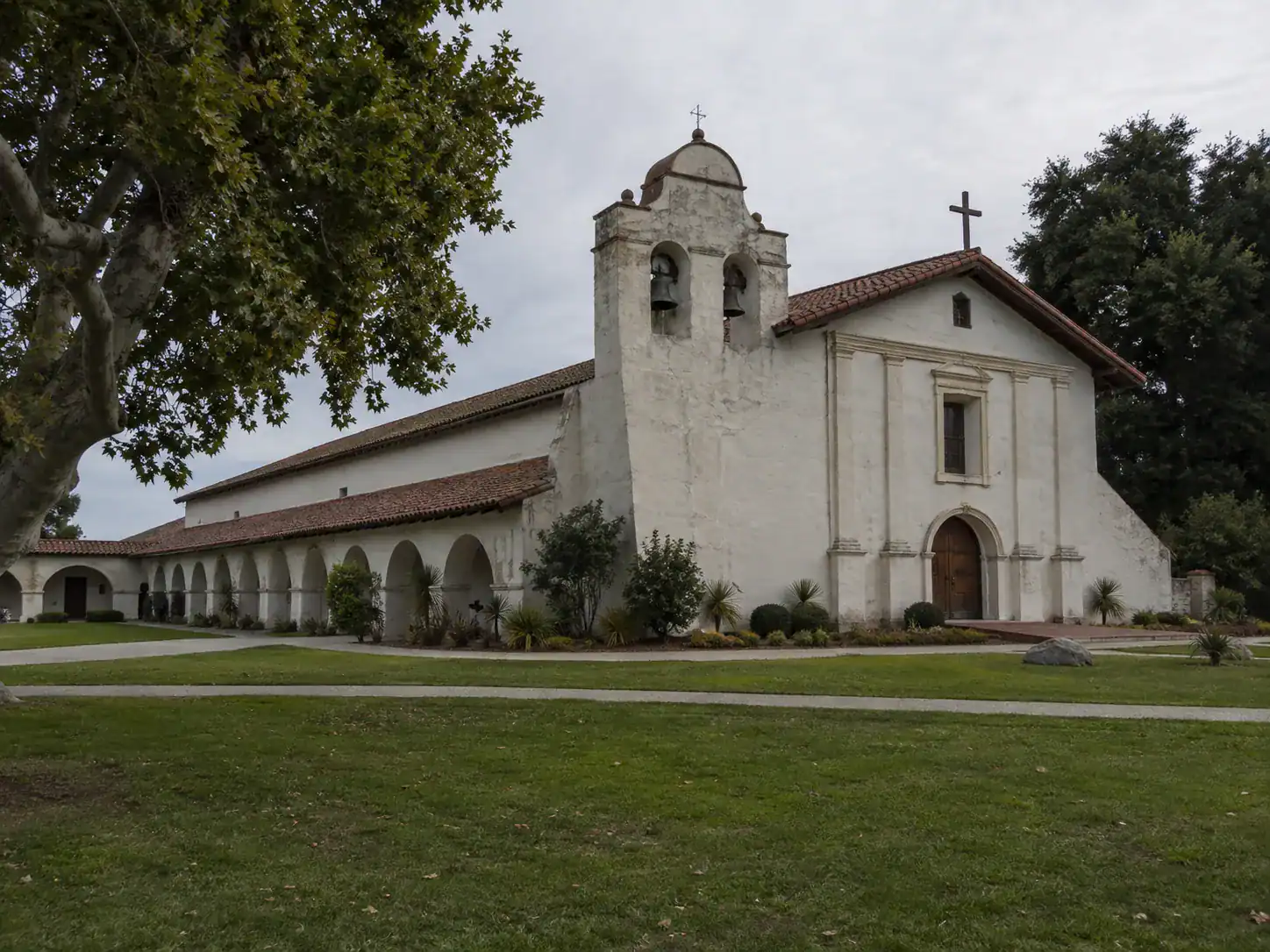
Fremont incorporates five historic districts — Centerville, Niles, Mission San Jose, Irvington, and Warm Springs — each with its own building stock and architectural character. Older homes and small apartment buildings in these districts often retain original wood-framed balconies, porches, and stairways with details predating modern fastener and code standards. Repairs in these districts balance code compliance with respect for architectural character, and our certified construction crew scopes every project accordingly.
Warm Springs BART transit-oriented development
The area around the Warm Springs BART station has seen substantial transit-oriented residential construction in the past decade — modern multi-family apartments, condominiums, and mixed-use developments. Most of this stock is post-2010 construction approaching first-cycle waterproofing maintenance, with original elastomeric membranes nearing end of service life. Our licensed construction firm coordinates inspections and waterproofing renewal on this newer stock to catch first-cycle wear before it becomes leak intrusion into occupied space.
Common building stock we work on
Fremont’s residential stock spans more than a century. Pre-war and mid-century homes in Centerville, Niles, Mission San Jose, and Irvington often need railing replacement, ledger restoration, and refinishing of original wood balconies and porches — many sit within the city’s historic district overlays. 1960s–1990s garden apartment complexes along Fremont Boulevard and the older parts of Warm Springs fall under heavy SB 721 scrutiny — aging fasteners, undersized connections, and waterproofing systems decades past service life. 1990s–2010s condominium and townhouse developments throughout the city fall under SB 326. Post-2010 transit-oriented developments near Warm Springs BART are approaching first-cycle waterproofing renewal. Our certified construction crew scopes every project to the era, original materials, and code in effect at installation.
Neighborhoods served
Our certified Fremont crew covers all five historic districts — Centerville, Niles, Mission San Jose, Irvington, and Warm Springs — plus the Fremont Boulevard corridor, the Fremont Hub area, Ardenwood, Brookvale, Cabrillo, Cherry-Guardino, Glenmoor, Kimber Park, and the Mission Peak foothill neighborhoods. ZIP codes include 94536, 94538, 94539, and 94555.
What we typically see
Across our Fremont inspections, our company most often documents: (1) corroded joist hangers, anchor bolts, and railing connections on bayshore-adjacent properties that look structurally sound from the surface — a Fremont-specific concern from salt-laden air exposure; (2) dry rot at ledger and joist connections on 1960s–1990s apartment stock from winter rain and fog moisture; (3) original mid-century wood-framed balconies in the historic districts with details that predate modern code; (4) waterproofing membrane fatigue on south- and west-facing balconies from cumulative UV and wet-dry cycling; (5) railings on pre-2000 buildings that fall short of the current CRC 42-inch height and 4-inch sphere rule; (6) first-cycle waterproofing wear on newer Warm Springs transit-village developments. Every finding is captured in a written assessment with prioritized repair, replacement, or restoration recommendations.
Emergency response & remodeling
For Fremont buildings with acute safety issues — sagging framing, loose railings, visible rot at load-bearing connections, or storm-driven damage — our emergency repair crew responds within 24–48 hours with temporary shoring and code-compliant stabilization. We also handle full balcony and deck remodeling for property owners modernizing the look and function of older outdoor spaces while bringing the structure up to current safety code.