What is the Difference Between SB721 and SB326?
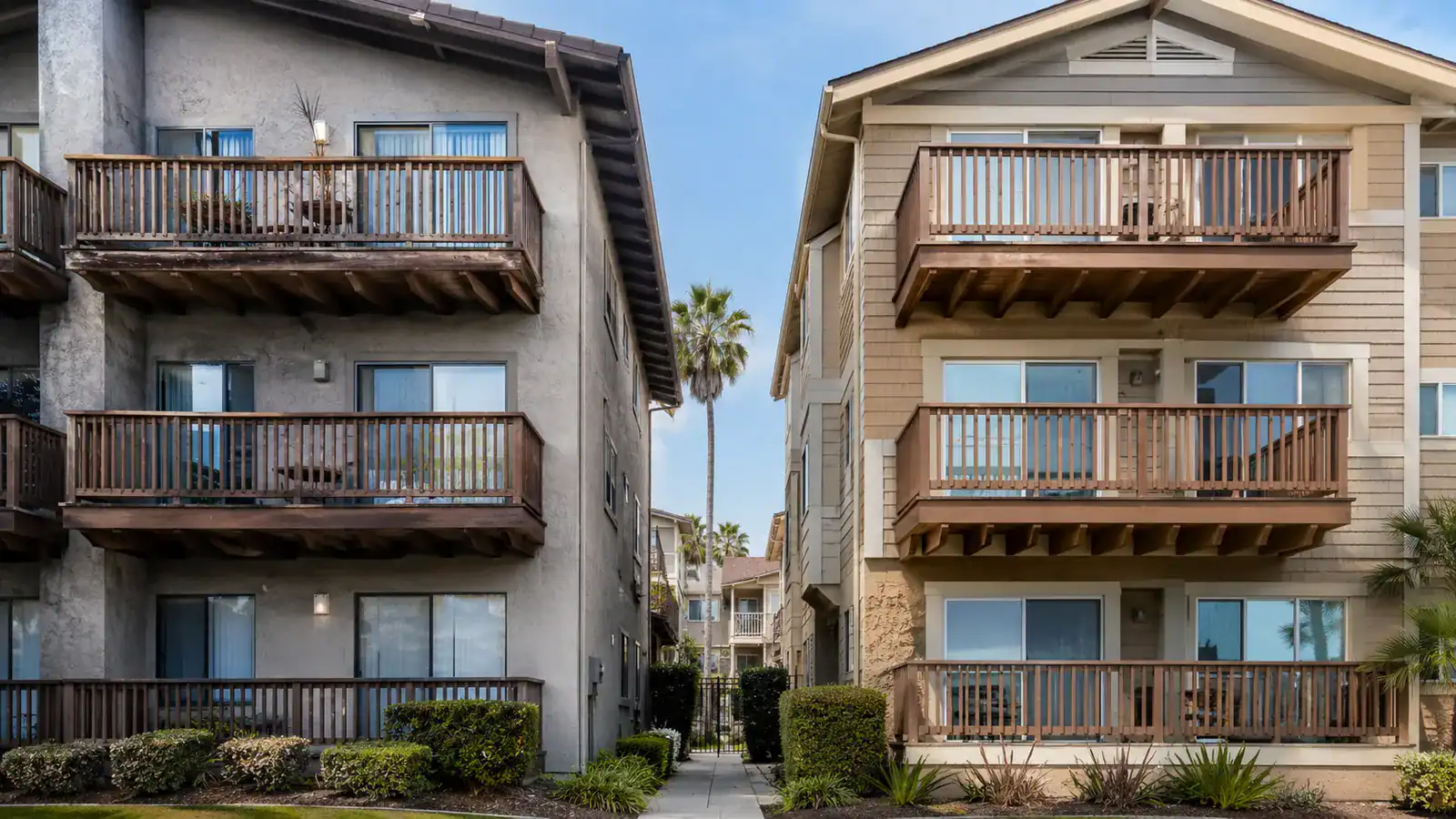
California has two separate laws requiring mandatory balcony inspections, and people mix them up constantly. SB 721 and SB 326 sound alike, ask for similar things, and were born from the same tragedy — balcony collapses that cost lives. But they apply to different buildings, carry different deadlines, and define who’s allowed to perform the inspection differently. Confusing them means hiring the wrong professional, ending up with a report that doesn’t qualify, and losing both time and money on a re-inspection.
This article sorts it all out. First, a clear table with the laws side by side across every key parameter. Then, a simple way to tell which one applies to your building, a breakdown of the main differences, a clear order of operations, and a separate note on San Francisco, where a third local requirement is also in force.
Side by Side
The easiest way to see the difference is in a table. Below are both laws across the parameters that matter most in practice to an owner and a board.
Parameter
SB 721
SB 326
Which buildings
Rental buildings with 3+ units
Condominiums managed by an HOA
Code section
Health & Safety Code §17973
Civil Code §5551 (Davis-Stirling)
First deadline
January 1, 2026 (extended by AB 2579), passed
January 1, 2025 (not extended), passed
Cycle
Every 6 years
Every 9 years
Who inspects
Architect, structural or civil engineer, plus a contractor with an A, B, or C-5 license and 5+ years’ experience, or a certified building inspector
Only an architect or a licensed engineer — structural or civil
Scope of inspection
At least 15% of each type of element
A statistically significant sample
Who pays for repairs
The building’s owner
The association (from reserves)
Penalties
$100–500 per day for unresolved defects, possible lien
Breach of the board’s duties, rising insurance exposure
The table shows the main point: the laws are alike in spirit but differ in nearly every detail — from the code section to who pays for the repair. It’s handy to keep around as a cheat sheet, but behind those dry rows are the nuances owners trip over. Next we’ll go through the differences that most often lead to costly mistakes.
Which Law Applies to Your Building
If you remember just one thing from this article, let it be the rule for telling them apart. The applicable requirement is chosen not by the number of floors, not by the look of the building, and not by whether units are rented out, but by the form of ownership. A short selector helps you get your bearings.
- A rental building with three or more units, one owner for the whole property. This is SB 721 territory.
- A condominium managed by a homeowners association. This is SB 326, even if some units are rented out.
- A building in San Francisco. Here a local requirement — Section 604 — is added on top of state law; more on that below.
- Not sure. Go by how ownership of the building is set up: a single owner means SB 721, an association means SB 326.
This fork matters more than it seems. A condominium board sometimes spends years thinking its building falls under SB 721, and hunts for an inspector by that law’s rules — only to find out later that the report doesn’t meet SB 326. A detailed breakdown of each law on its own is on our SB 721 and SB 326 pages.
The Difference That Costs People Money: Who May Inspect
The most expensive mistake lies in who you trust with the inspection. Here the two diverge fundamentally. SB 721 allows a broad circle of professionals: besides architects and engineers, the inspection may be done by licensed contractors in the A, B, or C-5 categories with five or more years’ experience, as well as certified building inspectors. SB 326 is far stricter — only a licensed architect or a licensed engineer may sign the report, and an ordinary contractor doesn’t qualify.
Why does the circle of inspectors differ at all? The legislature’s logic is that condominiums carry a higher cost of error: the board decides on behalf of many owners, and the law requires the signature of someone with design-level qualifications — an architect or an engineer. For a rental building, where there’s a single owner bearing the risk, a wider circle is allowed, including experienced contractors.
For us this difference is convenient, and here’s why. For rental buildings under SB 721 we perform the inspection ourselves, as a licensed contractor within the permitted circle — and take on the repair right away. For condominiums under SB 326 the inspection is done by our in-house licensed engineer, whose signature fully meets the law’s requirements. In both cases the inspection and the repair that follows stay in one set of hands, and the board or owner doesn’t have to pass the property between different parties, losing time on approvals and diluting accountability for the outcome.
The Difference in Scope
The second important divergence is what share of the structures has to be examined. SB 721 sets a firm minimum: at least fifteen percent of each type of element. That is, for a rental building the law names an outright figure you can’t go below.
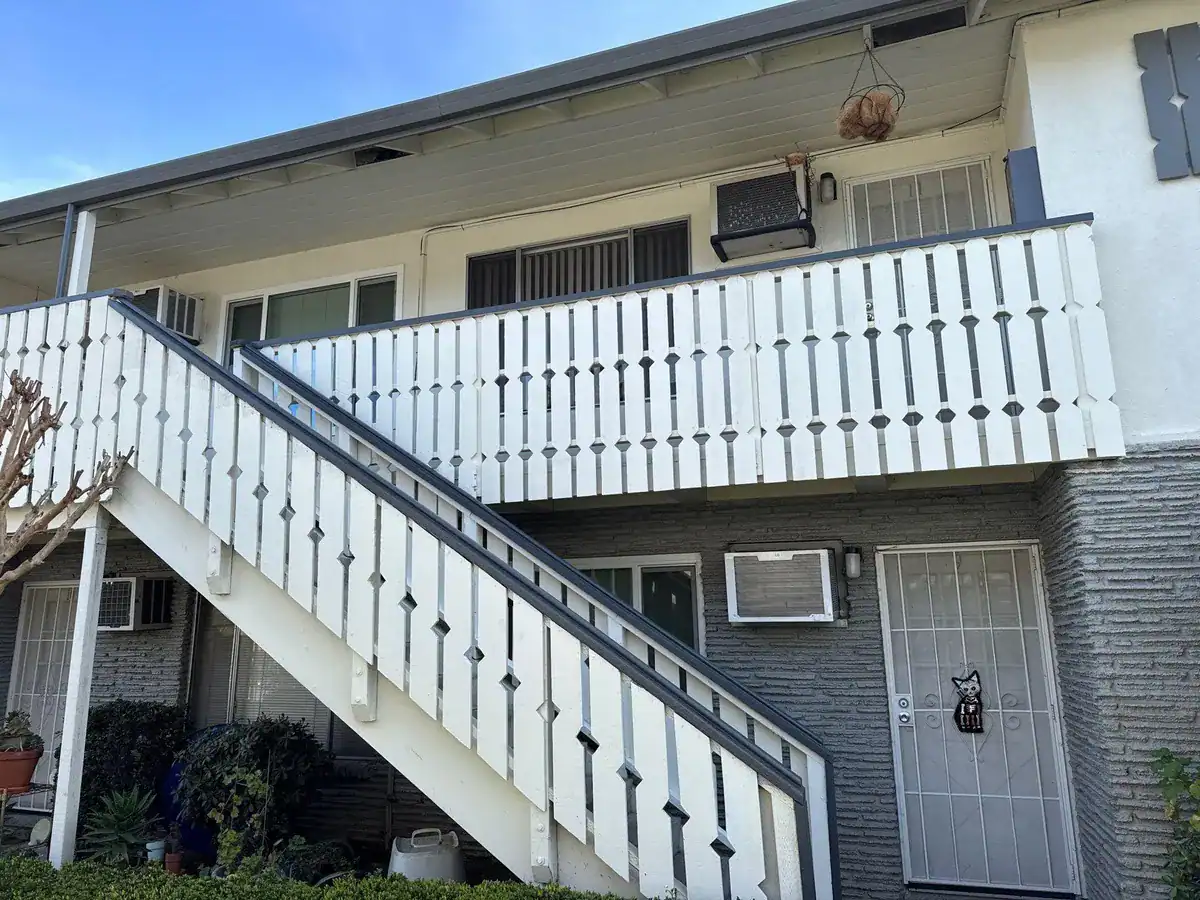
SB 326 works differently: it calls for a statistically significant sample — one sized so the result reflects the condition of all similar structures in the building with a high degree of confidence. There’s no fixed percentage here; the scope is set by the professional based on the building’s size and uniformity. In practice this means that for a condominium you can’t simply “check fifteen percent and call it done” — the methodology is different, and it’s best left to someone who understands the distinction.
Not sure how this applies to your building?
A licensed contractor answers — free, same-day callback.
A Separate Case: San Francisco and Section 604
If your building sits in San Francisco, state laws alone aren’t enough. The city has its own requirement — Section 604 of the housing code — and in many ways it’s stricter. Its inspection is performed every five years, and one hundred percent of the exterior elevated elements must be examined, not a sample. Section 604 applies to residential buildings with three or more units, including hotels and apartments.
This requirement appeared in the city before the state laws and was adopted back in 2003, with the first wave’s deadline passing well before the SB 721 and SB 326 cutoffs. So in San Francisco you shouldn’t think in terms of “either the state law or the local one”: a building can easily fall under both at once, with different timing and a different scope of inspection.
That means ignoring either one is risky. We help work out exactly what applies to a specific address and pass the inspection by the right rules; the details are on our Section 604 page.
The Order of Operations: From Identifying the Law to the Repair
Once it’s clear which law applies to your building, everything that follows lines up into a simple sequence. It works the same for a rental building and a condominium — only the details inside the steps change.
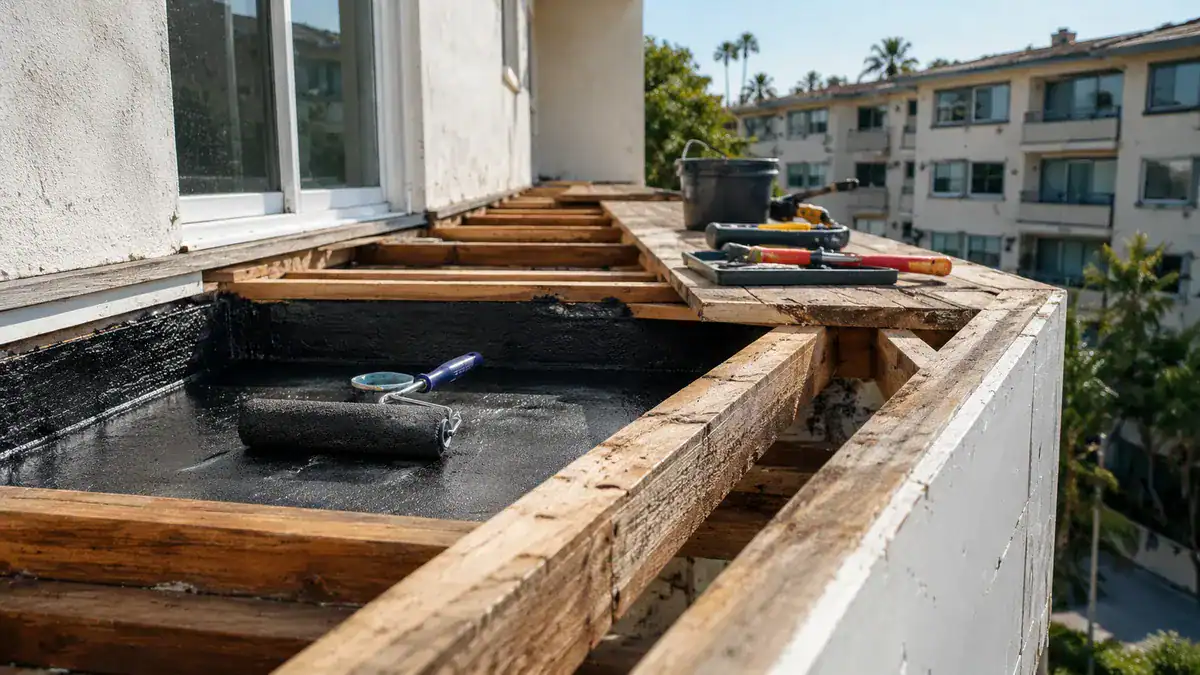
- Identify your law. Start from the form of ownership: a single building owner means SB 721, an association means SB 326, a San Francisco address means Section 604 on top.
- Find a qualified professional. For SB 326 that’s only an architect or engineer; for SB 721 the circle is wider and includes contractors with the right license.
- Carry out the inspection. The professional examines the structures to the extent the law requires and produces a report listing the defects.
- Fix the defects found. Hazardous ones immediately, the rest within a reasonable time; it’s the unresolved problems that trigger liability.
- Keep the documents and plan the next cycle. The report and records will be useful at sale and for the next inspection six or nine years out.
The sooner you walk this path, the calmer it is: defects caught early cost less, and the building meets its next inspection without surprises.
What the Two Laws Have in Common
For all their differences, SB 721 and SB 326 share one nature and one purpose. Both arose after balcony-collapse tragedies, both call for a professional inspection of wood-based exterior elevated structures, and both aim to have hidden rot and waterproofing failure found before an accident, not after.
They’re united by the logic of consequences, too: in both cases the penalty is not for the missed inspection itself, but for leaving the defects that were found unaddressed. That’s an important detail that takes the panic out for those who’ve missed a deadline: the fact of being late isn’t penalized in itself — what matters is genuinely getting to work on the problems. So whichever requirement your building falls under, the sensible strategy is the same: inspect in time, fix the defects, and fold regular balcony upkeep into the ordinary rhythm of running the building.
The Bottom Line: One Partner for Both Laws
The difference between SB 721 and SB 326 comes down to a few key points: building type, deadlines, the circle of inspectors, and the sampling method. Once you’ve identified your form of ownership, you immediately know which law is yours — and therefore your deadlines and who you can hire for the inspection.
The convenient part is that both scenarios can be handled by a single provider. For a rental building under SB 721 we perform the inspection and the repair ourselves; for a condominium under SB 326 our in-house engineer does the inspection, and the same team carries out the repair. If you need to determine which law applies to your building across Sacramento or the Bay Area and pass the inspection without extra middlemen, we’ll help you sort it out and take the whole cycle on ourselves.

Related service
SB 721 Inspection
Licensed, insured and SB 721/326-fluent — from assessment to sign-off, one accountable team.
About the author
Tom Marsden
Retired Property Inspector · Reviewed under CSLB #1060736
Tom Marsden is a retired property inspector with 20 years of experience. Starting as a general contractor, he transitioned to inspections, specializing in multi-family dwellings. Known for his straightforward approach and ability to simplify complex regulations, Tom became a respected figure in the local property management community. Now retired, he mentors new inspectors and writes about building safety, focusing on balcony inspections and maintenance. In his free time, Tom enjoys restoring vintage sailboats and volunteering at the local community center.
More from Tom Marsden

