What Is The Law SB326 In California?
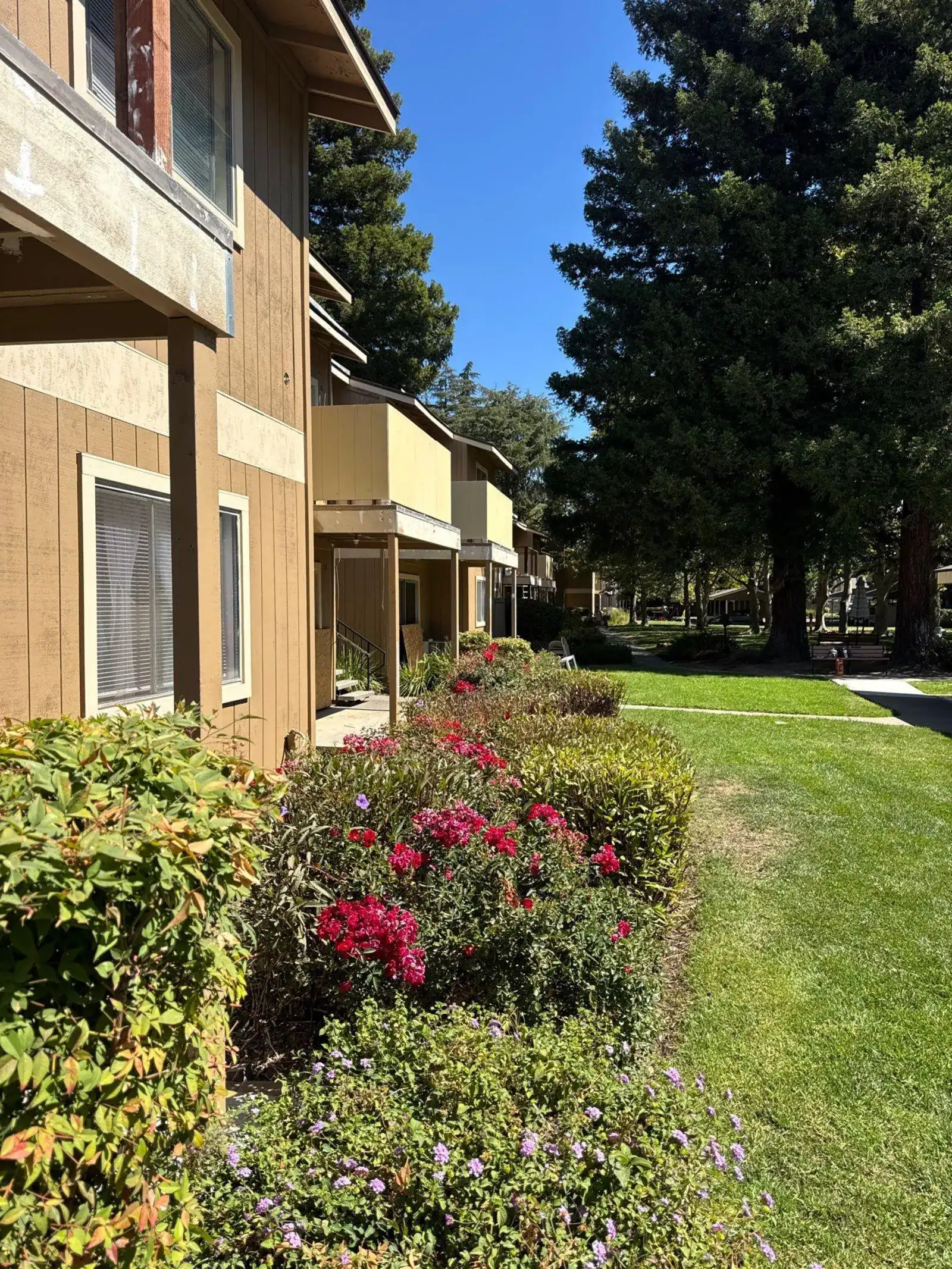
If you sit on a homeowners association board or own a unit in a condominium, the abbreviation SB 326 will land in front of you sooner or later — in a letter from the management company, on a meeting agenda, or in a repair estimate. Behind that dry bill number is a very concrete thing: the duty to inspect a building’s balconies and other elevated structures on a regular basis, so they don’t collapse under the people living there.
The law didn’t appear out of nowhere. After several tragedies involving balcony collapses, California decided the safety of these structures couldn’t be left to the owners’ discretion, and made inspections mandatory. For rental buildings, SB 721 did that; for condominiums run by an HOA, it was SB 326. In this article we’ll work through it in order: what exactly it requires, who it applies to, who is allowed to perform the inspection, and what’s at stake for those who have already missed the deadline.
The Law in a Nutshell
SB 326 is an amendment to what’s known as the Davis-Stirling Act, which governs homeowners associations in California. The rule requires condominium associations to regularly inspect the condition of exterior elevated elements built on wood: balconies, stairways, landings, and walkways. The aim is simple — to catch hidden damage in time, framing rot above all, and resolve it before the structure becomes dangerous.
The law applies specifically to wood-framed structures, and that’s no accident. Wood rots out of sight beneath the membrane: water finds a breach in the waterproofing, works its way in, and the framing loses strength long before any of it shows on top. A balcony can look solid while in fact hanging by a thread — which is exactly why the law calls for these connections to be examined professionally rather than by eye.
The inspection runs on a cycle: once every nine years. The first inspection was due by January 1, 2025 — and that date has already passed. It’s important not to get tangled up here: the SB 326 deadline was not extended. Assembly Bill 2579, which often gets brought up, pushed the deadline only for rental buildings under SB 721 (to 2026); it didn’t touch condominiums. So for associations there’s a single reference point — January 1, 2025 — and the next cycle comes due in 2034.
Who It Applies To
The key marker here isn’t the type of building but the form of ownership. SB 326 applies to condominiums managed by a homeowners association under the Davis-Stirling Act. If that’s your structure and the building has balconies or other elevated structures on wood supports, the law applies to you.
At the same time, it’s important to distinguish a condominium from developments and communities with a different ownership form. The law is tied specifically to condominium status, not to a building’s height or appearance — two buildings that look alike can fall under different rules depending on how ownership is set up.
This confusion shows up more often than you’d think: a board can spend years convinced its building falls under SB 721, when in reality it’s under SB 326, which has a different deadline, a different pool of inspectors, and a different sampling method. The mistake is costly — you can hire the wrong professional and end up with a report that doesn’t qualify. If you’re not sure which law applies to your property, it’s easier to check our breakdown of SB 721 and SB 326, where the difference is laid out point by point.
Who Is Allowed to Perform the Inspection
Here’s the point where associations most often slip up and lose money. Under SB 326, only a licensed architect or a licensed engineer — structural or civil — may sign the inspection report. Assembly Bill 2114, passed in 2024, added civil engineers to that group, widening the choice for associations.
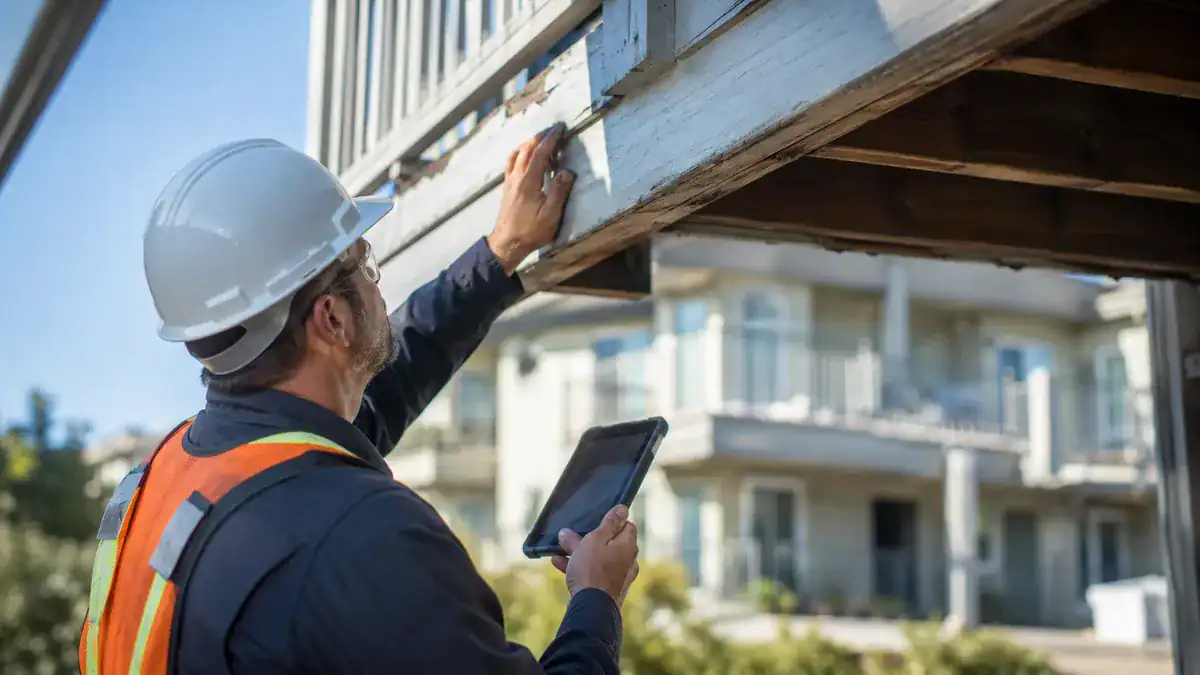
And here’s who the law does not allow to sign the report: ordinary contractors and certified building inspectors. For SB 326, unlike SB 721, their qualifications aren’t enough. This is where it’s worth spelling out our approach right away, because it removes a board’s main headache. Here’s how it works with us.
- The inspection is done by our in-house licensed engineer. A report bearing their signature fully meets SB 326’s requirements — this isn’t an outside partner you have to find and coordinate with.
- The repair that follows is handled by the same team. No need to hand the property off from the inspector to one contractor and then another — it all stays in one set of hands.
- Responsibility for the outcome doesn’t get diluted. When one party performs both the inspection and the work, the board doesn’t have to sort out which contractor is accountable for what.
This format spares an association the familiar situation where an engineer hands over a report listing the defects and walks away, leaving the board alone with the question of how to carry it all out and fit it into the budget.
How the Inspection Goes and What’s in the Report
The inspector evaluates the condition of the load-bearing and associated elements of the structure, their connections to the building, and the waterproofing system. Not every balcony is checked one by one — instead a statistically significant sample is taken, sized so the result reflects the condition of all similar structures in the building with a high degree of confidence. This differs from SB 721, where the share of elements to be checked is fixed outright.
To look inside the structure, the inspector makes careful openings at selected spots when needed — without that, hidden rot under the membrane can’t be seen. This is a normal part of the procedure, not damage to property: it’s far cheaper to open up a small section on purpose than to discover the problem after a collapse.
The result is a report: what’s sound, what needs attention, and what poses an immediate hazard and calls for urgent action. By law the inspection results are included in the association’s reserve study — the document used to plan savings for major repairs. We don’t give financial advice here; that’s the field of dedicated specialists. What matters is understanding that the inspection’s findings directly affect the building’s budget and need to be reflected in it.
Not sure how this applies to your building?
A licensed contractor answers — free, same-day callback.
What a Missed Deadline Can Cost You
Since the January 1, 2025 deadline is now behind us, for many associations the question isn’t “when” but “what now.” And here there’s an important, reassuring nuance: the law does not fine you for the missed inspection in itself. Penalties and claims arise when the defects that are found go unaddressed and the structure stays dangerous. In other words, there’s no need to panic over a passed date — you need to arrange the inspection and the repair.
But the consequences shouldn’t be underestimated either, because they reach beyond fines. Failing to meet SB 326’s requirements is a breach of the board’s duties to the owners. Insurers look ever more closely at compliance: premiums for buildings without a current inspection climb, and in some cases insurers decline to renew the policy. Add to that the risk of large one-time assessments on the residents if repairs have been put off for years, and it becomes clear why dragging it out doesn’t pay.
There’s one more twist many people aren’t aware of. As of 2026, SB 410 is in effect, requiring the inspection report to be disclosed when a condominium unit is resold. That means the absence of a current inspection will surface at the sale and can complicate it or drive the price down. Put differently, SB 326 compliance is now about more than safety — it’s about the marketability of the units in the building.
What a Board Should Do Now
If your building hasn’t been inspected yet, or was inspected long ago, the wisest course is to act calmly and in order. Below is a sequence that closes the matter without unnecessary fuss.
- Schedule the inspection with a qualified professional. That’s an architect or a licensed engineer; record the date you reached out.
- Get the report and review it with the board. Single out what needs urgent action and what can be planned.
- Enter the findings into the reserve study. The repairs from the report should make it into the building’s financial plan.
- Arrange the work. Hazardous defects are addressed immediately, the rest within a reasonable time.
- Keep the documents. The report and records will be useful at the next cycle and during unit sales.
The sooner a board walks this path, the calmer it is — both for the budget and for relations with the owners, who are entitled to count on a safe building.
Safety as Part of Running the Building
SB 326 is easier to see not as a burden imposed from above but as care for the building put into formal terms. Regular balcony inspections, timely repairs, and careful reserve planning are exactly what separate a well-run association from one where problems pile up until something fails. The law merely sets the rhythm and the timing for it.
On top of that, a building where inspections happen on time and reserves are planned around their findings rides out insurance reviews, unit sales, and board turnover more smoothly. Safe, well-kept balconies are, in the end, as much about property value and the owners’ trust in one another as they are about the letter of the law.
If your building needs an SB 326 inspection or a repair based on its findings across Sacramento or the Bay Area, we’ll take the whole cycle on ourselves — from the inspection by our in-house engineer to fixing the defects with a single team. And to get your bearings in the topic of balconies and the laws around them, take a look at our Balconies 101 guide and our detailed breakdown of the SB 326 law itself.

Related service
SB 326 Inspection
Licensed, insured and SB 721/326-fluent — from assessment to sign-off, one accountable team.
About the author
Tom Marsden
Retired Property Inspector · Reviewed under CSLB #1060736
Tom Marsden is a retired property inspector with 20 years of experience. Starting as a general contractor, he transitioned to inspections, specializing in multi-family dwellings. Known for his straightforward approach and ability to simplify complex regulations, Tom became a respected figure in the local property management community. Now retired, he mentors new inspectors and writes about building safety, focusing on balcony inspections and maintenance. In his free time, Tom enjoys restoring vintage sailboats and volunteering at the local community center.
More from Tom Marsden

