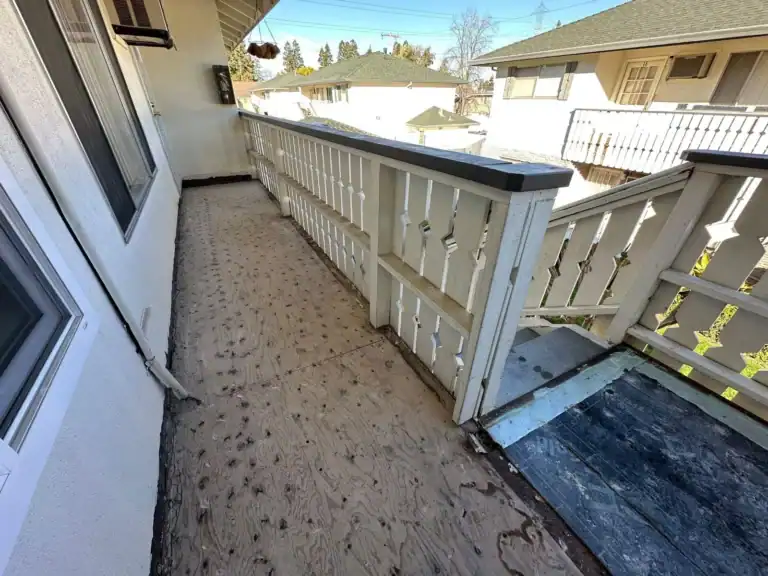
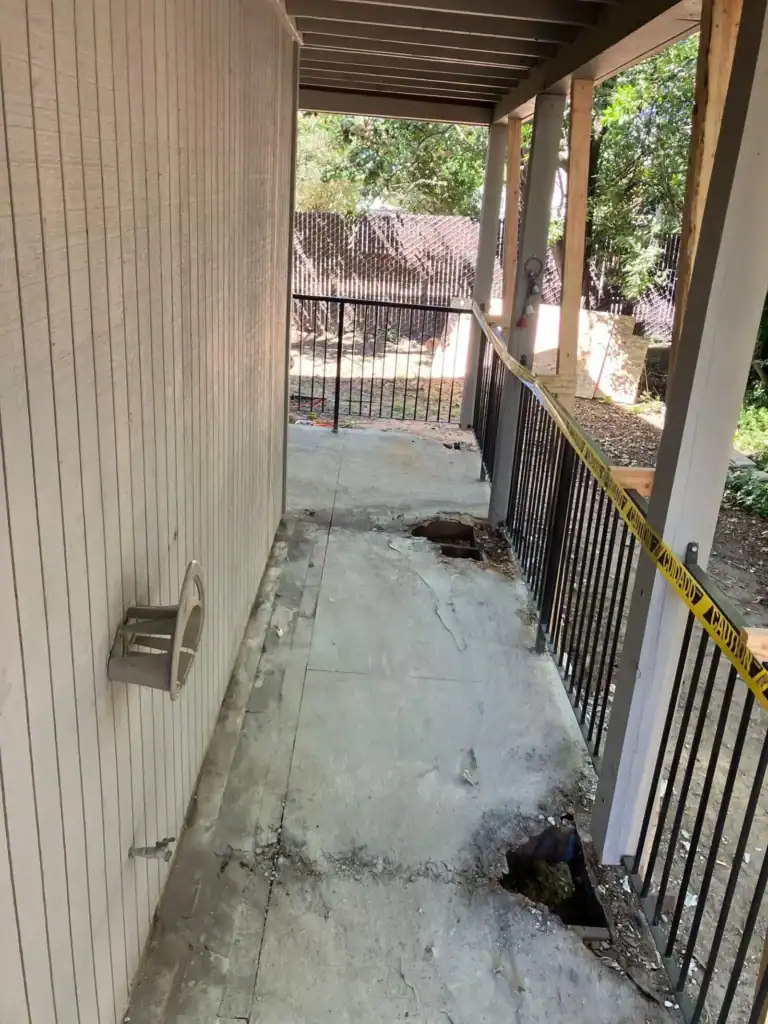
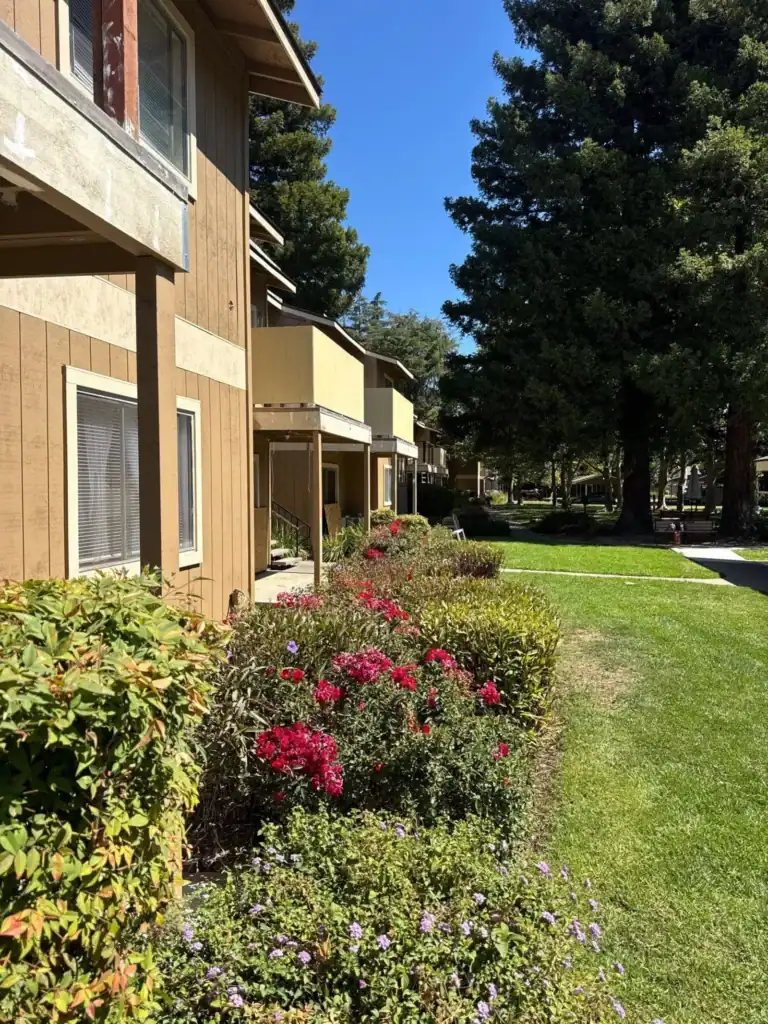
How Long Do Waterproofing Systems for Balconies Typically Last?
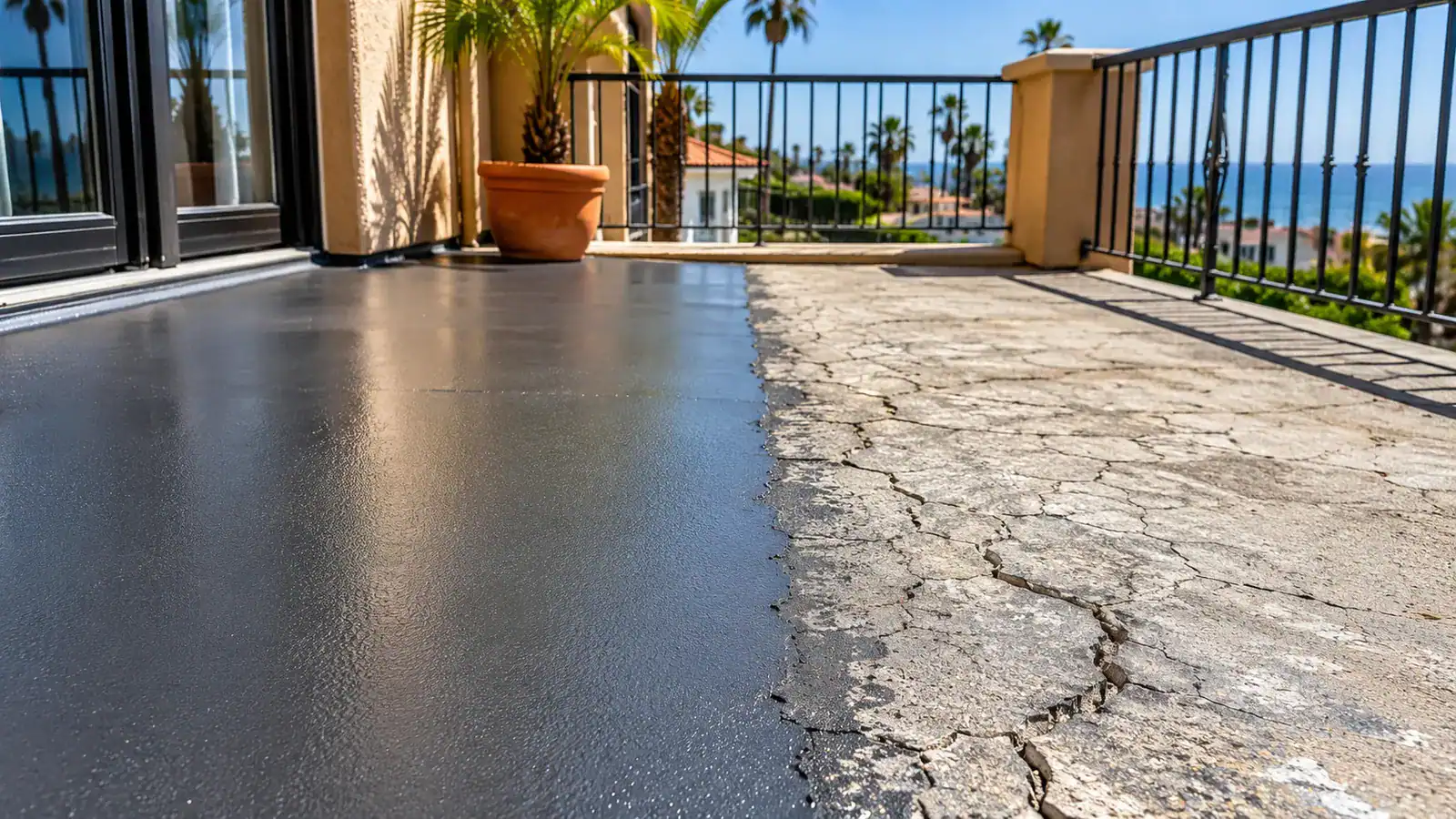
The short answer: with a sound installation and regular care, most balcony waterproofing systems hold up for at least ten years, and the best of them two or even three times that. But the number on the package and the real service life under California conditions aren’t the same thing. Hot sun, a months-long dry season, and an abrupt rainy season can noticeably shorten a coating’s life if it isn’t looked after.
This article is about what determines the longevity of waterproofing and how to get the most out of it. We’ll go through it in order: what kinds of systems there are and how long each lasts, what exactly wears the protection down in California’s climate, how to tell it’s nearing the end, and how service life ties in with the mandatory balcony inspections required by law. At the end — when it’s enough to refresh a coating and when it’s time for a serious redo.
What Service Life Depends On
The longevity of waterproofing is set not by one factor but by a combination of them. The first and foremost is the quality of the material and the installation. An expensive membrane laid over a poorly prepared substrate will last less than a cheap one done by the book: surface prep, drying, and the right coat thickness matter just as much as the compound itself.
The substrate deserves a separate mention. Even the best membrane has a short life if it’s applied over damp, dirty, or cracked concrete: surface preparation and drying determine whether the coating bonds properly. That’s why skimping on prep almost always leads to an early leak.
The second factor is how the balcony is used. One that’s walked on daily and loaded with heavy furniture and planters wears out faster than one used gently. The third is climate, and in California it plays a special role, as we’ll see below. And the fourth is upkeep: regular cleaning, drainage control, and timely resealing of joints stretch the lifespan out by years. Add these together, and you get the real longevity, not the one on the spec sheet.
Types of Systems and How Long Each Lasts
To choose a coating wisely, it helps to understand how the main types differ and what service life each has. Below is a summary of the most common systems and the spans you can count on with proper installation and normal care.
System type
Service life
Notes
Sheet membranes (roll-on)
20–25 years
Tough and thick, the longest service life; trickier to install
Liquid membranes (applied)
10–15 years
Brushed or sprayed on, flexible, handy for complex shapes
Cementitious coatings
5–7 years
Hard but less elastic; crack over time with movement
Multi-layer systems
15+ years
Several layers, sometimes with a reinforcing mesh; added protection
The table shows the main point: the spread in service life is wide, and a longer span usually costs you either in the price of the material or in the complexity of the install. Cementitious coatings are cheaper to apply but rigid, and they crack at the slightest movement of the structure; sheet membranes are pricier and harder to lay, but last the longest. For a California balcony that spends a lot of time in direct sun, flexibility and UV resistance matter most — worth discussing with your contractor when choosing a system. Selecting and applying the right compound is what our Waterproofing section helps with.
What Wears a Coating Down in California Specifically
Generic guides often warn about freeze-thaw cycles, but for most of California that isn’t the main threat — frosts that split a membrane with ice barely happen here. The local wear factors are entirely different, and understanding them matters more than fearing someone else’s.
The main enemy of a California balcony is the sun. Harsh ultraviolet and a long dry summer bake the membrane until it loses its flex, turns brittle, and cracks. Then the rainy season arrives and hits the water against those weakened spots.
Add the swing between daytime and nighttime temperatures, which keeps the material expanding and contracting, and near the coast the salt air that eats away at both the membrane and the metal fasteners. Because of this, standard compounds rated “on average” for 5–8 years often last less than advertised under California conditions. It’s especially noticeable on south- and west-facing balconies, which get the most direct sun: there the protection has to be renewed more often, and it’s wiser to plan for that ahead of time rather than after the fact.
Signs a Coating Is Nearing the End
Waterproofing rarely fails out of nowhere — it usually sends signals in advance. If you inspect the balcony regularly, these signs are easy to spot and act on before it reaches the framing.
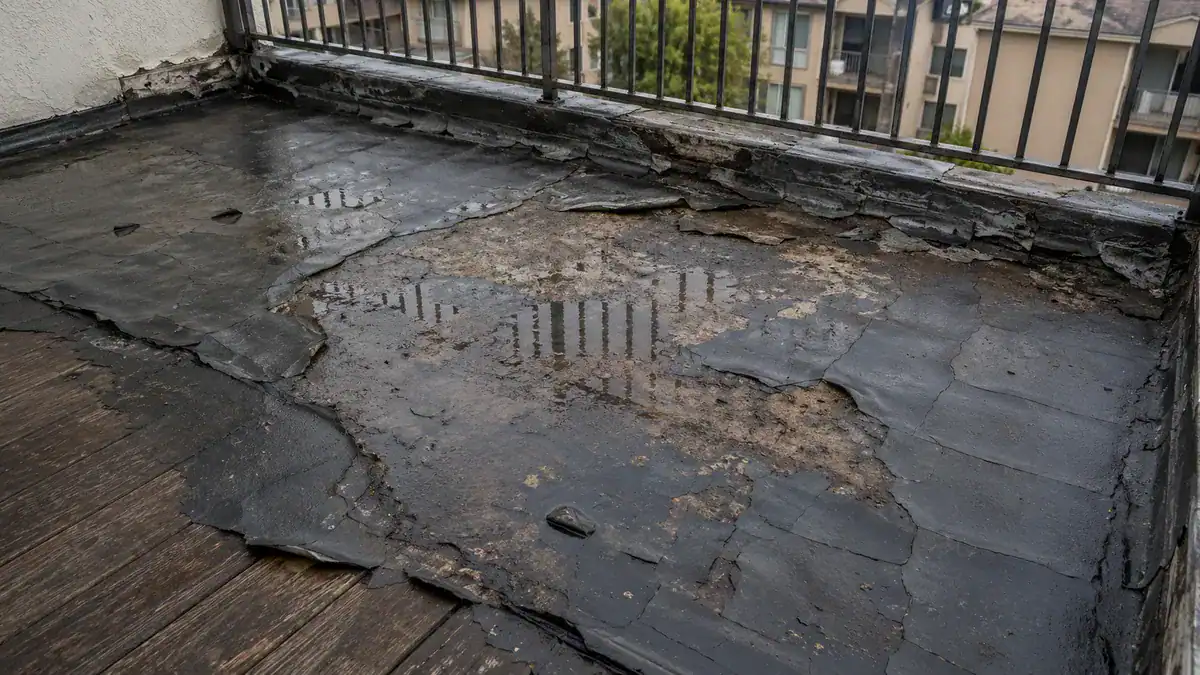
- Cracks and a web of fine splits. The coating has lost its elasticity and no longer stretches — a sure sign the membrane is aging.
- Blisters and bubbles. Moisture or air is collecting under the coating, breaking its bond with the substrate.
- Peeling at the edges and seams. The membrane lifts where load and movement are greatest.
- Standing water after rain. The slope is off or a drain is clogged; water that won’t drain speeds up wear.
- Stains on the ceiling below. If there’s a unit under the balcony, wet marks mean water has already gone all the way through.
Spot one of these signs and it’s not a catastrophe — but it’s a cue to deal with the coating before water reaches the framing. The sooner you respond to an aging membrane, the better your chances of getting by with a waterproofing refresh instead of a structural repair. The easiest way to catch these signs is at a scheduled inspection — especially before the rainy season, when the first downpours test the coating.
Not sure how this applies to your building?
A licensed contractor answers — free, same-day callback.
How to Extend the Service Life
The good news is that a coating’s life is largely in the owner’s hands. A few simple habits noticeably stretch the service life and put off a costly redo. It’s convenient to tie them to California’s seasonal rhythm — the main inspection before the rainy season and after it.
There isn’t much to do, but it should be regular. The basic list looks like this:
- Keep the surface clean. Sand, dirt, and standing water speed up membrane wear.
- Watch the slope and drains. Water should run off, not pool.
- Reseal the joints in time. Seams and transitions give out first — that’s where a leak begins.
- Don’t overload the balcony. Heavy furniture with sharp legs presses into the coating.
- Inspect once a year. Better to leave it to a professional: a fresh eye catches a problem early.
This kind of care is easy to put on a regular footing: it’s handled as part of an annual maintenance plan, so nothing slips off the schedule.
Service Life and the Mandatory Balcony Inspections
In California, the subject of coating longevity ties directly into the law. Mandatory inspections of exterior elevated structures are in force here: for rental buildings with three or more units under SB 721, on a six-year cycle, and for condominiums managed by an association under SB 326, every nine years. These intervals are handy to keep in mind alongside the service life of your coating.
The connection is direct and practical. If a liquid membrane lasts 10–15 years and the law requires inspecting the structure every six, it makes sense to combine the two: when an inspection comes due, assess the state of the waterproofing at the same time and renew it if needed. That way you both comply with the law and avoid paying twice for the visit and the setup.
And since it’s waterproofing failure that most often leads to hidden framing rot, renewing the protection in time is also a way to pass the mandatory inspection without unpleasant findings. It makes for a handy reference point: you can treat the inspection cycle as a natural moment to review the condition of all your balcony coatings at once, rather than waiting for one of them to leak.
When to Refresh and When to Redo
Not every bit of wear means major construction. If the membrane has aged but the substrate and framing are sound, a waterproofing refresh handles it: the old layer comes off, the slope and the seals are restored, and a new coating goes on. It’s planned, predictable work, and it costs noticeably less than replacing the structure.
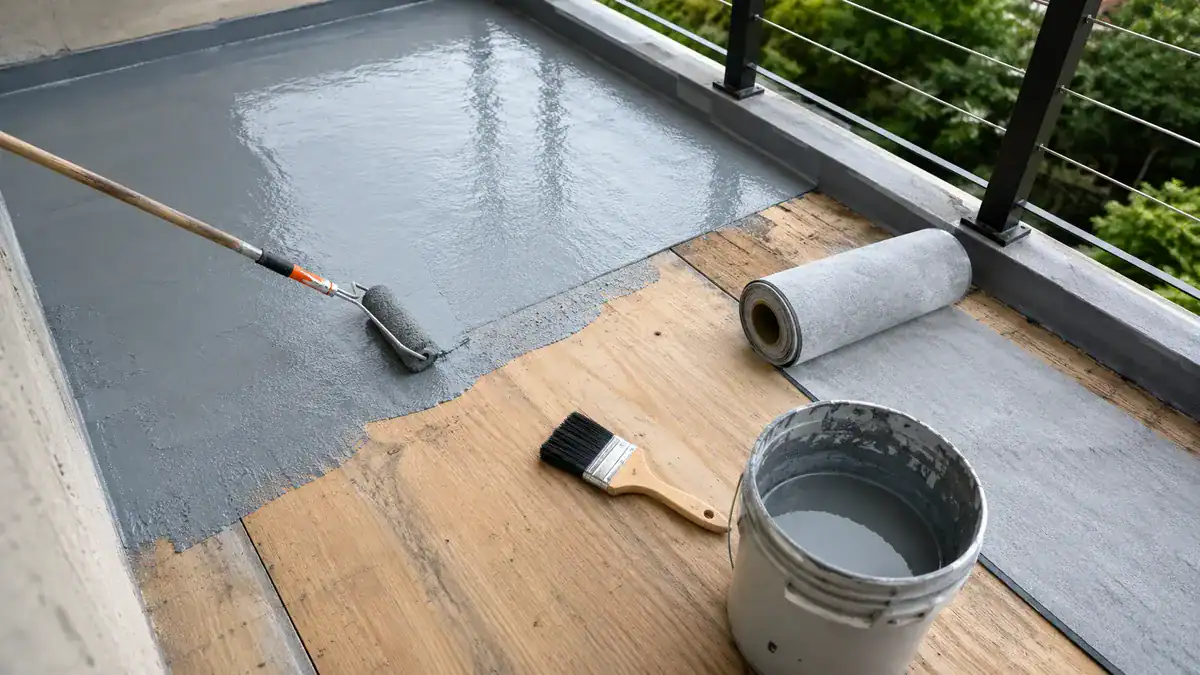
It’s another matter when water has already reached the wood. Then the surface alone won’t do: under the old membrane you often find a rotted frame, which has to be opened up, its damaged elements replaced, and only then is the waterproofing laid again. An exact estimate can’t be given in advance — it depends on the balcony’s area, how accessible it is, and how much hidden damage turns up along the way. The one honest rule of thumb: the sooner you deal with an aging coating, the better your chances of getting by with a simple refresh rather than a costly frame repair with the deck opened up.
Longevity Is a Matter of Care, Not Luck
The service life of a balcony’s waterproofing isn’t a lottery but the result of clear choices: a quality material, a proper installation, allowance for the California climate, and regular care. Sheet membranes can last a couple of decades, liquid ones around a decade and a half, cementitious coatings need renewing noticeably more often; but in every case it’s the attention paid to the coating that decides whether it lives out its span or gives out ahead of time.
If your balcony in Sacramento or the Bay Area needs its waterproofing assessed, renewed, or repaired based on an inspection’s findings, we’ll help you go the whole way in one set of hands — from the assessment to fixing the defects, without handing the property between contractors. The sooner you deal with an aging coating, the cheaper and calmer it works out.
Related service
Waterproofing
Licensed, insured and SB 721/326-fluent — from assessment to sign-off, one accountable team.
About the author
Tom Marsden
Retired Property Inspector · Reviewed under CSLB #1060736
Tom Marsden is a retired property inspector with 20 years of experience. Starting as a general contractor, he transitioned to inspections, specializing in multi-family dwellings. Known for his straightforward approach and ability to simplify complex regulations, Tom became a respected figure in the local property management community. Now retired, he mentors new inspectors and writes about building safety, focusing on balcony inspections and maintenance. In his free time, Tom enjoys restoring vintage sailboats and volunteering at the local community center.
More from Tom Marsden