El Camino corridor coverage
Callback the same business day for Burlingame. We're 107 miles out, so we schedule the El Camino corridor in blocks and bring the whole job in one mobilisation rather than five separate trips.
Commercial Balcony & Deck Specialists · CSLB #1060736
Burlingame incorporated in 1908, and the very first thing its trustees did was pass an ordinance prohibiting the cutting, injuring or destroying of trees. There are over 18,000 public trees here now, mostly eucalyptus, and they shed all year onto your balconies and into your scuppers. The debris is not the tree's fault and it is not going to stop, because you legally cannot make it stop. Licensed CA contractor serving Downtown, Burlingame Park, the Easton Addition, and Ray Park with SB 721 and SB 326 inspections, deck repair, and waterproofing.
02 / Local Presence
03 / Why D&B for Burlingame
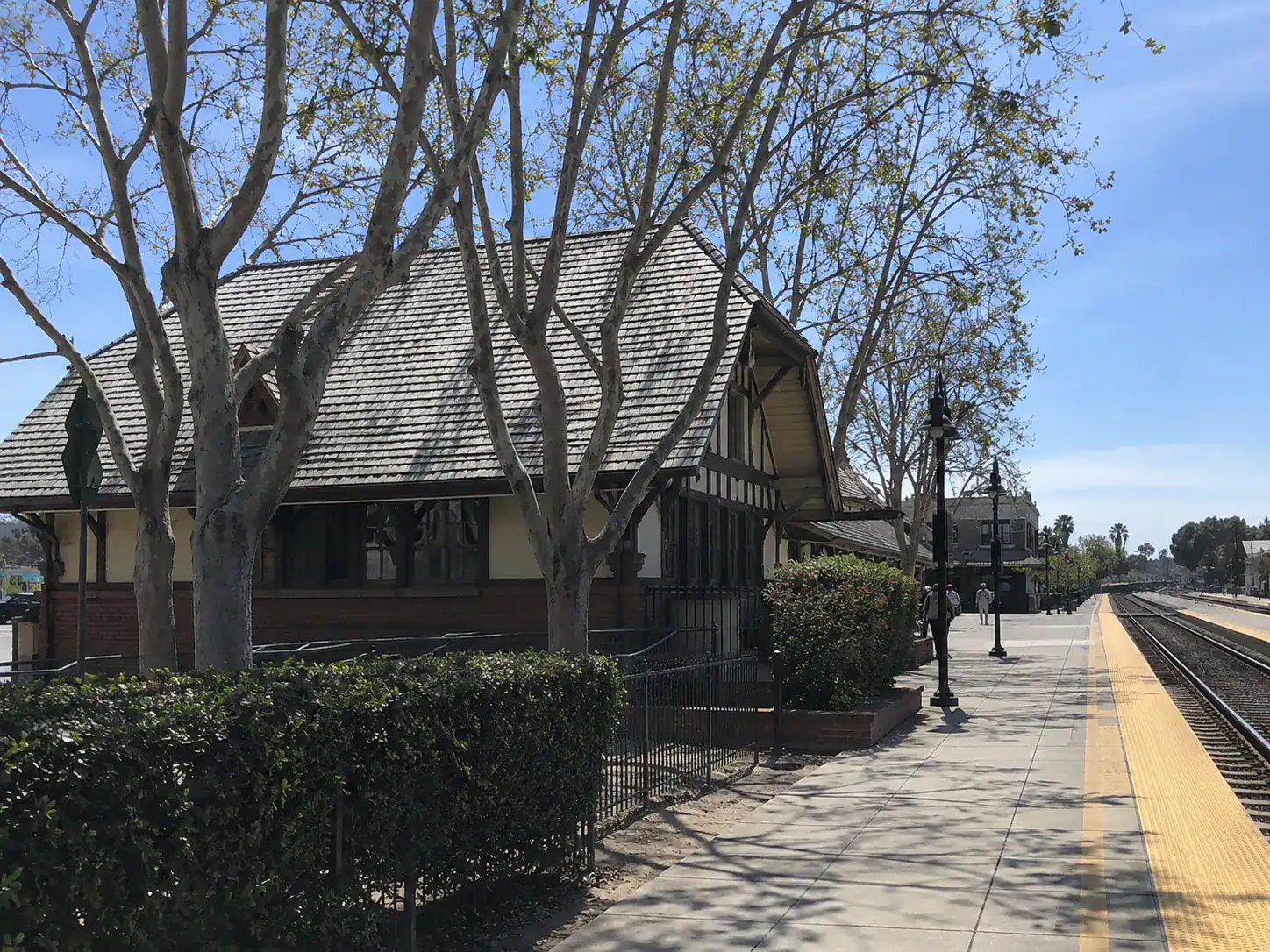
Callback the same business day for Burlingame. We're 107 miles out, so we schedule the El Camino corridor in blocks and bring the whole job in one mobilisation rather than five separate trips.
We've inspected and repaired balconies on 240+ Burlingame-area properties since 2019 - and in this city the first thing we look at is usually not the deck. It is what is sitting on the deck.
SB 721 and SB 326 inspection reports filed with the City of Burlingame when required. We handle the paperwork.
04 / Free Assessment
Tell us about your building(s) - we'll send same-week scheduling, transparent multi-building pricing, and handle SB 721 / SB 326 compliance filing with the City of Burlingame end-to-end.
Or call us now: (916) 848-2728
05 / Process
Same business day
Submit the form or call (916) 848-2728. We answer questions, discuss your Burlingame building situation, and schedule a free on-site assessment with a licensed contractor.
Within 24–48 hours
A licensed contractor walks the property, photographs every balcony and EEE element, and identifies SB 721 / SB 326 issues, concealed decay, scupper and drainage condition, and railing concerns. ~60 minutes.
Within 2–3 business days
Itemized scope, transparent multi-building pricing, repair-vs-replacement options. For SB 721 / SB 326 jobs we file the inspection report with the City of Burlingame.
Most jobs start 2–3 weeks
Permits pulled through the City of Burlingame when required. If anything in the scope goes near a tree, that is a separate conversation with the city and we would rather have it before we start - Burlingame protects trees on private property, and removing, structurally altering or heavily pruning one is a permit matter, not a site decision. Work executed by our in-house CSLB-licensed construction crew. Final walkthrough, photo documentation, warranty paperwork.
06 / Services
The eucalyptus on El Camino were never supposed to be permanent. John McLaren - the man who built Golden Gate Park - planted them in the 1870s as a windbreak to shelter elms until the elms took hold. The elms did not. In 1938 McLaren wrote to a historian about his original plan and added, almost as an aside, that the eucalyptus were as you know still in place. They are still in place today, and so is the 1908 ordinance protecting them. Here's where we lead.
Mandatory exterior elevated element inspection services for 3+ unit multifamily buildings and HOA-managed condominiums across Burlingame and the mid-Peninsula.
Joist replacement, ledger fix, post-tension repair, code-compliant railing reinforcement.
Elastomeric membrane installation, sealing, resurfacing, and drainage correction sized for a scupper that spends its life half-full of leaf litter.
Load-bearing capacity, wood rot analysis, connection integrity verification.
07 / Investment Ranges
Final estimate after on-site visit. Ranges below reflect 90% of recent Burlingame-area commercial work. Actual pricing depends on building size, materials, access, and site conditions.
Required compliance
$400–$800per building
On-site visual + structural review, written report filed with the City of Burlingame.
Most common
$2,500–$8,000per balcony
Joist replacement, ledger fix, railing reinforcement, board replacement. Waterproof recoat $3K–$12K.
Highest value
$15,000–$45,000per balcony
Complete tear-down, new framing, waterproof, railings, code-compliant. Volume pricing for 5+ buildings.
We never quote a final price without an on-site visit. Free assessment takes ~60 minutes — no commitment, no pressure.
09 / Client Voices
We'd been clearing the gutters twice a year and considered that handled. D&B lifted the debris off one balcony and the membrane underneath had gone soft in a patch exactly the shape of the pile. I had never thought of leaves as a water problem.
Every contractor before them looked at the scupper and said it was clear. It was clear in June. D&B asked what it looks like in December, which nobody had, and rebuilt the drainage for the answer.
Our building is 1921 and beautiful and we were terrified someone would wreck the front of it. They didn't. They also told us we couldn't touch the tree, which we already knew, and priced around it instead of pretending otherwise.
10 / Local Context
Burlingame has the Peninsula's mild climate – warm-summer Mediterranean, roughly 23 inches of rain a year, summer days averaging about 68°F and nights around 55°F. Sixty-eight degrees is the whole problem in one number: it is a lovely afternoon and it is nowhere near enough heat to dry out a framing cavity. Every Peninsula city has that. What Burlingame adds is organic. There are over 18,000 public trees inside the city limits, mostly eucalyptus, and eucalyptus does not have a leaf-fall season – it sheds bark, leaves and pods continuously, all year. That material lands on balconies and in scuppers, and once it is wet it behaves like a poultice: it holds water directly against the membrane, it does not drain, and it does not dry. A debris mat on a north-facing balcony in a city whose summers top out at 68°F is a permanent wet compress on a surface that was never designed to be under one. And a blocked scupper turns a balcony into a shallow tank, which is the single most common thing we open up here. None of this is a complaint about trees. It is simply what a canopy does to a building, and in this city there is a great deal of canopy.
Burlingame is a post-1906 city. William Davis Merry Howard bought the land, planted eucalyptus and died in 1856; William Ralston bought it and named it in 1868 after his friend Anson Burlingame, the ambassador to China; development proper began in the 1890s with the country club and the station. Then the earthquake came, hundreds of lots sold to San Franciscans looking for somewhere to start again, and the town incorporated in 1908, annexing Easton in 1910. So the older stock here is Edwardian and 1920s and it is exceptionally well kept – this is Renovation & Remodel work, not replacement, and an owner here is usually as concerned about the elevation as about the structure. Around it sits postwar and later multifamily, which is ordinary SB 721 Inspection territory on the six-year cycle. The thing that unites all of it is the canopy. The 1908 board of trustees passed an ordinance prohibiting the cutting, injuring or destroying of trees as its first act – the city's founding legislation was a tree law – and Burlingame has been a Tree City USA every year since 1979. Trees on private property are protected here; removing one, structurally altering it, or pruning it heavily is a permit matter rather than an owner's decision. The tree above your balcony is not going anywhere. Plan accordingly.
Downtown Burlingame, Burlingame Avenue, Broadway, Burlingame Park, the Easton Addition, Ray Park, Mills Estate, Lyon-Hoag, Burlingables, Bayside, and the El Camino Real corridor. ZIP code 94010.
In Burlingame we most often address: (1) debris held against a membrane – a wet mat of eucalyptus litter sitting on a coating for a season is doing something a rainstorm never does, which is keeping the surface wet continuously rather than briefly; (2) scuppers and drains that are clear when anyone looks and blocked when it matters, because the inspection happens in summer and the litter arrives with the wind and the wet; (3) undersized drainage generally, since the original detail was sized for water and is being asked to pass water plus solids; (4) hundred-year-old elevations where the repair has to satisfy the structure and the street, on buildings whose owners bought them for exactly the reason they look the way they do. Because the tree is protected and the litter is not negotiable, Annual Maintenance Plans here are built around the shedding rather than around an anniversary – and our Inspections page covers what we actually check.
11 / More Service Areas
Every city links to a dedicated local page — crews, recent projects and compliance details for that area.
Don’t see your city? We likely still cover it — call (916) 848-2728.
12 / Common Questions
$400-$800 per building for a 3-8 unit property. What we do differently here is look at the drainage before the deck, because in a city with 18,000 public trees the scupper is doing a harder job than the membrane is. On the older downtown stock the walk also takes longer, because a 1920s building has a hundred years of undocumented alterations behind the finish. The site visit is free either way.
It is the right instinct pointed at the wrong surface. Gutters get cleared because people can see them. The places that matter on a balcony are the scupper, the low corner and whatever is sitting on the membrane, and eucalyptus makes that a year-round proposition rather than an autumn one - it sheds bark, leaves and pods continuously, which is why this city looks the way it does and why there is always something on your deck. Here is the mechanism that owners consistently miss. A wet mat of leaf litter is not just untidy; it is a compress. It holds water against the coating and stops air reaching it, so the surface under the pile stays wet for weeks at a time in a climate whose summers average 68°F and cannot dry it anyway. We routinely lift a debris pile and find a soft patch in the shape of the pile. Nothing about that is visible while the pile is there, which is exactly the point.
Not on your own say-so, and this is the thing that separates Burlingame from every other city on the Peninsula. The town incorporated in 1908 and the first ordinance its board of trustees passed prohibited cutting, injuring or destroying trees - the founding legislation of this city is a tree law, and it has been a Tree City USA every year since 1979. Trees on private property here are protected once they reach a set size, and removing one, structurally altering it, or pruning more than a limited share of the canopy or roots requires a formal permit from the city rather than a decision by the owner or a contractor with a saw. So the honest position for a property owner is this: the debris load on your building is a permanent condition, protected by law, and it is not the problem to be solved. The maintenance schedule is. Anyone who quotes you a job that quietly involves taking a limb off is quoting you a code violation.
It is the reason to be careful about who you hire, not a problem in itself. Burlingame grew because San Franciscans came south after 1906 and bought hundreds of lots, and the resulting Edwardian and 1920s stock is a large part of why people want to live here. The statute does not care about any of that - SB 721 asks whether the building has three or more units and wood-supported elevated elements more than six feet up, and an elegant 1921 building answers yes exactly as a 1998 one does. What age changes is the method: we are working out what is original and what was added in 1954, and the repair has to be sound and has to look right. Those are not competing requirements, they are just two requirements, and a contractor who solves one and wrecks the other has not saved you anything.
Ownership structure decides it, not the building. HOA-governed condominiums are SB 326, nine-year cycle. Non-HOA rental buildings of three or more units are SB 721, six-year cycle. Burlingame runs a mix, with the older apartment stock around downtown and the Easton Addition largely rental and the association inventory concentrated in the later buildings. A detached single-family association with no elevated elements sits outside both laws. We'll tell you which of the three you are before you spend anything.
Callback the same business day, on-site within 48 hours. Burlingame is 107 miles from our North Highlands yard, so we are straight that we are not the crew for something in the next hour. We schedule the El Camino corridor in blocks and bring the full crew and materials in one mobilisation. Genuine safety issues we move on immediately regardless - and one practical note: if you want to know what your drainage really does, call us in December rather than July. A scupper that is clear in summer has told you nothing.
13 / Free Property Inspection
No commitment. Same-day callback. Licensed, insured & bonded. We file SB 721 / SB 326 reports with the city on your behalf.