SB 326 Inspection · CSLB #1060736
Commercial SB 326 Deck & Balcony Inspection — California HOA Condominiums
Balcony, deck, and walkway inspection required every nine years for HOA-managed condominium properties under California Civil Code §5551 — we coordinate the licensed architect or structural engineer the law requires, deliver a board-ready certified report, and bundle any repairs under our CSLB license.
- CSLB #1060736 Licensed California contractor
- 9+ yrs Building commercial balconies & decks
- SB 721 / 326 Trained — inspect & certify
- HOA Condominium communities & boards
01 Why it matters
SB 326 puts the liability directly on the Board
SB 326 — codified in California Civil Code §5551 — requires every HOA-managed condominium property to have its exterior elevated elements inspected every nine years. It covers the same load-bearing balconies, decks, and walkways as SB 721, but the critical difference is who’s responsible. Under SB 326, the obligation sits with the HOA Board, not a rental owner.
That distinction carries real personal weight. A board that delays or skips the inspection exposes the association — and the directors themselves, personally — to liability if a balcony failure causes injury. This isn’t a maintenance line item the board can quietly defer; it’s a legal duty attached to the people who serve on it. The law was written after a fatal balcony collapse, and it treats these elements as life-safety systems.
On top of the liability, the market is tightening. Insurance carriers increasingly require proof of SB 326 compliance to renew a master policy — so a missing inspection isn’t just a legal exposure, it’s a coverage problem that can surface at the worst possible time. The protective move is simple: a board-ready certified report on file before the cycle comes due.
Under SB 326, skipping the inspection isn’t deferred maintenance — it’s personal liability sitting on the directors.

02 The D&B difference
A board-ready report, delivered the way a board actually works
D&B coordinates the licensed architect or structural engineer Civil Code §5551 requires to perform the inspection, delivers a board-ready certified report to your Secretary, and bundles any required repairs under our CSLB license (#1060736) — the whole SB 326 process managed by one vendor.
Inspected by the professional §5551 requires
The §5551 inspection is performed by the licensed architect or structural engineer the statute requires, working a random sample with stratification by unit type — minimum 15% — so the report reflects the real condition across the community, not just the easy-to-reach balconies.
Built for board decisions
The certified report is delivered board-ready to your Secretary, with an on-site board presentation if requested. We coordinate per-unit owner notices and access scheduling, so the inspection runs smoothly across an occupied community without the board having to manage logistics.
One contractor through repair
If deficiencies are found, we bundle a repair quote under the same CSLB license — so the association doesn’t run a separate bidding cycle. We also set a nine-year recurrence calendar and can offer an interim maintenance plan to protect the assemblies between cycles.
03 · Service Areas
Where We Work in California
Every city links to a dedicated local page — crews, recent projects and compliance details for that area.
Sacramento Metro
11 cities
East Bay
18 cities
Don’t see your city? We likely still cover it — call (916) 848-2728.
04 How a project runs
From scheduling to a board-ready report
-
01
Scope & access coordination
We confirm the community’s building inventory and balcony count, coordinate per-unit owner notices, and schedule access across the occupied units with minimal disruption.
-
02
Inspection per §5551
The licensed architect or structural engineer Civil Code §5551 requires inspects the exterior elevated elements, working a random sample with stratification by unit type (minimum 15%).
-
03
Documented findings
We classify the condition of every inspected element with a photo and measurement record for the association’s file.
-
04
Board-ready certified report
The certified report is delivered to the Secretary, formatted for the board, reserve study, and master-policy carrier — with an on-site board presentation if requested.
-
05
Repair path & recurrence
For any deficiencies, we bundle a repair quote under the same license, set a nine-year recurrence calendar, and can add an interim maintenance plan to protect the assemblies between cycles.
05 Scope
What a full SB 326 inspection includes
A complete SB 326 balcony inspection service — inspected per §5551, documented, certified, delivered board-ready, and prepared for repair under one contractor.
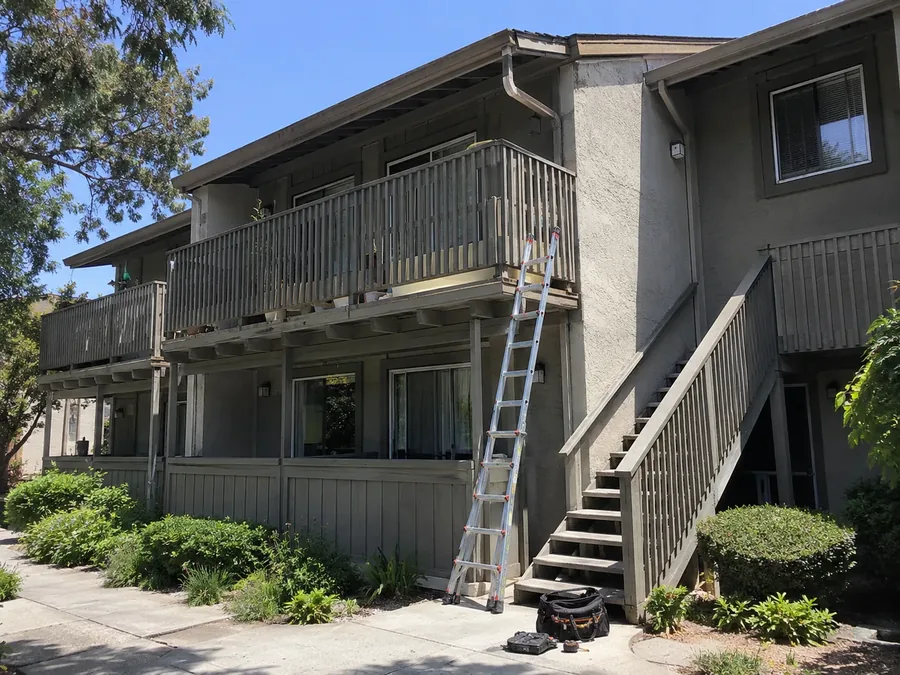
- Inspection per Civil Code §5551, by the licensed architect / structural engineer the law requires
- Random sample minimum 15% with stratification (per unit type)
- Board-ready certified report (delivered to the Secretary)
- On-site Board presentation if requested
- Coordinated per-unit owner notices and access scheduling
- Repair quote bundled if deficiencies found
- Nine-year recurrence calendar + interim maintenance plan offer
Inspected to the standard SB 326 requires — exterior elevated elements per Civil Code §5551, board-ready certified report within 14 days
06 Investment
What an SB 326 inspection typically costs
SB 326 inspections are priced fixed and scaled to the community’s balcony count — so the board can budget it cleanly through reserves with no per-visit surprises. On-site work is typically 1–3 days.
What drives the number
- Total balcony and EEE count across the community
- Number of buildings and stories in the association
- The stratified 15% sample size across unit types
- Access conditions and coordination of per-unit owner notices
- Whether any elements require additional invasive (open-up) inspection
- Coordination with the reserve study timeline and board calendar
Pricing is fixed and scaled to balcony count, confirmed once the community’s EEE inventory is verified — no obligation.
In the field
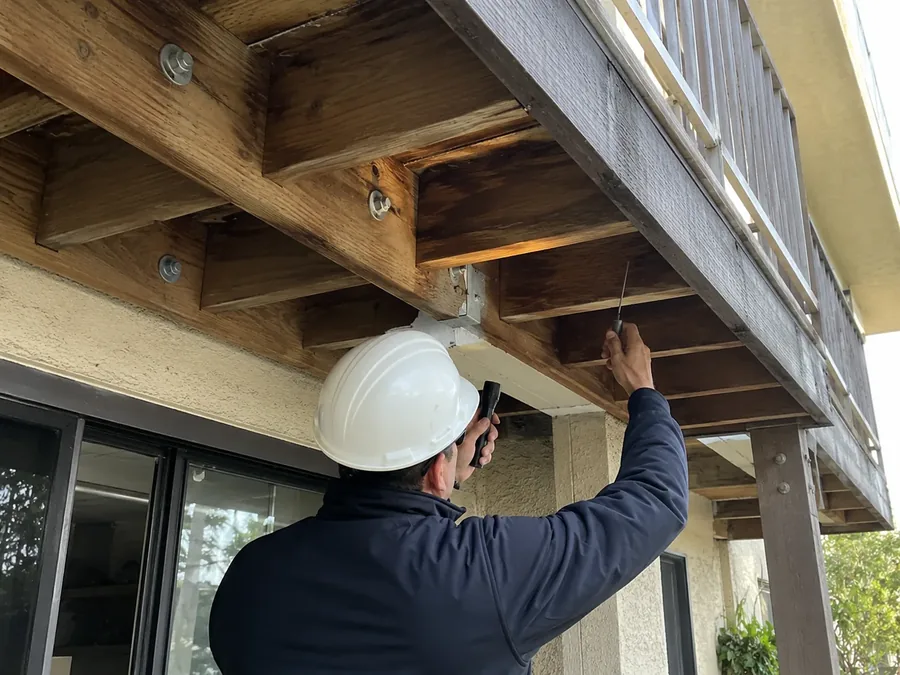
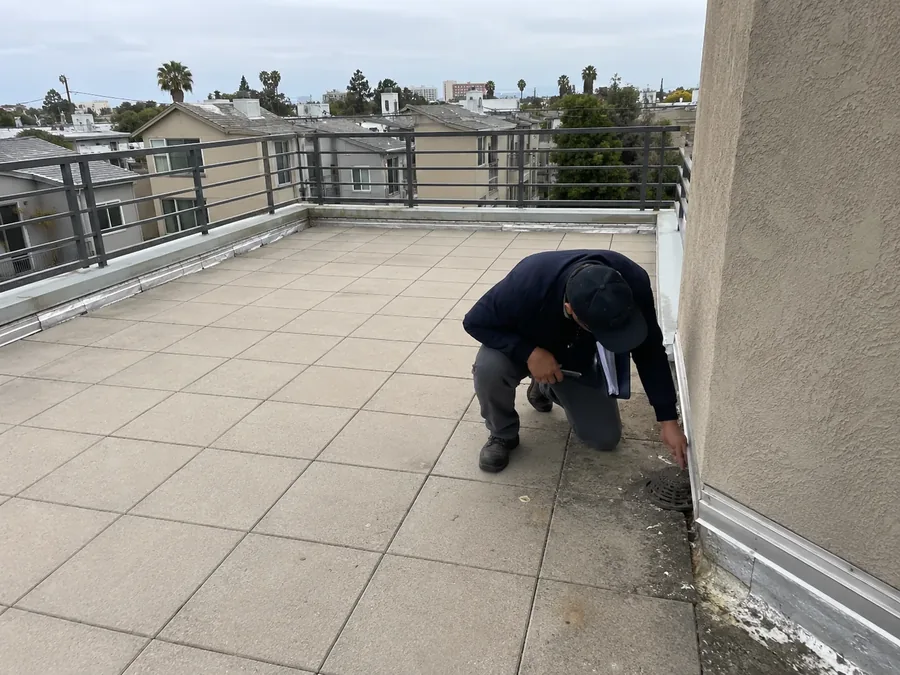
SB 326 inspection on site
Visual inspection of load-bearing components and the associated waterproofing at an HOA community.
07 Project example
A recent SB 326 inspection in Fremont
A condominium association in Fremont approached its nine-year SB 326 deadline with the board wanting it handled before it became a reserve problem — and before the master-policy carrier asked for compliance proof at renewal. We coordinated per-unit owner notices and access scheduling across the four buildings, and the licensed structural engineer §5551 requires performed the inspection over two days, working a stratified random sample by unit type. The board-ready certified report went to the Secretary in eleven days, and we presented the findings on-site at the next board meeting. Most elements were sound; a cluster of balconies on the weather-facing elevation showed early ledger water intrusion. Because the board caught it on schedule, the bundled repair quote fit inside the association’s reserve budget — no special assessment to homeowners.
They delivered a report our Secretary could file and presented it to the board in person. Caught the problem balconies early enough to fund repairs through reserves — no special assessment — and fixed them under the same contractor. Exactly what an association needs. HOA Board President · Fremont condominium community
08 Case studies
Recent Projects, Documented
Real commercial properties — what the building needed, what we did, and what it delivered.
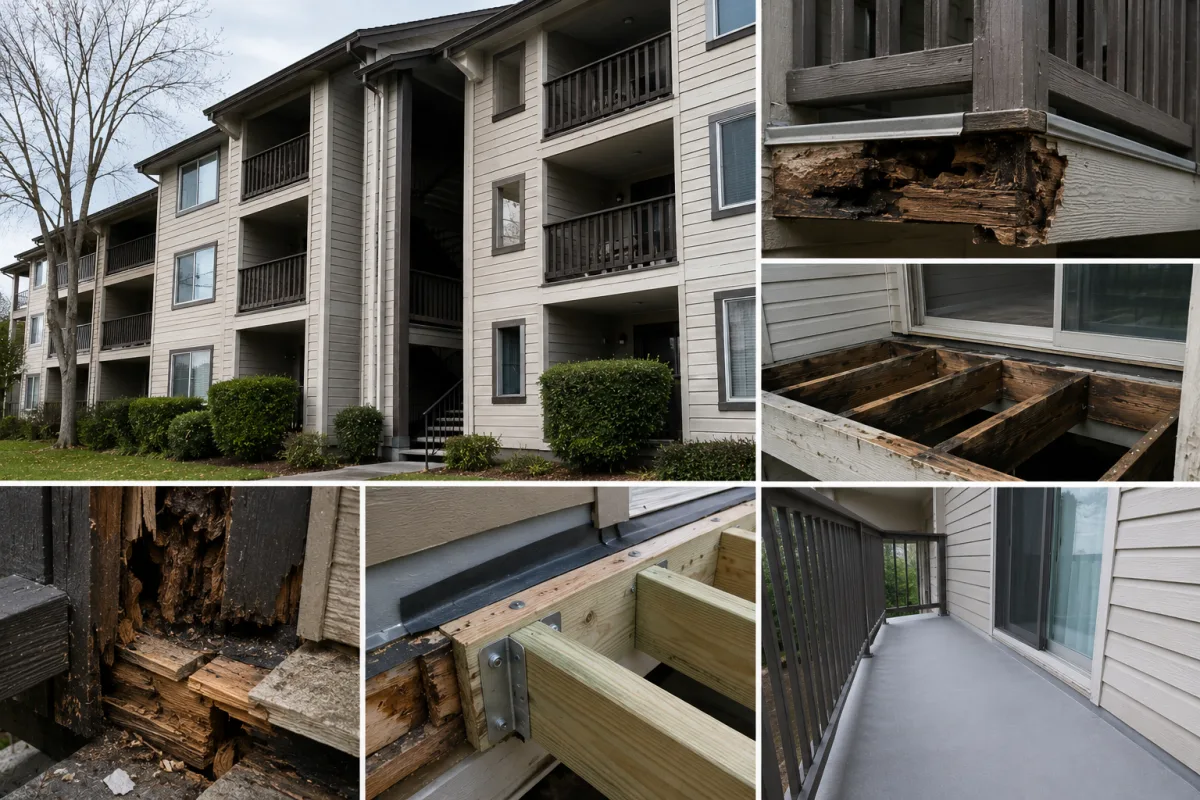
 Balcony RepairBalcony Replacement with Trex Composite Decking — 18 Balconies, AntelopeThe rot had already reached the beams and posts. We rebuilt the framing under every balcony and re-decked…View case study
  WaterproofingBalcony & Walkway Waterproofing — 12 Elevated Elements, Rio LindaThe coating still covered the middle of every walkway. It had given up at the edges, and the…View case study
  Deck RepairElevated Deck Reconstruction & Waterproofing — 24 Balconies, SacramentoOpen board decks sitting directly over enclosed garages. Every gap between the boards was a route for water…View case study
 09 Client feedback
What HOA boards say
The board-ready report dropped straight into our reserve study, and the carrier accepted it for our master-policy renewal without follow-up. Every balcony documented, stratified by unit type.
They coordinated all the owner notices and access scheduling, so the board didn’t have to chase residents. Inspected per §5551, found early water intrusion, and repaired it under one license.
Catching the problem balconies on schedule meant we funded repairs through reserves instead of a special assessment. The on-site presentation made it easy for the whole board to understand what we were voting on.
10 FAQ
SB 326 inspection questions
What is SB 326 and does it apply to our community?
SB 326 is California’s balcony inspection law for community associations, codified in Civil Code §5551. It requires HOA-managed condominium properties to have their exterior elevated elements — balconies, decks, and walkways — inspected every nine years. If your property is a condominium governed by an HOA with wood-supported EEE, it applies. Multifamily rentals without an HOA fall under SB 721 instead.
Who is legally responsible for the SB 326 inspection?
The HOA Board. Unlike SB 721, which puts the duty on a rental owner, SB 326 makes the board the legally responsible party. A board that delays or skips the inspection exposes the association — and the directors personally — to liability if a balcony failure causes injury. It’s a board-level legal duty, not an individual homeowner’s.
How often is the SB 326 inspection required?
Every nine years, aligned with the association’s reserve study cycle. We set a nine-year recurrence calendar so the board is never caught past due, and can add an interim maintenance plan to protect the assemblies between cycles.
What does a full SB 326 inspection include?
The inspection is performed per Civil Code §5551 by the licensed architect or structural engineer the statute requires, working a random sample with stratification by unit type (minimum 15%), with a board-ready certified report delivered to your Secretary and an on-site board presentation if requested. We coordinate the engineer, the per-unit owner notices, and access scheduling, and bundle a repair quote if deficiencies are found.
Will our insurance carrier require proof of SB 326 compliance?
Increasingly, yes. Carriers more and more require proof of SB 326 compliance to renew a master policy. A missing or expired inspection can become a coverage problem at renewal — which is one more reason to get the certified report on file ahead of the deadline.
Can you repair anything the inspection flags?
Yes. As a CSLB-licensed contractor, we bundle a repair quote under the same license, so the board can fund it through reserves and we perform the work — no separate bidding cycle, and the assemblies are re-documented for the compliance file.
How does this fit our reserve study?
SB 326 intentionally ties the balcony inspection to the reserve study. We deliver a report structured for reserve planning and timed to your board calendar, so any required repairs can be funded on schedule rather than through a surprise special assessment.
11 Start here
Schedule your SB 326 inspection
Get the certified inspection on file before the nine-year deadline — and before a problem balcony becomes a special assessment or a master-policy issue. Tell us about your community and we’ll coordinate owner notices and access, inspect per Civil Code §5551, and deliver a board-ready report to your Secretary, with repairs bundled under one CSLB license if needed. No obligation.
CSLB #1060736 · 9+ years · Insured & Bonded · Serving the Bay Area, Central Valley & Sacramento