Climate considerations in San Jose
San Jose sits in the South Bay’s Mediterranean climate zone — warm dry summers, cool wet winters, and consistent UV exposure year-round. Annual rainfall (around 15 inches concentrated November–March) is moderate, but seasonal thermal cycling, persistent UV load on south- and west-facing balconies, and decades of wet/dry transitions drive steady wood movement, sealant fatigue, and waterproofing membrane wear. On aging multi-family stock, untreated balconies routinely show concealed dry rot at ledger and post connections by year 12–15, with original 1970s–1990s waterproofing systems long past service life. Scheduled waterproofing, sealing, and structural inspection are essential to building longevity and liability protection.
Seismic context & pre-1997 connections
San Jose sits near several active fault lines including the Hayward Fault and Calaveras Fault. California Building Code has long included seismic provisions, but balcony connections built before the major 1997 code update routinely fall short of current seismic standards — particularly older joist hanger details, undersized fasteners, and ledger connections lacking modern hold-down hardware. When our licensed construction firm performs structural repair on San Jose balconies, we upgrade connections to current seismic detailing as a matter of best practice: hold-down hardware, seismic-rated metal connectors, and proper lateral bracing meeting the seismic design requirements for this seismic design category. The cost premium over a basic repair is modest; the structural and liability benefit is substantial.
Common building stock we work on
San Jose’s building stock spans more than a century. Pre-1940 bungalows and four-square homes in Japantown, the Rose Garden, and Willow Glen typically need railing replacement, ledger restoration, and refinishing of original wood balconies. 1950s–1970s garden apartment complexes throughout East San Jose, Cambrian, and Evergreen fall under heavy SB 721 scrutiny — most have aging fasteners, undersized seismic connections, and waterproofing systems decades past service life. 1980s–2000s condominium and townhouse developments fall under SB 326, often with cantilevered balconies needing their first major waterproofing restoration. Modern high-density transit-oriented developments along North First Street, Santana Row, and the Berryessa BART corridor are newer but already showing first-cycle waterproofing wear. Our certified construction crew scopes every project to the era, original materials, and code in effect at installation.
Districts served
Our certified San Jose crew covers Downtown San Jose, Japantown, Rose Garden, Willow Glen, Cambrian, Almaden Valley, West San Jose, Evergreen, East San Jose, South San Jose, North First Street corridor, Santana Row, the Berryessa BART corridor, and the wider San Jose community. ZIP codes include 95110, 95112, 95116, 95117, 95118, 95120, 95122, 95124, 95125, 95126, 95128, 95131, and 95133.
What we typically see
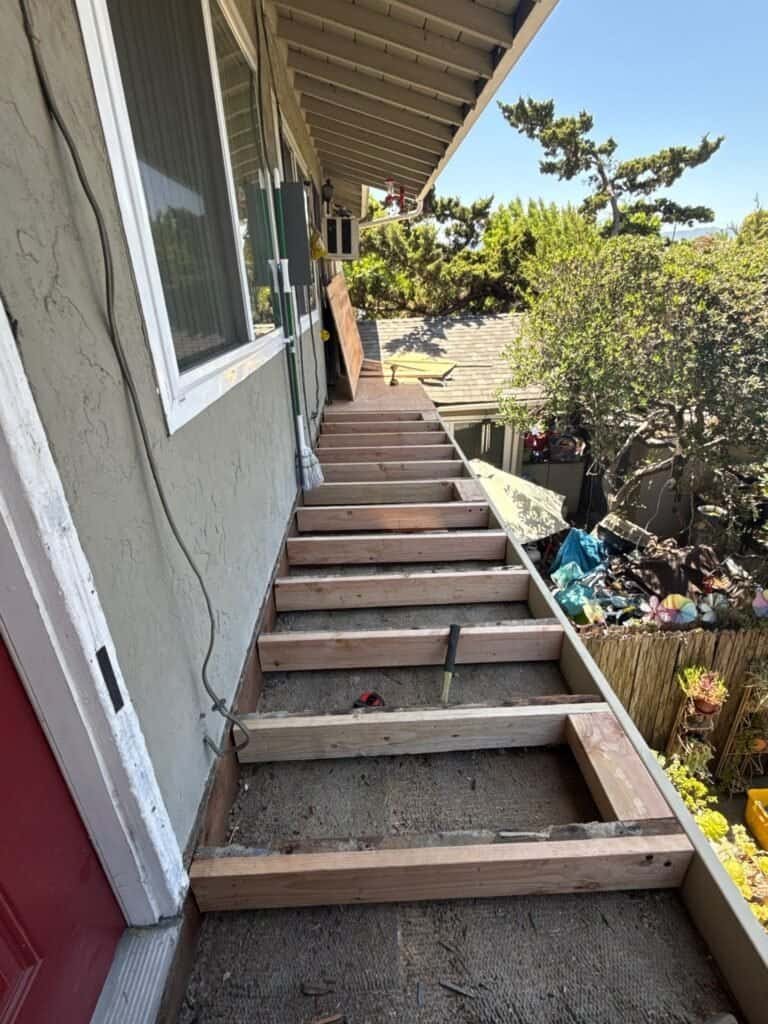
Across our San Jose inspections, our company most often documents: (1) dry rot and concealed water damage at ledger-to-rim board connections on 1970s–1990s multi-family construction — the leading cause of catastrophic balcony failure; (2) pre-1997 seismic connection deficiencies at joist hangers, post bases, and ledger attachments — a San Jose-specific concern given fault proximity; (3) waterproofing membrane fatigue and blistering on south- and west-facing balconies from cumulative UV and thermal cycling; (4) railings on pre-2000 buildings that fall short of the current CRC 42-inch height and 4-inch sphere rule; (5) corroded fasteners and weep-hole blockage on aged garden-apartment stock; (6) first-cycle waterproofing wear on modern transit-oriented developments. Every finding is captured in a written assessment with prioritized repair, replacement, or restoration recommendations.
City compliance enforcement
The San Jose Department of Planning, Building and Code Enforcement actively cross-references building records against submitted inspection reports to identify non-compliant properties. Persistent non-compliance can trigger notices of violation and escalating daily penalties. Our licensed construction firm files SB 721 and SB 326 reports electronically and tracks them through review, so San Jose property owners do not get caught in code enforcement queues.
Emergency response & remodeling
For San Jose buildings with acute safety issues — sagging framing, loose railings, visible rot at load-bearing connections, or post-seismic-event damage — our emergency repair crew responds within 24–48 hours with temporary shoring and code-compliant stabilization. We also handle full balcony and deck remodeling for property owners modernizing the look and function of older outdoor spaces while bringing the structure up to current safety and seismic code.