Commercial Railings · CSLB #1060736
Commercial Deck & Balcony Railing Repair & Replacement
Code-compliant guardrail systems — reinforcement, retrofit, or full replacement — for multifamily, mixed-use, and HOA properties across the Bay Area. Non-compliant railings are the single most common immediate-hazard finding on commercial inspections.
- CSLB #1060736 Licensed California contractor
- 9+ yrs Building commercial balconies & decks
- SB 721 / 326 Trained — we build to pass
- Commercial Multifamily, HOA & mixed-use only
Where to start
Railing Repair by Structure
A deck post anchors into framing you can reach; a balcony post anchors through the waterproofing. Different pages, different work.
CSLB #1060736SB 721 / SB 326 documentedCommercial, multifamily & HOA
Free quote · no obligation
Request a quote
This page is on its way. Tell us about the property and a licensed contractor follows up the same business day.
01 Why it matters
Non-compliant railings are the #1 immediate-hazard finding on commercial inspections
Of everything an SB 721 or SB 326 inspection flags, non-compliant railings are the single most common immediate-hazard finding on commercial deck and balcony properties. It makes sense — the guardrail is the component people trust with their full weight, on an elevated edge, often where residents gather. When it’s below the 42-inch height, has gaps wider than the 4-inch sphere rule, or moves because the anchorage has failed, it’s not a cosmetic issue. It’s a life-safety system on the way to giving out.
That’s why railings sit at the center of California’s balcony laws. The inspections evaluate every guardrail against a hard standard: 42 inches tall, no gap a 4-inch sphere can pass through, and able to take code-specified load with proper anchorage. A railing that fails that test is the finding most likely to be classified immediate-hazard — and on a commercial property, an open immediate-hazard finding is exposure that can’t sit on the file.
The right fix depends on the cause. A loose connection or a tired top rail can be a reinforcement or retrofit; a system that’s undersized, corroded, or never to code is a full replacement. Either way, the goal is the same: a guardrail that’s genuinely compliant, properly anchored, and documented — so it clears the inspection and closes the hazard.
The railing is the one component a resident trusts with their full weight — and the finding most likely to be flagged an immediate hazard.

02 The D&B difference
We match the building — and bring every system up to code
D&B repairs and replaces railing systems in steel, aluminum, powder-coated metal, glass-panel, and cable — matching the building’s era and the HOA’s aesthetic while bringing every system up to 42-inch height, the 4-inch sphere rule, and proper anchorage. Where a deck edge has no compliant guardrail at all, we handle new deck railing installation to the same standard.
The anchorage is everything
Most railing failures aren’t in the rail — they’re at the anchorage, where a failed through-bolt, post base, or mounting plate lets the whole system move. We repair and install from the connection out, into structure we’ve confirmed is sound, so the guardrail actually holds its load.
Reinforce, retrofit, or fully replace
Not every railing needs replacing. We audit each system and recommend the right level — reinforcement, a retrofit to bring it to code, or full replacement — so you’re not paying for a teardown when a retrofit closes the finding, or patching a system that’s genuinely unsafe.
Match the building, in any material
Steel, aluminum, powder-coated metal, glass-panel, cable, composite, and thermally-modified wood — we install all of them and finish in your HOA or brand color. The system matches the building’s era and aesthetic while meeting current code, so compliance doesn’t cost you the look.
03 · Service Areas
Where We Work in California
Every city links to a dedicated local page — crews, recent projects and compliance details for that area.
Sacramento Metro
11 cities
East Bay
18 cities
Don’t see your city? We likely still cover it — call (916) 848-2728.
04 How a project runs
From code audit to a documented, load-tested railing
-
01
Code audit
We audit each railing against the standard — height, the 4-inch sphere rule, load capacity, and anchorage — and determine whether it needs reinforcement, retrofit, or full replacement.
-
02
Material & match
We recommend the right system and material to match the building’s era, the HOA’s aesthetic, and the budget, with powder-coat finishing in your HOA or brand color where applicable.
-
03
Repair, retrofit, or replace
Our crew replaces hardware — through-bolts, post bases, mounting plates — rebuilds the top rail, or removes and replaces the full system, anchoring into sound structure.
-
04
Load test & sign-off
We load-test the guardrail and provide documented sign-off against the 42-inch height, 4-inch sphere, and anchorage requirements.
-
05
Waterproofing integration & handoff
We integrate the railing connections with the adjacent deck waterproofing membrane so the new anchorage doesn’t become a new leak path — and document the work for your compliance file.
05 Scope
What’s included in D&B railing work
A complete deck and balcony railing service — code audit, reinforcement, retrofit, or full replacement, in any material, load-tested and documented.
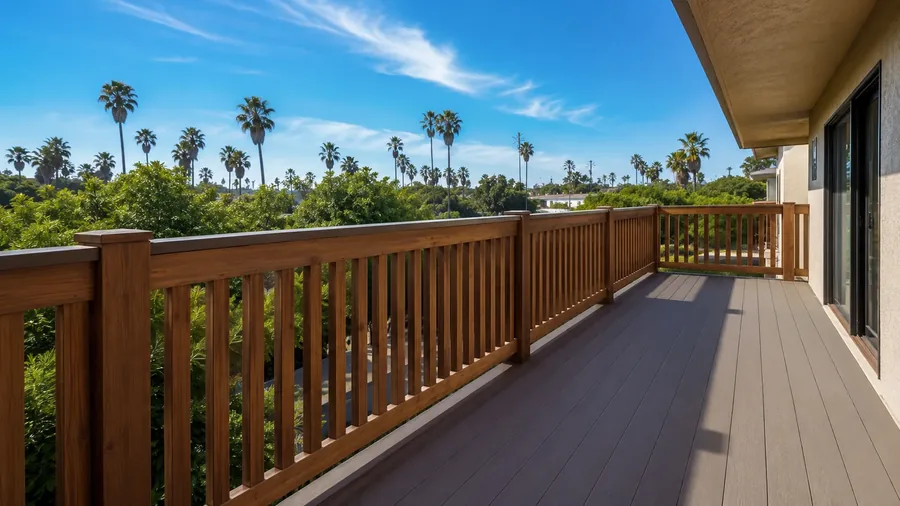
- Code audit — height, sphere rule, load capacity, anchorage
- Hardware replacement — through-bolts, post bases, mounting plates
- Top rail rebuild — powder-coated steel, aluminum, composite, thermally-modified wood
- Full system replacement — cable, glass, picket, panel
- Powder-coat finishing in HOA / brand color
- Load test + documented sign-off
- Integration with adjacent deck waterproofing membrane
Built to current code: 42″ guardrail height · 4″ sphere rule · code-specified load capacity · proper anchorage · documented for SB 721 / SB 326
06 Investment
What railing work typically costs
Railing work is quoted per linear foot installed, but the real cost depends on material, the level of work — reinforcement versus full replacement — and the condition of the anchorage behind it. These ranges reflect typical recent installed work.
What drives the number
- Reinforcement or retrofit versus full system replacement
- Material — steel, aluminum, powder-coated metal, glass-panel, or cable
- Condition of the anchorage and the structure behind it
- Powder-coat finishing in a specific HOA or brand color
- Total linear footage across decks, balconies, and stairs
- Site access and phasing around occupied units
Ranges reflect typical recent commercial installed work and vary by material and linear footage. Final pricing follows an on-site code audit — no obligation.
In the field
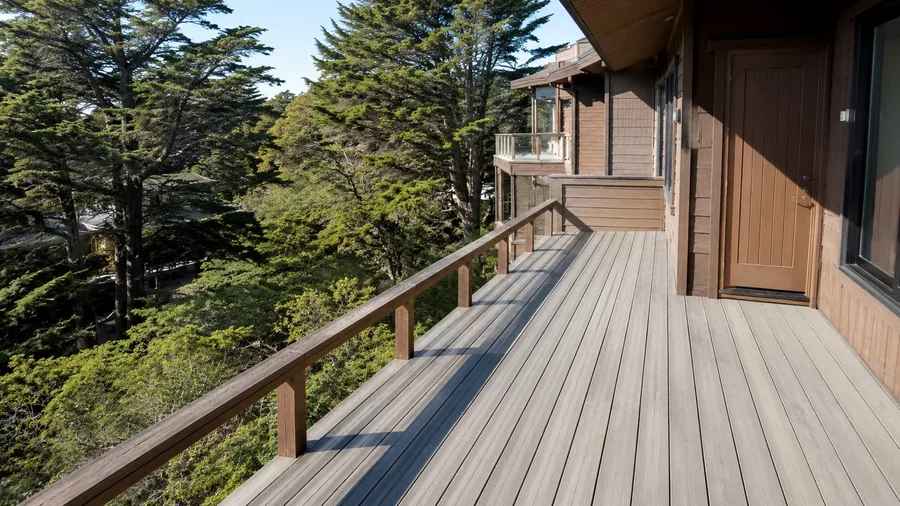
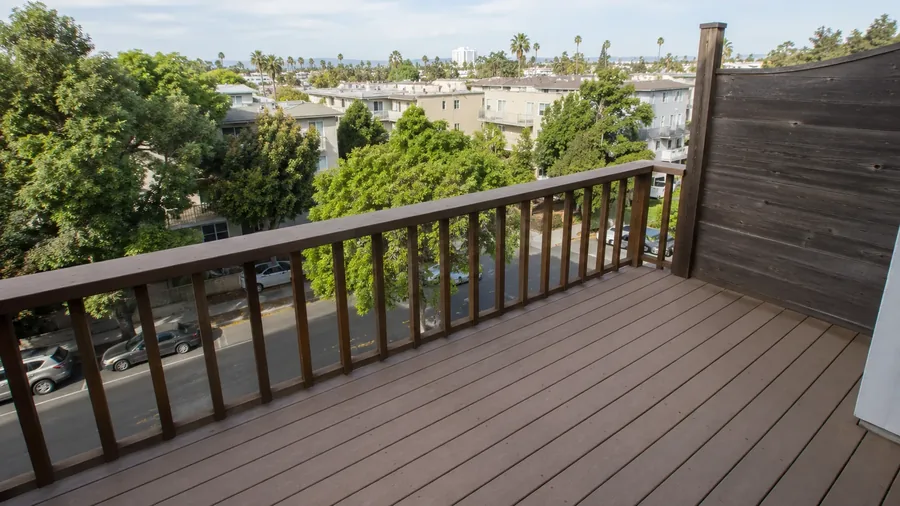
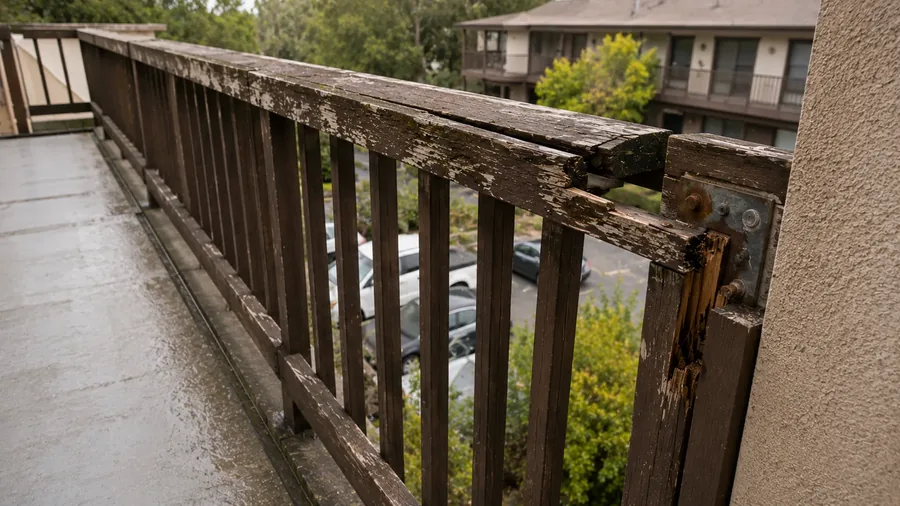
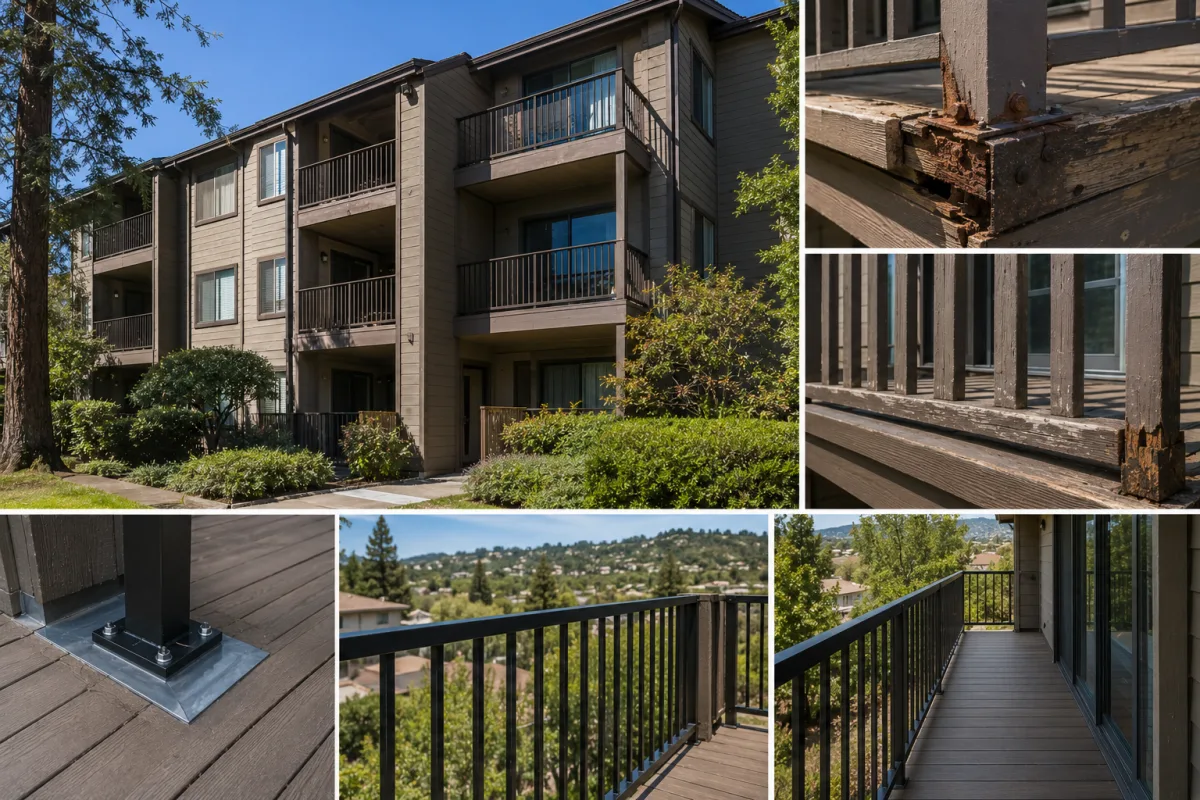
Railing failures we’re called for
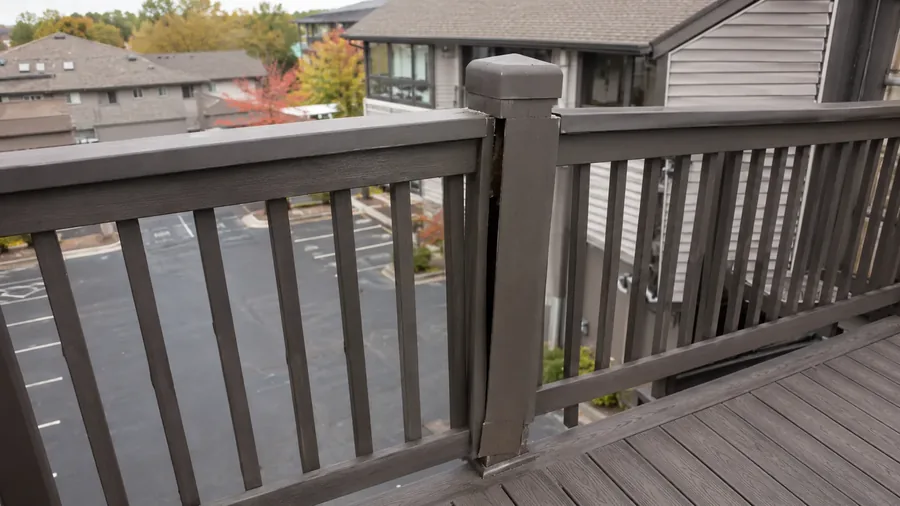
Loose posts, rotted connections and non-compliant heights — the findings behind most railing scopes.
07 Project example
A recent railing replacement in Walnut Creek
An HOA condominium in Walnut Creek had its SB 326 inspection flag 14 balcony railings as immediate-hazard — original systems sitting below 42 inches with picket spacing that failed the 4-inch sphere rule, and several with corroded post bases letting the whole rail move. The board needed the hazards closed and the look kept consistent across the community. We ran a code audit on every railing, replaced the failed hardware and anchorage, and installed powder-coated aluminum guardrail systems to current code — correct height, compliant spacing, proper through-bolted anchorage — finished in the association’s existing color so the buildings stayed uniform. We load-tested each system, integrated the new post connections with the balcony waterproofing membrane so the anchorage didn’t become a leak path, and provided documented sign-off for the compliance file. Every immediate-hazard finding closed.
Our SB 326 inspection flagged 14 railings as immediate hazards. D&B replaced them all to code, matched our community color so the buildings still look uniform, and documented every load test. The hazards are closed and the board can breathe. HOA Board President · Walnut Creek condominium community
08 Case studies
Recent Projects, Documented
Real commercial properties — what the building needed, what we did, and what it delivered.
 Deck RepairPrivate Deck & Guardrail Rebuild Across a Residential Community — Los AltosUnit-by-unit deck replacement where the guardrail was the real finding — railing posts rotted through at the rim,…View case study
  Deck RepairTrex Deck, Walkway & Stair Replacement — 12-Unit Apartment Community, Menlo ParkResidents walked the same tired wood the whole way from the parking lot to their front door —…View case study
  WaterproofingBalcony Waterproofing & Reconstruction — Apartment Walkway, San JoseThe walkway read as concrete and the railing read as tired. Both were wrong: the surface was a…View case study
 09 Client feedback
What property owners say
Half our balcony railings failed the SB 721 inspection on height and spacing — flagged as immediate hazards. D&B replaced them across the building, all load-tested and documented, and we cleared the re-inspection clean.
They didn’t just swap the rail — they showed us the corroded post bases that were the real problem and fixed the anchorage first. And they integrated the connections with our waterproofing so we didn’t trade a railing problem for a leak.
Powder-coated to match our existing color so the property stayed consistent. Fair price per linear foot, and the documented sign-off went straight into our file.
10 FAQ
Deck & balcony railing questions
Why are railings the most common immediate-hazard finding?
Because they’re the component most exposed to both wear and code change. Older guardrails were often built below today’s 42-inch height or with spacing that fails the 4-inch sphere rule, and anchorage corrodes over time. Since the railing is a fall-protection system on an elevated edge, an inspector flags a failed one as an immediate hazard — the most urgent classification.
Does my railing need reinforcement, a retrofit, or full replacement?
It depends on the code audit. A sound system with a failed connection may only need reinforcement or hardware replacement; a system that’s close to code can sometimes be retrofitted; one that’s undersized, corroded, or never compliant needs full replacement. We audit height, sphere rule, load capacity, and anchorage, then recommend the least invasive option that actually closes the finding.
Why does my deck railing feel loose or wobbly?
Almost always the anchorage, not the rail itself. A failed through-bolt, corroded post base, or pulled mounting plate lets the whole guardrail move. Tightening the rail doesn’t fix it — the hardware and any compromised structure behind it have to be repaired. That’s where our code audit starts.
What does railing replacement cost?
Railing work typically runs $150–$400 per linear foot installed, depending on material, whether it’s a retrofit or full replacement, and the condition of the anchorage. We quote per linear foot after an on-site code audit, with the anchorage condition factored in.
What railing materials and finishes do you offer?
Steel, aluminum, powder-coated metal, glass-panel, cable, composite, and thermally-modified wood — for decks, balconies, and stairs. We powder-coat in your HOA or brand color so the system matches the building’s era and aesthetic while meeting current code.
Will the railing pass an SB 721 or SB 326 inspection?
Yes — that’s the standard we build to. Every guardrail we repair or replace meets the 42-inch height, 4-inch sphere rule, code-specified load capacity, and proper anchorage, and we load-test it with documented sign-off for your compliance file so it closes the finding.
Do you coordinate the railing work with our waterproofing?
Yes, and it matters. New post anchorage penetrates the deck surface, so we integrate the connections with the adjacent waterproofing membrane — otherwise a new railing can become a new leak path. Doing both under one contractor keeps that interface owned.
11 Start here
Start with a railing code audit
Railings flagged as a hazard, sitting below code, or loose at the anchorage? That’s the most common immediate-hazard finding — and the one to close first. Tell us what you’re dealing with and we’ll audit every guardrail against height, the 4-inch sphere rule, load, and anchorage, then reinforce, retrofit, or replace in the right material and finish. No obligation.
CSLB #1060736 · 9+ years · Insured & Bonded · Serving the Bay Area, Central Valley & Sacramento