Amador Valley coverage
Callback the same business day for Pleasanton. We're 87 miles out at the I-580 / I-680 crossroads, so we schedule the Amador Valley in blocks and bring the whole job in one mobilization rather than five separate trips.
Commercial Balcony & Deck Specialists · CSLB #1060736
Pleasanton incorporated in 1894 and kept its downtown, which means Main Street still holds buildings older than the state's first building code - and downtown, every permit goes through design review before it goes anywhere. North of the freeway it's a different city entirely. Licensed CA contractor serving Downtown, Vintage Hills, Hacienda, and Stoneridge with SB 721 and SB 326 inspections, deck repair, and waterproofing.
02 / Local Presence
03 / Why D&B for Pleasanton
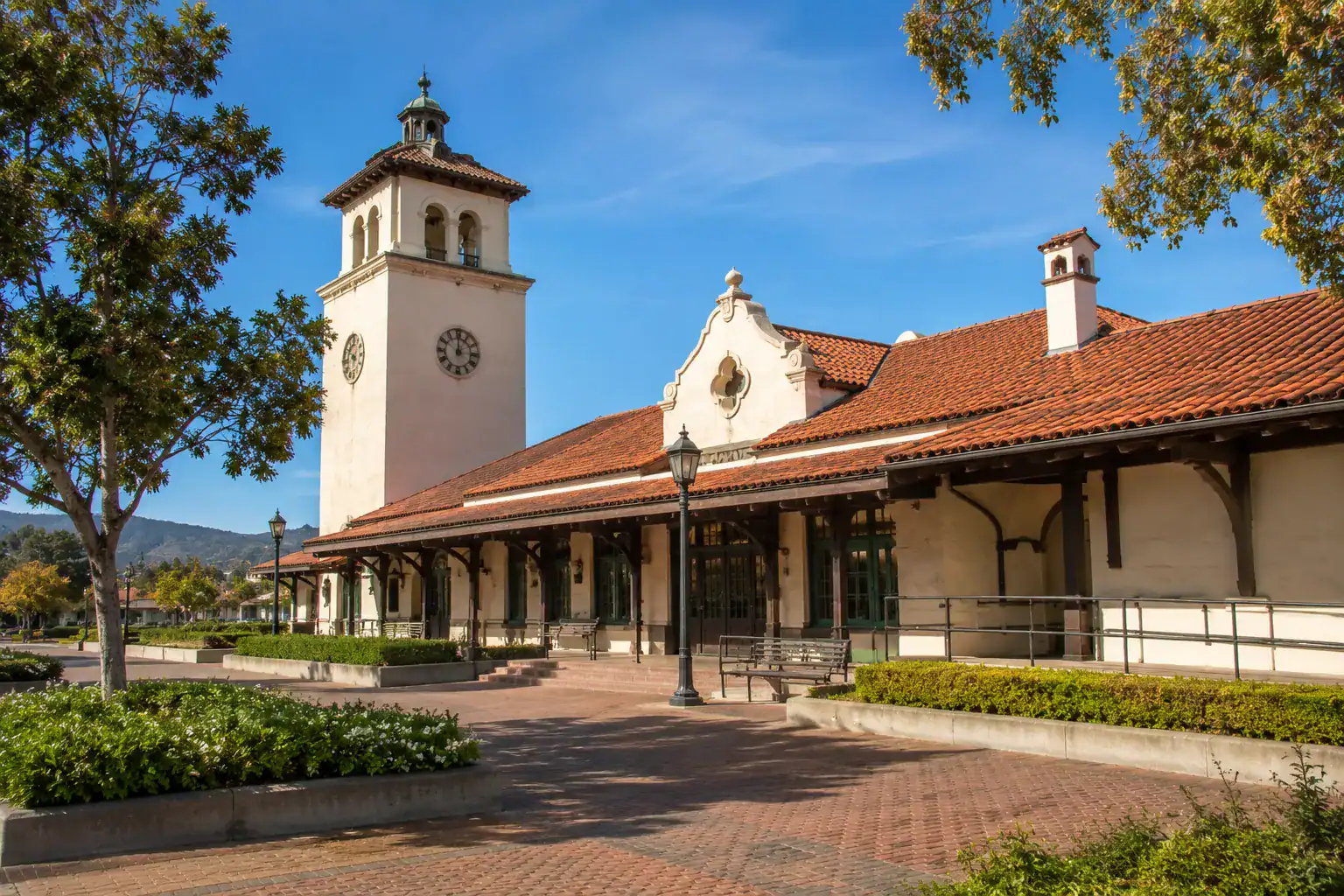
Callback the same business day for Pleasanton. We're 87 miles out at the I-580 / I-680 crossroads, so we schedule the Amador Valley in blocks and bring the whole job in one mobilization rather than five separate trips.
We've inspected and repaired balconies on 240+ Pleasanton-area properties since 2019 - Main Street stock from before the turn of the last century, 1960s-70s buildings south of the freeway, and the Hacienda-era multifamily north of it.
SB 721 and SB 326 inspection reports filed with the City of Pleasanton when required. We handle the paperwork.
04 / Free Assessment
Tell us about your building(s) - we'll send scheduling that accounts for Pleasanton's review timelines, transparent multi-building pricing, and handle SB 721 / SB 326 compliance filing with the City of Pleasanton end-to-end.
Or call us now: (916) 848-2728
05 / Process
Same business day
Submit the form or call (916) 848-2728. We answer questions, discuss your Pleasanton building situation, and schedule a free on-site assessment with a licensed contractor.
Within 24–48 hours
A licensed contractor walks the property, photographs every balcony and EEE element, and identifies SB 721 / SB 326 issues, water-damaged framing, fastener and connector fatigue, and railing concerns. ~60 minutes.
Within 2–3 business days
Itemized scope, transparent multi-building pricing, repair-vs-replacement options. For SB 721 / SB 326 jobs we file the inspection report with the City of Pleasanton.
Most jobs start 2–3 weeks
Permits pulled through the City of Pleasanton Community Development Department, Building & Safety Division - everything runs electronically through Accela Citizen Access, no paper. Pleasanton is honest about its timelines: three weeks for the first plan review on alterations and additions under 1,000 square feet, five weeks when multiple divisions are involved, and no fast track. We build that into the schedule rather than discovering it. Downtown, design review runs in parallel. Work executed by our in-house CSLB-licensed construction crew. Final walkthrough, photo documentation, warranty paperwork.
06 / Services
Pleasanton has recorded 115°F and it has recorded 17°F - a 98-degree spread on the same assemblies. Rainfall is modest out here; Livermore, six miles east, normals under 15 inches. So the thing that ages a Pleasanton balcony isn't water volume, it's range: the expansion and contraction that walks a fastener loose and opens a joint the water then finds. Here's where we lead.
Mandatory exterior elevated element inspection services for 3+ unit multifamily buildings and HOA-managed condominiums across Pleasanton and the Amador Valley.
Joist replacement, ledger fix, post-tension repair, code-compliant railing reinforcement.
Elastomeric membrane installation, sealing, resurfacing, and drainage correction specified for high thermal movement rather than high rainfall.
Load-bearing capacity, wood rot analysis, connection integrity verification.
07 / Investment Ranges
Final estimate after on-site visit. Ranges below reflect 90% of recent Pleasanton-area commercial work. Actual pricing depends on building size, materials, access, and site conditions.
Required compliance
$400–$800per building
On-site visual + structural review, written report filed with the City of Pleasanton.
Most common
$2,500–$8,000per balcony
Joist replacement, ledger fix, railing reinforcement, board replacement. Waterproof recoat $3K–$12K.
Highest value
$15,000–$45,000per balcony
Complete tear-down, new framing, waterproof, railings, code-compliant. Volume pricing for 5+ buildings.
We never quote a final price without an on-site visit. Free assessment takes ~60 minutes — no commitment, no pressure.
09 / Client Voices
Our building is on Main Street and the last contractor didn't know the demolition even went to the Planning Commission. D&B did. They flagged the certificate of appropriateness before we signed anything, ran it alongside the building permit, and the balcony came out looking like it belonged on the building.
Twenty-six balconies, one 1985 complex, and every single connector had walked loose in the same way. They explained it as thermal cycling rather than water, which finally made sense of why our recoats kept failing. Fixed the cause instead of the symptom.
They told us upfront that Pleasanton doesn't do fast track and the first plan review would take three weeks. It took three weeks. Nobody else set expectations we could actually plan a tenant notice around.
10 / Local Context
Pleasanton sits in the Amador Valley at the crossroads of I-580 and I-680, far enough inland that the marine air thins and the valley behaves like a valley. The number that matters here isn't rainfall – Livermore, six miles east, normals under fifteen inches – it's range. Pleasanton's recorded high is 115°F, set in 1950; its recorded low is 17°F, in 1990. A 98-degree spread across the same wood, the same fasteners, the same membrane. That range is what fatigues an assembly in a dry climate: aluminum flashing grows and shrinks against wood that moves at a different rate, a lag bolt works a fraction looser every cycle, a sealant joint loses its elasticity years before it looks failed, and then one wet January finds the gap. The water gets blamed. The heat did the work.
Pleasanton was incorporated on June 18, 1894 – eighty-nine years before San Ramon up the freeway – and unlike most of this region it kept what it built. Because the historic downtown was preserved rather than cleared, Main Street still carries examples going back to the mid-19th century; Kolln Hardware at 600 Main went up in 1890 and is still standing. That stock is Renovation & Remodel work, not checklist work, and it comes with a rulebook: downtown sits inside the Downtown Revitalization District, where the zoning administrator reviews the design of every improvement requiring a permit, and no structure of primary or secondary significance can be demolished – in whole or in part – without a certificate of appropriateness from the Planning Commission. South of the freeway, 94566 is mostly 1960s and 70s. North of it, 94588 is the Hacienda era: ground broke on the 850-acre business park in 1982, on land that had been swamp and was nearly a mobile home park, and the multifamily followed the offices. That split shows in the numbers – 94588 runs 36.9% renter-occupied against 94566's 29.4%.
Downtown, Main Street, Bernal, Vintage Hills, Harvest Park, Ruby Hill, Hacienda, Stoneridge, Hopyard, Santa Rita, Pleasanton Ridge, Shadow Cliffs, and the wider Amador Valley. ZIP codes 94566 and 94588.
In Pleasanton we most often address: (1) connector and fastener fatigue driven by thermal range rather than rot – lag bolts and hangers that have cycled through ninety-eight degrees of movement for forty years and no longer hold what they're rated for; (2) sealant and flashing joints that failed years before anyone could see it, which is why a recoat over an unaddressed joint buys about two seasons; (3) original framing behind masonry facades downtown, where the wall is 1890s and the balcony is whatever got added in 1975, and the two are connected in ways nobody documented; (4) decking and guard material on the west side against Pleasanton Ridge, where the city maintains a Wildland Urban Interface map – inside it, the ignition-resistant requirements make Deck Installation a specification question before it's a scope question.
11 / More Service Areas
Every city links to a dedicated local page — crews, recent projects and compliance details for that area.
Don’t see your city? We likely still cover it — call (916) 848-2728.
12 / Common Questions
$400-$800 per building for a 3-8 unit property. Where Pleasanton diverges from the range is downtown: on a Main Street building we're documenting how a modern element got attached to a hundred-year-old wall, and that walk takes longer and matters more than the same walk on a 1985 complex off Hopyard. The site visit that tells us which one you have is free either way.
Substantially, and the surprise is usually the demolition. Downtown Pleasanton is a Revitalization District: the zoning administrator reviews the design of every improvement that needs a permit, licence or certificate, and applications can't be approved unless they're consistent with the adopted downtown design guidelines. More to the point for balcony work - no structure of primary or secondary significance can be demolished or removed without a certificate of appropriateness from the Planning Commission, and the chief building official forwards every demolition application there on receipt. Cutting out a rotted balcony is a demolition. If your building is on that list, that approval is your critical path, not the building permit, and it needs to start first.
Cosmetic work and straight recoating generally don't. Structural work does, through the Community Development Department's Building & Safety Division, submitted electronically through Accela - Pleasanton takes no paper. Two things worth knowing before you promise a date. Exterior work on an unreinforced masonry building triggers discretionary design review, which matters downtown. And covered front porches in the front setback in the R-1 and RM districts go to design review as well, so a porch guard replacement can pull Planning into what you assumed was a Building-only job - we scope Railing Repair & Replacement with that routing already assumed.
Callback the same business day, on-site within 48 hours. Straight answer on distance: Pleasanton is 87 miles from our North Highlands yard, so we aren't the crew you call for something in the next hour. We schedule the Amador Valley in blocks and bring the full crew and materials in one mobilization, which for a multi-building association means one disruption instead of four. Genuine safety issues we move on immediately regardless. Worth setting expectations on the other end too: the city states plainly that first plan review runs three weeks for alterations under 1,000 square feet and five for multi-division projects, and that fast track is generally not available.
Ownership structure decides it. HOA-governed condominiums are SB 326, nine-year cycle. Non-HOA rental buildings of three or more units are SB 721, six-year cycle. In Pleasanton the split is geographic and you can almost draw it on the freeway: 94588, north, built out around Hacienda after 1982, runs 36.9% renter-occupied and is where most of the SB 721 Inspection work sits. 94566, south, is 29.4% renter and leans owner-occupied and association-governed. We'll tell you which you are before you spend anything.
Probably not, and Pleasanton is better than most on this. Under the city's Building Administrative Code, the Building & Safety Division keeps an official copy of the plans for every building it permits, for the life of the building - and while that filing requirement is waived for ordinary small dwellings, it is expressly not waived for common interest developments. If your association's buildings were permitted here, the city should still hold the original set. That matters for an SB 326 inspection: knowing how the ledger was actually detailed in 1987 is the difference between opening one bay to confirm and opening six to find out. We pull the record before we quote.
13 / Free Property Inspection
No commitment. Same-day callback. Licensed, insured & bonded. We file SB 721 / SB 326 reports with the city on your behalf.
