SB 721 deadline has passed. Penalties run $100–$500/day per building — schedule your inspection today. SB 721 past due Get compliant 

Licensed California Contractor · CSLB #1060736 · Insured & Bonded

Decks Balcony Request an Inspection

HomeService AreasBenicia

Commercial Balcony & Deck Specialists  ·  CSLB #1060736

SB 721 Compliance & Balcony Repair for Benicia Commercial Properties

A great deal of what we attach things to in Benicia is brick and sandstone laid in the 1850s, which is a completely different proposition from fastening into wood framing — and in salt air, a steel anchor set into old masonry can end up damaging the wall it was meant to hold. Knowing that before you drill is most of the job here. Licensed California construction contractor serving Downtown Benicia and First Street, the Arsenal, Southampton, Bayshore, Semple Crossing, Dillon Point, and the waterfront district with SB 721 inspections, structural repair, railing replacement, and waterproofing services.

9+ YearsCalifornia Licensed 240+Benicia properties SB 721 / 326Compliance Specialists

02 / Local Presence

  • 240+ jobs in Benicia area
  • 71 mi from our North Highlands HQ
  • 24 hrs avg response time
  • $0 on-site assessment fee

03 / Why D&B for Benicia

Local response. Compliance experts.

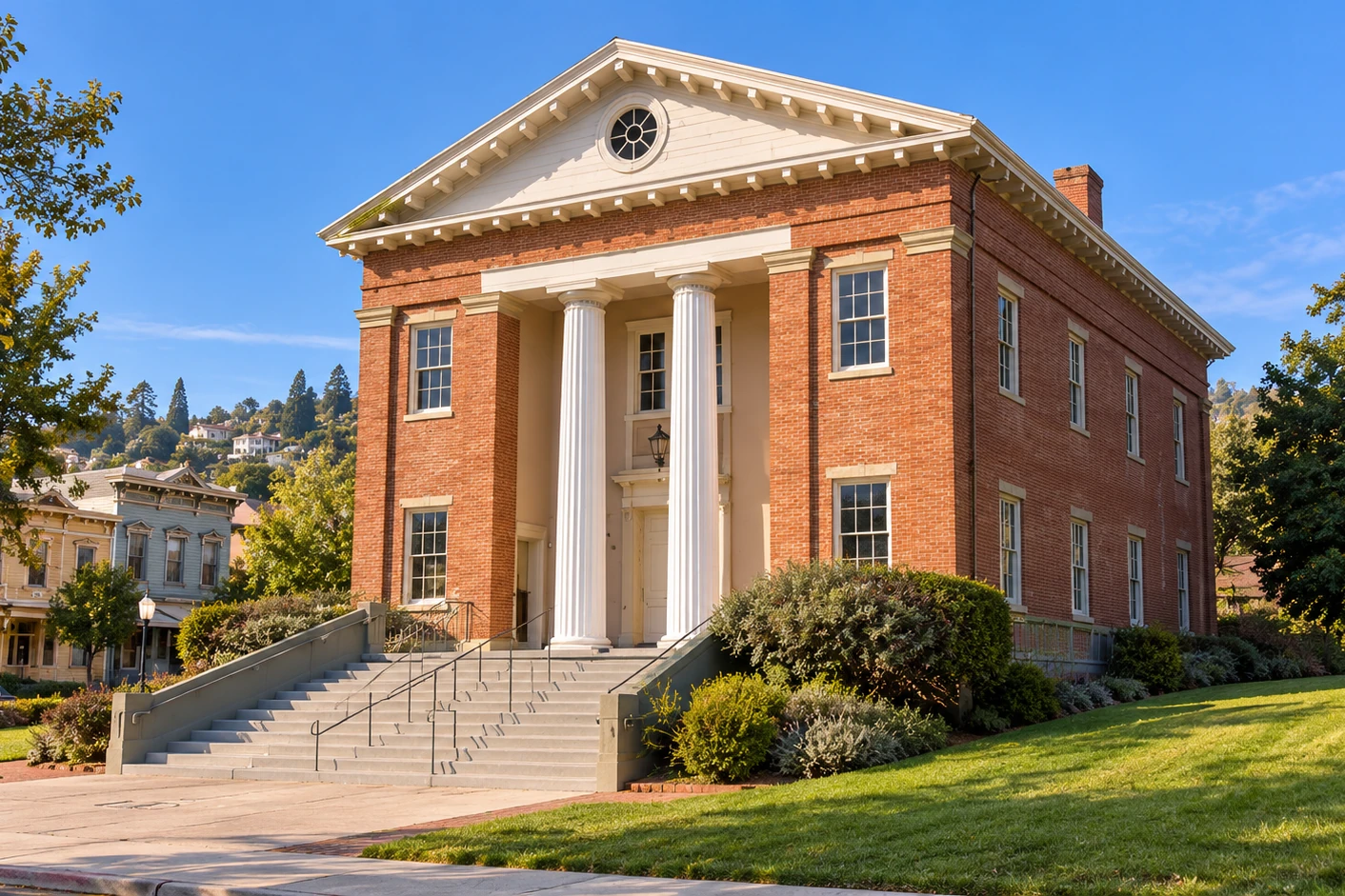
Historic downtown Benicia, California, with the 1850s Capitol building

Fast local response

Same-day callback for Benicia property owners and managers. Our licensed contractor crew schedules on-site assessments within 24–48 hours across Downtown Benicia, the Arsenal, Southampton, Bayshore, Semple Crossing, and the waterfront district.

Benicia familiarity

Our construction company has inspected, repaired, and restored elevated structures across Benicia's full range — from 1850s masonry in the Arsenal and First Street's Victorian commercial stock to post-war housing in Southampton and the newer waterfront development.

Historic-masonry & marine-exposure specialists

SB 721 and SB 326 inspection reports filed with the City of Benicia when required. Our certified firm anchors into historic brick and stone by method rather than by habit, and inspects embedded hardware in masonry for the corrosion that marine air drives — which is a problem for the wall, not just for the fixing.

04 / Free Assessment

Get a free deck & balcony assessment in Benicia

Tell us about your property — we'll send same-week scheduling, transparent pricing, and handle SB 721 / SB 326 compliance filing end-to-end with the City of Benicia, with substrate and anchoring conditions established before anything is specified.

  • SB 721 / SB 326 inspection reports filed with the City of Benicia — we handle the paperwork
  • Anchoring method established against the actual substrate, not assumed from the elevation
  • Embedded hardware in masonry inspected for corrosion and the damage it causes around it
  • Professional licensed CA contractor · Insured & Bonded

Or call us now: (916) 848-2728

05 / Process

From your message to a finished property

  1. Reach out

    Same business day

    Submit the form or call us. We answer questions, ask what the structure is attached to and roughly when the building went up, and schedule a free on-site assessment with a licensed contractor.

  2. On-site assessment

    Within 24–48 hours

    A licensed contractor walks the property, photographs every deck, balcony, stair, and EEE element, examines the substrate and anchoring at every attachment point, and identifies SB 721 / SB 326 issues, dry rot, corrosion, or railing concerns. ~60 minutes.

  3. Written report & estimate

    Within 2–3 business days

    Itemized scope, transparent pricing, repair-vs-replacement options. For SB 721 / SB 326 jobs we file the inspection report with the city. Where a structure is anchored into historic masonry, the report addresses the condition of the wall around the anchors as well as the condition of the structure itself.

  4. Schedule and execute

    Most jobs start 2–3 weeks

    Permits pulled through the City of Benicia when required, historic review coordinated where the building calls for it, work executed by our in-house CSLB-licensed construction crew. Final walkthrough, photo documentation, warranty paperwork.

07 / Investment Ranges

Typical pricing for Benicia commercial jobs

Final estimate after on-site visit. Ranges below reflect 90% of recent Benicia work. Substrate is the variable that moves pricing most here — anchoring into 1850s brick is slower, needs different hardware, and sometimes needs engineering input, and we identify that at the assessment rather than mid-job.

Required compliance

SB 721 / SB 326 Inspection

$400–$800per building

On-site visual + structural review, written report filed with City Code Enforcement.

Most common

Balcony / Deck Repair

$2,500–$8,000per balcony

Joist and bearing work, anchor replacement, railing reinforcement, board replacement. Waterproofing recoat $3K–$12K.

Highest value

Full Balcony Rebuild

$15,000–$45,000per balcony

Complete tear-down, new framing, anchoring specified for the substrate present, waterproofing, code-compliant custom railings, historic-review documentation where required.

We never quote a final price without an on-site visit. Free assessment takes ~60 minutes — no commitment, no pressure.

09 / Client Voices

From Benicia property managers

We had cracking around the anchors on our Arsenal building and assumed the brick was simply old. Their licensed contractor team explained that the steel inside was corroding and expanding, and that the brick was being broken from within rather than just weathering. They replaced the anchors properly and were straight that the masonry repair itself was a different trade.

T.P. · Property Owner · The Arsenal · Sep 2026

A previous contractor had put expansion anchors into First Street brick and two of them had split the units outright. Their certified construction company used an approach suited to soft historic masonry instead and explained why the first attempt had failed. Costlier and obviously correct.

G.H. · Building Owner · Downtown Benicia (First Street) · Aug 2026

Our Southampton property is ordinary post-war construction and I half expected to be sold the historic-building treatment. Their insured team scoped it as the straightforward job it was. They clearly know the difference between the two halves of this town.

P.A. · Property Owner · Southampton · Jul 2026

10 / Local Context

Historic fabric, exposure & building stock in Benicia

Climate considerations in Benicia

Benicia sits on hilly ground on the north side of the strait, in the path of the wind that funnels through the gap. Summers are warm rather than hot, winters are cool and wet with roughly 18–20 inches of rain concentrated between November and March, and marine air and fog are present through much of the year. Humidity stays elevated and there is no sustained hot dry stretch to drive accumulated moisture back out of a structure, so decay progresses slowly and quietly. Wind drives rain into junctions and seams that would shed vertical rain without trouble, and it carries marine moisture inland across the whole city rather than leaving it at the shoreline. For most of our service area that combination describes the main problem. Here it describes the setting for a different one.

Attaching to masonry that predates the state

Benicia was incorporated in 1850 and briefly served as the state capital, and a substantial amount of the fabric from that period is still standing and still in use — brick and sandstone laid in the early 1850s, Victorian commercial buildings on First Street, and the Arsenal’s military structures. Attaching a deck, stair, landing, or balcony to any of it is a different operation from fastening into wood framing, and the differences are not optional. Historic brick and the soft lime-based mortar of that era have far lower capacity than modern masonry, so hardware sized by habit can simply pull out. Expansion anchors, which work by forcing the material apart, can split old brick outright — we have been called to buildings where a previous attempt did exactly that. The appropriate approach depends on the substrate and the load, and on some buildings it needs engineering input to establish what the wall can actually carry. That determination is made by assessment rather than assumed from the elevation, and where a wall itself needs work, that is historic masonry restoration — a different trade from ours, and we say so rather than attempting it.

When the anchor damages the wall

This is the condition most often misread here, and it is specific to the combination Benicia has: old masonry in marine air. Steel embedded in masonry corrodes, and corroded steel occupies more volume than the metal it came from. In a wall, that expansion has nowhere to go, so it pushes outward against the surrounding brick or stone — cracking it, spalling the face, and opening paths for more moisture to reach the steel and accelerate the process. Marine humidity makes it faster here than it would be inland. The visible result is cracking and loss around an anchor point, which owners very reasonably read as the masonry weathering with age. It is not. The wall is being broken from the inside by the hardware that was supposed to be holding something to it, and replacing the surface without addressing the corroding steel behind it buys very little time. We inspect embedded hardware specifically for this on historic buildings, and we report on the condition of the material around an anchor rather than only on the anchor itself.

The Arsenal: adaptive reuse at scale

The Arsenal operated as a military facility for well over a century and its stone and brick buildings have since been reused as studios, workshops, offices, light industrial space, and in places residential. Adaptive reuse means modern elevated elements — egress stairs, access platforms, mezzanine landings, balconies — attached to structures built for entirely different purposes with entirely different construction. Every one of those attachments raises the substrate question set out above, often on buildings where the original fabric is itself significant and where exterior modification may require review by the city before it proceeds. Our licensed construction firm scopes Arsenal work with both considerations in from the start: what the wall will carry, and what the approval path is. Neither is something to discover after a design is finished.

Common building stock we work on

Benicia’s inventory is unusually split. The downtown and First Street carry mid-nineteenth-century commercial and residential buildings, many with upper floors in use, original porches and stairs, and connection details that predate not only current standards but most intermediate ones. The Arsenal holds 1850s-onward masonry structures in adaptive reuse as described above. Against that, Southampton and the post-war neighbourhoods are conventional wood-framed housing of the 1960s through 1980s with the usual ledger, railing, and waterproofing issues of their era, and the newer waterfront and Semple Crossing developments are conventional modern construction. The practical point is that two jobs in Benicia a mile apart can have almost nothing in common, and we scope each to what it actually is rather than to the city’s reputation.

Neighborhoods served

Our certified Benicia crew covers Downtown Benicia and First Street, the Arsenal, Southampton, Bayshore, Semple Crossing, Dillon Point, East 2nd Street, the waterfront district, the Military West corridor, the Columbus Parkway corridor, and the wider Benicia community. ZIP code 94510 covers the city.

What we typically see

Across our Benicia inspections, our company most often documents: (1) cracking and spalling around anchor points caused by corroding embedded steel expanding inside the wall, routinely misread as the masonry simply weathering — a Benicia-specific pattern from old fabric in marine air; (2) hardware set into historic brick by methods suited to modern masonry, including expansion anchors that have split the units; (3) wind-driven water entering at junctions between modern elements and historic fabric, which is where the detailing is hardest and most often skipped; (4) slow concealed decay in a climate with no drying season; (5) nineteenth-century connection details with no modern equivalent on downtown and Arsenal stock; (6) conventional ledger, railing, and waterproofing issues on the post-war housing, which needs none of the above. Every finding is captured in a written assessment with prioritized repair, replacement, or restoration recommendations.

Emergency response & remodeling

For Benicia properties with acute safety issues — a stair or landing pulling away from a wall, sagging framing, loose railings, visible rot or corrosion at load-bearing connections, red-tagged structures, or storm damage — our emergency repair crew responds within 24–48 hours with temporary shoring and code-compliant stabilization. Where a structure is anchored into masonry we establish whether the fixing or the wall is failing before recommending a permanent repair, because the two call for different work and sometimes different trades. We also handle full balcony, deck, and stair replacement across both halves of the city’s building stock.
12 / Common Questions

Benicia commercial balcony & deck FAQ

What does a typical deck or balcony inspection cost in Benicia?

For a small Benicia multi-family building (3–8 units), our SB 721 or SB 326 inspection service runs $400–$800 per building. On historic masonry buildings the assessment takes longer, because anchoring points and the condition of the material around them have to be examined individually rather than reviewed from the ground. We will tell you at the free initial visit if your building sits at the higher end and why.

Can you attach a deck or stair to an 1850s brick building?

Usually yes, but not with the hardware or methods used on modern construction. Historic brick and the soft lime-based mortar of that period have far lower capacity than modern masonry, so fixings sized by habit can pull out — and expansion anchors, which work by forcing material apart, can split old brick outright. We have been called to buildings where a previous attempt did exactly that. The right approach depends on the substrate and the load, and on some buildings it needs engineering input to establish what the wall will actually carry. We determine that at the assessment rather than assuming it. Where the wall itself needs work, that is historic masonry restoration, which is a different trade and we will say so.

The brick around our railing anchors is cracking. Is the masonry just old?

Probably not, and this is the most commonly misread condition here. Steel embedded in masonry corrodes, and corroded steel takes up more space than the metal it came from. Inside a wall that expansion has nowhere to go, so it pushes outward and cracks the brick or stone around it, which opens paths for more moisture to reach the steel and speeds the whole thing up. Marine air makes it faster here than inland. What looks like weathering is usually the wall being broken from the inside by the hardware meant to hold something to it — and repairing the surface without dealing with the steel behind it buys very little time.

Our building is ordinary post-war construction. Does any of this apply?

No, and we will say so rather than selling you the historic-building treatment. Benicia's stock is genuinely split: the downtown and the Arsenal are nineteenth-century masonry with everything that implies, while Southampton and the post-war neighbourhoods are conventional wood-framed housing with the ordinary ledger, railing, and waterproofing issues of their era. Two jobs a mile apart here can have almost nothing in common. We scope each to what it actually is.

Are Benicia HOA condos under SB 326 or SB 721?

HOA-managed condominiums fall under SB 326 (re-inspection every 9 years). Non-HOA multi-family rental buildings of 3+ units fall under SB 721 (every 6 years), which also covers residential units above ground-floor commercial where they meet the unit threshold — relevant for the downtown and adaptively reused stock. Our certified inspection firm files the appropriate report with the City of Benicia.

13 / Free Property Inspection

Free balcony & deck inspection for Benicia commercial properties

No commitment. Same-day callback. Licensed, insured, and bonded. Our certified construction company files SB 721 / SB 326 reports with the City of Benicia on your behalf, and establishes what your wall will carry before it specifies what goes into it.

Privacy controls

Cookie preferences

Choose which optional technologies may be used. Necessary tools remain active.

Change or withdraw permission any time using Cookie settings in the footer.

Closing does not save changes.

Your privacy choices

Opt out of the sale or sharing of personal information for advertising. You can still request a quote.

No account needed for this browser choice. Other privacy requests: see Privacy Policy.

📞
Call Now!