Climate considerations in North Highlands
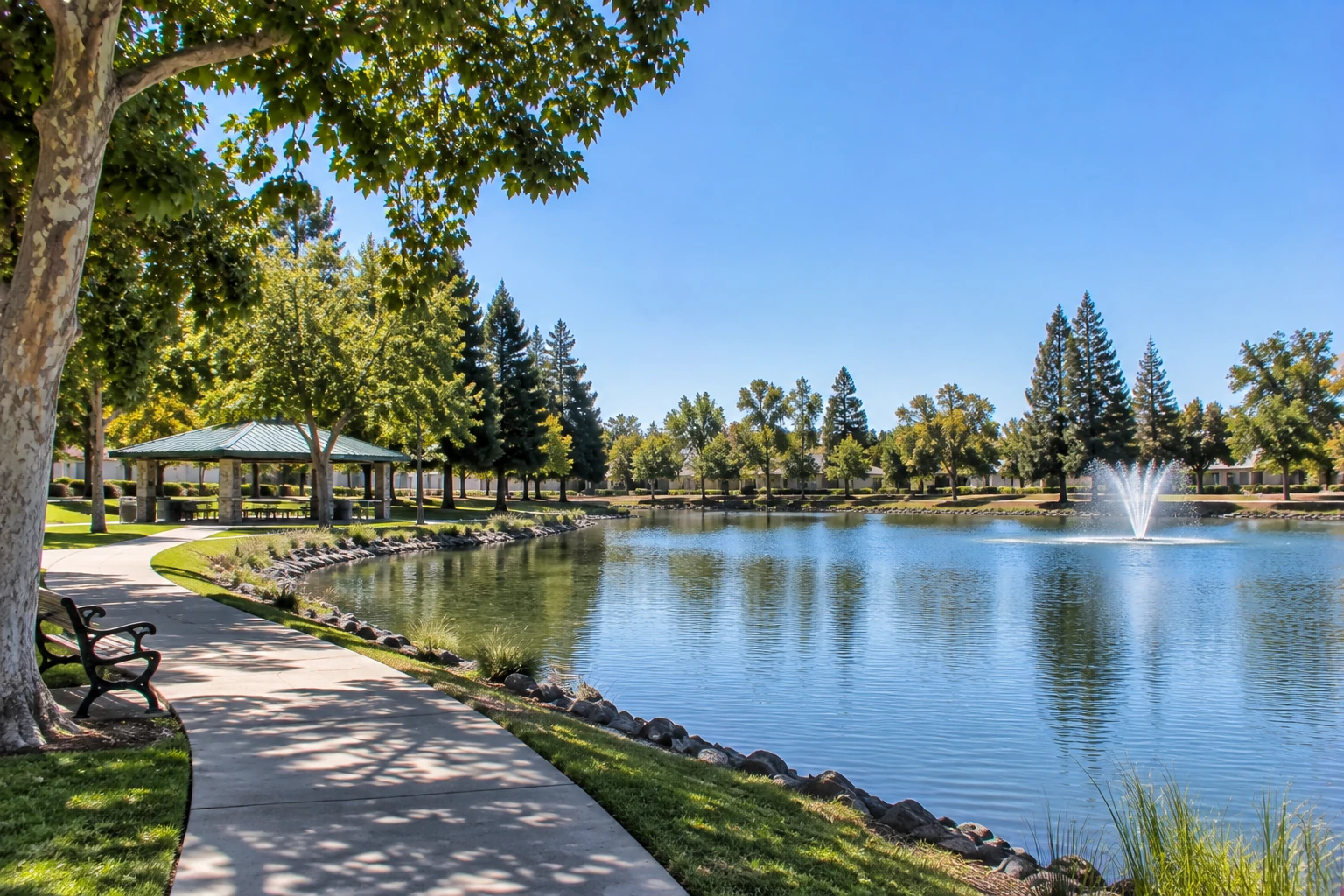
North Highlands has a Central Valley climate — hot dry summers with afternoon temperatures regularly reaching 95–105°F, and cool wet winters with dense tule fog and roughly 20 inches of rainfall falling almost entirely November through March. Summer heat drives UV degradation of sealants and finishes, surface checking and warping in exposed decking, and thermal stress at every connection; exposed decks here generally need re-sealing every one to two years rather than every three or four. Winter fog then holds moisture against those same surfaces for days at a time on flat ground that drains slowly. It is a demanding cycle for any structure, and it has been running on most of the local housing stock for seventy or eighty years.
Our home community
North Highlands is where our business is based. That is worth stating plainly because it changes a few practical things rather than just sounding good. Crews mobilize from here, so callbacks and first site visits happen faster in North Highlands than anywhere else we serve. Travel and setup costs on local jobs are genuinely lower, and we pass that through in the estimate. And a follow-up visit — checking how a repair is holding after the first wet season, or taking a second look at something a property manager is unsure about — costs us almost nothing, so we do those when they are useful rather than only when they can be billed. It also means we are accountable in a way that is hard to avoid: the properties we work on here are the ones we drive past.
Base-era housing: built to a schedule
North Highlands grew up around the air base that once operated on its edge, and most of its housing went up between the 1940s and the 1960s to accommodate base personnel and the workforce that supported them. That history explains a great deal about what we find in the walls. Housing built under wartime and Cold War schedule pressure was built to get people housed quickly — minimum-specification framing, connection details that met the practice of the day rather than exceeding it, and a great many duplexes and fourplexes rather than single-family homes. None of that was improper for its time, and much of it has performed for eighty years. But it does mean that when we open a balcony or deck assembly on base-era stock we expect undersized original connections, fastener schedules well short of anything current, and ledger attachments done in ways no longer accepted. The right response is replacing those elements properly, not re-fastening what is already at its limit.
The three-unit line runs through the local stock
SB 721 applies to non-HOA multi-family rental buildings with three or more dwelling units. In many communities that threshold sits comfortably below the typical rental building, so owners know where they stand. In North Highlands it runs straight through the most common building type in the community — duplexes fall outside it, triplexes and fourplexes fall inside it, and a great many local owners hold exactly that kind of property while assuming the law is aimed at large complexes. We have inspected buildings for owners who had held them for decades without knowing an inspection cycle applied. There is no penalty for asking, and the answer takes one conversation: three or more rental units means SB 721 and a six-year cycle; HOA-managed condominiums mean SB 326 and a nine-year cycle. Our certified firm gives that answer plainly and files whichever report applies.
Common building stock we work on
North Highlands’s residential stock is concentrated in a narrow band of construction eras. 1940s–1960s base-era housing — small single-family homes, duplexes, triplexes, and fourplexes across Freedom Park, Elkhorn Village, Don Julio, and the older central neighborhoods — makes up the bulk of it, and after seventy or eighty years of Central Valley cycling most of it needs ledger restoration, replacement of undersized original connections, full railing replacement to current height and geometry standards, and refinishing. Larger 1960s–1980s apartment communities along the Watt Avenue, Madison Avenue, and Elkhorn Boulevard corridors form the larger-scale SB 721 inventory, typically with aging connectors and waterproofing decades past service life. Later infill and redevelopment construction is comparatively limited but present, and is generally at first-cycle waterproofing renewal. Our certified construction crew scopes every project to the era, original materials, and code in effect at installation.
Neighborhoods served
Our certified North Highlands crew covers Freedom Park, Elkhorn Village, Don Julio, Parkway, the North Highlands Park and Depot Park areas, the Watt Avenue corridor, the Elkhorn Boulevard corridor, the Madison Avenue corridor, the neighborhoods bordering the former air base, and the wider North Highlands community. ZIP code 95660 covers the community.
What we typically see
Across our North Highlands inspections, our company most often documents: (1) undersized original connections, fastener schedules short of current standards, and ledger attachments done to mid-century practice — a North Highlands-specific concentration given how much of the stock dates to the base-era build-out; (2) small rental properties whose owners were unaware SB 721 applies at three units; (3) heat-driven surface checking, splitting, and sealant breakdown from 95–105°F summer stretches; (4) moisture damage on flat lots where winter fog holds against surfaces that never fully dry; (5) railings on pre-2000 buildings that fall short of the current CRC 42-inch height and 4-inch sphere rule; (6) prior repairs that re-fastened original hardware rather than replacing it, which buys a few seasons at most on stock this age. Every finding is captured in a written assessment with prioritized repair, replacement, or restoration recommendations.
Emergency response & remodeling
For North Highlands buildings with acute safety issues — sagging framing, loose railings, visible rot at load-bearing connections, red-tagged balconies, or storm-driven damage — our emergency repair crew responds faster here than anywhere in our service area, because the crew is already here. Temporary shoring and code-compliant stabilization the same day where the situation calls for it. We also handle full balcony and deck remodeling for property owners modernizing older outdoor spaces while bringing mid-century structures up to current safety code.