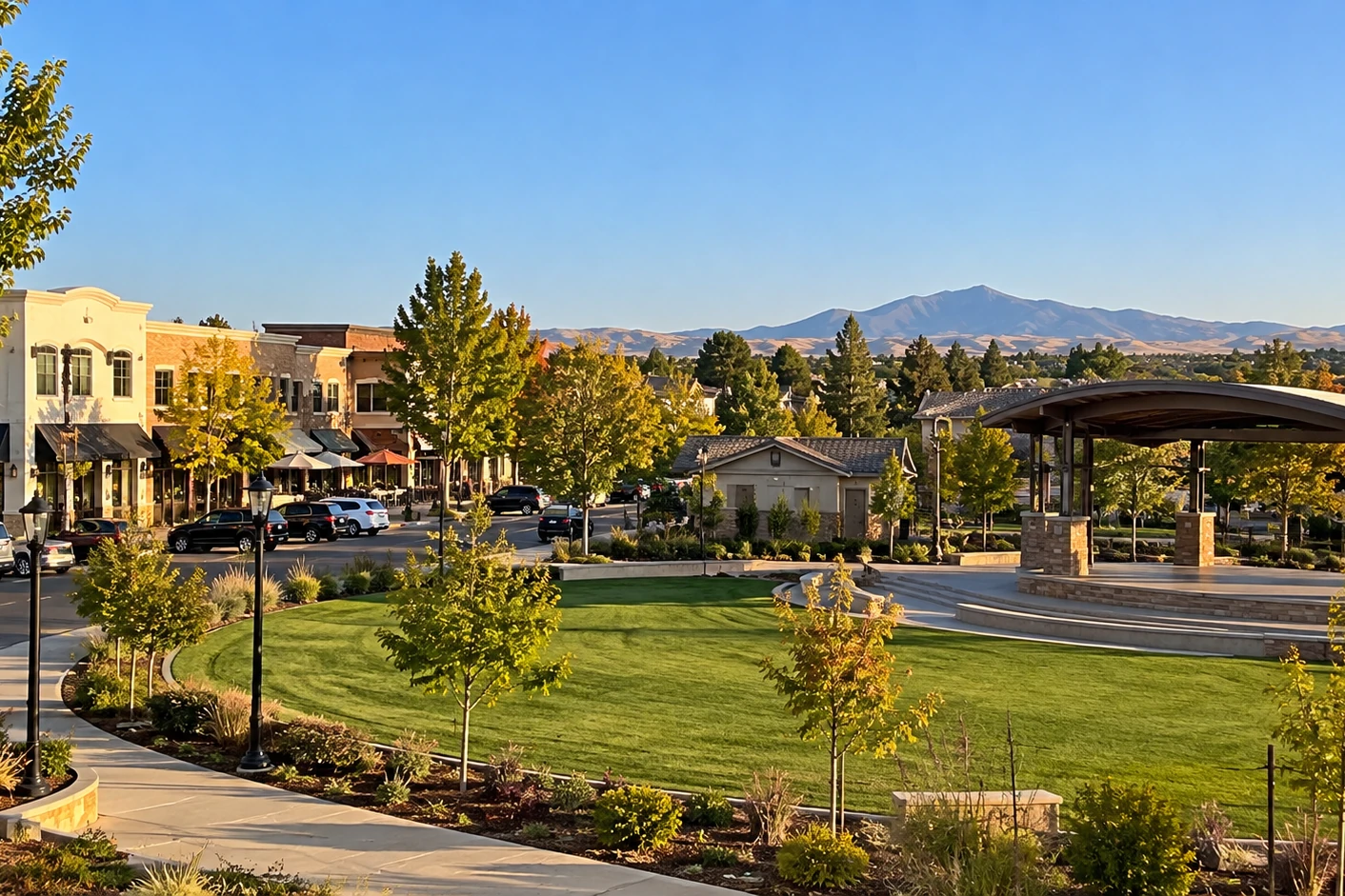
Climate considerations in Oakley
Oakley sits at the southern edge of the Delta on flat, low ground. Summers are hot and dry with afternoons regularly past 100°F, driving UV degradation of finishes, surface checking, and thermal stress at connections. Annual rainfall is low — around twelve to thirteen inches — falling almost entirely between November and March, with tule fog in between. The feature that runs through the whole year is wind: the afternoon breeze off the Delta blows on most days, and on a flat site with no topography to break it, a deck takes that load squarely. On its own none of this is remarkable for the region. What makes Oakley distinct is what all of it is standing on.
Sand: the ground under almost everything here
Oakley is built on deep sandy soil — the ground that made this country some of the best old-vine land in the state, because vines thrive in it. It behaves very differently from the clays and alluvium found across most of our service area, and the difference matters at the footings. Sand drains freely, which is genuinely helpful: ground contact here stays drier than in heavier soils and post-base rot is less of a chronic problem than it is elsewhere. But sand has little cohesion, which means it offers much less resistance to a post being pushed sideways than a cohesive soil would, and its bearing capacity depends heavily on how well compacted it is. A footing can therefore be entirely adequate for the weight above it and still be poorly held against lateral movement — two separate questions that look identical from the deck surface. What any particular site needs depends on the conditions actually found there, which is what the assessment is for. What we will not do is assume a footing detail that worked on heavier ground will behave the same way here.
Wind and sand together
The two local conditions compound, and this is the point most relevant to raised decks here. Afternoon wind puts a sustained lateral load into a structure. Tall posts turn that load into leverage at the base, where it has to be resisted by the ground around the footing. In cohesive soil that resistance is substantial; in loose sand it is considerably less. The result on Oakley properties is a characteristic complaint — a raised deck with a slight sway or movement that feels like a framing problem and is not. We have been called to decks where two previous opinions blamed span or joist sizing and the actual issue was that nothing underneath was holding the posts against sideways load. The fix is lateral bracing sized for the exposure, footings detailed for the ground, or both. Diagnosing it the other way around means stiffening a frame that was never the weak part.
Scour: where your deck sends its water
Sand moves when water runs over it, and a deck concentrates water. A structure that simply sheds over its edge delivers several hundred square feet of rainfall into a narrow band of ground, repeatedly, through every wet season. In heavier soil that produces a damp patch. In sand it produces a hollow, and if that hollow is beside or beneath a footing, material that was supporting and restraining the post is no longer there. Owners usually find it after a wet winter and assume something leaked. The cause is almost always the discharge point, and it is entirely preventable — deck-edge collection and a run to a stable outfall costs a fraction of rebuilding a footing. We check post bases for washout including below grade during every assessment here, because the visible part of the problem is usually smaller than the part that is not.
Common building stock we work on
Oakley was a small agricultural town until the 1990s and grew several times over in the two decades that followed, so the inventory is weighted heavily toward one era. Older stock around Old Town carries original wood porches and decks with connection details predating current standards. The large subdivisions built from the 1990s through the 2000s across Summer Lake, Cypress Grove, Magnolia Park, Duarte Ranch, and the surrounding communities make up the bulk of the housing and are now at the age where builder-grade ledger flashing and first-generation waterproofing reach end of service life. Delta-shoreline properties carry raised decks with the wind and footing considerations set out above in their most pronounced form. Apartment and HOA-managed townhome stock along the Laurel Road and Empire Avenue corridors forms the SB 721 and SB 326 inventory. Our certified construction crew scopes every project to the era, the ground at the post locations, and the code in effect at installation.
Neighborhoods served
Our certified Oakley crew covers Old Town Oakley, the Town Center, Summer Lake, Cypress Grove, Magnolia Park, Duarte Ranch, Gilbert, the Laurel Road corridor, the Empire Avenue corridor, the Main Street corridor, the Delta shoreline neighborhoods, and the wider Oakley community. ZIP code 94561 covers the city.
What we typically see
Across our Oakley inspections, our company most often documents: (1) raised decks with lateral movement misdiagnosed as a framing or span problem when the posts are simply not held against sideways load by the ground — an Oakley-specific pattern from sand under sustained wind exposure; (2) washout and hollows at and below post bases where the deck discharges its runoff, usually found after a wet winter and blamed on a leak; (3) footings adequate for vertical load and poorly detailed for lateral, which look identical from above; (4) heat-driven surface checking and sealant breakdown from 100°F-plus summers; (5) builder-grade ledger flashing failing on the 1990s and 2000s subdivisions; (6) railings on pre-2000 stock that fall short of the current CRC 42-inch height and 4-inch sphere rule. Every finding is captured in a written assessment with prioritized repair, replacement, or restoration recommendations.
Emergency response & remodeling
For Oakley properties with acute safety issues — a raised deck moving under load, sagging framing, loose railings, visible rot at load-bearing connections, washout at a footing, red-tagged structures, or storm damage — our emergency repair crew responds within 24–48 hours with temporary shoring and code-compliant stabilization. Where movement is involved we establish whether the frame or the ground is the cause before recommending a permanent repair, because the two call for entirely different work. We also handle full deck remodeling for owners replacing older structures with assemblies braced and footed for the conditions here.