North San Joaquin coverage
Callback the same business day for Tracy. We're 75 miles out and we come straight down I-5 rather than over the pass, which means our crews arrive at the start of the day instead of at the end of somebody's commute.
Commercial Balcony & Deck Specialists · CSLB #1060736
About 60% of this city's residents commute over the Altamont, and most of them are looking at a three-to-five-hour round trip. Eighty thousand vehicles cross that pass every day. Which means a Tracy apartment building is empty from before dawn until after dark, five days a week - and that is the easiest occupied building to work on anywhere we operate. Licensed CA contractor serving Downtown, Tracy Hills, Berg Ranch, and the I-205 corridor with SB 721 and SB 326 inspections, deck repair, and waterproofing.
02 / Local Presence
03 / Why D&B for Tracy
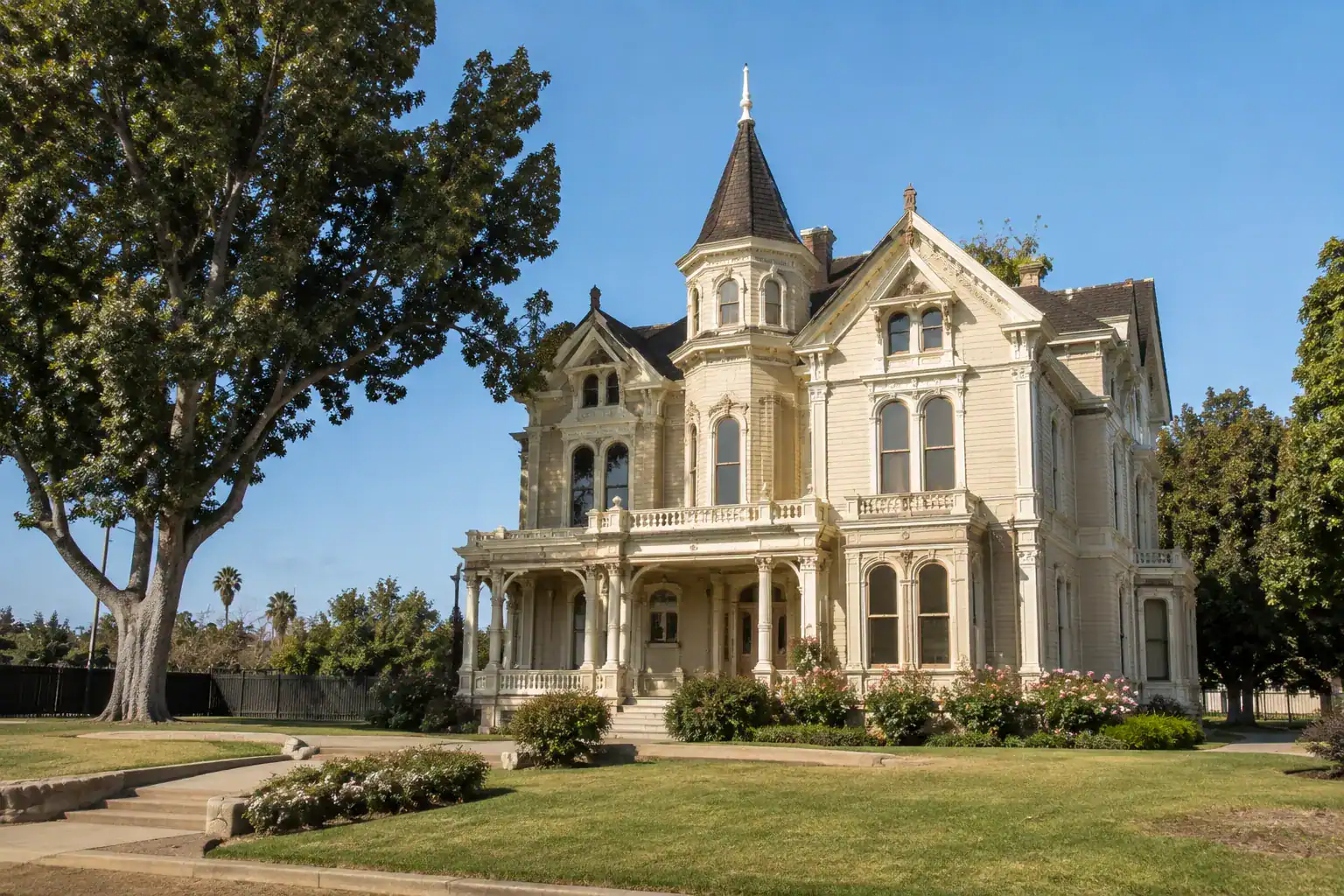
Callback the same business day for Tracy. We're 75 miles out and we come straight down I-5 rather than over the pass, which means our crews arrive at the start of the day instead of at the end of somebody's commute.
We've inspected and repaired balconies on 240+ Tracy-area properties since 2019 - mostly the stock that went up when this city grew 64% in a single decade and has been quietly ageing on the same schedule ever since.
SB 721 and SB 326 inspection reports filed with the City of Tracy when required. We handle the paperwork.
04 / Free Assessment
Tell us about your building(s) - we'll send same-week scheduling, transparent multi-building pricing, and handle SB 721 / SB 326 compliance filing with the City of Tracy end-to-end.
Or call us now: (916) 848-2728
05 / Process
Same business day
Submit the form or call (916) 848-2728. We answer questions, discuss your Tracy building situation, and schedule a free on-site assessment with a licensed contractor.
Within 24–48 hours
A licensed contractor walks the property, photographs every balcony and EEE element, and identifies SB 721 / SB 326 issues, dry rot, heat and UV damage to the membrane, and railing concerns. ~60 minutes, and in Tracy we can usually do it while the building is empty.
Within 2–3 business days
Itemized scope, transparent multi-building pricing, repair-vs-replacement options. For SB 721 / SB 326 jobs we file the inspection report with the City of Tracy.
Most jobs start 2–3 weeks
Permits pulled through the City of Tracy when required. We work the daytime window here deliberately: on most Tracy properties the noisy, disruptive part of a rebuild happens while the units are empty and the residents are on the other side of the pass. Work executed by our in-house CSLB-licensed construction crew. Final walkthrough, photo documentation, warranty paperwork.
06 / Services
Tracy is not classified Mediterranean. Wikipedia puts it as semi-arid - BSk - with cool moist winters and very hot dry summers, and locally that reads as roughly 82 days a year above 90°F and 18 above 100°F. Very little rain, a great deal of sun, and winter storms that arrive through the Altamont with the wind behind them. A membrane here dies of exposure long before it drowns. Here's where we lead.
Mandatory exterior elevated element inspection services for 3+ unit multifamily buildings and HOA-managed condominiums across Tracy and north San Joaquin County.
Joist replacement, ledger fix, post-tension repair, code-compliant railing reinforcement.
Elastomeric membrane installation, sealing, resurfacing, and drainage correction specified for UV and heat load rather than for rainfall this city doesn't get.
Load-bearing capacity, wood rot analysis, connection integrity verification.
07 / Investment Ranges
Final estimate after on-site visit. Ranges below reflect 90% of recent Tracy-area commercial work. Actual pricing depends on building size, materials, access, and site conditions.
Required compliance
$400–$800per building
On-site visual + structural review, written report filed with the City of Tracy.
Most common
$2,500–$8,000per balcony
Joist replacement, ledger fix, railing reinforcement, board replacement. Waterproof recoat $3K–$12K.
Highest value
$15,000–$45,000per balcony
Complete tear-down, new framing, waterproof, railings, code-compliant. Volume pricing for 5+ buildings.
We never quote a final price without an on-site visit. Free assessment takes ~60 minutes — no commitment, no pressure.
09 / Client Voices
We'd put the work off for two years because we couldn't face the tenant notices. D&B pointed out that our building is empty from six to seven and asked why we were planning around people who aren't there. Three weeks of work and we had four complaints total.
Two recoats in nine years and both cracked. They said the product was fine and the spec was wrong - we'd bought waterproofing for a city that doesn't rain and needed UV. Different material, and the third one is still holding.
Our buildings are 1998 and we assumed that was new. D&B did the arithmetic out loud: twenty-eight years, first membrane, never opened. It was not a sales pitch, it was a calendar.
10 / Local Context
Tracy is not a Mediterranean city, technically. It is classified semi-arid – Köppen BSk – with cool, moist winters and very hot, dry summers, and it sits inside a triangle of three interstates at the eastern mouth of the Altamont Pass. The practical numbers are what matter: something on the order of 82 days a year above 90°F and 18 above 100°F, almost no summer rain at all, and winter weather that comes through the pass with wind behind it. So the failure mode here is not the one most owners are braced for. Water is not what kills a Tracy membrane; sun is. An elastomeric coating specified for its waterproofing performance and installed on a south or west elevation in this city will chalk, embrittle and crack from ultraviolet and heat long before it is ever asked to hold back a serious storm – and then the small amount of rain that does arrive walks straight into the crack that the sun made. Owners read that sequence backwards, blame the water, and buy the same wrong product again. It is also worth remembering the Corral Fire, which burned south of the city over the first week of June 2024 – notable less for its size than for its timing, arriving well before what used to be fire season.
Tracy was a railroad town – founded in 1878 where the Central Pacific line came east out of Oakland through the Livermore Valley and over the Altamont, incorporated in 1910, and prosperous on agriculture after the first irrigation district arrived in 1915. None of that is the work. The work started in the 1980s, when Bay Area house prices pushed families over the pass looking for something they could afford, and it accelerated hard: Tracy added 22,253 people in the 1990s alone, a 64% increase in ten years, and has grown roughly another 39% since 2000 to around 100,000 today. The city passed Measure A in 1990 to try to contain that, and grew 64% anyway. So the multifamily stock here is overwhelmingly late-1980s through 2000s – which sounds recent and is not. A 1998 building is twenty-eight years old, on its original membrane, in a city with 82 days a year over 90°F. Around it now sits the other Tracy: an enormous logistics footprint built on the interstate triangle, including a 1,700-acre commerce park, that has made this a warehouse town as much as a bedroom one. Under SB 721 Inspection the 1998 building carries the same six-year obligation as anything else, and most of them have never had a first one.
Downtown Tracy, 11th Street, Tracy Hills, Berg Ranch, Edgewood, Presidio, Ellis, Kagehiro, Corral Hollow, the I-205 corridor, the Tracy Transit Station area, and the wider north San Joaquin Valley. ZIP codes 95376 and 95377.
In Tracy we most often address: (1) UV and heat failure misdiagnosed as water failure – the coating cracked in August and leaked in January, and the owner remembers January; (2) stock that everybody still calls new – the 1990s build-out is now twenty-five to thirty-five years old, which is precisely the age at which a first-generation membrane stops being a membrane, and precisely the age nobody worries about; (3) south and west elevations that have aged at a completely different rate from north and east ones on the same building, because 82 days over 90°F is not distributed evenly around a structure – we price by elevation and it usually saves money; (4) buildings that have never been inspected because there was never a convenient moment, which in a commuter town is an odd complaint, since the convenient moment is every weekday between seven and six – and that is exactly why Annual Maintenance Plans work unusually well here.
11 / More Service Areas
Every city links to a dedicated local page — crews, recent projects and compliance details for that area.
Don’t see your city? We likely still cover it — call (916) 848-2728.
12 / Common Questions
$400-$800 per building for a 3-8 unit property. Tracy tends to sit at the friendlier end of it, for a reason that is purely logistical: we come down I-5 rather than over the Altamont, so we are not paying for anybody's pass traffic, and the building is usually empty when we arrive, so the walk goes faster and cleaner than it does in a city where we are knocking on doors. The site visit is free.
Do the arithmetic rather than the vibe. Tracy grew 64% in the 1990s - it added over 22,000 people in ten years - so a very large share of this city's multifamily went up between roughly 1988 and 2005. A building from 1998 is twenty-eight years old this year. It is almost certainly on its original waterproof membrane, which was specified for a twenty-year service life at best, and it has spent every one of those years in a city that runs about 82 days a year over 90°F. The word "new" in Tracy is a habit left over from when it was true. Under SB 721 the obligation attaches to the building regardless, and the January 2026 deadline has passed. Most of these buildings have never had a first inspection, and the reason is not that anyone decided against it - it is that nobody has thought about it since the day it was finished.
More so here than anywhere else we work, and it is the one genuine advantage of owning rental property in a commuter town. About 60% of Tracy residents commute over the Altamont into the East Bay and the Bay Area, most facing a three-to-five-hour round trip, and around 80,000 vehicles cross that pass daily. In practice that means your building is empty from before six in the morning until well after six at night, Monday to Friday. Compare that with a city where the demand never lapses and the units never empty - there, the noisy part of a stair rebuild has to be negotiated. In Tracy it just happens, and most residents come home to a day's progress they never heard. We schedule deliberately into that window. It is not a small thing: tenant friction is the reason most of this work gets deferred, and here the reason mostly does not apply.
Because you are buying for the wrong enemy. Tracy is semi-arid - the classification is BSk, not Mediterranean - and the summer delivers something like 82 days over 90°F and 18 over 100°F with almost no rain at all. Ultraviolet and heat are what age an elastomeric coating: it chalks, it loses elasticity, it embrittles, and it cracks. That happens in August, silently, on the south and west elevations. Then in January the modest rain this city does get finds the crack and shows up inside, and the owner concludes the product failed at waterproofing. It did not. It failed at exposure, months earlier, and the water was just the messenger. We specify for UV and thermal load first and water second, in that order, because that is the order the damage actually happens in.
Ownership structure decides it, not the building. HOA-governed condominiums are SB 326, nine-year cycle. Non-HOA rental buildings of three or more units are SB 721, six-year cycle. Tracy's build-out era means both are here in volume and often side by side on the same street, put up by the same builder in the same year with the same detail - the only difference being how they were sold. Identical construction, different statute, three years apart on the clock. A detached single-family association with no elevated elements is outside both. We'll tell you which of the three you are before you spend anything. Inspections covers what each one involves.
Callback the same business day, on-site within 48 hours. Tracy is 75 miles from our North Highlands yard, almost straight south down I-5, which is a clean run with none of the pass traffic our Bay Area work has to plan around. We schedule north San Joaquin in blocks for portfolio work because it keeps the price down. Genuine safety issues we move on immediately regardless - and in a building where everyone is gone all day, an unsafe stair is at its most dangerous in the dark at either end of a commute.
13 / Free Property Inspection
No commitment. Same-day callback. Licensed, insured & bonded. We file SB 721 / SB 326 reports with the city on your behalf.