Climate considerations in Half Moon Bay
Half Moon Bay has a mild, cool-summer climate. Fog and overcast are common in the mornings and at night and usually clear in the afternoon, and hot weather is rare: September is the warmest month, with average highs of only around 67°F. Normal rainfall is about 26 inches a year, mostly from November to April. For decks, that means wood rarely gets the heat and sun it needs to dry out completely, especially on the shaded or north-facing side of a building. Moisture lingers in board gaps, at stair stringers, and at ledgers, and decay develops slowly but steadily. Inland along the creek, days are warmer and nights cooler, but the same pattern holds wherever a deck stays in shade.
The green film and the slippery step
On damp, shaded surfaces, algae and mildew grow into a thin green or black film. On a deck it looks like discoloration; on a stair tread or handrail, it is a slip hazard, worst in the morning when the fog has just wet it. The film also holds water against the surface, so the wood underneath stays wet longer and decays faster, and composite boards are not immune to it either. Cleaning removes it for a while, but it comes back where the conditions stay the same. Lasting improvements are about those conditions: trimming plants that keep stairs in shade, opening board gaps so water drains, improving airflow under the deck, and adding grip strips or slip-resistant surfaces on stair treads. Before any of that, we probe under the film, because a soft board or tread hidden beneath it is the real problem.
Grills on apartment and condo balconies
On cool, foggy evenings, many residents want to cook outdoors, and on apartment and condominium buildings that often means a grill on a balcony. The California Fire Code prohibits operating charcoal burners and other open-flame cooking devices on combustible balconies or within 10 feet of combustible construction. The exceptions are one- and two-family dwellings, buildings and balconies protected by automatic sprinklers, and LP-gas cooking devices with a container of water capacity not greater than 2½ pounds, the small one-pound cylinder size. Local adoption can vary, so managers and boards should confirm with the local fire authority. For our part, we see what happens when the rule is not followed: scorch marks and melted spots on decking and balcony coatings, and damaged membranes that let water into the framing below. We document that damage, repair it, and can help managers explain to residents why the rule exists.
Downtown and the older streets
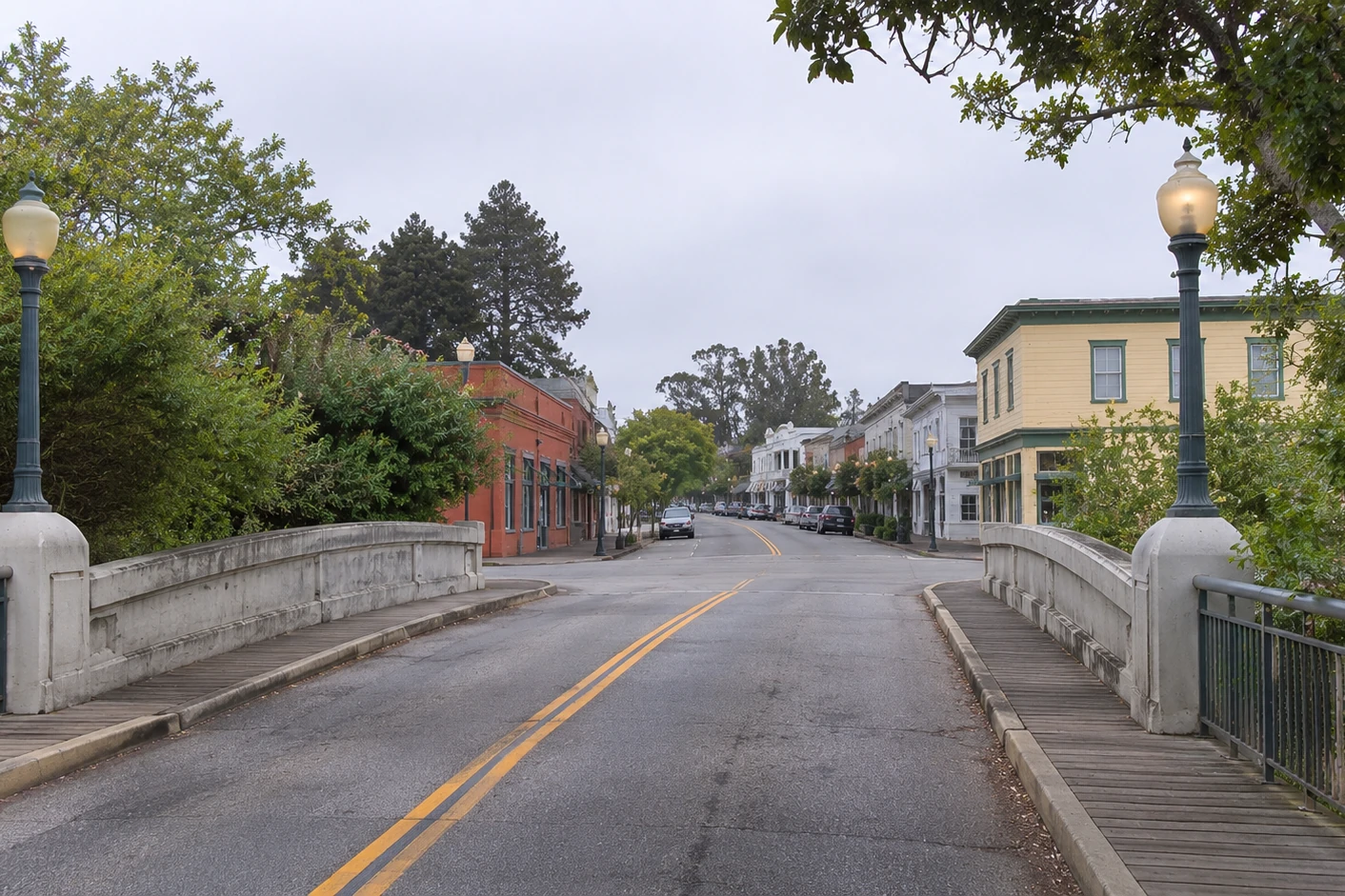
Half Moon Bay was the county’s first real town, and its historic downtown district has buildings dating back to 1869. Some have apartments or offices upstairs with balconies or rear stairs, and the older houses on the surrounding streets have porches and steps built long before current standards. Work on these buildings means bringing stairs and railings up to code while keeping their character, and replacing wood that years of coastal damp have damaged under the paint.
Common building stock we work on
Half Moon Bay’s housing is mostly owner-occupied, about seven in ten homes. Older houses fill the streets around downtown. The Westside and neighborhoods such as Arleta Park and Alsace Lorraine sit closest to the ocean, with decks exposed to fog and onshore wind. Planned communities such as Ocean Colony have their own associations, and where an association maintains elevated elements on condominium or townhome buildings, SB 326 applies. Small apartment and condominium buildings form the rest of the SB 721 and SB 326 inventory, where balcony use and grill rules are a recurring issue. Our certified construction crew scopes every project to the exposure, the shade, and the code in effect at installation.
Neighborhoods served
Our certified Half Moon Bay crew covers Downtown Half Moon Bay and Main Street, Ocean Colony, Arleta Park, Frenchmans Creek, Alsace Lorraine, the Westside, the Kelly Avenue area, the Pilarcitos Creek area, the Highway 1 corridor, the Highway 92 corridor, and the wider Half Moon Bay community. ZIP code 94019 covers the city.
What we typically see
Across our Half Moon Bay inspections, our company most often documents: (1) algae and mildew film making decks, stair treads, and handrails slippery, often with soft wood underneath — a Half Moon Bay pattern given how much of the year surfaces stay damp; (2) scorch marks and heat damage on apartment and condominium balconies; (3) shaded stairs and north-facing decks that never fully dry; (4) blocked board gaps holding water; (5) older downtown porches and stairs with decay under the paint; (6) railings on pre-2000 stock that fall short of the current CRC 42-inch height and 4-inch sphere rule. Every finding is captured in a written assessment with prioritized repair, replacement, or restoration scope.
Emergency response & remodeling
For Half Moon Bay properties with acute safety issues — sagging framing, loose railings, a stair tread that has given way, fire or heat damage to a balcony, visible rot at load-bearing connections, red-tagged structures, or storm damage — our emergency repair crew responds within 24–48 hours with temporary shoring and code-compliant stabilization. We also handle full deck remodeling with surfaces and layouts chosen to dry out and keep their grip.