Deck & Balcony Replacement · CSLB #1060736
Commercial Deck & Balcony Replacement in California
We replace decks and balconies across the Bay Area, Central Valley, and Sacramento — new boards on a sound frame, a complete decking replacement from the footings up, or a full balcony replacement on an occupied building. Those are different projects with very different prices, and which one you need isn’t decided by how the surface looks. It’s decided by what’s under it.
- CSLB #1060736 Licensed California contractor
- 9+ yrs Replacing commercial decks & balconies
- Structure decides Boards, full rebuild or balcony — checked first
- Commercial & HOA Apartments, condominiums, HOAs & hotels
Where to start
Replacement by Structure
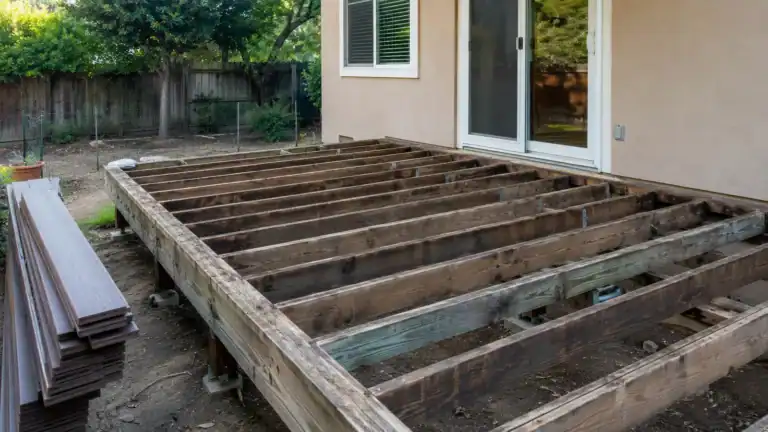
Boards, a whole deck, or a balcony at the wall — the structure decides which job you are buying.
CSLB #1060736SB 721 / SB 326 documentedCommercial, multifamily & HOA
01 Why it matters
“Replacement” means three different jobs — and on a balcony only one of them applies
Most people asking what deck replacement costs are asking about one of three things without knowing which. Board replacement takes the surface off and puts new decking on a frame that stays — the least expensive by a wide margin, and only possible where the joists, beams, ledger, and posts are sound. Full deck replacement takes everything out and rebuilds from the footings. Balconies are their own category, and the reason is worth understanding before you compare quotes.
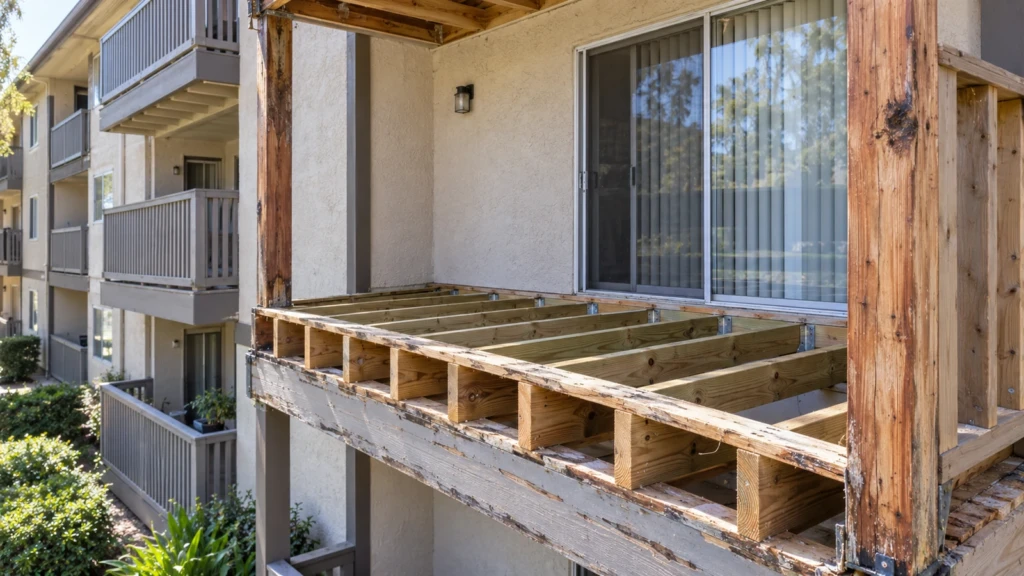
On a deck, the boards are a surface sitting on a frame, so swapping them is a genuine option. On a balcony they usually aren’t. The walking surface is part of a waterproofing system that protects the framing and the room below, turned up at the wall and dressed over the edge — so lifting it means opening the system, and closing it again means rebuilding the system. That’s why a balcony that needs new decking is rarely a re-decking job, and why anyone quoting one as though it were hasn’t opened it.
Which applies to your property is settled underneath, not from the surface. Decking is the layer that shows wear first and matters least; the frame carries people at height and, on a balcony, keeps water out of the building. We’ve re-decked twenty-year-old decks whose framing was in excellent order, and quoted full replacements on balconies half that age where the ledger had been leaking since the day it went in.
New boards on a rotten frame is the most expensive deck anyone buys. On a balcony it’s also the most expensive way to hide a leak.
02 The D&B difference
What replacement should involve
We establish which job it is before we price it, and we show you the parts of the cost that other bids bury.
The structure decides, and we look at it first
Probe testing at joists, ledger, and post bases before any number is written. That assessment is what separates board replacement from a rebuild, and it’s the difference between a fair price and a change order.
Demolition and disposal shown, not hidden
Tearing out a deck or a balcony produces a lot of heavy material and disposal costs real money. It’s a line in our estimate rather than something absorbed into a square-foot rate, because it’s a substantial part of what you’re paying for.
One crew for the structure and the waterproofing
On balconies especially, replacement means framing, flashing, and membrane as one assembly. Splitting those between trades creates the interface where the next leak becomes an argument about scope.
03 · Service Areas
Where We Work in California
Every city links to a dedicated local page — crews, recent projects and compliance details for that area.
Sacramento Metro
11 cities
East Bay
18 cities
Don’t see your city? We likely still cover it — call (916) 848-2728.
04 How a project runs
How a replacement project runs
-
01
Assessment
Boards lifted where necessary to probe joists, ledger, and post bases, plus moisture readings. This determines which of the three jobs it is.
-
02
Scope & options
A written scope with board replacement, full replacement, and — on balconies — the waterproofing system priced where more than one approach genuinely applies.
-
03
Permits
A full replacement generally requires one; replacing boards on an existing frame usually doesn’t. We confirm what applies and handle it.
-
04
Tear-out & disposal
Surface stripped or the element demolished, material sorted and hauled, and the site left clear.
-
05
Structure
Framing repaired, replaced, or rebuilt from footings, with ledger connections flashed to current code and rated hardware throughout.
-
06
Surface & waterproofing
New decking on decks; on balconies a continuous membrane or traffic coating turned up at the wall and dressed over the edge.
-
07
Railings, handover & documentation
Guardrails to current height and spacing, stairs where included, and as-built documentation for the compliance file.
05 Scope
What we replace
Whichever of the three jobs it turns out to be, handled by one CSLB-licensed crew.
- Structural assessment — joists, ledger, post bases, moisture readings
- Written recommendation: replace the boards, replace the element, or repair
- Options priced side by side where more than one genuinely applies
- Permit coordination where the scope requires it
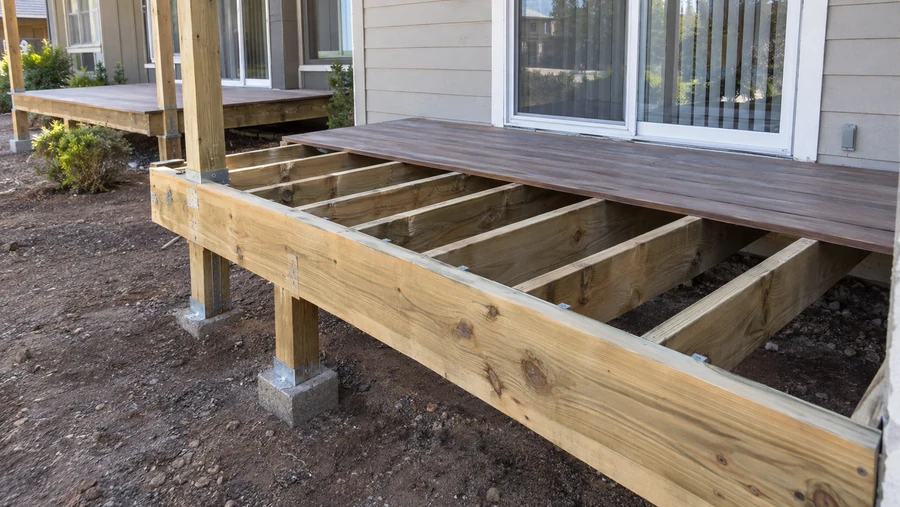
- Deck board replacement on sound framing, in matched or upgraded material
- Replacement decking boards — pressure-treated, redwood, cedar, hardwood, composite, Trex
- Full deck replacement, rebuilt from new footings
- Balconies replaced on occupied buildings, phased around residents
- Tear-out of decking, railings, and stairs
- Disposal and haul-away, priced as its own line
- Framing repair, partial replacement, or complete rebuild
- Ledger connections flashed and fastened per CBC 1604.8.1
- Joist tape and flashing over joist tops before new surfaces
- Waterproofing systems on balconies — membrane, traffic coating, flashing, drainage
- Guardrails to current height and spacing, and stairs with graspable handrails
- As-built documentation, plus SB 721 / SB 326 material on commercial property
Built to current code: CBC 1604.8.1 ledger connections · ASCE 7 load criteria · Title 24 · 42″ / 4″ guardrail standard · SB 721 and SB 326 requirements for exterior elevated elements
06 Investment
What replacement costs
The cost to replace deck boards, a whole deck, or a balcony is quoted after the structure is checked, because the assessment decides which of three very differently priced jobs you’re buying.
What drives the number
- Board replacement — new decking on the existing frame. The least expensive route by a wide margin, since the structure, footings, and usually the railings stay. Available only where the joists, ledger, and posts are sound, and priced by area plus whatever localised repair the frame needs. If rot is found once the boards are off, the job changes — and we tell you what that costs before we start rather than after.
- Full deck replacement — everything out, rebuilt from the footings. Priced by size, elevation, footings, materials, railings, stairs, and access, plus demolition and disposal. This is what the average cost for deck replacement usually describes, and it’s the widest range of the three because two decks of the same size can differ enormously in what’s underneath them.
- Balconies — structure and waterproofing together. Priced by the number of elements, the condition found at the wall once opened, the waterproofing system specified, and phasing around occupied units. Programmes across a property cost meaningfully less per balcony than the same work done one at a time, because mobilisation, staging, engineering, and permitting are paid once.
What published per-square-foot figures leave out: demolition, disposal, footings, permits, railings, and stairs. Those are a substantial share of any real replacement, and they’re the reason two quotes at the same rate can differ by half. Compare scope rather than rate.
On permits: a full replacement generally requires a permit and inspection; replacing boards on an existing frame usually doesn’t. That difference affects both cost and timeline, and it’s worth knowing which side of it your project falls on before you compare bids.
Final pricing follows an on-site assessment. Request a free estimate — no obligation.
In the field
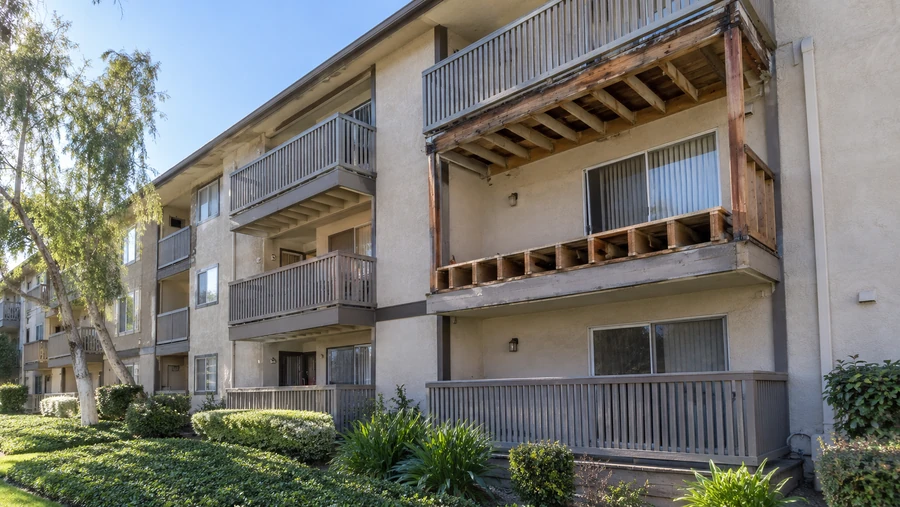
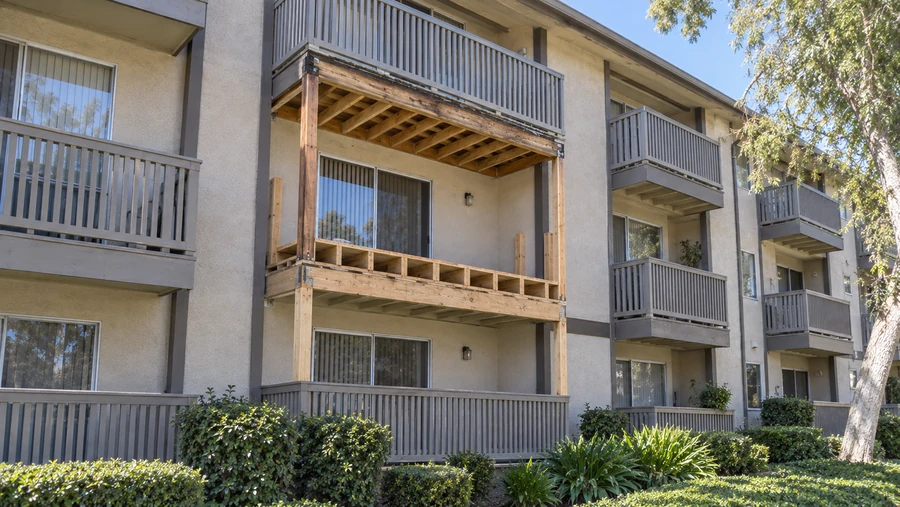
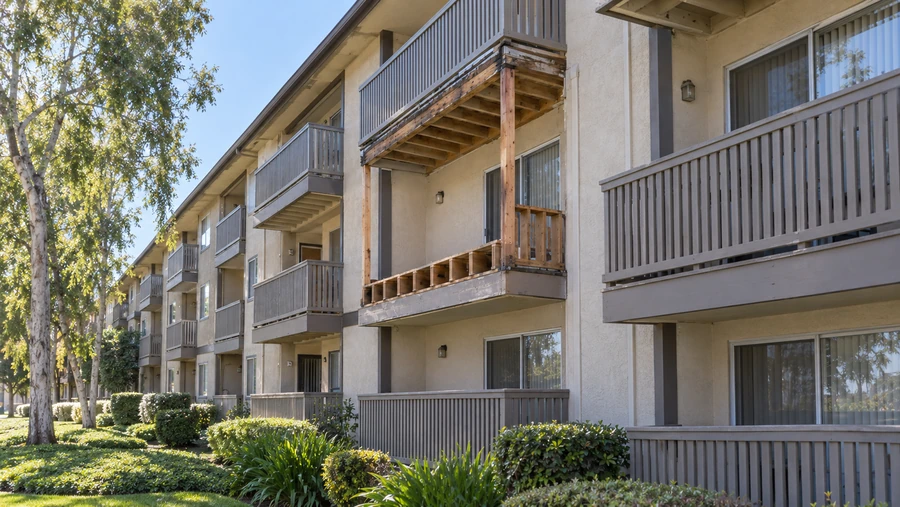
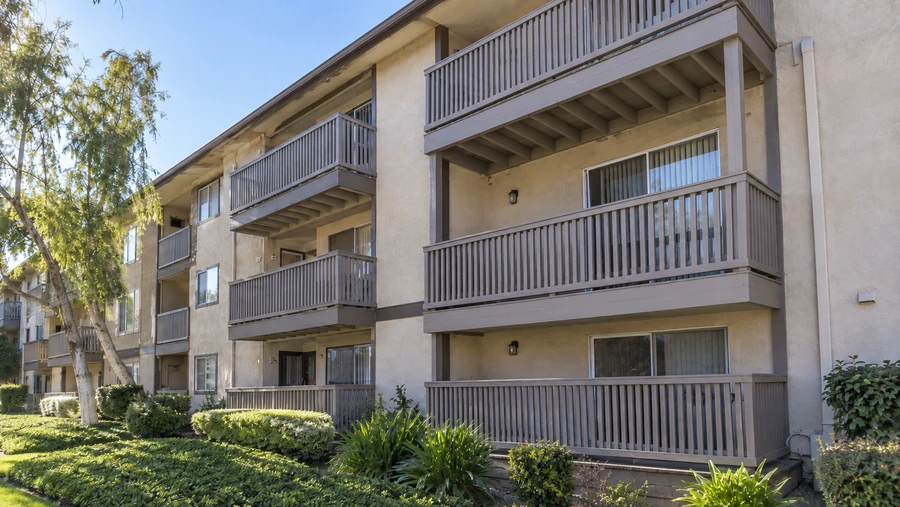
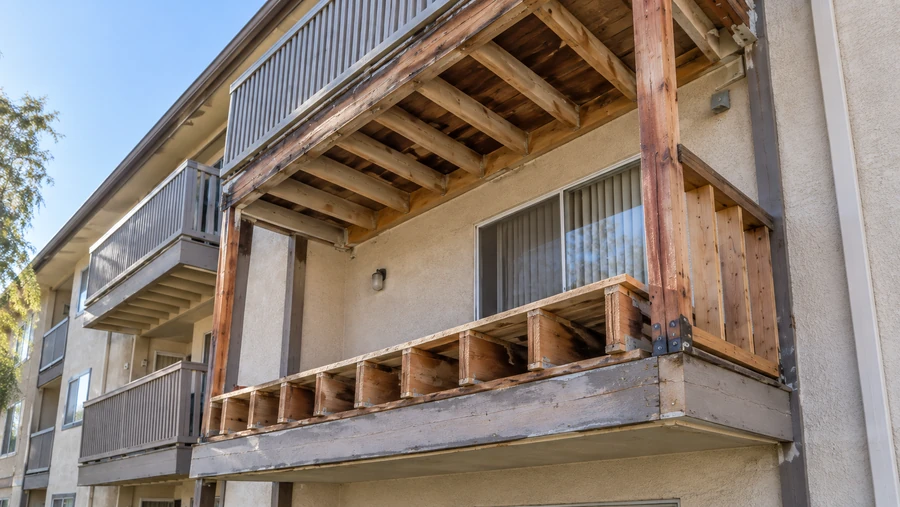
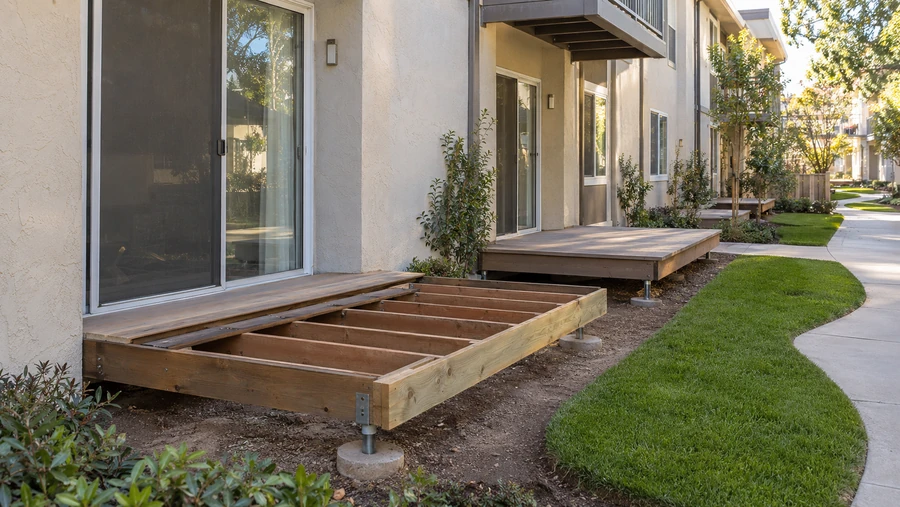
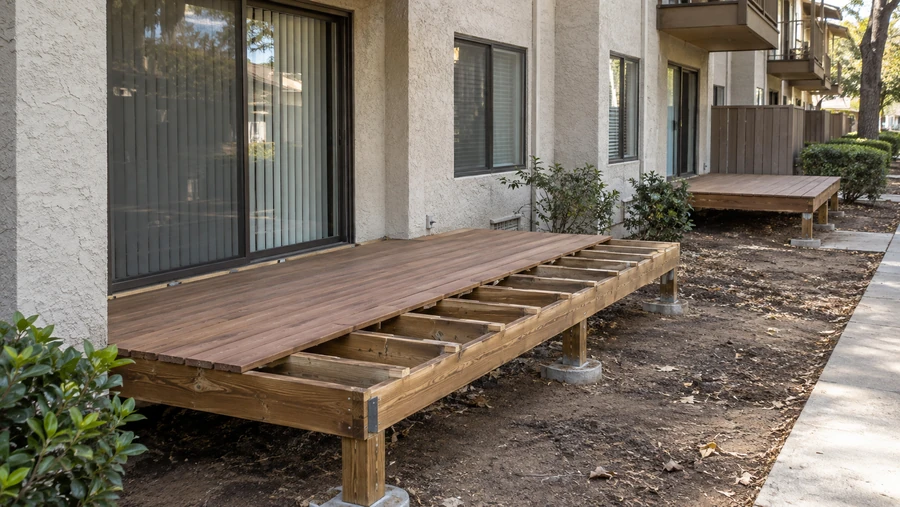
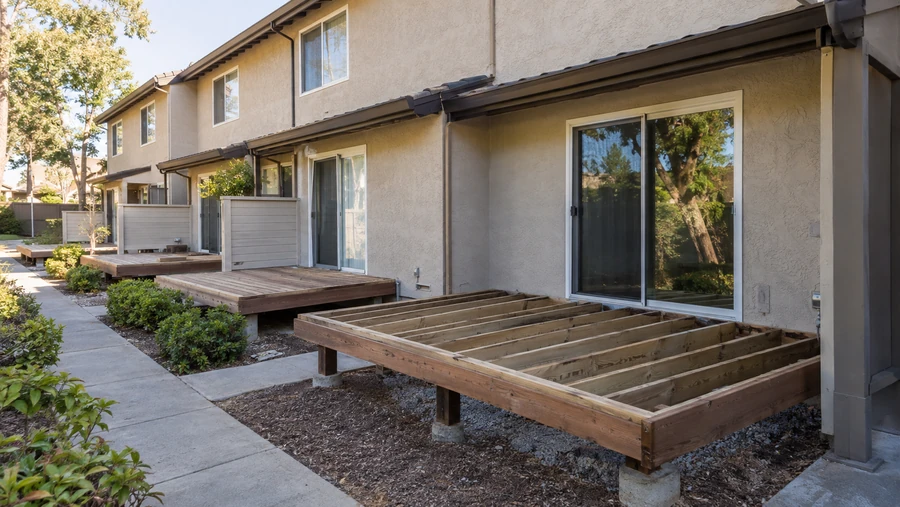
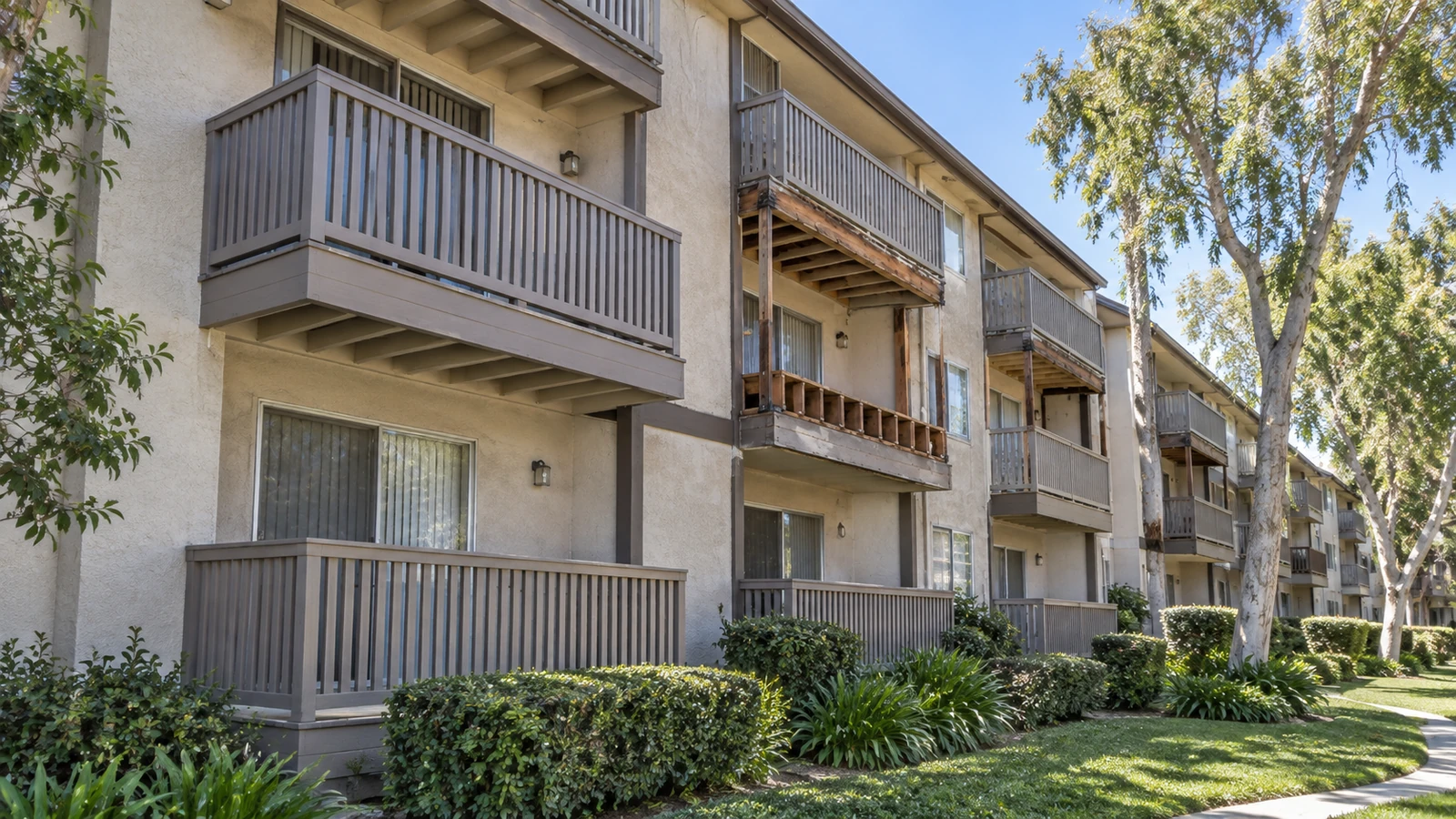
What the boards were hiding
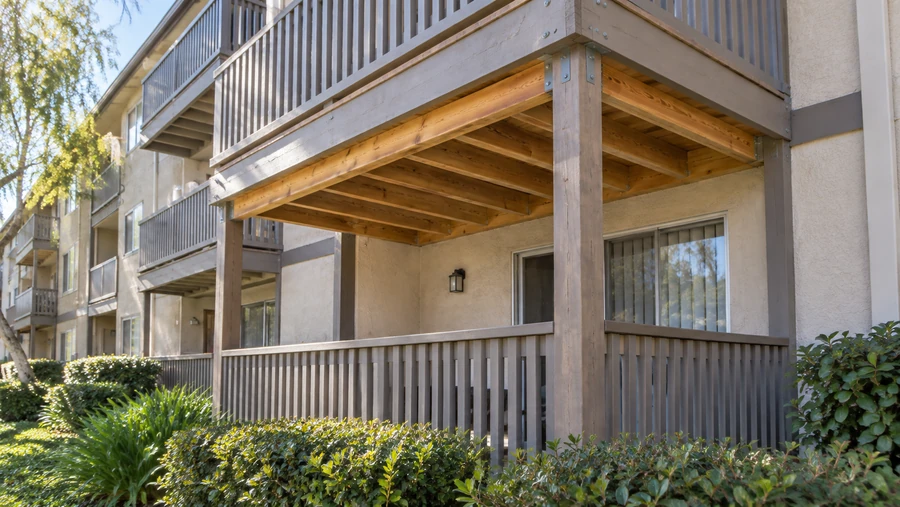
Frames, ledgers and connections, photographed before the new surface went on.
07 Project example
A recent replacement project
A property manager asked us to quote replacing the decking on a run of walkway decks and balconies. The assessment found most of the framing in good order — but on the balconies nearest the stair, where water had been running off the threshold for two decades, the joist ends gave under a probe and the ledger had never been flashed. We priced two scopes: board replacement across the sound elements, and rebuilding the affected balconies including the ledger and a new waterproofing system, with the cost of each stated before anything started. The manager took both. No change order followed, because the possibility had been priced up front rather than discovered.
They quoted what they might find, not just what they could see. When they found it, the number didn’t move. Regional Property Manager · California apartment community
08 Case studies
Recent Projects, Documented
Real commercial properties — what the building needed, what we did, and what it delivered.
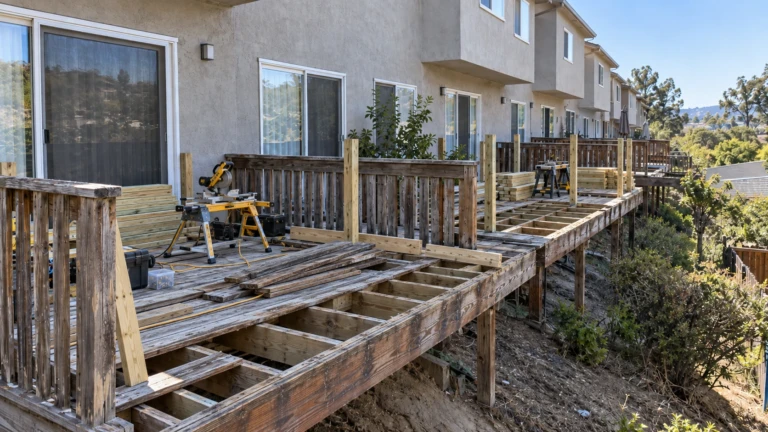 Deck ConstructionCommunity-Wide Elevated Deck Replacement — San RamonEvery elevated deck across a hillside townhome community rebuilt to a single spec in one managed program —…View case study
 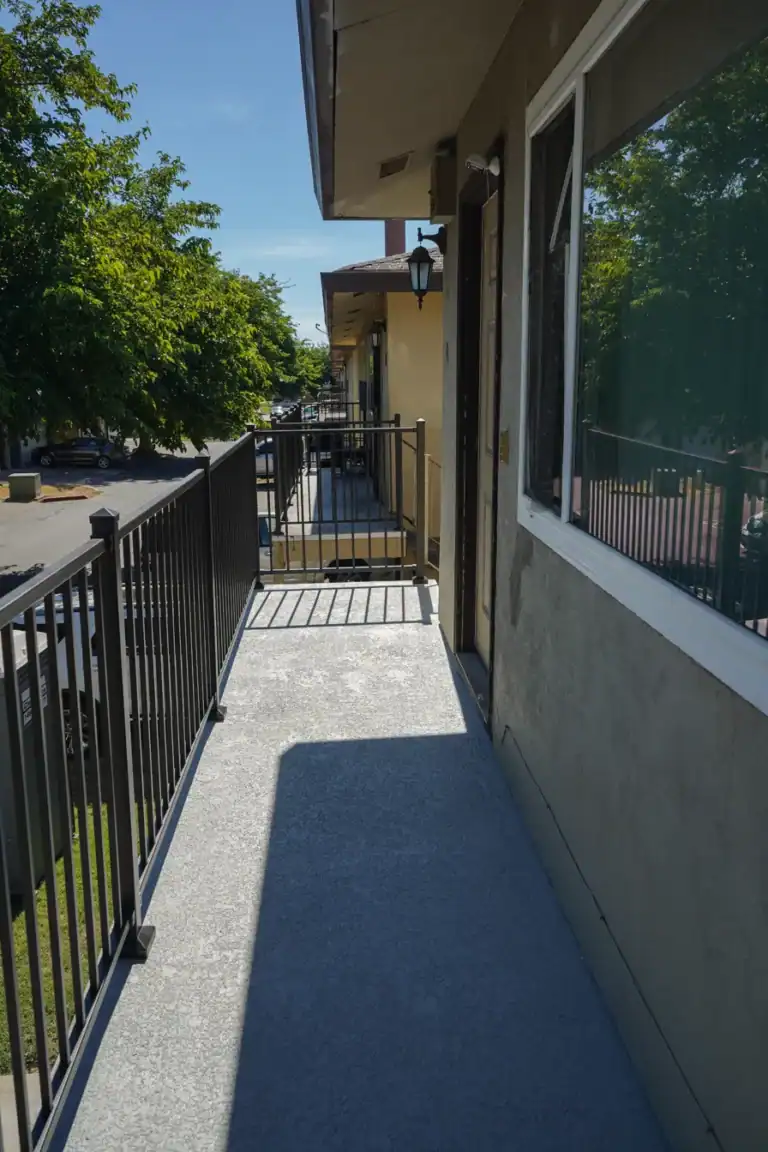 Deck RepairElevated Deck Reconstruction & Waterproofing — 24 Balconies, SacramentoOpen board decks sitting directly over enclosed garages. Every gap between the boards was a route for water…View case study
 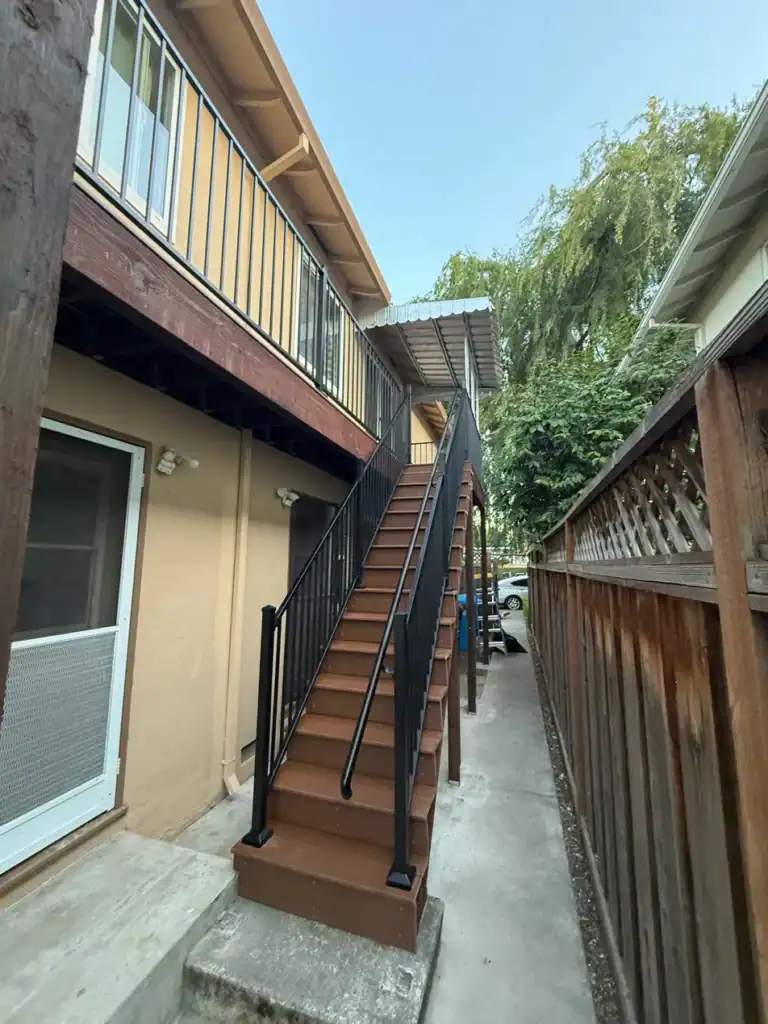 Deck RepairTrex Deck, Walkway & Stair Replacement — 12-Unit Apartment Community, Menlo ParkResidents walked the same tired wood the whole way from the parking lot to their front door —…View case study
 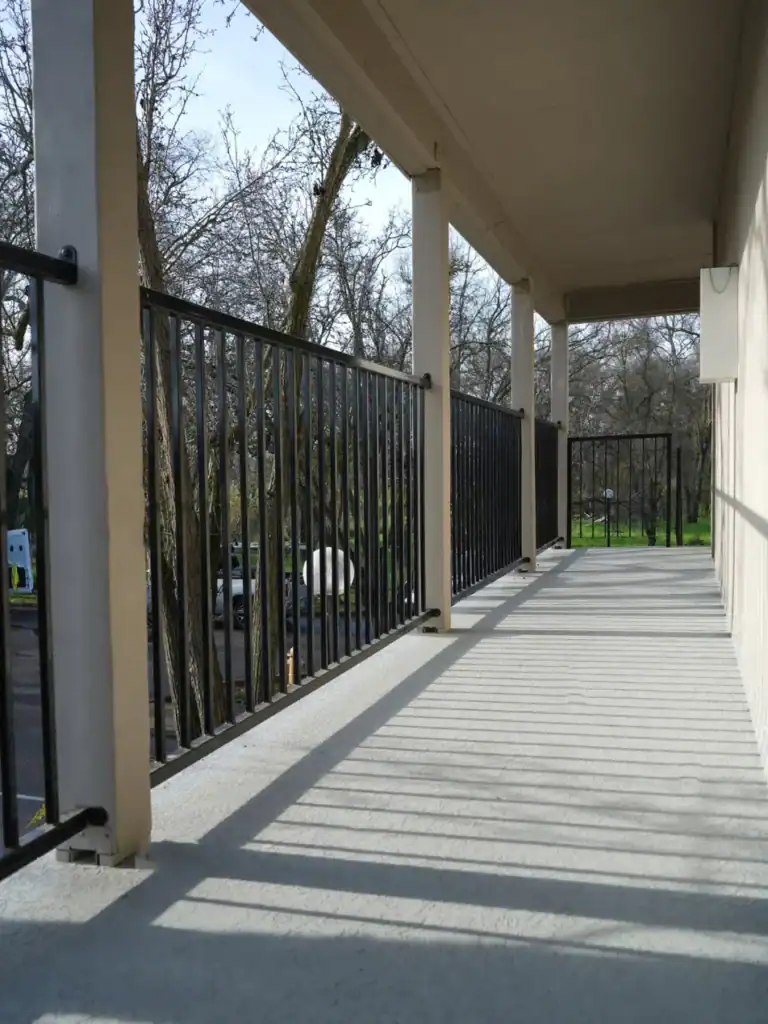 WaterproofingElevated Walkway & Balcony Waterproofing — 40-Unit Apartment Community, Rio LindaDry rot had opened holes straight through the walkway decks. We shored the spans, rebuilt the framing underneath,…View case study
 09 Client feedback
What property managers say
Three quotes for a full replacement. D&B lifted a few boards and told us most of them only needed new decking. That conversation saved us most of the budget.
The disposal was a line on the estimate. Everyone else had it buried somewhere, and one of them added it later.
Nobody had explained that a balcony surface is part of the waterproofing. We’d been pricing it like new floorboards.
10 FAQ
Replacement questions
How much does it cost to replace a deck?
It depends which of three jobs you need. Replacing the boards on a sound frame costs a fraction of a full rebuild. A complete replacement from the footings up is the widest range, because two decks of the same size can differ enormously in what’s underneath. Balcony replacement is priced differently again, because the surface is part of a waterproofing system rather than a separate layer. We check the structure first, because a number given before anyone has looked under the boards is a guess.
Can I just replace the deck boards?
On a deck, if the frame is sound — and it’s much the cheapest route, since the structure, footings, and usually the railings stay. What makes it possible is the condition of the joists, ledger, and post bases, none of which you can assess from the surface. We lift boards and probe before quoting, because re-decking over rot is the most expensive mistake available.
What does deck board replacement cost compared with a full rebuild?
Substantially less — the surface is the cheapest layer in a deck and the structure is the expensive one. The proportion varies with elevation, railings, and how much framing repair comes with it, but replacing boards on a sound frame is typically a fraction of what rebuilding the same deck costs. That’s the whole reason the assessment matters.
Is balcony replacement the same as deck replacement?
No, and this is the part that catches owners out. On a deck the boards sit on a frame, so swapping them is a genuine option. On a balcony the walking surface is usually part of a waterproofing system protecting the framing and the room below — turned up at the wall, dressed over the edge. Lifting it opens the system, and closing it means rebuilding the system. A balcony needing new decking is therefore rarely a simple re-deck, and a quote that treats it as one hasn’t opened it.
What happens if you find rot after starting?
We price that possibility before starting. Where the assessment suggests a risk in a particular area, we quote the repair scope alongside the replacement so you have both numbers up front and no surprises mid-job. What we won’t do is start, find rot, and present a change order as though nobody could have predicted it.
Why is demolition and disposal a separate line?
Because it’s a real and substantial cost that deserves to be visible. An old deck is a lot of heavy, awkward material, and disposal fees are charged by weight and volume. Contractors who fold it into a square-foot rate aren’t doing you a favour — they’re making their number harder to compare, and occasionally adding it back later.
Do we need a permit?
For a full replacement, generally yes, with inspection. For replacing boards on an existing structure, usually not. It varies by jurisdiction and we confirm before work starts. The distinction matters for both cost and timeline, and it’s another reason the two jobs shouldn’t be compared on the same rate.
Can you replace balconies on an occupied building?
Yes, and phasing is part of what we’re quoting. We sequence work so a resident loses access to their own balcony and nothing else — not the elevation, not the walkway, not the parking below. Programmes across a property also cost meaningfully less per element than the same work done piecemeal.
Does replacement help with SB 721 or SB 326?
On commercial and multifamily property, substantially. A replaced deck or balcony enters the inspection cycle as new construction, and full replacement is frequently what closes a structural finding that repair can’t. We hand over as-built documentation for the compliance file at completion.
Are you deck replacement contractors near me in California?
Searches for decking replacement near me return directories as often as crews. We’re a CSLB-licensed contractor (#1060736) replacing decks and balconies across the Bay Area, Central Valley, and Sacramento, exclusively on commercial, multifamily, and HOA properties. Assessment, permitting, demolition, disposal, structure, waterproofing, and finish come from one crew.
11 Start here
Find out which job you actually need — free assessment
Tell us how old the decks or balconies are and what’s wrong with them. We’ll come out, lift a few boards, and tell you whether you’re looking at new decking, a full replacement, or a repair — with a written price for each option that genuinely applies.
CSLB #1060736 · 9+ years · Insured & Bonded · Commercial, multifamily & HOA properties across the Bay Area, Central Valley & Sacramento