SB 721 deadline has passed. Penalties run $100–$500/day per building — schedule your inspection today. SB 721 past due Get compliant 

Licensed California Contractor · CSLB #1060736 · Insured & Bonded

Decks Balcony Request an Inspection

HomeService AreasLincoln

Commercial Balcony & Deck Specialists  ·  CSLB #1060736

SB 721 Compliance & Balcony Repair for Lincoln Commercial Properties

Lincoln is one of the most HOA-governed cities in the region, and that produces a question boards ask us constantly: does SB 326 apply to us? For a community of detached homes the answer is usually narrower than people expect — but the association-owned buildings are a separate matter, and getting the distinction wrong costs money in both directions. Licensed California construction contractor serving Downtown Lincoln, Sun City Lincoln Hills, Twelve Bridges, Lincoln Crossing, Catta Verdera, Foskett Ranch, Westpark, and the Joiner Parkway and Ferrari Ranch Road corridors with SB 721 inspections, structural repair, railing replacement, and waterproofing services.

9+ YearsCalifornia Licensed 240+Lincoln properties SB 721 / 326Compliance Specialists

02 / Local Presence

  • 240+ jobs in Lincoln area
  • 21 mi from our North Highlands HQ
  • 24 hrs avg response time
  • $0 on-site assessment fee

03 / Why D&B for Lincoln

Local response. Compliance experts.

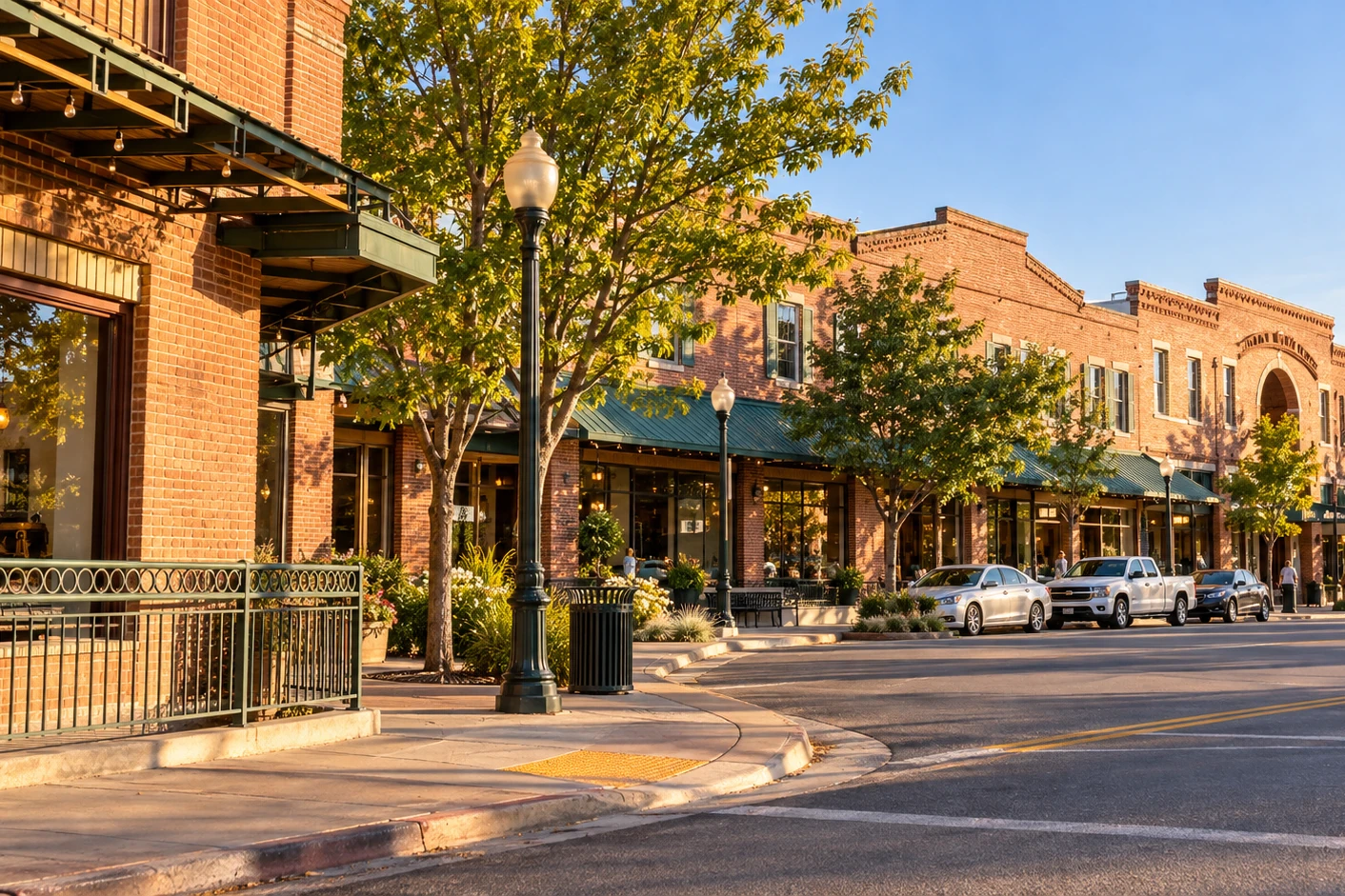
Downtown Lincoln, California

Fast local response

Same-day callback for Lincoln property owners, managers, and HOA boards. Our licensed contractor crew schedules on-site assessments within 24–48 hours across Downtown Lincoln, Sun City Lincoln Hills, Twelve Bridges, Lincoln Crossing, Foskett Ranch, and the surrounding communities.

Lincoln familiarity

Our construction company has inspected, repaired, and restored decks and balconies across Lincoln's full residential range — from older stock around the historic downtown to the large master-planned communities built from the late 1990s onward, including association-owned lodges and common buildings.

HOA-scope & compliance specialists

SB 721 and SB 326 inspection reports filed with the City of Lincoln when required. Our certified firm starts by establishing which structures on an association's books actually fall inside the inspection requirement and which do not, because that answer determines the whole programme.

04 / Free Assessment

Get a free deck & balcony assessment in Lincoln

Tell us about your property or community — we'll send same-week scheduling, transparent pricing, and handle SB 721 / SB 326 compliance filing end-to-end with the City of Lincoln. For associations, we start by mapping which structures are actually in scope before quoting anything.

  • SB 721 / SB 326 inspection reports filed with the City of Lincoln — we handle the paperwork
  • Scope mapped across an association's structures before pricing, so nothing is inspected unnecessarily
  • Railing and transition safety prioritised ahead of cosmetic items in the repair sequence
  • Professional licensed CA contractor · Insured & Bonded

Or call us now: (916) 848-2728

05 / Process

From your message to a finished property

  1. Reach out

    Same business day

    Submit the form or call us. We answer questions, ask what the association actually owns and maintains, and schedule a free on-site assessment with a licensed contractor.

  2. On-site assessment

    Within 24–48 hours

    A licensed contractor walks the property, photographs every deck, balcony, walkway, and EEE element, pays particular attention to railing integrity and step and threshold transitions, and identifies SB 721 / SB 326 issues, dry rot, or structural concerns. ~60 minutes.

  3. Written report & estimate

    Within 2–3 business days

    Itemized scope, transparent pricing, repair-vs-replacement options, board-ready documentation for reserve study use. Findings are ordered by consequence rather than by cost, so anything a resident might reach for or step onto ranks ahead of surface appearance.

  4. Schedule and execute

    Most jobs start 2–3 weeks

    Permits pulled through the City of Lincoln Building Division when required, work phased across a community so no resident loses access unnecessarily, executed by our in-house CSLB-licensed construction crew. Final walkthrough, photo documentation, warranty paperwork.

07 / Investment Ranges

Typical pricing for Lincoln commercial jobs

Final estimate after on-site visit. Ranges below reflect 90% of recent Lincoln work. For associations, scope is mapped before pricing so that nothing is inspected that does not need to be — the cheapest inspection is the one you were never obliged to commission. Volume pricing applies across a community's buildings.

Required compliance

SB 721 / SB 326 Inspection

$400–$800per building

On-site visual + structural review, written report filed with City Code Enforcement.

Most common

Balcony / Deck Repair

$2,500–$8,000per balcony

Joist replacement, ledger fix, railing reinforcement, board replacement, transition correction. Waterproofing recoat $3K–$12K.

Highest value

Full Balcony Rebuild

$15,000–$45,000per balcony

Complete tear-down, new framing, waterproofing, code-compliant custom railings, slip-resistant finishes where appropriate. Volume pricing for 5+ buildings.

We never quote a final price without an on-site visit. Free assessment takes ~60 minutes — no commitment, no pressure.

09 / Client Voices

From Lincoln property managers

We had been quoted an inspection programme covering far more of our community than turned out to be necessary. Their licensed contractor team went through what the association actually owns and maintains, told us plainly which structures were in scope and which were a question for our attorney rather than for them, and the programme came out a fraction of the original number.

J.S. · HOA Board · Ferrari Ranch Road Corridor · Sep 2026

Their certified construction company ordered the findings by consequence instead of by cost. Railings and step transitions came first, surface appearance last. When we took it to the board that ordering made the funding conversation straightforward — nobody argues about a railing.

S.K. · HOA Board · Downtown Lincoln · Aug 2026

Our buildings all went up within a few years of each other and everything came due at once. Their insured team gave us a sequence across two funding cycles rather than one bill, flagged which findings were common to the original construction and which were building-specific, and the reserve study update went in without rework.

E.C. · Building Owner · Sun City Lincoln Hills · Jul 2026

10 / Local Context

Compliance scope, climate & building stock in Lincoln

Climate considerations in Lincoln

Lincoln sits where the valley meets the foothills, with hot dry summers running 95–100°F through July and August and cool wet winters delivering roughly 22–24 inches of rain concentrated between November and March. Summer heat drives UV degradation of finishes, surface checking, and thermal stress at connections, so exposed decks here generally want re-sealing every one to two years. Winter brings tule fog that holds moisture against surfaces for days at a stretch. Underneath, the ground is the clay that founded the town’s original industry, and like clay everywhere it takes on water and swells through the wet season before shrinking back through summer — enough movement over decades to work at footings and connections that were originally set flush.

What the inspection requirement actually covers

This is the question Lincoln boards ask us more than any other, and the answer matters in both directions. SB 326’s inspection requirement is directed at exterior elevated elements in buildings containing three or more multifamily dwelling units where the association carries repair and maintenance responsibility. A community made up of detached single-family homes generally sits outside that — but association-owned common buildings, lodges, and shared facilities are a separate matter and may well not. We have seen boards commission inspection programmes covering far more than they needed, and we have seen boards assume they were exempt entirely while owning common structures that were not. Whether a given association has an obligation is a legal question for the board and its counsel, not something a contractor decides. What we do is map what the association actually owns and maintains, identify which structures plausibly fall inside the requirement, and give the board something concrete to take to its attorney — rather than quoting a blanket programme and letting the scope sort itself out later.

Railings and transitions come first

A large share of Lincoln’s housing sits in an active adult community, and that changes how we order a repair list rather than how we inspect. The reasoning is about consequence, not capability. A loose railing is a defect anywhere; in a setting where residents are more likely to be putting weight on it, the cost of it giving way is higher. The same goes for uneven steps, settled thresholds at deck doors, and transitions that have shifted a half-inch out of plane — all of which read as cosmetic on a condition report and are not. So our findings are sequenced by consequence rather than by repair cost: anything a resident reaches for or steps onto ranks ahead of surface appearance, and we say so in the report so a board can defend the order to owners. Boards have told us this is the part that makes the funding conversation easy, because nobody argues about a railing.

A city built in one decade

Lincoln went from a small agricultural town to a city of tens of thousands in little more than ten years, with the overwhelming majority of its housing completed between the late 1990s and the late 2000s. For a contractor that compression is the central planning fact. Thousands of homes and the association buildings serving them were built to the same details within a narrow window, which means original ledger flashing, connection hardware, and first-generation waterproofing all reach end of service life across the community at roughly the same time. Left to itself that arrives as a single enormous bill in whichever year the failures become visible. Sequenced deliberately — identifying which findings are common to the original construction and which are specific to a building, then spreading the work across funding cycles — it becomes a manageable programme. The difference is planning early rather than reacting, which is why we encourage boards here to inspect ahead of the point where damage shows.

Common building stock we work on

Lincoln’s inventory divides cleanly. A modest amount of older stock sits around the historic downtown, including nineteenth and early twentieth-century buildings with original wood porches and stairs whose connection details predate current standards entirely. Everything else is essentially post-1998: large master-planned communities across Sun City Lincoln Hills, Twelve Bridges, Lincoln Crossing, Catta Verdera, and Foskett Ranch, together with the association-owned lodges, clubhouses, and common buildings that serve them. Multifamily rental stock along the main corridors falls under SB 721, and attached condominium and townhome stock under SB 326 where the association carries the maintenance obligation. Our certified construction crew scopes every project to the era, the ownership structure, and the code in effect at installation.

Neighborhoods served

Our certified Lincoln crew covers Downtown Lincoln, Sun City Lincoln Hills, Twelve Bridges, Lincoln Crossing, Catta Verdera, Foskett Ranch, Westpark, East Lincoln, the Joiner Parkway corridor, the Ferrari Ranch Road corridor, the Twelve Bridges Drive corridor, and the wider Lincoln community. ZIP code 95648 covers the city.

What we typically see

Across our Lincoln inspections, our company most often documents: (1) associations carrying inspection programmes broader than their obligation, or assuming exemption while owning common structures that may not be exempt — a Lincoln-specific pattern from how densely the city is governed by HOAs; (2) railing connections and step transitions treated as cosmetic findings on prior condition reports when they are the highest-consequence items on the list; (3) original ledger flashing and first-generation waterproofing reaching end of service life across whole communities simultaneously; (4) footing and connection movement from seasonal clay swelling worked in over two decades; (5) railings on the older downtown stock that fall short of the current CRC 42-inch height and 4-inch sphere rule; (6) heat-driven surface checking and sealant breakdown from 95–100°F summer stretches. Every finding is captured in a written assessment with prioritized repair, replacement, or restoration recommendations.

Emergency response & remodeling

For Lincoln properties with acute safety issues — a railing that moves under load, sagging framing, visible rot at load-bearing connections, a step or threshold that has shifted, red-tagged structures, or storm damage — our emergency repair crew responds within 24–48 hours with temporary stabilization and code-compliant repair. Railing movement and transition defects get treated as urgent here rather than scheduled, for the reasons set out above. We also handle full deck remodeling for owners and associations modernizing older outdoor spaces while bringing them up to current safety code.
12 / Common Questions

Lincoln commercial balcony & deck FAQ

What does a typical deck or balcony inspection cost in Lincoln?

For a small multi-family or attached condominium building (3–8 units), our SB 721 or SB 326 inspection service runs $400–$800 per building, with volume pricing across a community's buildings. For associations we map scope before quoting, because the cheapest inspection is the one you were never obliged to commission. Free initial site visits are included.

Our HOA has thousands of homes. Does SB 326 apply to us?

Possibly less than you expect, and possibly more. The inspection requirement is directed at exterior elevated elements in buildings with three or more multifamily dwelling units where the association carries repair and maintenance responsibility. A community of detached single-family homes generally sits outside that — but association-owned lodges, clubhouses, and common buildings are a separate question and may not. We have seen boards commission far more inspection than they needed, and boards assume exemption while owning structures that were not exempt. The determination is a legal question for your board and its counsel, not for a contractor. What we provide is a map of what you actually own and maintain and which structures plausibly fall inside the requirement, so your attorney is answering a specific question rather than a general one.

How should an association prioritise a long list of findings?

By consequence, not by cost. Railing connections, step geometry, settled thresholds at deck doors, and transitions that have shifted out of plane routinely appear as minor cosmetic items on condition reports, and they are the highest-consequence things on the list — anything a resident reaches for or steps onto. Surface appearance can wait; a railing cannot. We sequence findings that way in the written report and state the reasoning, so a board can defend the order to owners who are looking at the visible items instead.

Everything in our community was built around the same time and it's all coming due together. How do we handle that?

By sequencing it deliberately before the failures become visible. Most of Lincoln was built inside a single decade, so original flashing, connection hardware, and first-generation waterproofing reach end of service life across a whole community at roughly the same time. Left alone, that arrives as one very large bill in whichever year things start leaking. Inspected ahead of that point, it separates into findings common to the original construction and findings specific to individual buildings, which can be spread across funding cycles. The saving comes from planning early, not from doing less.

What is the difference between SB 326 and SB 721?

SB 326 covers common interest developments, with re-inspection every 9 years, and applies to exterior elevated elements the association is responsible for maintaining. SB 721 covers non-HOA multi-family rental buildings of three or more units, with re-inspection every 6 years. Lincoln has both: association stock across the master-planned communities, and rental inventory along the main corridors. Our certified inspection firm files the appropriate report with the relevant authority either way.

13 / Free Property Inspection

Free balcony & deck inspection for Lincoln commercial properties

No commitment. Same-day callback. Licensed, insured, and bonded. Our certified construction company files SB 721 / SB 326 reports with the City of Lincoln on your behalf, and tells associations which structures are genuinely in scope before quoting a programme rather than after.

Privacy controls

Cookie preferences

Choose which optional technologies may be used. Necessary tools remain active.

Change or withdraw permission any time using Cookie settings in the footer.

Closing does not save changes.

Your privacy choices

Opt out of the sale or sharing of personal information for advertising. You can still request a quote.

No account needed for this browser choice. Other privacy requests: see Privacy Policy.

📞
Call Now!