Napa Valley coverage
Callback the same business day for Napa. We're 64 miles out, a shorter run than most of what we cover in the Bay Area, so Napa Valley schedules well and we bring the whole job in one mobilisation.
Commercial Balcony & Deck Specialists · CSLB #1060736
On 24 August 2014 a magnitude 6.0 earthquake on the West Napa Fault shook this city at up to 0.61g and left 165 red tags and 1,707 yellow ones. Those tags asked whether the building was safe to enter. Nobody asked what the shake had done to the bolts holding the balconies on, because the law that requires that question was not written until 2018. Licensed CA contractor serving Downtown, the Oxbow, Alta Heights, and Browns Valley with SB 721 and SB 326 inspections, deck repair, and waterproofing.
02 / Local Presence
03 / Why D&B for Napa
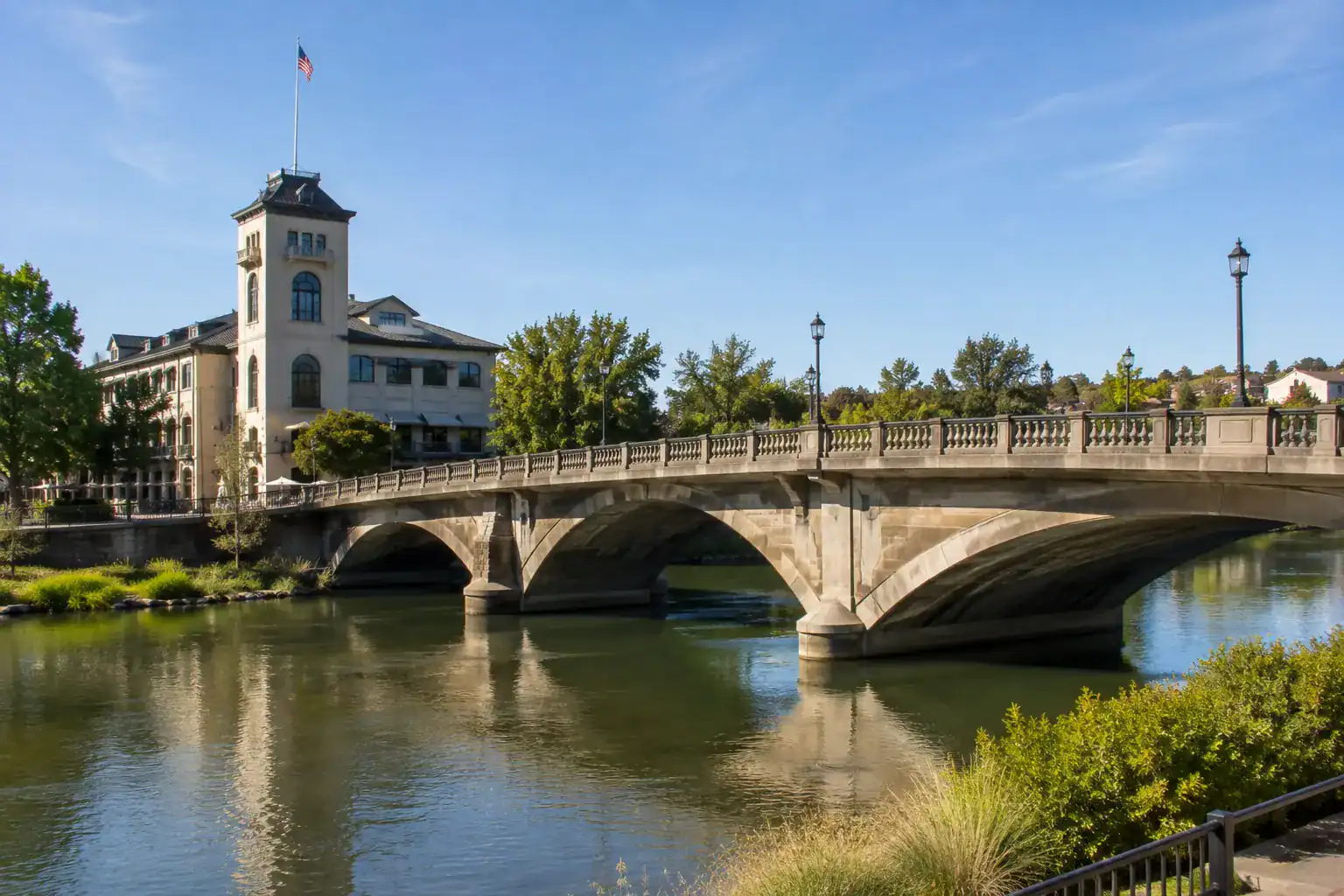
Callback the same business day for Napa. We're 64 miles out, a shorter run than most of what we cover in the Bay Area, so Napa Valley schedules well and we bring the whole job in one mobilisation.
We've inspected and repaired balconies on 240+ Napa-area properties since 2019 - which is to say, on buildings that had already been through 2014 by the time we first opened them.
SB 721 and SB 326 inspection reports filed with the City of Napa when required. We handle the paperwork.
04 / Free Assessment
Tell us about your building(s) - we'll send same-week scheduling, transparent multi-building pricing, and handle SB 721 / SB 326 compliance filing with the City of Napa end-to-end.
Or call us now: (916) 848-2728
05 / Process
Same business day
Submit the form or call (916) 848-2728. We answer questions, discuss your Napa building situation, and schedule a free on-site assessment with a licensed contractor.
Within 24–48 hours
A licensed contractor walks the property, photographs every balcony and EEE element, and identifies SB 721 / SB 326 issues, dry rot, and railing concerns - with particular attention to the hardware where a stiff element meets a frame that moved. ~60 minutes.
Within 2–3 business days
Itemized scope, transparent multi-building pricing, repair-vs-replacement options. For SB 721 / SB 326 jobs we file the inspection report with the City of Napa.
Most jobs start 2–3 weeks
Permits pulled through the City of Napa when required. On downtown stock the historic fabric and the structure are one conversation rather than two, and we scope them together. Work executed by our in-house CSLB-licensed construction crew. Final walkthrough, photo documentation, warranty paperwork.
06 / Services
The engineering reports on the 2014 earthquake are unusually clear about what broke. Modern buildings largely held, because the shaking came in under what the current code designs for. What failed was old masonry, and connections - stiff things bolted to structures that moved further than the connection could tolerate. A balcony hung off a wall is precisely that geometry. Here's where we lead.
Mandatory exterior elevated element inspection services for 3+ unit multifamily buildings and HOA-managed condominiums across Napa and the Napa Valley.
Joist replacement, ledger fix, post-tension repair, code-compliant railing reinforcement.
Elastomeric membrane installation, sealing, resurfacing, and drainage correction - after the connection question is answered, not instead of it.
Load-bearing capacity, wood rot analysis, connection integrity verification.
07 / Investment Ranges
Final estimate after on-site visit. Ranges below reflect 90% of recent Napa-area commercial work. Actual pricing depends on building size, materials, access, and site conditions.
Required compliance
$400–$800per building
On-site visual + structural review, written report filed with the City of Napa.
Most common
$2,500–$8,000per balcony
Joist replacement, ledger fix, railing reinforcement, board replacement. Waterproof recoat $3K–$12K.
Highest value
$15,000–$45,000per balcony
Complete tear-down, new framing, waterproof, railings, code-compliant. Volume pricing for 5+ buildings.
We never quote a final price without an on-site visit. Free assessment takes ~60 minutes — no commitment, no pressure.
09 / Client Voices
Our building was yellow-tagged in 2014, repaired, and signed off. We assumed that was the end of it. D&B was the first crew to point out that nobody had ever looked at the balcony connections, because in 2014 nobody had to. Two of them needed doing. Twelve years is a long time to not know.
Everyone else quoted us a recoat. D&B pulled one fastener before quoting anything and showed us why a recoat would have been money set on fire. The bolt told the whole story.
Our buildings are 1990s and east of the river, and they told us plainly that the 2014 story doesn't really apply to us and priced a normal inspection. I'd have paid more for the scare. That's why we use them.
10 / Local Context
Napa runs the valley pattern – hot dry summers, cool wet winters, and the sort of weather that is hard on a membrane and unremarkable to write about. The city's real environmental story is not the air, it is the ground and the water. This is a river town on a flood plain: the Napa River took the entire downtown in 2005 and destroyed a thousand homes across the county. And it sits on the West Napa Fault, which produced a magnitude 5.0 in 2000 and then, on 24 August 2014 at twenty past three in the morning, a magnitude 6.0 – the largest earthquake in the Bay Area since Loma Prieta in 1989, with a maximum Mercalli intensity of VIII, peak ground acceleration recorded at 0.61g, and forty to forty-six centimetres of surface slip on the rupture. Napa is also fire country; the Atlas and Partrick fires burned parts of the county in October 2017. So an exterior assembly here has, within one human memory, been shaken hard, and in places flooded, and in places had fire pass nearby. Weather is the least of what has happened to it.
The research on 2014 is unusually precise about which buildings suffered, and it maps directly onto our work. Structural engineers tagged 165 buildings red and 1,707 yellow, and the study of those tags found the damage concentrated in the residential section between State Route 29 and the Napa River, including the historic downtown – and correlated above all to two things: pre-1950 construction, and sitting inside the sedimentary basin. Areas east and west of central Napa, outside the basin, came off lighter. The neighbourhoods north, inside the basin but built more recently, came off moderately. So Napa is really two building stocks. Downtown and the old core hold late-1800s and early-1900s masonry – the buildings that took the worst of it and that mostly want Renovation & Remodel rather than replacement, because they are the reason the downtown is worth anything. Everything newer and further out performed as designed, and still carries the same six-year obligation under SB 721 Inspection as anywhere else. We do not price those two the same, and anyone who does has not looked.
Downtown Napa, the Oxbow District, Napa Abajo, Fuller Park, Old Town, Alta Heights, Browns Valley, Bel Aire, Westwood, Linda Vista, Silverado, Vintage, the riverfront and Napa Mill, and the wider Napa Valley. ZIP codes 94558 and 94559.
In Napa we most often address: (1) connection hardware that has been through a documented severe shake and twelve years of ordinary movement since – the 2014 engineering reporting is explicit that connections between stiff elements and moving structures were a defining failure mode, and a balcony bolted to a wall is exactly that; (2) the twelve-year gap – your building may have been tagged, repaired and cleared in 2014, and none of that process asked anyone to open a ledger, because SB 721 did not exist until 2018; (3) the basin line, which is a real thing and not a metaphor – two buildings of the same age a mile apart had materially different 2014s depending on which side of it they sit, and we scope accordingly; (4) guards and their bases on the old core, where the picket is fine and the anchorage into a hundred-year-old wall is the question – which is why Railing Repair & Replacement here starts at the wall.
11 / More Service Areas
Every city links to a dedicated local page — crews, recent projects and compliance details for that area.
Don’t see your city? We likely still cover it — call (916) 848-2728.
12 / Common Questions
$400-$800 per building for a 3-8 unit property. Napa splits on two lines rather than one: age, and whether you sit inside the sedimentary basin between Highway 29 and the river. A 1990s building on the eastern edge inspects like a 1990s building anywhere. A pre-1950 building in the basin has a history, and the inspection has to account for it. The site visit that tells us which one you own is free.
It settled the question that was asked, which was whether the building was safe to enter. It did not settle the one this page is about. The red and yellow tags were occupancy calls made in the days after the shake; the repairs that followed addressed what the tags identified. Nobody was required to remove a waterproof membrane and inspect a ledger connection, because the law that requires exactly that - SB 721, Health and Safety Code section 17973 - was not enacted until 2018, four years later. So a Napa building that was tagged, repaired and cleared in 2014 has, in most cases, still never had its exterior elevated elements formally inspected. The first mandatory look at what a 0.61g shake did to your connection hardware is the inspection you are doing now, twelve years on. That is not a scare - it is a sequence of dates.
Honest answer: for a modern building, probably not much. The engineering reviews are clear that the 2014 ground motions came in under what the current building code designs for, and modern structures largely performed as intended. But two things qualify that. First, the damage that did occur clustered on pre-1950 construction inside the basin, and if that is your building the general reassurance does not apply to you. Second, one of the more instructive failures documented in 2014 involved connections between a structure that deflected and stiff cladding that could not follow it - and a balcony, a stair or a walkway hung off a wall is that same relationship. A bolt that took 0.61g once and has been thermally cycling for twelve years since is not the bolt on the drawings. It might be fine. The point is that nobody has checked.
Cosmetic work and straight recoating generally don't. Structural work does, through the City of Napa. On downtown and old-core stock the practical constraint is usually not the permit but the fabric - the buildings that survived 2014 and were repaired are the reason the downtown recovered at all, and a repair that solves the structure while wrecking the elevation is a bad trade. We scope both at once. If your building is already carrying an open case, deal with that first rather than starting with a repair quote.
Ownership structure decides it, not the building. HOA-governed condominiums are SB 326, nine-year cycle. Non-HOA rental buildings of three or more units are SB 721, six-year cycle. In Napa the split tends to follow the same line as everything else here: the older rental and mixed-use stock sits in the core and is largely SB 721, while the association stock is newer and further out. A detached single-family association with no elevated elements is outside both laws. We'll tell you which of the three you are before you spend anything.
Callback the same business day, on-site within 48 hours. Napa is 64 miles from our North Highlands yard, which is a shorter run than most of what we cover around the bay - we come across the top rather than around it. We still schedule the valley in blocks and bring the full crew in one mobilisation, because that is how a portfolio gets done efficiently. Genuine safety issues we move on immediately regardless. Inspections covers what we look at and how the sampling works.
13 / Free Property Inspection
No commitment. Same-day callback. Licensed, insured & bonded. We file SB 721 / SB 326 reports with the city on your behalf.