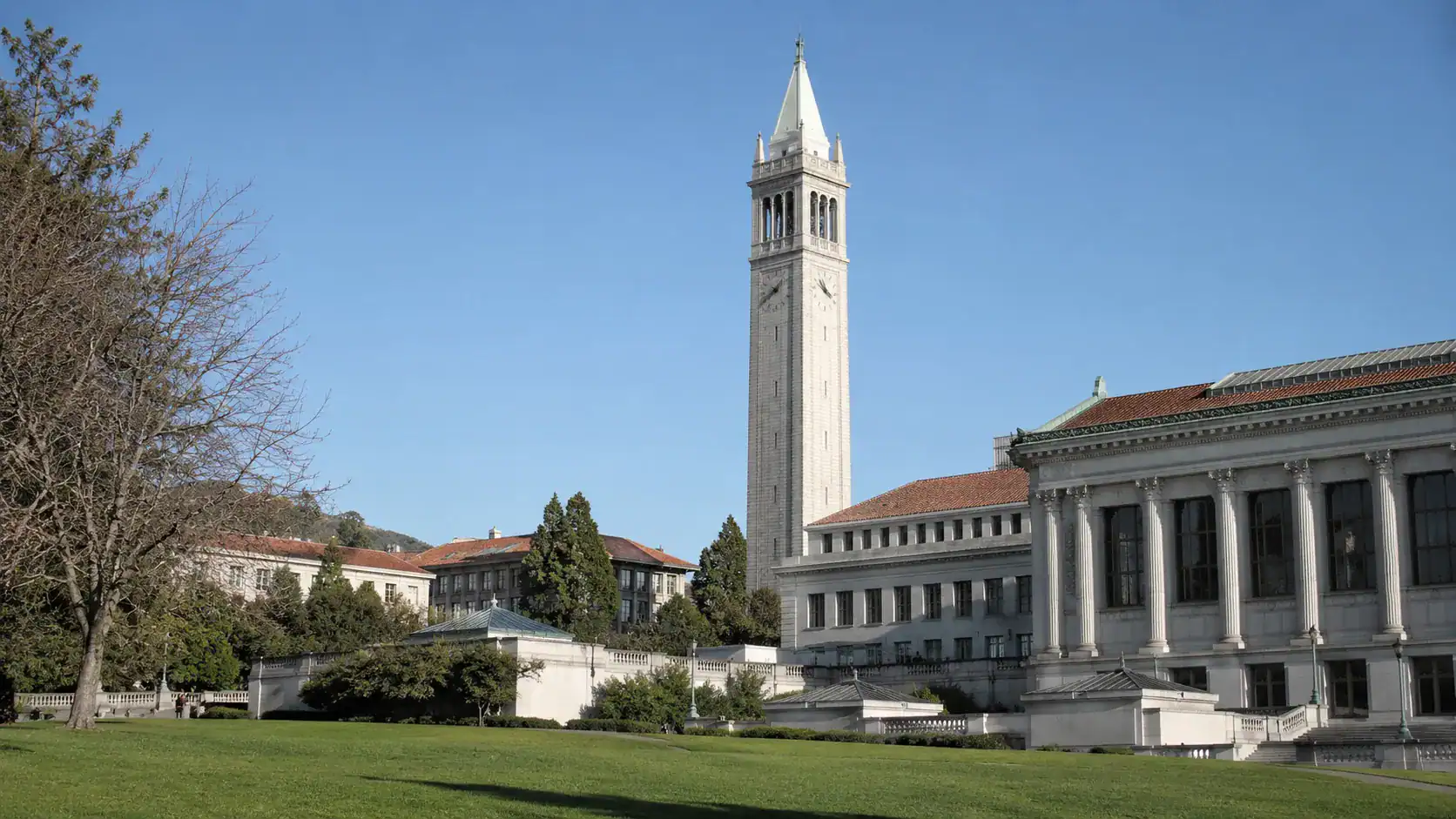
Climate considerations in Berkeley
The inland cities we work in sit in a hot-summer Mediterranean climate. Berkeley is classified warm-summer, and the reason is geography: it lies directly opposite the Golden Gate, which means the eastward fog flow off the Bay blankets it more often than its neighbours, and the cold upwelling current offshore keeps its summers cool where the valley's bake. Mornings and nights are foggy. Afternoons rarely finish the job of drying anything out. For a person that is a good climate. For wood it is close to the worst one available. Decay fungi need two things – sustained moisture and moderate temperature – and the thing that stops them is heat and desiccation. A Sacramento balcony spends four months a year at 94°F, which is brutal on a membrane but sterilises the framing behind it. A Berkeley balcony gets neither the heat nor the drying. Whatever starts in the wood here does not pause for the summer. It just keeps going, out of sight, behind a membrane that looks fine, for as long as nobody opens it.
Common building stock we work on
Berkeley is old, dense, and overwhelmingly rented – 56.7% of occupied units here are tenant-occupied, far above the inland cities we work in, and in the Southside ZIP around the campus it runs higher still. The city incorporated as a town in 1878 and as a city in 1909; growth jumped after the 1906 San Francisco earthquake sent people across the Bay, and the fire of September 1923 rebuilt a good part of the north side in one go. So the layers are pre-1906, the post-quake boom, the twenties, and then the post-war and 1960s student housing that fills Southside. Almost none of it is new, most of it is wood, and a great deal of it is Renovation & Remodel rather than replacement, because the buildings are worth keeping. Two things sit under all of it. The Hayward Fault runs the length of the city – visibly, through Memorial Stadium – and the flat ground toward the shoreline carries liquefaction susceptibility. Neither is our scope, but both are context for what a connection has been asked to do over ninety years.
Neighborhoods served
Southside, Downtown Berkeley, North Berkeley, West Berkeley, the Elmwood, Claremont, Berkeley Hills, Gourmet Ghetto, Telegraph Avenue, Shattuck, Ocean View, and the campus perimeter. ZIP codes include 94702, 94703, 94704, 94705, 94707, 94708, 94709 and 94710.
What we typically see
In Berkeley we most often address: (1) concealed decay with no surface warning – the single defining condition of this city, because the climate never dries the framing and the membrane hides what is happening to it; (2) elements the state law does not reach but the city ordinance does, principally steel-supported balconies and walkways, which are outside SB 721's wood-based scope and squarely inside Berkeley's; (3) ninety-year-old connections on the pre-war stock, where the original detail assumed a maintenance regime nobody has run since the war; (4) buildings on a compliance clock the owner did not know was running – which is why we treat Annual Maintenance Plans here as a calendar problem first and a maintenance product second.