Climate considerations in Los Altos
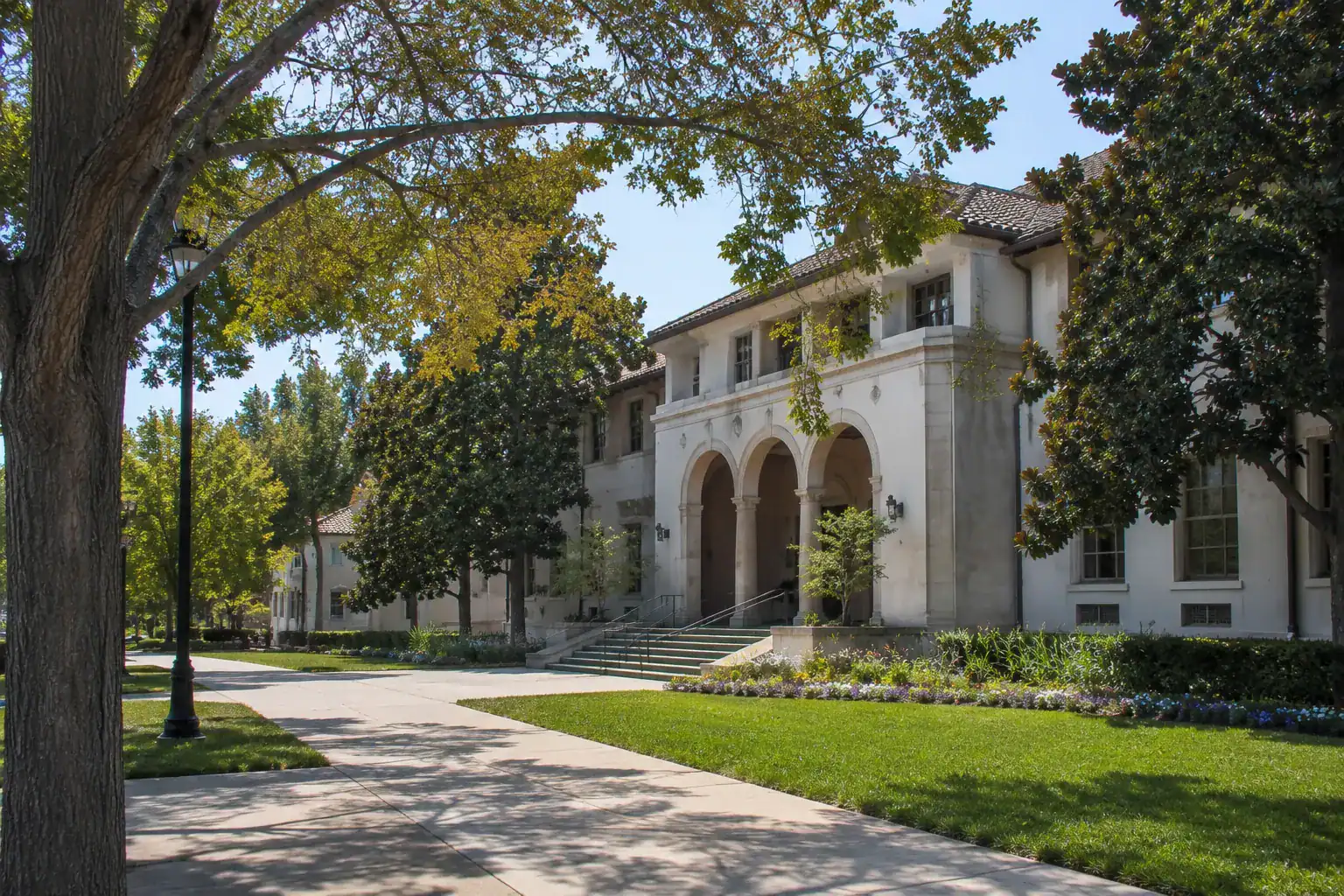
Los Altos enjoys a mild Mediterranean climate with cool wet winters and warm dry summers — annual rainfall around 15–18 inches concentrated November–March, with summer temperatures rarely reaching extremes. On paper this is a relatively forgiving climate for exterior wood. In practice, what defines Los Altos for deck and balcony durability is not the weather but the landscape: the city’s signature mature tree canopy and dense, carefully maintained plantings create persistent shade and moisture-retention conditions around exterior structures. Wood framing under heavy canopy stays damp longer after rain events, shaded surfaces hold moisture for days, and waterproofing membranes work harder than at open-exposure sites. Disciplined inspection — including probing where appropriate — and enhanced moisture-barrier specifications are essential.
Mature landscaping & shade moisture
The mature landscaping that makes Los Altos beautiful is also one of its biggest deck-and-balcony risk factors. Tree canopies overhanging decks block sun-driven drying, perimeter plantings hold moisture against post bases and ledger boards, and dropped organic debris (leaves, needles, seed pods) traps moisture against decking surfaces. Concealed dry rot routinely progresses unseen under intact-looking surfaces — by the time membrane failure becomes visible, the framing underneath often has more deterioration than expected. Every Los Altos inspection our certified firm performs includes assessment of shade exposure, surrounding planting density, and moisture-retention conditions around the structure.
Premium aesthetic standards
Los Altos property values and aesthetic standards are exceptionally high, and restoration work needs to match. Visible repair patches, color mismatches, hardware that doesn’t suit the architectural style — these are not acceptable outcomes. For decks and railings, our licensed construction firm frequently installs premium composites (TimberTech, Trex Transcend) and exotic hardwoods (Ipe, Cumaru) with 25–50 year service-life expectations and minimal maintenance demands. For railing systems, cable rail and tempered-glass panels complement the mid-century and contemporary architectural styles common in Los Altos while exceeding California Building Code guardrail requirements.
Hillside terrain & engineering
Many Los Altos properties — particularly in the western hillside neighborhoods west of Foothill Expressway — sit on steep slopes with tall, elevated decks supported by long posts. These hillside structures face engineering challenges including lateral bracing, soil anchoring, seismic resistance, and concentrated drainage at footings. Hillside deck repairs in Los Altos often require a geotechnical assessment to verify soil conditions and structural engineering plans to verify framing capacity, adding $2,000–$5,000 to the project cost. Our certified construction firm works with local structural engineers familiar with the area’s soil and slope conditions, and coordinates scaffolding, access planning, and engineering documentation as part of every hillside scope.
Common building stock we work on
Los Altos’s residential stock is overwhelmingly single-family with a smaller multi-family component near downtown and Loyola Corners. Many single-family properties feature large custom decks — mid-century stock with redwood or original 1960s–1970s engineered lumber, plus contemporary builds with modern engineered framing and premium decking surfaces. Small to mid-sized multi-family complexes near downtown and Loyola Corners fall under SB 326 scrutiny if HOA-managed, with most needing first or second-cycle waterproofing renewal. Hillside custom homes west of Foothill Expressway feature long-span elevated decks that often need structural engineering review during substantial repairs. Our certified construction crew scopes every project to the era, original materials, and code in effect at installation.
Neighborhoods served
Our certified Los Altos crew covers Downtown Los Altos (Main Street, State Street, Second Street, Third Street), the San Antonio Road corridor, Loyola Corners, the Country Club area, North Los Altos, South Los Altos, the Highlands, the western hillside neighborhoods west of Foothill Expressway, and the Rancho area near the open-space preserve. ZIP codes include 94022 and 94024.
What we typically see
Across our Los Altos inspections, our company most often documents: (1) hidden water damage beneath intact-looking surfaces driven by mature-landscape shade moisture retention — a Los Altos-specific concern from the city’s signature tree canopy; (2) post-base deterioration and ledger flashing failure where perimeter plantings keep wood damp; (3) waterproofing membrane fatigue accelerated by reduced sun-driven drying under canopy; (4) hillside lateral-load and seismic-bracing concerns on older elevated decks west of Foothill Expressway; (5) railings on pre-2000 buildings that fall short of the current CRC 42-inch height and 4-inch sphere rule; (6) aesthetic-mismatch repair work from prior contractors who didn’t scope materials to the property’s architectural style. Every finding is captured in a written assessment with prioritized repair, replacement, or restoration scope.
Emergency response & remodeling
For Los Altos properties with acute safety issues — sagging framing, loose railings, visible rot at load-bearing connections, hillside deck movement, or storm-driven damage — our emergency repair crew responds within 24–48 hours with temporary shoring and code-compliant stabilization. We also handle full deck remodeling for property owners modernizing the look and function of older outdoor spaces while bringing the structure up to current safety code with premium-material specifications.