SB 721 deadline has passed. Penalties run $100–$500/day per building — schedule your inspection today. SB 721 past due Get compliant 

Licensed California Contractor · CSLB #1060736 · Insured & Bonded

Decks Balcony Request an Inspection

HomeService AreasLathrop

Commercial Balcony & Deck Specialists  ·  CSLB #1060736

SB 721 Compliance & Balcony Repair for Lathrop Commercial Properties

Lathrop has the newest housing stock anywhere we work, and that creates a problem nobody expects: the inspection requirement turns on what kind of building you have, not on how old it is or what condition it is in. Boards of recently completed buildings routinely assume compliance is something for later. It is not, and the window for documenting anything found is shorter than the one for fixing it. Licensed California construction contractor serving River Islands, Historic Lathrop, Mossdale Landing, Stonebridge, and the River Islands Parkway, Lathrop Road, and Louise Avenue corridors with SB 721 inspections, structural repair, railing replacement, and waterproofing services.

9+ YearsCalifornia Licensed 240+Lathrop properties SB 721 / 326Compliance Specialists

02 / Local Presence

  • 240+ jobs in Lathrop area
  • 70 mi from our North Highlands HQ
  • 24 hrs avg response time
  • $0 on-site assessment fee

03 / Why D&B for Lathrop

Local response. Compliance experts.

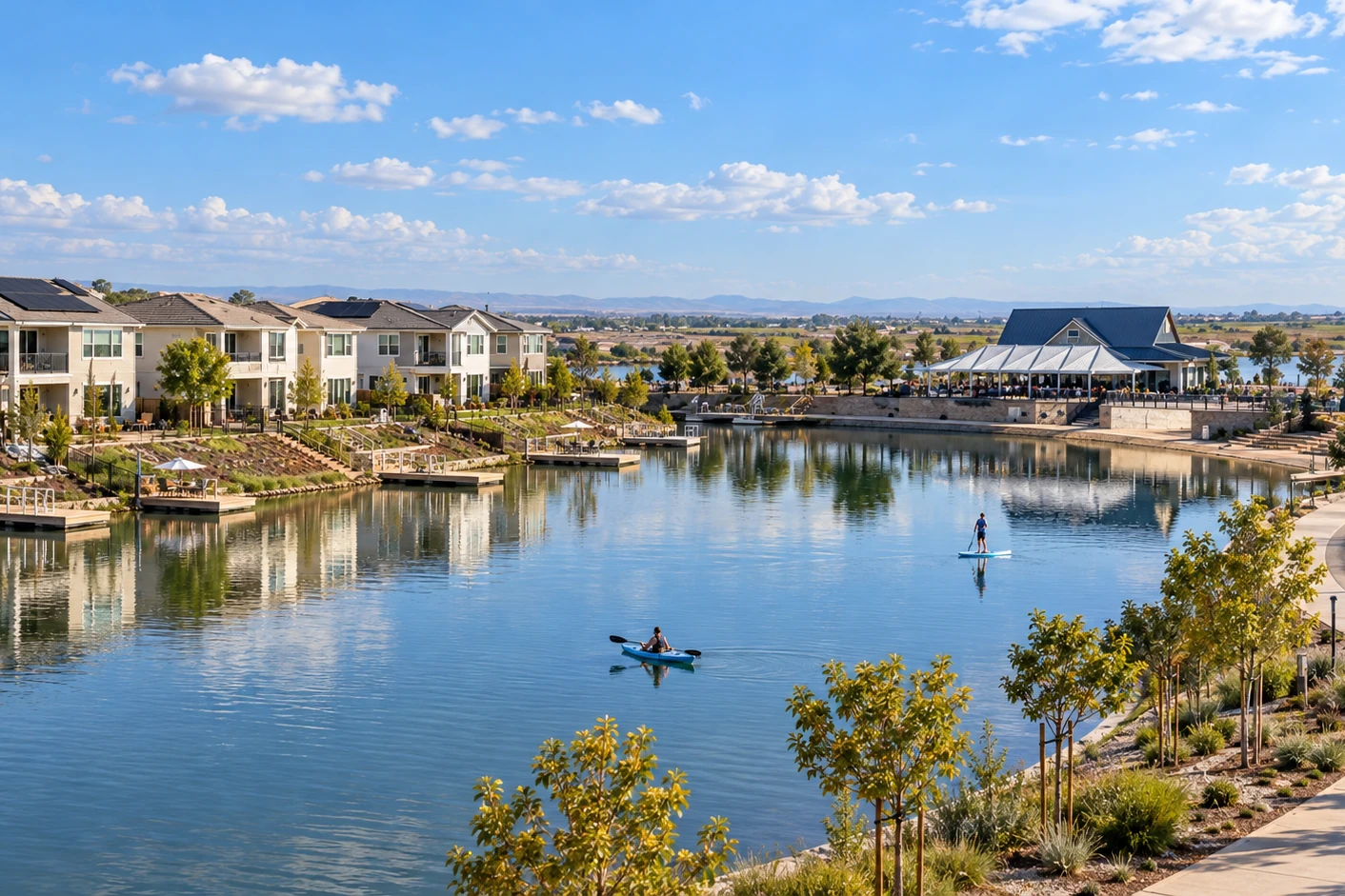
River Islands waterfront in Lathrop, California

Scheduled Lathrop coverage

Same-day callback for Lathrop property managers and HOA boards. Because Lathrop sits toward the southern edge of our service area, we schedule work here in dedicated blocks — typically starting within 2–3 weeks of estimate approval, with expedited scheduling for urgent safety work.

Lathrop familiarity

Our construction company has inspected, repaired, and restored balconies and decks across Lathrop's full range — from waterfront and lakeside homes in River Islands and the newer multi-family stock there to the older subdivisions and historic buildings in the original town.

New-construction compliance specialists

SB 721 and SB 326 inspection reports filed with the City of Lathrop when required. Our certified firm documents recently built stock to a standard that is useful afterwards, not just sufficient for the filing — because on a new building the report is often worth more than the inspection.

04 / Free Assessment

Get a free deck & balcony assessment in Lathrop

Tell us about your building or community — we'll send scheduling that accounts for the travel, transparent multi-building pricing, and handle SB 721 / SB 326 compliance filing end-to-end with the City of Lathrop.

  • SB 721 / SB 326 inspection reports filed with the City of Lathrop — we handle the paperwork
  • Itemized, photo-evidenced documentation that holds up long after the filing
  • Clear advice on whether a recently completed building is already in scope
  • Professional licensed CA contractor · Insured & Bonded

Or call us now: (916) 848-2728

05 / Process

From your message to a finished property

  1. Reach out

    Same business day

    Submit the form or call us. We answer questions, establish what kind of building you have and when it was completed, and schedule a free on-site assessment with a licensed contractor.

  2. On-site assessment

    Within 24–48 hours

    A licensed contractor walks the property, photographs every balcony and EEE element individually, checks waterproofing terminations and connection details rather than assuming new means sound, and identifies SB 721 / SB 326 issues, workmanship concerns, or railing problems. ~60 minutes.

  3. Written report & estimate

    Within 2–3 business days

    Itemized per element and per address, photo-evidenced, with condition and proposed repair separated line by line. On recently completed buildings this matters more than usual: a general condition statement satisfies the filing and is worth very little afterwards, while a documented, element-level record is useful to whoever needs it next.

  4. Schedule and execute

    Most jobs start 2–3 weeks

    Permits pulled through the City of Lathrop when required, work executed by our in-house CSLB-licensed construction crew. Final walkthrough, photo documentation, warranty paperwork.

07 / Investment Ranges

Typical pricing for Lathrop commercial jobs

Final estimate after on-site visit. Ranges below reflect 90% of recent Lathrop work. On newer stock the inspection often costs more than the repairs it finds, which is the right way round — and we schedule Lathrop work in blocks so travel is not loaded onto individual jobs. Volume pricing applies across a community's buildings.

Required compliance

SB 721 / SB 326 Inspection

$400–$800per building

On-site visual + structural review, written report filed with City Code Enforcement.

Most common

Balcony / Deck Repair

$2,500–$8,000per balcony

Termination and flashing correction, connection work, railing compliance, board replacement. Waterproofing recoat $3K–$12K.

Highest value

Full Balcony Rebuild

$15,000–$45,000per balcony

Complete tear-down, new framing, waterproofing, code-compliant custom railings. Volume pricing for 5+ buildings.

We never quote a final price without an on-site visit. Free assessment takes ~60 minutes — no commitment, no pressure.

09 / Client Voices

From Lathrop property managers

Our buildings are less than ten years old, so the board had assumed the inspection requirement was years away. Their licensed contractor team explained it does not work on building age and told us to confirm our own dates with the city, which we did. We were already in scope. Better to find that out from a contractor who checked than from a notice.

P.A. · HOA Board · Historic Lathrop · Sep 2026

Their certified construction company produced a report itemized balcony by balcony with photographs, rather than the general condition summary we had been expecting. We did not need all of it at the time. We very much needed it eighteen months later, and it was already in the right form.

C.N. · Property Owner · Mossdale Landing · Aug 2026

We are right on the water and assumed we would be told we needed marine-grade everything. Their insured team said no — fresh water, no salt, standard specification is appropriate here — and quoted accordingly. First contractor who talked us out of spending more.

L.G. · Property Owner · Stonebridge · Jul 2026

10 / Local Context

New stock, compliance timing & site conditions in Lathrop

Climate considerations in Lathrop

Lathrop sits on the valley floor at the edge of the Delta, with hot dry summers running past 100°F through July and August, low annual rainfall of around twelve to thirteen inches concentrated almost entirely between November and March, and dense tule fog through much of the winter. Afternoon wind comes off the Delta most of the year. Summer heat drives UV degradation of finishes and thermal stress at connections; the wet season arrives compressed, putting every waterproofing termination under load in a short window. On older stock that profile shows up as accumulated wear. On most of Lathrop’s stock there has not yet been enough time for accumulation, and what shows up instead is anything that was not quite right to begin with.

The newest stock we work on — and why new is not exempt

Lathrop has grown faster than almost anywhere in the region, and a large share of its housing — particularly in the River Islands development — was completed within the last decade. That makes it the youngest building stock in our entire service area, and it produces a misconception we correct here more than anywhere else. The inspection requirement is not triggered by deterioration, by age, or by anything a board can observe on a walkthrough. It turns on what kind of building you have and how it is owned: multi-family rental buildings of three or more units on one cycle, HOA-managed condominium stock on another. A building completed five years ago sits inside that framework on exactly the same basis as one completed fifty years ago. Boards here regularly assume they have years before any of this applies, and some of them are already in scope. We will tell you what we see and direct you to confirm your own dates with the city or your counsel — a contractor should not be the final word on a deadline, but a contractor who never raises the question is not doing you any favours either.

Documentation while coverage is still open

This is the part that matters most on recently built property and is most often got wrong. On a new building, an inspection is not primarily about finding accumulated wear — there has not been time for much — but about establishing whether what was built matches what should have been built, and recording that while it is still useful to do so. Coverage periods on new construction are finite, and they run on their own schedule regardless of when anyone gets round to looking. A general condition statement satisfies a filing requirement and is close to worthless as a record. A report built element by element, with each balcony photographed and identified individually, its condition described and any finding attributed to it specifically, is a document that remains useful long after the inspection is paid for. We produce the second kind as standard, at the same price. What happens with it afterwards — whether a finding is pursued, under what framework, and on what timeline — is a question for the board and its counsel, not for us. Our job is to make sure the record exists and is in a form somebody can actually use.

Fresh water, not salt water

A great many Lathrop properties front onto water, and owners reasonably assume that means the specification requirements that apply at coastal and bay-side locations apply here too. Mostly they do not, and we would rather say so than quietly take the budget. The lakes and channels here are fresh water, not brackish or saline, so the chloride-driven corrosion that governs hardware selection on salt-water frontage is not the controlling factor. What waterfront proximity does bring is sustained elevated humidity close to the water, which slows drying and makes ground-contact and ledger detailing worth closer attention than on a dry-side lot in the same community. That is a real consideration and a much cheaper one to address than marine-grade hardware throughout. Where a property genuinely does warrant upgraded specification we say so; where it does not, we do not invent a reason.

Common building stock we work on

Lathrop divides sharply by era. The River Islands development accounts for most of the newer inventory — single-family and multi-family construction largely completed in the last decade, much of it waterfront or lakeside, with balconies and elevated walkways now reaching their first compliance cycle and first waterproofing review. Historic Lathrop and the older subdivisions around the original town carry stock from the rail-town era through the 1980s and 1990s, with the accumulated wear, dated connection details, and pre-current railing geometry that implies. Mossdale Landing and the other 1990s and 2000s subdivisions sit between the two, now at the age where builder-grade flashing and first-generation waterproofing reach end of service life. Apartment and HOA-managed stock across all three eras forms the SB 721 and SB 326 inventory. Our certified construction crew scopes every project to the era, not to the city.

Neighborhoods served

Our certified Lathrop crew covers River Islands, Historic Lathrop, Mossdale Landing, Stonebridge, Woodfield, South Lathrop, the River Islands Parkway corridor, the Lathrop Road corridor, the Louise Avenue corridor, Harlan Road, and the wider Lathrop community. ZIP code 95330 covers the city.

What we typically see

Across our Lathrop inspections, our company most often documents: (1) boards of recently completed buildings who believed the inspection requirement did not yet apply to them — a Lathrop-specific pattern from how much of the housing is new, and one that has nothing to do with the condition of the buildings; (2) prior inspection reports written as general condition summaries, leaving no usable element-level record of anything; (3) waterproofing failures at perimeter terminations, drain assemblies, and planter edges rather than in the field membrane, which is where newer assemblies actually fail; (4) owners near the water specified for salt-water conditions that do not apply here; (5) builder-grade ledger flashing reaching end of life on the 1990s and 2000s subdivisions; (6) railings on older stock around the original town that fall short of the current CRC 42-inch height and 4-inch sphere rule. Every finding is captured in a written assessment with prioritized repair, replacement, or restoration scope.

Emergency response & remodeling

For Lathrop properties with acute safety issues — sagging framing, loose railings, visible rot at load-bearing connections, active intrusion into space below a balcony, red-tagged structures, or storm damage — we offer expedited scheduling within 5–7 business days, ahead of our normal block scheduling for this part of the service area. On newer buildings we document the condition thoroughly before stabilising it, because once a repair is made the evidence of what was there is gone. We also handle full balcony and deck remodeling across the older stock in the original town and the 1990s and 2000s subdivisions.
12 / Common Questions

Lathrop commercial balcony & deck FAQ

What does a typical balcony inspection cost in Lathrop?

For a small Lathrop multi-family or condominium building (3–8 units), our SB 721 or SB 326 inspection service runs $400–$800 per building, with volume pricing across a community. On newer stock the inspection frequently costs more than the repairs it finds, which is the right way round. We schedule Lathrop work in blocks so travel is not loaded onto individual jobs. Free initial site visits are included.

Our building is only a few years old. Does the inspection requirement apply to us yet?

Possibly, and the answer has nothing to do with the building's age or condition. The requirement turns on what kind of building you have and how it is owned — multi-family rental buildings of three or more units on one cycle, HOA-managed condominium stock on another. A building completed five years ago sits inside that framework on the same basis as one completed fifty years ago. Boards here regularly assume they have years in hand and some are already in scope. We will tell you what we see and point you to confirm your own dates with the city or your counsel; a contractor should not be the final word on a deadline, but one who never raises it is not helping you either.

We think something was not built correctly. What should we do first?

Get it documented properly, and do it sooner rather than later. Coverage periods on new construction are finite and run on their own schedule regardless of when anyone looks. What serves you is a report built element by element — every balcony photographed and identified individually, condition described, findings attributed specifically — rather than a general condition statement that satisfies a filing and records nothing usable. We produce that as standard at the same price. What you then do with it, under what framework and on what timeline, is a question for your board and its counsel rather than for us. Our part is making sure the record exists and is in a form somebody can use.

We're on the water. Do we need marine-grade hardware?

Generally no, and we would rather say so than take the budget. The water here is fresh, not brackish or saline, so the chloride-driven corrosion that governs hardware selection on coastal and bay frontage is not the controlling factor. What waterfront proximity does bring is sustained higher humidity close to the water, which slows drying and makes ground-contact and ledger detailing worth closer attention than on a dry-side lot in the same community. That is a real consideration and a far cheaper one to address. Where a property genuinely warrants upgraded specification we will say so; where it does not, we will not invent a reason.

What is the difference between SB 326 and SB 721?

SB 326 covers common interest developments — HOA-managed condominium stock — with re-inspection every 9 years, and applies to exterior elevated elements the association is responsible for maintaining. SB 721 covers non-HOA multi-family rental buildings of three or more units, with re-inspection every 6 years. Lathrop has both, across stock of very different ages. Our certified inspection firm files the appropriate report with the City of Lathrop either way.

13 / Free Property Inspection

Free balcony & deck inspection for Lathrop commercial properties

No commitment. Same-day callback. Licensed, insured, and bonded. Our certified construction company files SB 721 / SB 326 reports with the City of Lathrop on your behalf, and documents new buildings to a standard that is still useful years after the filing.

Privacy controls

Cookie preferences

Choose which optional technologies may be used. Necessary tools remain active.

Change or withdraw permission any time using Cookie settings in the footer.

Closing does not save changes.

Your privacy choices

Opt out of the sale or sharing of personal information for advertising. You can still request a quote.

No account needed for this browser choice. Other privacy requests: see Privacy Policy.

📞
Call Now!