Deck & Balcony Restoration · CSLB #1060736
Commercial Deck & Balcony Restoration in California
We provide deck restoration and balcony restoration services across the Bay Area, Central Valley, and Sacramento — stripped back, repaired where members have failed, refinished, and returned to service on apartment communities, condominiums, HOAs, and hotels. Restoration is excellent value on a structure that is still sound underneath, and money thrown away on one that isn’t. Which of those you have is the first thing we establish, before anyone talks about finishes.
- CSLB #1060736 Licensed California contractor
- 9+ yrs Restoring commercial decks & balconies
- Structure first Framing probed before the finish is quoted
- Commercial & HOA Apartments, condominiums, HOAs & hotels
Where to start
Restoration by Structure
What is under the finish is established before the finish is quoted — on decks and on balconies.

CSLB #1060736SB 721 / SB 326 documentedCommercial, multifamily & HOA
Free quote · no obligation
Request a quote
This page is on its way. Tell us about the property and a licensed contractor follows up the same business day.
01 Why it matters
Restoration is a surface decision that rests on a structural answer
A deck or balcony that has gone grey, splintery, and blotchy usually looks worse than it is. Wood weathers on the surface long before it weakens, and a structure that photographs badly can be in excellent order — which is exactly when restoration is the best money in this trade. Stripped, repaired and refinished, a fifteen-year-old deck can come back looking close to new for a fraction of what replacing it costs.
The trap is that the surface tells you almost nothing about the frame. Decay starts on joist tops, at the ledger connection into the building, and at post bases — none of which you can see from standing on it. So the most expensive restoration anyone buys is a beautifully refinished surface over a structure that needed replacing, discovered eighteen months later. We probe the framing, the ledger, and the post bases before quoting a finish, because that answer decides whether restoration is a bargain or a waste.
On balconies the stakes are higher again. A deck that fails at the edge is a deck problem; a balcony that fails at the wall is water inside the building’s framing, over somebody’s living room. And there’s a point worth being blunt about on a commercial property: restoration is not compliance. A balcony can be refinished to a very high standard and still carry a live SB 721 or SB 326 finding, because those inspections look at structure, connections, and guardrails rather than at the coating.
A deck that looks terrible is often fine. A balcony that looks fine is sometimes not. The surface tells you almost nothing about the frame.

02 The D&B difference
What proper restoration involves
We restore the way it needs to be done, which mostly means doing the unglamorous half properly.
The structure is checked before the finish is quoted
Probe testing at joists, ledger, and post bases, with moisture readings, before we price anything cosmetic. If the structure shouldn’t be restored, we say so — including when that means we don’t get the job.
Stripped, not just washed
Most failed finishes have to be removed rather than cleaned. New coating over old failed coating is the single most common reason a restored deck looks poor within a year, and it’s why cheap restorations don’t last.
Cleaned without damaging the timber
Softwood is easily wrecked by too much pressure — it erodes the soft grain and leaves a furred surface that then needs sanding to fix. We clean at pressures the wood can take and sand where sanding is what’s actually required.
03 · Service Areas
Where We Work in California
Every city links to a dedicated local page — crews, recent projects and compliance details for that area.
Sacramento Metro
11 cities
East Bay
18 cities
Don’t see your city? We likely still cover it — call (916) 848-2728.
04 How a project runs
How a restoration project runs
-
01
Assessment
Probe the joists, ledger, and post bases, take moisture readings, and check the railings. This is where we tell you whether restoration makes sense.
-
02
Scope & estimate
A written scope covering what’s being repaired, what’s being replaced, and what’s being refinished, with the restore-or-replace comparison where it’s a close call.
-
03
Repairs
Failed and split boards replaced, popped and corroded fasteners removed and replaced, railings re-secured, and any localised framing repair carried out.
-
04
Strip & clean
Old failed finish removed, the surface cleaned at a pressure the timber can take, and mildew and staining treated.
-
05
Sand & prepare
Sanded where the grain has raised or the surface has furred, and left to dry to a moisture content that will accept finish.
-
06
Finish
Stain, sealer, or traffic coating applied at the right time and in the right conditions, across surfaces, railings, stairs, and fascia.
-
07
Handover
A maintenance schedule so the work stays done, plus documentation for the compliance file on commercial property.
05 Scope
What’s included in a D&B restoration
Complete deck restoration services and balcony work — structure checked, surface renewed — by one CSLB-licensed crew.
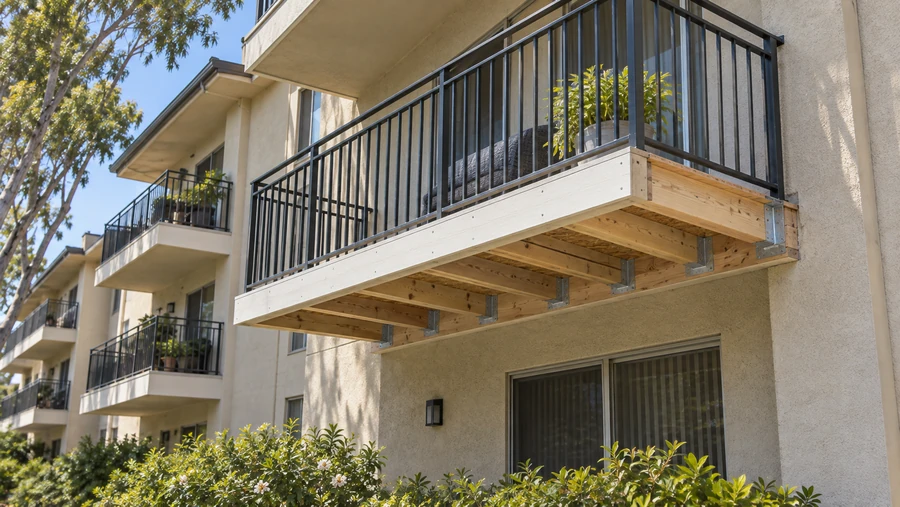
- Structural assessment — joists, ledger, post bases, moisture readings
- Honest restore-or-replace recommendation before anything is quoted
- Replacement of split, cupped, and failed boards in matched material
- Popped nails and corroded fasteners removed and replaced with rated screws
- Railings re-secured, with loose posts re-anchored into structure
- Localised framing repair where decay is contained
- Ledger and connection detailing corrected where the surface is open anyway
- Old failed finish stripped rather than coated over
- Cleaning at pressures the timber can take, with mildew and stain treatment
- Sanding where the grain has raised or the surface has furred
- Drying to a moisture content that will hold finish
- Stain, sealer, or traffic coating applied to surfaces, railings, stairs, and fascia
- Balcony coatings turned up at the wall and dressed over the edge
- Soffits and fascia repaired and refinished
- Maintenance schedule matched to the finish and the exposure
- Documentation for the SB 721 / SB 326 compliance file
06 Investment
What restoration costs
The cost of deck restoration is quoted after the structure is checked, because the assessment determines whether we’re quoting a restoration at all.
What drives the cost
- Total area, including railings, stairs, and fascia, which are slower per square foot than the surface itself
- Condition of the existing finish and whether it has to be stripped or only cleaned
- How much sanding the surface needs
- Number of boards or members being replaced, and whether matching material is available
- Fastener replacement across the whole element or in localised areas
- Any framing repair found during assessment
- Number of elements, since a programme across a property prices very differently from a single deck or balcony
- Finish selected, and the number of coats it requires
Restoration against replacement: on a sound structure, restoration typically costs a fraction of replacement and buys years of service. That maths flips as soon as significant framing repair enters the scope — once you’re replacing joists, repairing a ledger, and re-boarding a large share of the surface, the marginal cost of rebuilding is smaller than owners expect, and you get a full service life rather than a few more seasons. We give you both numbers where it’s genuinely close rather than steering you toward the bigger job.
Why cheap restorations cost more: the difference between one that lasts and one that doesn’t is almost entirely in the preparation. Coating over a failed finish, or washing at a pressure that damages the wood, produces work that looks good for a season and needs redoing. If a quote is markedly lower than the others, the preparation is where it was saved.
Final pricing follows an on-site assessment. Request a free estimate — no obligation.
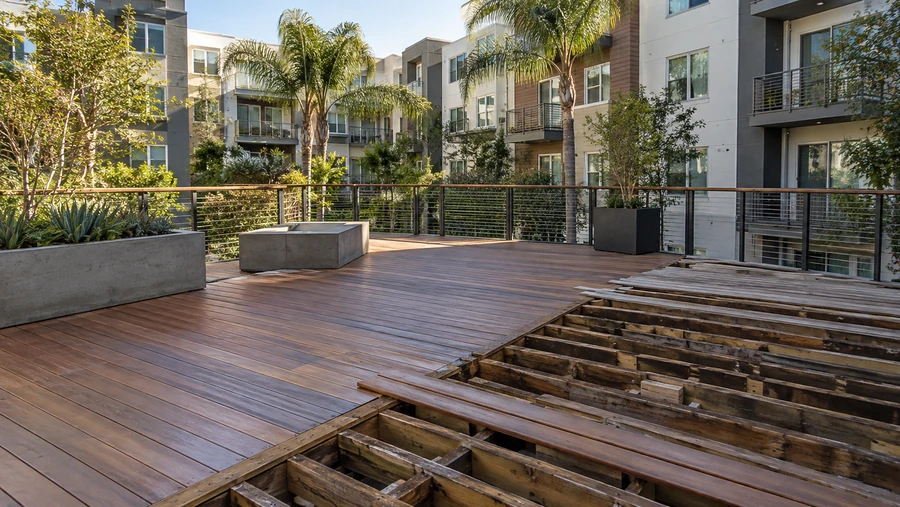
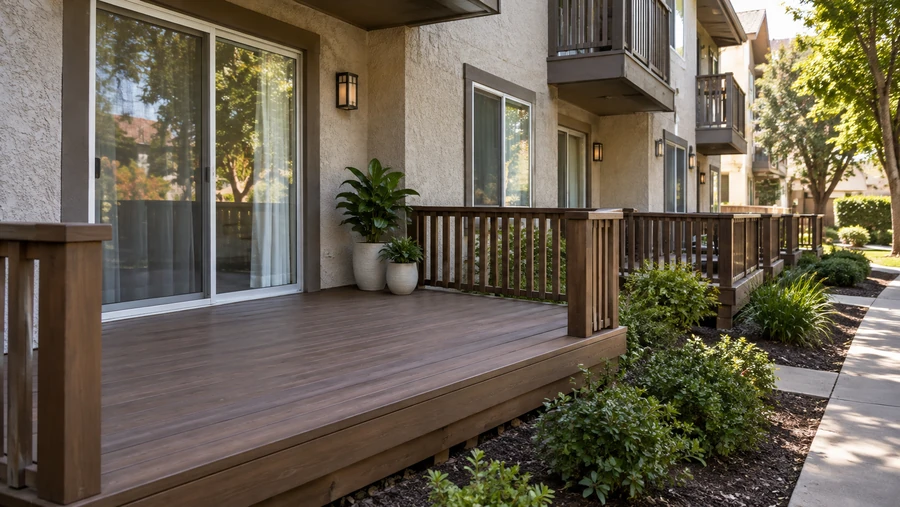
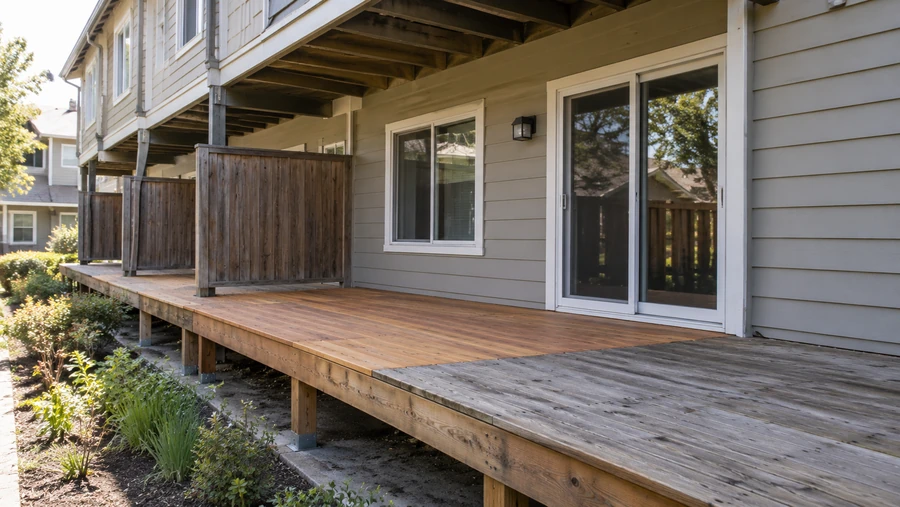
In the field
Restoration detail
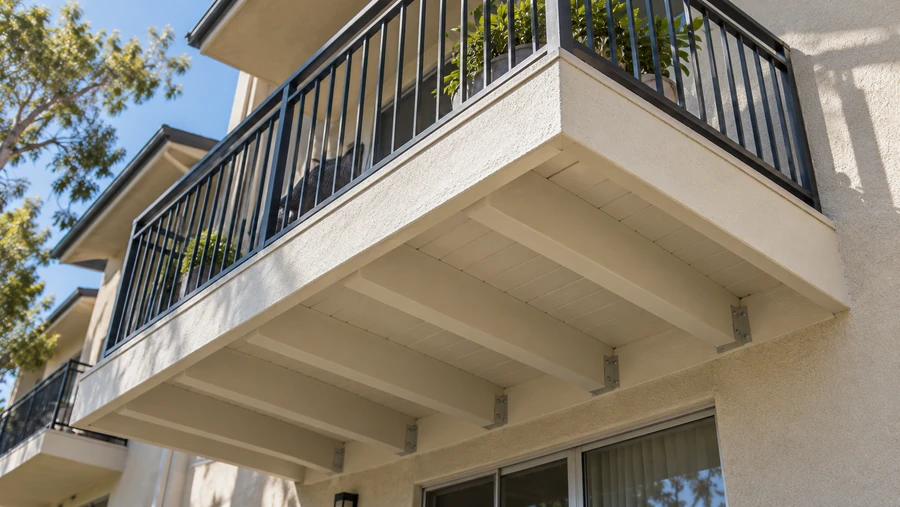
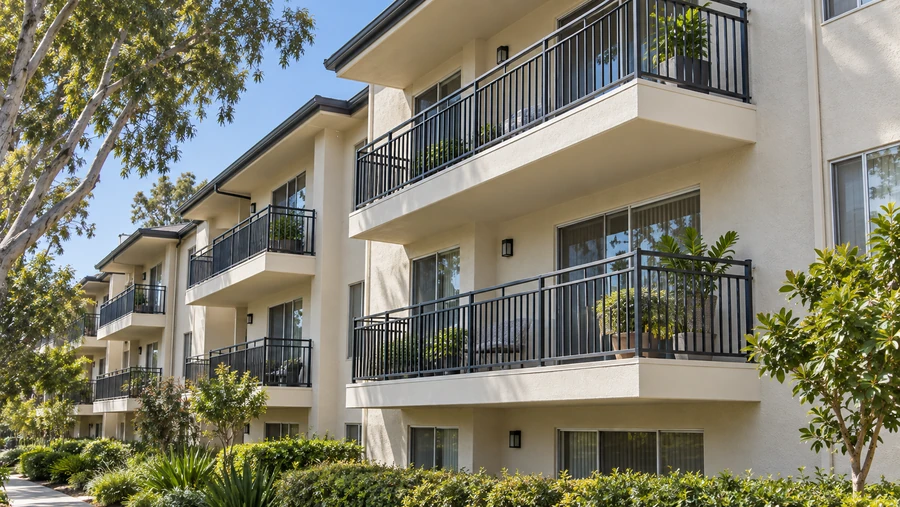
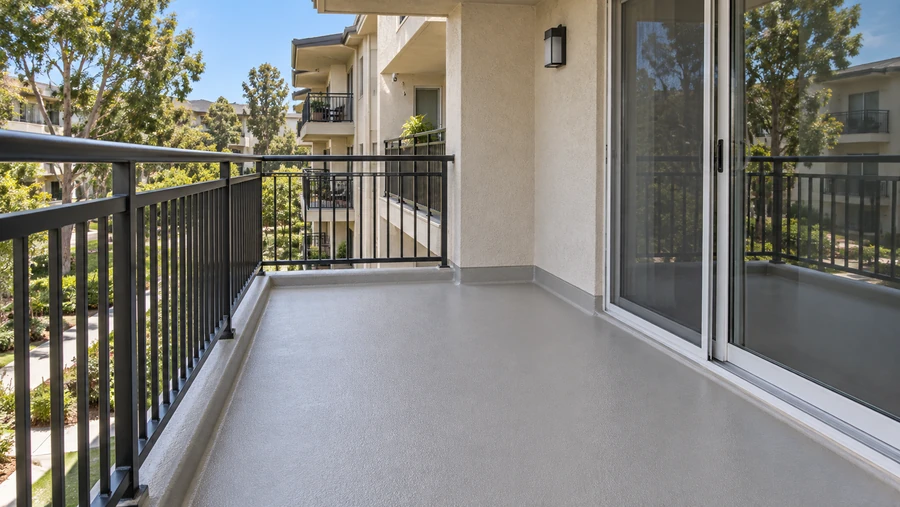
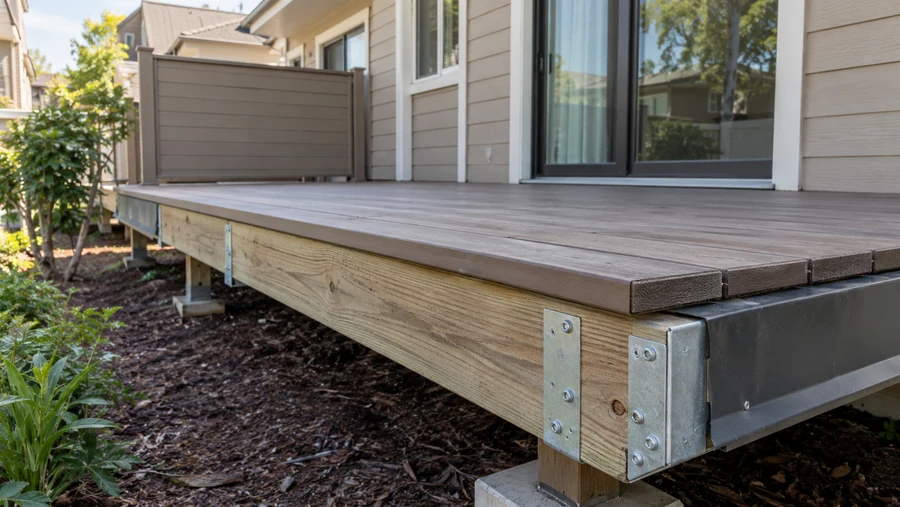
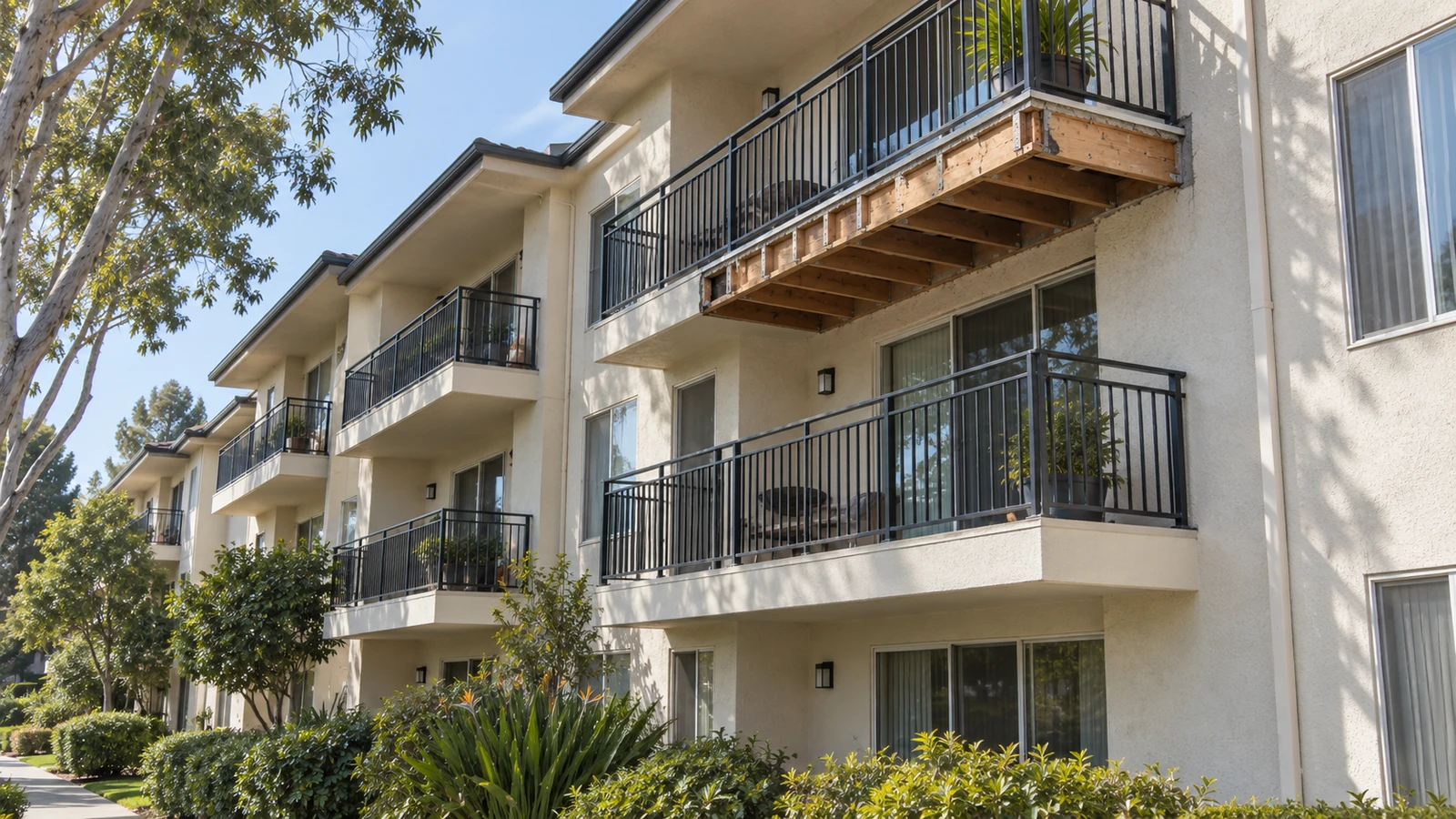
The same properties, before and after the work nobody photographs.
07 Project example
A recent restoration project
An apartment community had balconies and walkway decks that had gone grey and blotchy, with coating flaking off in patches. The owner had been quoted for a full replacement across the property and wanted a second opinion. Probing changed the scope in both directions. On most of the elements the framing was sound and the ledgers were dry, which made them restorations — stripped, repaired where boards had split, sanded, and refinished. On four, opening the soffit found decay at the joist ends where the ledger had never been flashed, and those were rebuilt rather than refinished. The property paid replacement prices on four elements instead of forty.
We’d already accepted we were replacing all of them. They spent a day probing and told us we were replacing four. Regional Property Manager · California apartment community
08 Case studies
Recent Projects, Documented
Real commercial properties — what the building needed, what we did, and what it delivered.
 Deck RepairElevated Restaurant Dining Deck Restoration — SaratogaA multi-level hillside dining deck taken from failing boards and moisture-damaged connections back to a sound, sealed structure…View case study
  Deck RepairElevated Deck Reconstruction & Waterproofing — 24 Balconies, SacramentoOpen board decks sitting directly over enclosed garages. Every gap between the boards was a route for water…View case study
  Deck RepairTrex Deck, Walkway & Stair Replacement — 12-Unit Apartment Community, Menlo ParkResidents walked the same tired wood the whole way from the parking lot to their front door —…View case study
  WaterproofingBalcony Waterproofing — Blue Apartment Building, VacavilleThe coating had not cracked. It had worn thin exactly where the debris line sat — along the…View case study
 09 Client feedback
What property managers say
They talked us out of a full replacement. Most of the frames were fine — nobody else had bothered to look underneath before quoting forty elements.
The last company pressure-washed our walkways and the boards came up furry. These ones explained why that happens and sanded it back properly.
They stripped the old coating instead of going over it. Three years on it still looks like the week they finished.
10 FAQ
Restoration questions
How do I know if our decks and balconies are worth restoring?
By what’s underneath, not by what they look like. Wood weathers on the surface long before it weakens, so a grey, splintery deck is frequently sound and an excellent candidate. What matters is the framing: joist tops, the ledger connection into the building, and the post bases. We probe those and take moisture readings before quoting anything cosmetic, and if the answer is that an element should be replaced, we’ll tell you that instead.
How much does deck restoration cost?
Considerably less than replacement on a sound structure, and the number depends on area, how much of the old finish has to be stripped, how much sanding is needed, how many members are being replaced, and whether railings and stairs are included — those are slower per square foot than the surface. On a property with multiple elements, a programme prices better than the same work done piecemeal. We quote after the assessment, because the assessment determines whether we’re quoting restoration at all.
When does replacement make more sense?
When framing repair enters the scope in a meaningful way. Replacing a few boards and refinishing is a restoration. Replacing joists, repairing a ledger, and re-boarding most of the surface is most of a rebuild already — and at that point the additional cost of replacing outright is smaller than owners expect, and you get a full service life instead of a few more years. We show both numbers when it’s genuinely close.
Can’t we just pressure-wash and re-coat?
That’s what most failed restorations are. Two things go wrong. Pressure washing softwood at typical settings erodes the soft grain and leaves a furred surface that then needs sanding — it damages the timber it was meant to clean. And new finish applied over an old one that’s already failing doesn’t bond; it fails again, usually within a season. Stripping and proper preparation are the reason a restoration lasts.
Does restoration close an SB 721 or SB 326 finding?
No, and this is worth being clear about. Those inspections look at structure, connections, and guardrails, not at the finish. An element can be restored beautifully and still carry a live finding, because nothing about refinishing addresses a rotted ledger or a non-compliant railing. If your property has findings, those are repair work — and we do that too, as a separate scope on the same visit.
Is balcony restoration different from deck restoration?
The process is similar and the stakes aren’t. Deck restoration on a freestanding structure is a contained job; a balcony sits over occupied space and attaches to the building, so decay at the wall means water in the building’s framing rather than in a freestanding structure. Balcony work also usually involves a traffic coating rather than a stain, turned up at the wall and dressed over the edge — a system rather than a finish. We probe balconies more thoroughly for exactly that reason.
Can you restore a whole property at once?
Yes, and it prices better than doing elements one at a time, because mobilisation, staging, and setup are paid once. On occupied buildings we phase the work so a resident loses access to their own balcony and nothing else. Boards and managers field more complaints about access than about cost, and a schedule that anticipates that is part of what we’re quoting.
How often will it need doing again?
Depends on the finish and the exposure, but on properly prepared work expect two to three years before re-coating, and considerably longer before the full strip-and-sand treatment is needed again. We hand over a schedule matched to what we applied and where the element sits, because work that’s re-coated on time never needs restoring twice.
Are you deck restoration contractors near me in California?
We’re a CSLB-licensed contractor (#1060736) restoring decks and balconies across the Bay Area, Central Valley, and Sacramento, exclusively on commercial, multifamily, and HOA property. Rather than working through a list of deck restoration companies one by one, call once and we’ll tell you whether your property is in range. Assessment, repairs, stripping, sanding, and refinishing come from one crew — and the assessment is free whether or not the answer is restoration.
11 Start here
Find out what’s worth restoring — free assessment
Send photos or tell us how old the decks and balconies are and what they look like now. We’ll come out, probe what’s underneath, and tell you honestly which elements are restorations and which aren’t — with estimates for both.
CSLB #1060736 · 9+ years · Insured & Bonded · Commercial, multifamily & HOA properties across the Bay Area, Central Valley & Sacramento