Climate considerations in Arden-Arcade
Arden-Arcade sits in an inland Mediterranean climate zone with hot dry summers and cool wet winters. Summer temperatures regularly reach 95–105°F, driving intense UV degradation of sealants and finishes, thermal expansion stress on decking, and rapid moisture loss that causes surface checking and warping on exposed wood. Winter tule fog and concentrated rainfall (annual precipitation around 17–20 inches falling mostly November–March) drive the wet phase of a heat-then-rain stress profile that wears waterproofing membranes faster than milder climates. The mature tree canopy along the American River Parkway and in older residential neighborhoods adds shade-driven moisture retention around deck substrates that keeps wood damp longer after rain events. Scheduled re-sealing every 1–2 years and disciplined waterproofing maintenance are essential.
Unincorporated CDP: Sacramento County jurisdiction
Arden-Arcade is a Census Designated Place (CDP), not an incorporated city — with roughly 95,000 residents, it is one of California’s largest unincorporated communities. This has practical implications for deck and balcony repair work: there is no “City of Arden-Arcade” building department. All permits are processed through the Sacramento County Building Division, and all SB 721 / SB 326 inspection reports are filed with Sacramento County Code Enforcement. Our licensed construction firm is familiar with the county permitting process for the 95821, 95825, and 95864 ZIP code areas and handles the complete paperwork end-to-end.
American River Parkway proximity
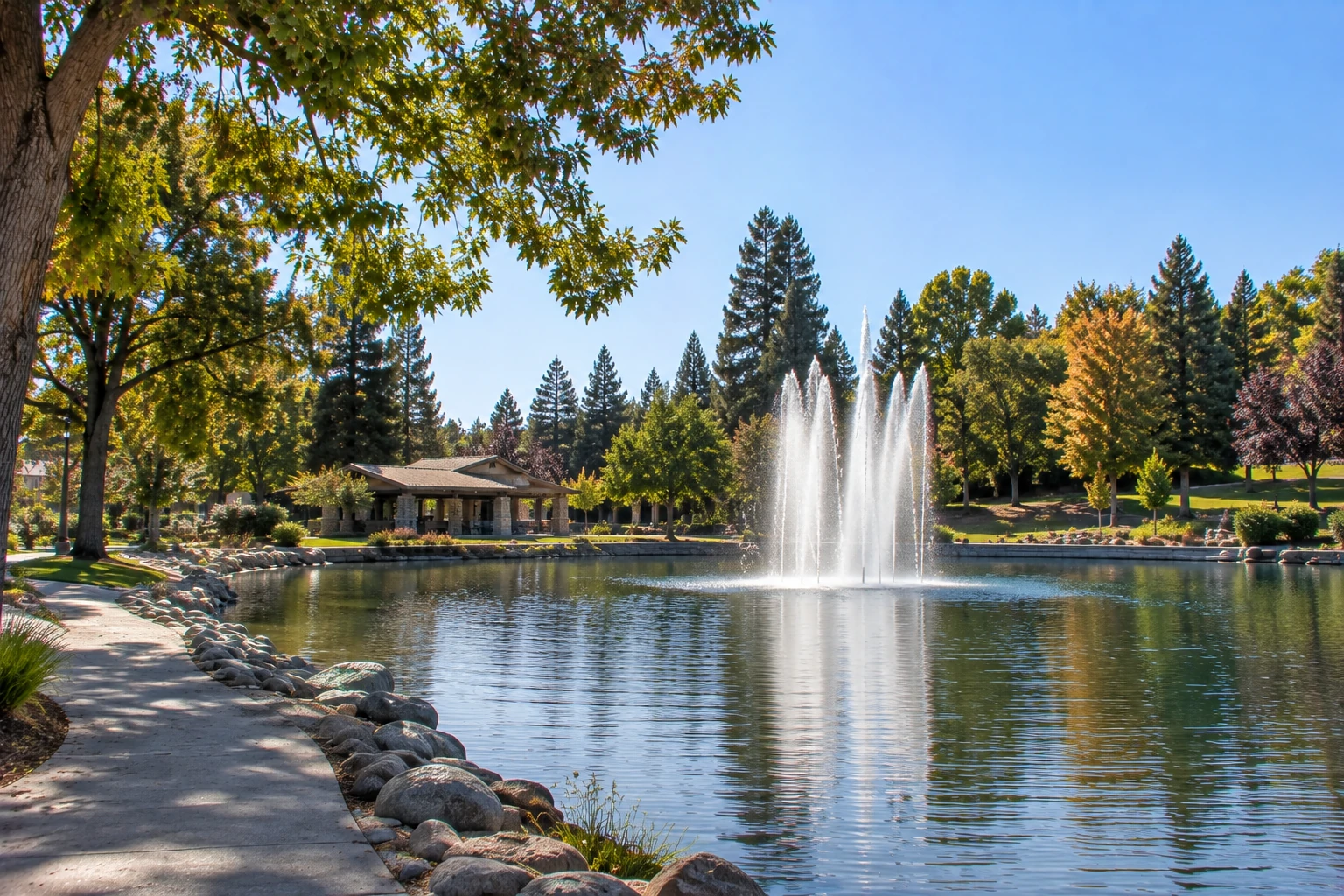
Arden-Arcade’s northern edge borders the American River Parkway — a long, mature-canopy riverside greenbelt with signature oak, sycamore, and cottonwood trees. Properties in Arden Park, Sierra Oaks, and other neighborhoods near the parkway benefit from the shade and beauty, but the same canopy retains moisture around exterior wood structures. Fallen leaves and organic debris trap moisture against decking surfaces, perimeter plantings hold moisture against post bases and ledger boards, and reduced sun-driven drying accelerates concealed dry rot. Every deck inspection near the parkway includes assessment of shade exposure and moisture-retention conditions around the structure.
Post-war multi-family scale
Arden-Arcade has one of the largest multi-family residential inventories in the region, concentrated along the Fulton Avenue, Watt Avenue, Marconi Avenue, and Arden Way corridors. Much of this stock dates to the 1950s–1970s post-war building boom, when the community grew rapidly. That building era means the multi-family inventory now falls squarely under heavy SB 721 scrutiny: aging fasteners, undersized connections, waterproofing systems decades past service life, and railings that predate current CRC height and geometry standards. Coordinated inspection scheduling across multi-building portfolios protects operating budgets — our certified firm scales staffing to portfolio size.
Common building stock we work on
Arden-Arcade’s residential stock spans several construction eras. 1940s–1950s post-war ranch homes in Arden Park, Sierra Oaks, and Arden Terrace typically feature original wood porches, small deck additions, and railings predating modern fastener and code standards. 1950s–1970s garden apartment complexes along Fulton Avenue, Watt Avenue, Marconi Avenue, and Arden Way form the bulk of the SB 721-eligible inventory — most need ledger restoration, post-base rebuild, full railing replacement, and refinishing. 1980s–2000s condominium and townhouse developments near the Arden Fair Mall area and along the Cal Expo periphery fall under SB 326 scrutiny. Post-2000 mixed-use buildings are approaching first-cycle waterproofing renewal. Our certified construction crew scopes every project to the era, original materials, and code in effect at installation.
Neighborhoods served
Our certified Arden-Arcade crew covers Arden Park, Sierra Oaks, Arden Terrace, the Cal Expo area, the Fulton Avenue corridor, the Watt Avenue corridor, Marconi Avenue, Arden Way, the Arden Fair Mall area, the Del Paso Country Club area, the American River Parkway neighborhoods, and the wider Arden-Arcade community. ZIP codes include 95821, 95825, and 95864.
What we typically see
Across our Arden-Arcade inspections, our company most often documents: (1) heat-driven surface checking, splitting, and waterproofing membrane fatigue on south- and west-facing balconies — an Arden-Arcade-specific concern from sustained 95–105°F summer stretches; (2) UV breakdown of sealants and finishes within 2–3 years on unmaintained decks; (3) dry rot at ledger and joist connections on 1950s–1970s apartment stock from winter rain exposure; (4) concealed dry rot beneath intact-looking surfaces where mature tree canopy retains moisture — a signature concern for parkway-adjacent properties; (5) railings on pre-2000 buildings that fall short of the current CRC 42-inch height and 4-inch sphere rule; (6) first-cycle waterproofing wear on newer condominium developments near the Arden Fair Mall area. Every finding is captured in a written assessment with prioritized repair, replacement, or restoration recommendations.
Emergency response & remodeling
For Arden-Arcade properties with acute safety issues — sagging framing, loose railings, visible rot at load-bearing connections, red-tagged decks, or storm-driven damage — our emergency repair crew responds within 24–48 hours with temporary shoring and code-compliant stabilization. We also handle full balcony and deck remodeling for property owners modernizing the look and function of older outdoor spaces while bringing the structure up to current safety code.