How To Avoid Water Damage In Your Rental Property
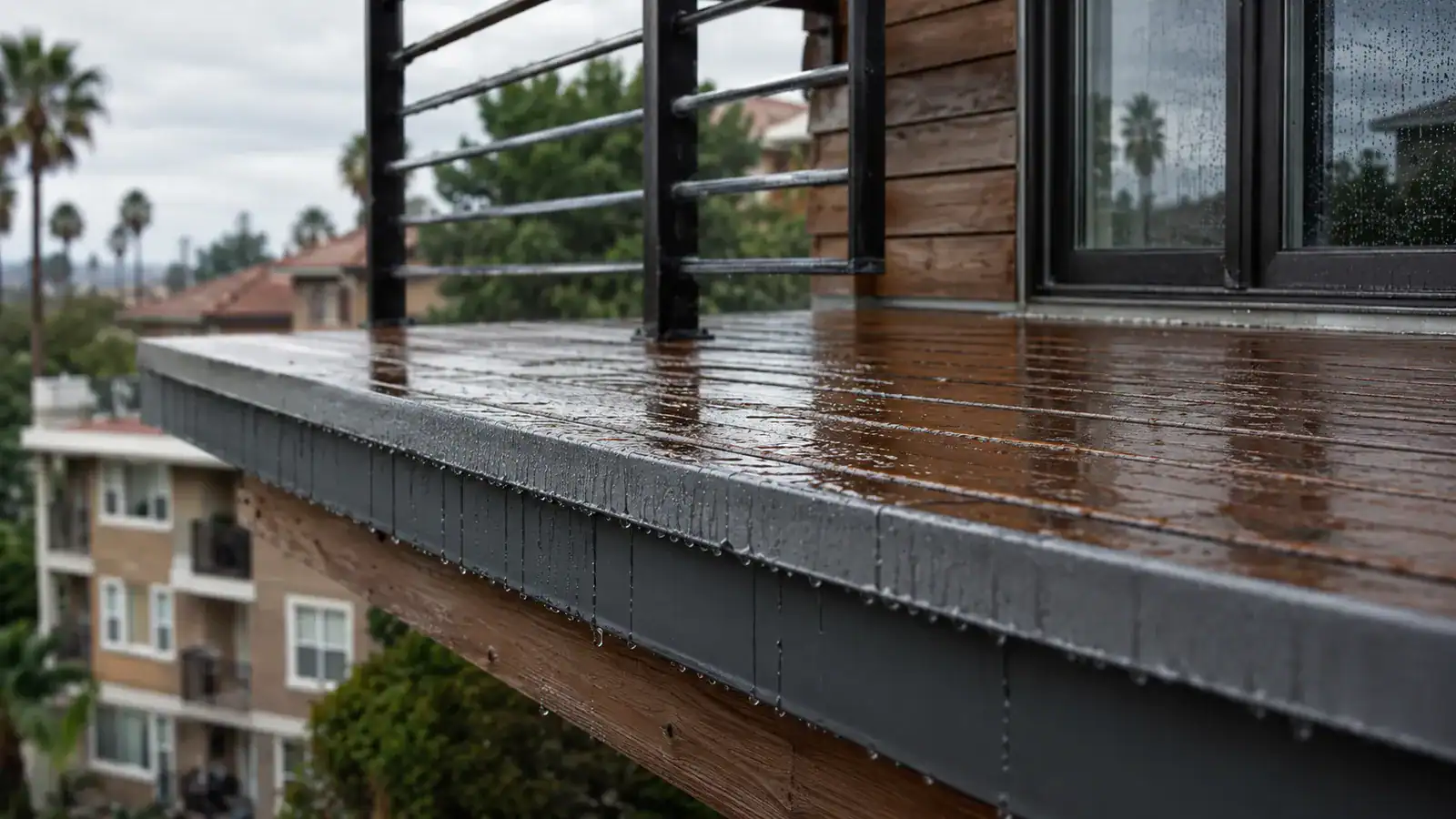
Water is the most patient and most expensive enemy a rental property has. It doesn’t burst in with a roar like a fire, and it doesn’t demand an instant response like a broken lock. It seeps in quietly — along a seam, through a crack in a balcony coating, under a worn-out membrane — and gnaws at the structure for months, until one day it shows itself as a wet patch on the downstairs neighbor’s ceiling or a board sagging under a tenant’s feet.
For an owner renting out property in California, protecting against water isn’t a one-time job but part of keeping the building in good shape. The integrity of the structure, the peace of mind of the tenants, and compliance with the law all hinge on it. In this article we’ll work through it step by step: where water comes from under California conditions specifically, why the balcony turns out to be the most vulnerable point, what prevention involves, and how responsibility is split between owner and tenant.
Where Water Comes From in a California Building
Generic water-damage guides often tell you to install sump pumps in basements and guard against snowmelt. For most of California that advice is useless: basements are nearly absent from the local housing stock, and snow is a rarity. Different forces are at work here, and those are the ones worth keeping in mind.
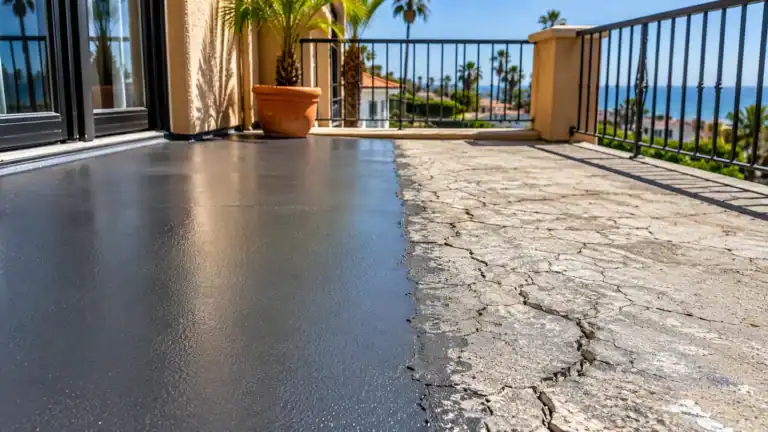
The great California paradox is that it’s not only the rain that does harm, but the absence of it. A long, dry summer with harsh ultraviolet bakes the waterproofing coatings until they crack and lose their flex. Then the rainy season arrives, and a year’s worth of pent-up water hits those weakened, cracked spots all at once. Add to that the swing between daytime and nighttime temperatures, which makes materials expand and contract, and near the coast the salt air that eats away at metal fasteners.
So California water comes from above and from the side: through the roof, the windows, the balcony decks, and worn-out seams. One especially sneaky detail is poorly ventilated bathrooms and kitchens, where moisture builds up from the inside and slowly degrades the walls without any rain at all. Understanding these paths points you straight to where the problem hides: at the joint where the deck meets the wall, under the balcony door threshold, and in the places where an old coating has long been overdue for renewal.
Why the Balcony Is the Weakest Link
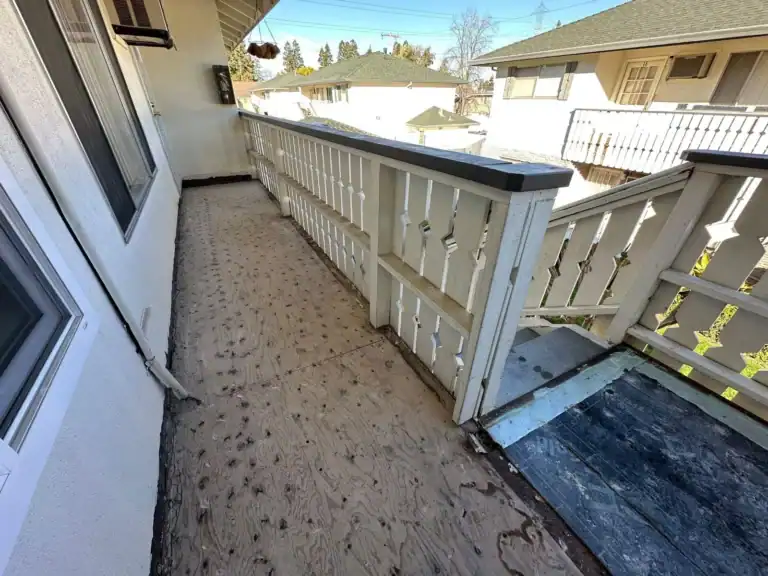
Of all the parts of a rental building, the balcony suffers from water first, and there are several reasons for that. It’s constantly open to the sky, it has a horizontal surface where moisture lingers, and it relies on complex waterproofing that inevitably wears out over time. Above all, it’s an elevated structure with no ventilation underneath, so water that gets inside barely evaporates and quietly does its work.
By the observation of industry specialists, waterproofing failure is behind the overwhelming majority of balcony breakdowns — far more often than any other cause. The mechanics are always the same: water finds a breach in the coating, works into the wood framing, sets off rot, and the load-bearing capacity drops long before any of it shows on top.
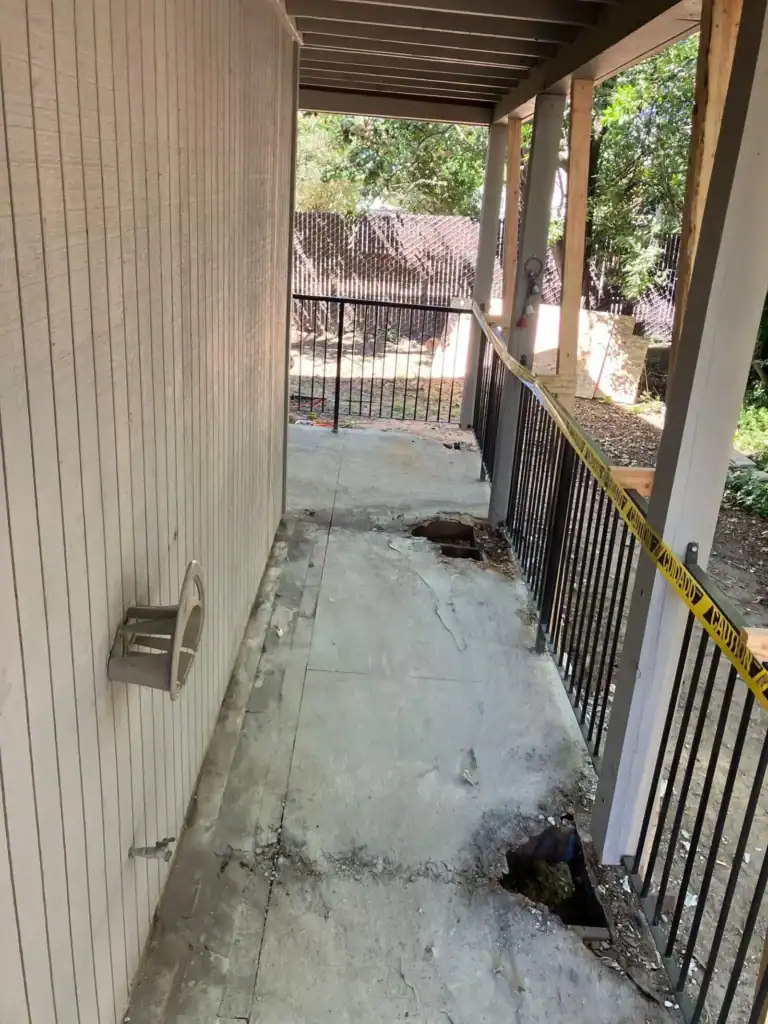
The treacherous part is that a balcony looks fine for a long time. The surface is even, the paint intact, while underneath the wood is already soft — and it announces itself only when a board starts to flex or sink underfoot. For an owner the takeaway is simple: keeping an eye on the balcony matters more than on any other part of the building, because the price of a missed leak here isn’t cosmetic — it’s replacing the load-bearing structure, along with the collateral damage that comes with it.
What Prevention Involves
The good news is that protecting against water comes down to clear and not especially costly actions, as long as you do them regularly. Below are the main areas worth paying attention to when you walk the property.
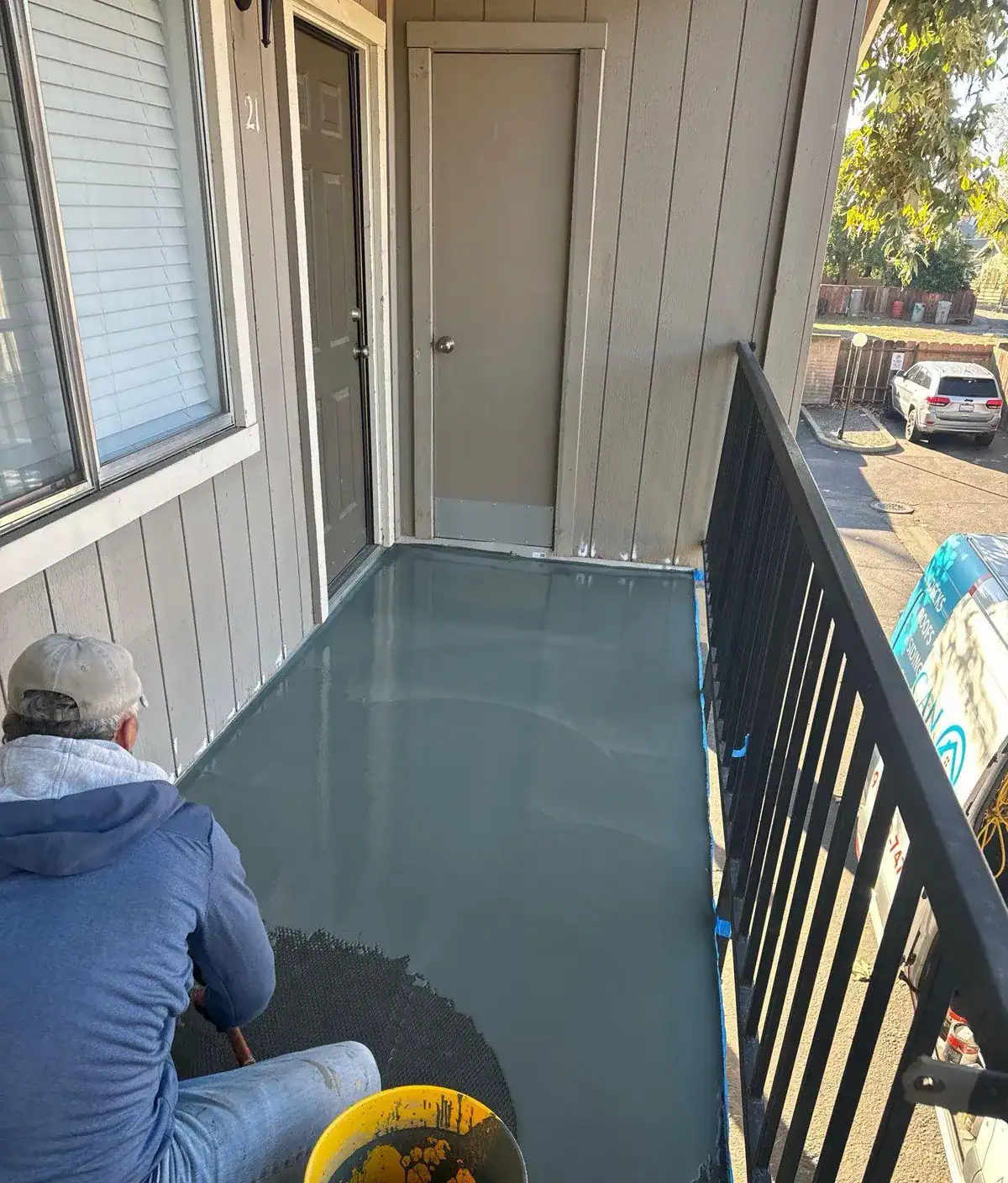
- Balcony and deck waterproofing. The condition of the coating, the integrity of the membrane, the absence of cracks and blisters — that’s the first thing to check.
- Slope and drainage. Water should run off the surface rather than pool; a slope of roughly one to two percent and clean drains solve half the problems.
- Seams and transitions. The joints where the deck meets the wall and the door threshold, plus the flashing, are the typical spots where water gets in.
- Roof and windows. Leaks from above often masquerade as balcony leaks, so they’re worth inspecting too.
- Fasteners and metal. Rust on brackets and hardware is a sign corrosion is already underway, especially near the coast.
A word about materials. There are several kinds of waterproofing — liquid membranes applied by brush or spray, cementitious coatings, elastomeric and asphalt-based systems. Each has its own service life and its own best use, but an owner doesn’t need to get deep into the chemistry: what matters is that the coating is matched to the specific balcony and renewed in time. Choosing and applying it correctly is the contractor’s job, and we cover that in detail in our Waterproofing section.
A Pre-Rainy-Season Checklist
California’s seasonality gives an owner a handy reference point: it makes sense to tie everything preventive to the dry window before the rains. Run through this short list before the first serious downpours, and you’ll meet the season fully prepared.
- Inspect the balcony coatings. Cracks, blisters, peeling — these are reasons to renew the waterproofing ahead of time, not during a storm.
- Check the slope and drainage. Make sure water runs off and that drains and scuppers aren’t clogged with leaves.
- Examine the seams and flashing. Pay special attention to the joint by the door and the transition to the wall.
- Go over the roof and windows. Find and fix small leaks before they make themselves known inside.
- Record the condition. Take dated photos of trouble spots — useful both for your own records and at inspection time.
A walk-through like this takes little time and saves far more: clearing up a crack on a dry October day is incomparably simpler and cheaper than dealing with a flooded apartment in the thick of January rain. The habit of checking balconies twice a year — in the fall and in the spring — removes most of the seasonal risk.
Not sure how this applies to your building?
A licensed contractor answers — free, same-day callback.
Who Is Responsible for What: Owner and Tenant
Protecting against water is a responsibility shared by both sides, and California law draws a fairly clear line here. Under the state’s Civil Code (sections 1941–1942), the owner is required to keep the dwelling in habitable condition, and that includes a sound roof, walls, and protection against leaks. In other words, the structural defense against water rests with the owner, and it can’t be shifted onto the tenant.
What stays with the tenant is something else — everyday care and a timely report of a problem. A renter is obligated not to create conditions for dampness (by blocking ventilation, for instance) and to notify the owner of a leak or a stain right away. The sooner that signal comes, the cheaper the repair, which is why sensible owners actively encourage tenants to report the slightest sign of water rather than stay quiet until there’s a flood.
In practice it helps to put this order in writing: a simple note in the lease about where and how to report a leak saves both sides nerves and money. When a tenant knows their report will be taken seriously and they won’t be saddled with the repair of what is essentially someone else’s problem, they’ll mention a ceiling stain right away rather than six months later, when there’s already rot under the coating.
A Special Case: Multi-Story Buildings
In a low-rise building, a balcony leak is first and foremost the balcony’s own problem. In a multi-story complex the stakes are higher: water that has passed through an upper balcony’s deck reaches the apartment a floor below, ruining its finishes and the tenants’ belongings. One unnoticed defect turns at once into several affected parties and a far more expensive repair.
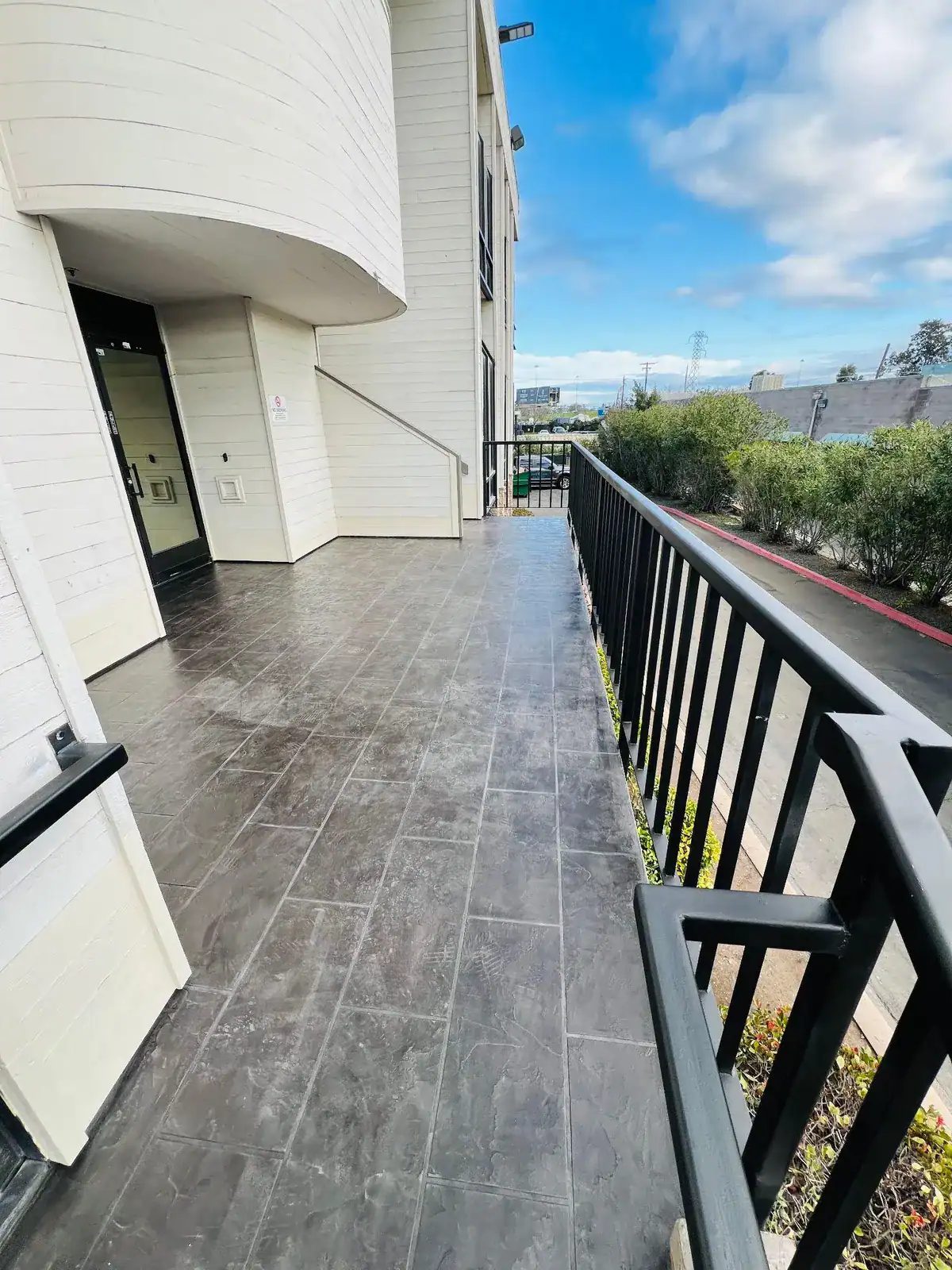
That’s why, in multi-unit buildings, balcony prevention is also a matter of responsibility toward the neighbors below and of insurance exposure. Regular inspection of the upper balconies and a quick response to any leak protect not only the structure but also the relationships between residents — and the owner’s wallet, which would otherwise have to cover damage to several parties at once.
There’s a legal side here, too. If a leak from an upper balcony has ruined a downstairs tenant’s property, and the owner knew about the problem and dragged out the repair, that’s no longer a simple household dispute but a question of the owner’s direct liability. So in a multi-story building, timely waterproofing stops being optional and becomes the way to keep the matter from turning into claims and disputes.
Tying It to the Law and the Owner’s Peace of Mind
Protecting against water connects to one more California reality — the mandatory balcony inspections. SB 721 requires owners of rental buildings with three or more units to have their exterior elevated structures inspected regularly by a licensed professional; the first deadline has already passed. Well-kept, timely-renewed waterproofing is exactly how you pass such a check without unpleasant surprises and avoid fines for unresolved defects. There’s more on the inspection itself on our SB 721 page.
In the end it comes down to a simple idea: water is predictable, and most of the trouble it causes happens where prevention was put off. Regular inspection, timely waterproofing, and a quick response to tenants’ signals cost many times less than an emergency repair. And if you’d like your balconies looked at, and put right where needed, by someone who does this every day across Sacramento and the Bay Area — from the assessment to the repair, all in one set of hands — we’re here. It’s also worth a look at our Balconies 101 guide.
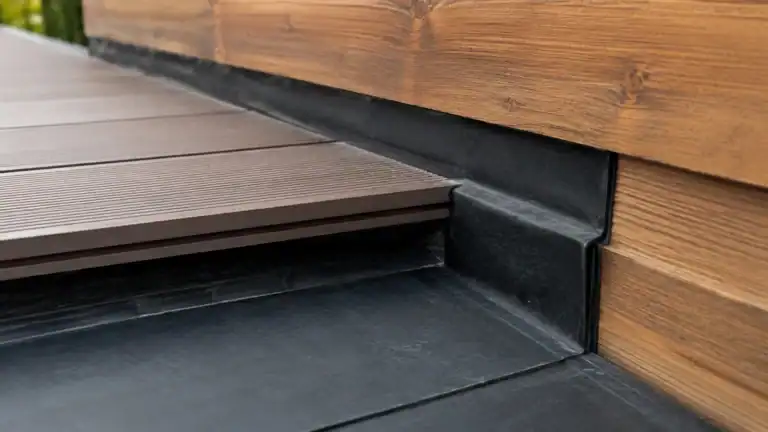
Related service
Waterproofing
Licensed, insured and SB 721/326-fluent — from assessment to sign-off, one accountable team.
About the author
Tom Marsden
Retired Property Inspector · Reviewed under CSLB #1060736
Tom Marsden is a retired property inspector with 20 years of experience. Starting as a general contractor, he transitioned to inspections, specializing in multi-family dwellings. Known for his straightforward approach and ability to simplify complex regulations, Tom became a respected figure in the local property management community. Now retired, he mentors new inspectors and writes about building safety, focusing on balcony inspections and maintenance. In his free time, Tom enjoys restoring vintage sailboats and volunteering at the local community center.
More from Tom Marsden