What Does Code Enforcement Do In California?
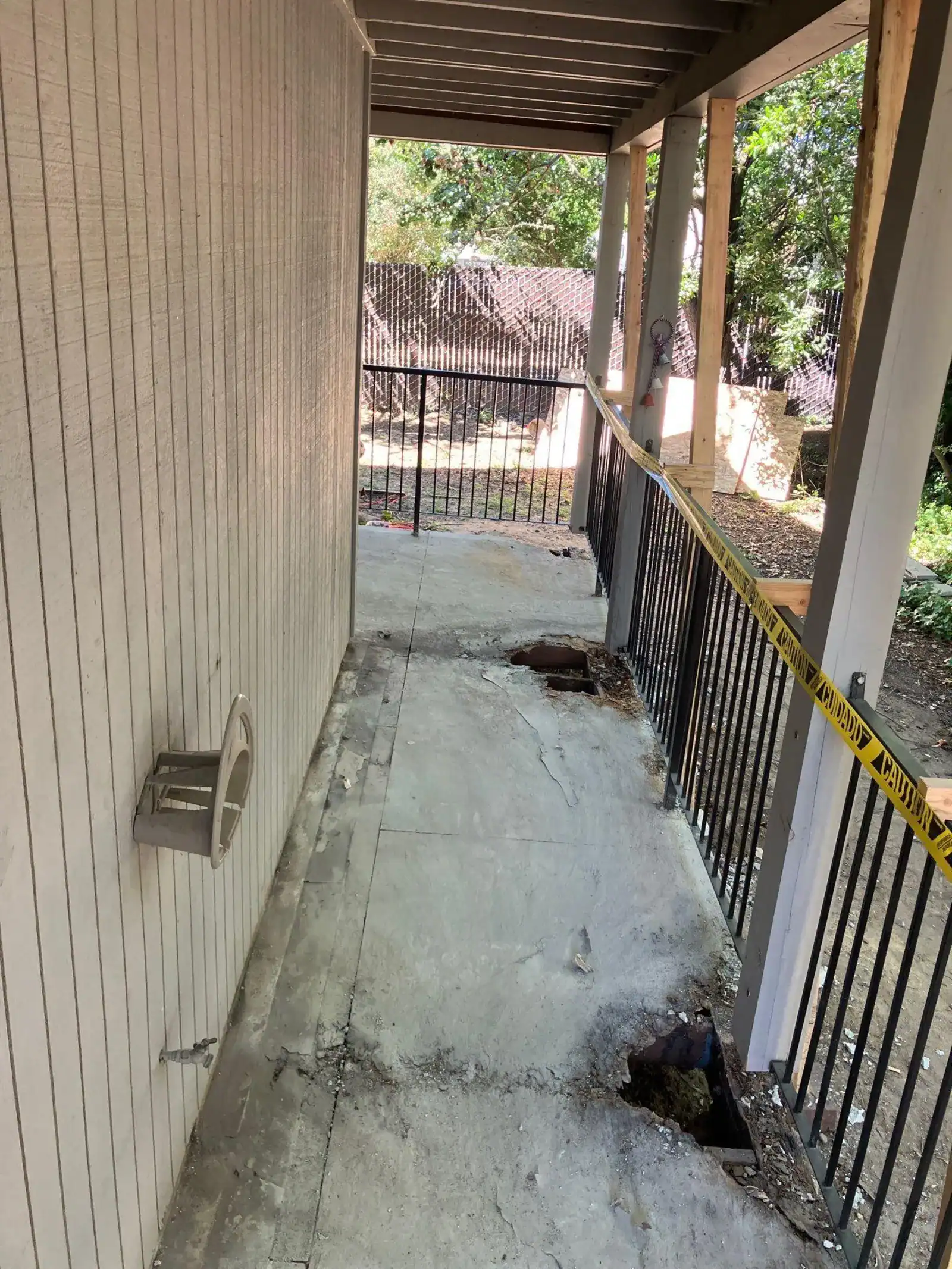
When a notice shows up on a balcony and access to it is suddenly taped off, the owner’s first question is usually: who did this, and on what authority? Behind those actions is typically the municipal code enforcement office. It isn’t some abstract agency — it’s a specific set of people whose job is to keep the city’s buildings safe for the people living in them.
For the owner of a rental building, this stopped being an abstract topic a while ago. In California, code enforcement increasingly deals with balconies and other exterior elevated structures — and that’s tied directly to Senate Bill 721. In this article we’ll work through it in order: what code enforcement actually does, how it connects to balconies, how a violation case unfolds, and what an owner should do when a notice is already in hand.
What This Office Actually Does
Code enforcement is a city or county division that oversees compliance with building, housing, and health codes. An inspection is most often triggered by a complaint: it can come from a neighbor, a tenant, or a passerby who spotted a hazard. Less often, an inspector shows up on a scheduled basis. If a violation is confirmed, the owner receives an official notice describing the problem along with a deadline to fix it.
The authority here runs wider than people assume. An inspector can come out to the property, examine the structures, issue a notice, set a deadline, and in extreme cases declare a building or part of it unsafe and close off access. Different violations fall into different buckets, though: some concern sanitation and the appearance of the grounds, some concern unpermitted alterations, and some concern the safety of load-bearing structures — and that last one is where balconies come in.
It’s worth understanding that the goal of this office isn’t to punish, but to get the building back in order. Fines and harsher measures come into play when an owner ignores the notices. And one more caveat: the specific procedures, timelines, and wording differ noticeably from city to city — California has more than four hundred eighty municipalities, each with its own rules. So the details are always worth confirming locally: how enforcement works in Sacramento may not match the process in Bay Area cities.
Where Balconies and SB 721 Come In
For a long time, code enforcement was associated with lawns, parking, and trash. But after a string of tragedies involving balcony collapses, the safety of exterior structures came into focus. Senate Bill 721 directly grants local enforcement authorities powers in this area: they receive reports of an imminent hazard, can require access to a dangerous balcony to be restricted, and make sure the owner carries out the mandatory inspection and fixes the defects that are found.
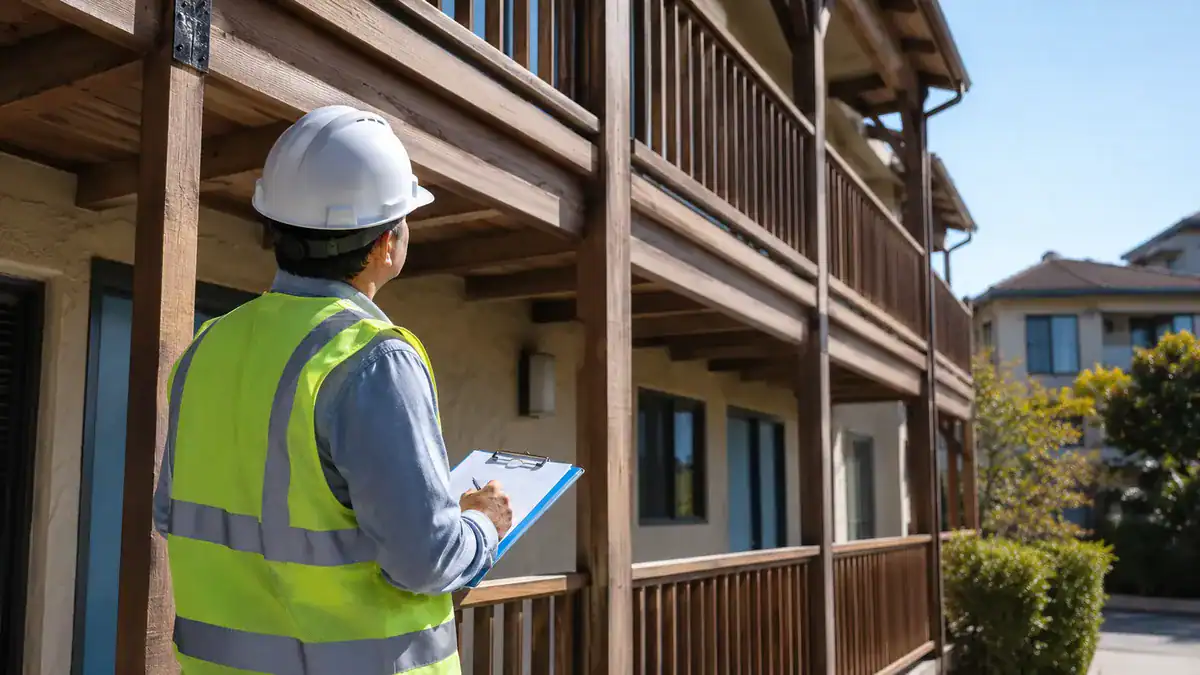
The connection is direct — and unpleasant for an owner who ignores it. The law requires owners of rental buildings with three or more units to have their balconies, stairways, and walkways inspected by a licensed professional; that first deadline has already passed. It was originally set for January 1, 2025, and Assembly Bill 2579 pushed it to January 1, 2026. If an inspector finds a hazard, they’re obligated to report it to the local enforcement office within a short window — and from there, that office takes over.
The law covers exterior elevated elements built on wood supports and raised more than six feet off the ground: balconies themselves, open stairways, landings, and walkways. These are the structures water attacks first, and their sagging or hidden rot is exactly what leads to accidents. We cover what SB 721 requires of owners, and who the law grants authority to, on our SB 721 page.
How a Violation Case Unfolds
So that worry doesn’t turn into panic, it helps to picture the whole path ahead of time — from the first signal to the consequences. It usually looks like this.
- The trigger. A complaint comes in, or an inspector finds the problem directly, including as a result of the mandatory balcony inspection.
- The notice. The owner receives an official letter: exactly what’s in violation and the deadline to fix it.
- The cure period. Time is given for the repair; if there’s an imminent hazard, access to the balcony may be closed immediately.
- The re-inspection. The office confirms the defects have genuinely been resolved.
- Action on inaction. If the owner drags their feet, penalties kick in.
Those penalties aren’t an empty threat. Unresolved violations carry fines of one hundred to five hundred dollars a day, plus a lien on the property that makes it hard to sell or refinance. Sums like that add up fast, which is why it’s cheaper and calmer to respond to the very first notice rather than let it reach collections.
What to Do When the Notice Is Already Yours
Getting an official letter is unpleasant, but it’s a manageable situation with a clear way out. The main thing is not to ignore it and not to try fixing the problem in a rush by patching a crack right before the inspector arrives. A sensible order of operations removes most of the risk.
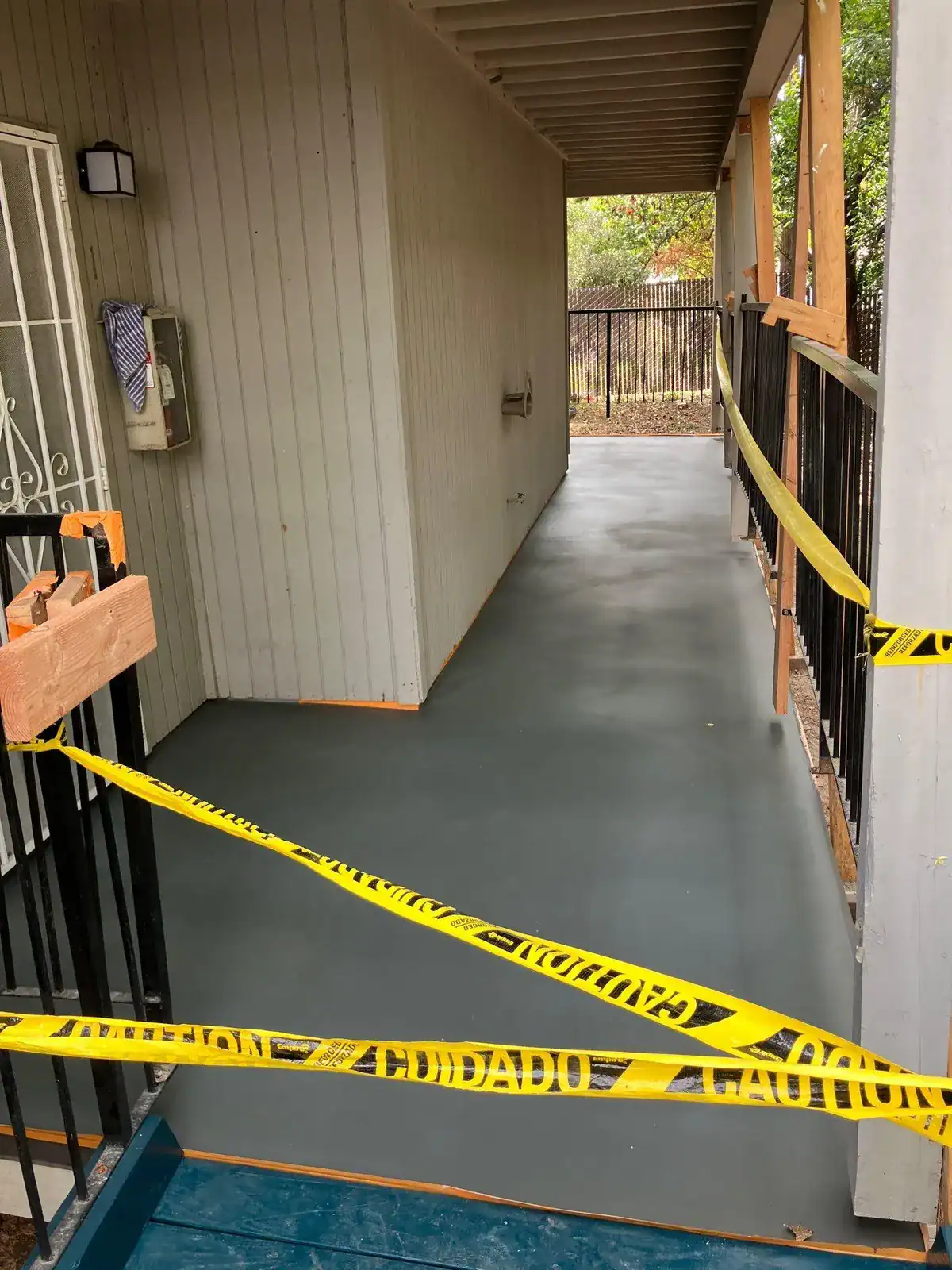
A sensible sequence looks like this:
- Read the notice carefully. Understand exactly what’s alleged and what deadline you have before doing anything.
- Gauge the danger to people. If the balcony is shaky, it’s wiser to restrict access right away, without waiting for a separate demand.
- Call a licensed contractor. They’ll find the cause and fix it at the root, not cosmetically.
- Pull the permit, if one’s needed. When the work requires city approval, dragging out the paperwork also counts as inaction.
- Keep all the documents. Correspondence, reports, and records show you’re acting in good faith — and that works in your favor at the re-inspection.
In practice, many offices are in no hurry to fine those who have clearly taken up the cure and are keeping the process on track — whereas silence and ignored letters almost guarantee penalties.
The good news is that fixing the cause and the inspection itself can stay in one set of hands. We carry out the inspection ourselves, with a licensed engineer on staff, and the same crew handles the repair that follows — no handing the property off to outside contractors. You’ll find more on our Code Enforcement Resolution service page.
Not sure how this applies to your building?
A licensed contractor answers — free, same-day callback.
What a Lingering Violation Can Cost You
Plenty of owners underestimate a notice until it has turned into real losses. And the chain of consequences here runs longer than it first appears: it rarely stops at a single fine. The daily charges build into large sums within months, a lien on the property gets added on top, and now the building is hard to sell or refinance until the matter is closed.
There are less obvious risks, too. Insurers are wary of buildings with open safety violations: the premium may go up, and the policy may not be renewed. And if someone is hurt because of a faulty balcony, a failed inspection and an ignored notice become a heavy argument against the owner in court — that’s no longer a question of a fine, but of liability for bodily harm. So it’s calmer to keep balconies in order ahead of time than to deal with the fallout after the fact.
The View From the Tenant’s Side
Code enforcement is usually discussed from the owner’s perspective, but it’s more often a tenant who sets the process in motion. Someone who steps out onto a sagging balcony every day, or sees rusted fasteners, has every right to ask for help — and how quickly they do can sometimes decide someone’s safety.
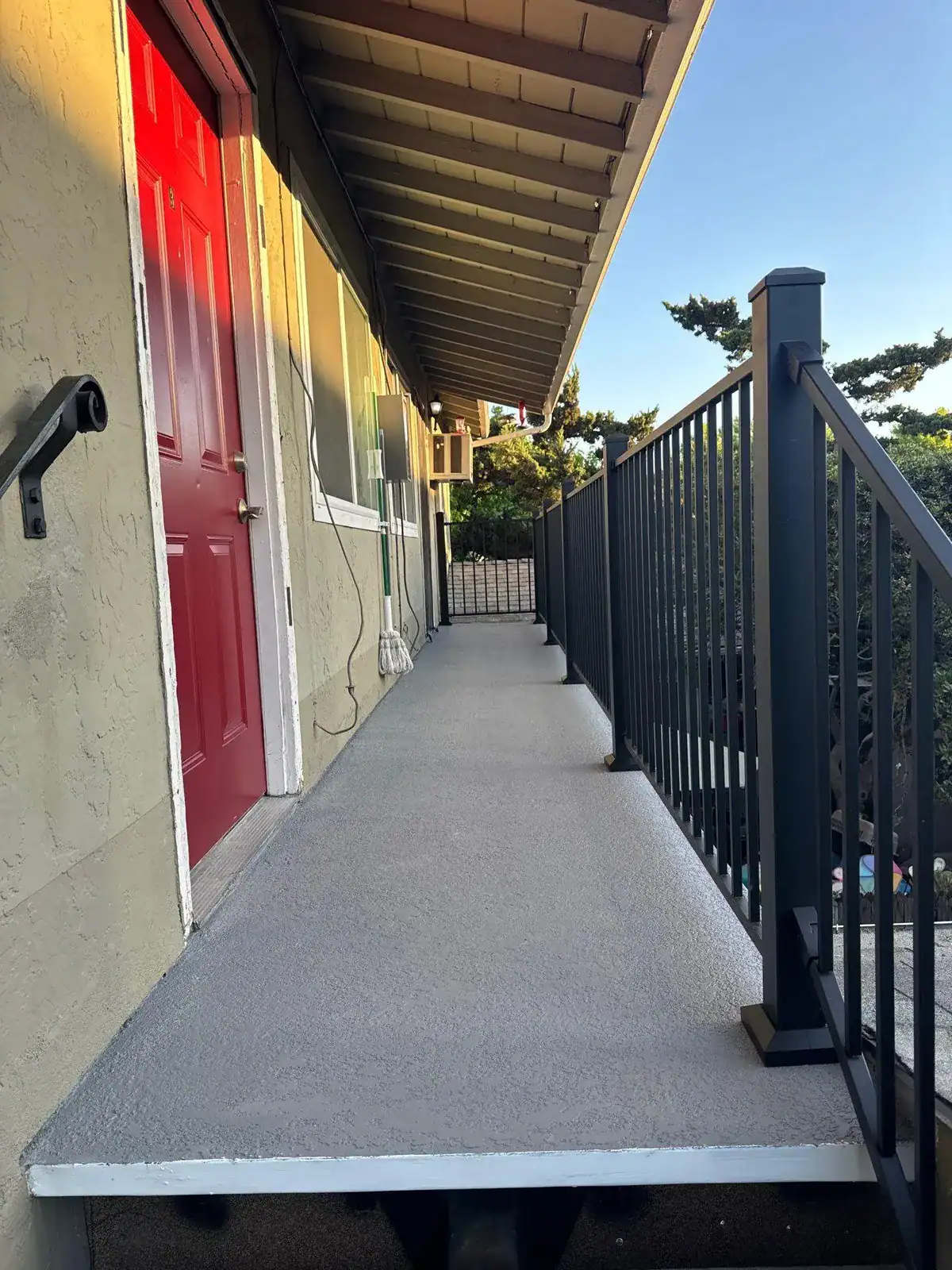
If you’re renting and notice a dangerous balcony, the first step is to notify the owner or property manager in writing and keep a copy of the request. The warning signs are the same as they are for an owner: a sagging or springy deck, wobbly railings, rusted hardware, dark wet stains, the smell of damp. If there’s no response within a reasonable time, you can go to your city’s local building code enforcement office — it’s a lawful way to get to safety.
Under our article, for that matter, there’s already a real comment from a resident who ran into faulty wiring and didn’t know where to turn — so this question is anything but theoretical. An attentive tenant often spots a problem before it grows into an accident, and their report works for everyone: for the neighbors, and ultimately for the owner, who’d rather fix a balcony than deal with the aftermath of a collapse.
Enforcement as Part of Ordinary Upkeep
The easiest way to view code enforcement is not as a punishing body but as one more reason to keep a building in order. Regular balcony inspections, timely waterproofing, and a quick response to any notice turn the whole subject from a threat into a routine that barely takes any effort. A building that’s looked after rarely reaches the notice stage at all — and if a letter does arrive, the matter gets closed quickly and without fines.
In the end, everyone’s interests line up: tenants want a safe balcony, the owner wants a smoothly rented property free of fines and lawsuits, and the city wants buildings that pose no danger. Code enforcement in this picture isn’t an adversary, but more of a reminder that the safety of these structures is an obligation, not a favor.
If you need to deal with a specific notice, or to bring your balconies into compliance ahead of time across Sacramento or the Bay Area, we’ll help you walk that path without the extra stress — from the assessment and the official inspection to the repair, all in one set of hands.

Related service
Code Enforcement Resolution
Licensed, insured and SB 721/326-fluent — from assessment to sign-off, one accountable team.
About the author
Tom Marsden
Retired Property Inspector · Reviewed under CSLB #1060736
Tom Marsden is a retired property inspector with 20 years of experience. Starting as a general contractor, he transitioned to inspections, specializing in multi-family dwellings. Known for his straightforward approach and ability to simplify complex regulations, Tom became a respected figure in the local property management community. Now retired, he mentors new inspectors and writes about building safety, focusing on balcony inspections and maintenance. In his free time, Tom enjoys restoring vintage sailboats and volunteering at the local community center.
More from Tom Marsden

