Climate considerations in Livingston
Livingston sits on the floor of the valley on a bluff above the river, surrounded by farmland. Summers are long and very hot, with afternoons regularly past 100°F, and surfaces in full sun get far hotter than the air. Annual rainfall is only about 12 inches, falling between November and March, with tule fog in the winter months. For wood, that means fast UV and heat damage to finishes and surface checking on exposed boards. For composite decking, which many owners choose precisely because it does not rot, the heat raises a different issue.
Composite boards move in the heat
Composite and other plastic-based deck boards resist rot and weathering well, which makes them a sensible choice here. What they do not do is stay the same length. They expand and contract with temperature considerably more than wood, and a dark board in full sun on a Livingston afternoon gets very hot. Manufacturers specify gaps at the ends and sides of boards, fastener types, and joist spacing to allow for that movement, and the right gaps depend on the temperature on the day the boards are laid. Where boards were laid tight, or fastened for a cooler climate, the movement has nowhere to go: boards bow upward, push against each other, pull screws loose, or open up and split at the ends. Owners usually assume the product has failed. In most cases the boards are fine and the installation is the problem. We check gaps, fasteners, and joist spacing on composite decks, and where the framing underneath is sound, the boards can often be relaid correctly rather than replaced.
Decks for manufactured homes
Manufactured homes are part of the housing mix in many valley towns, and their decks, porches, and entry steps need a different approach from those on a site-built house. A manufactured home is not designed to take the load of a deck through a ledger bolted to its side, so a deck that relies on the home for support can damage the wall and pull away over time. The right way is a freestanding structure: the deck, landing, or steps stand on their own posts and footings, close to the home but not hanging from it. Permitting can also be different. Within city limits, deck permits go through the City of Livingston. In a mobilehome park, the state housing department generally handles permits for accessory structures such as decks and steps unless the city has taken that role on, so it is worth confirming which agency applies before work starts. We note the likely agency in the report and build to what it requires.
Main Street and the older streets
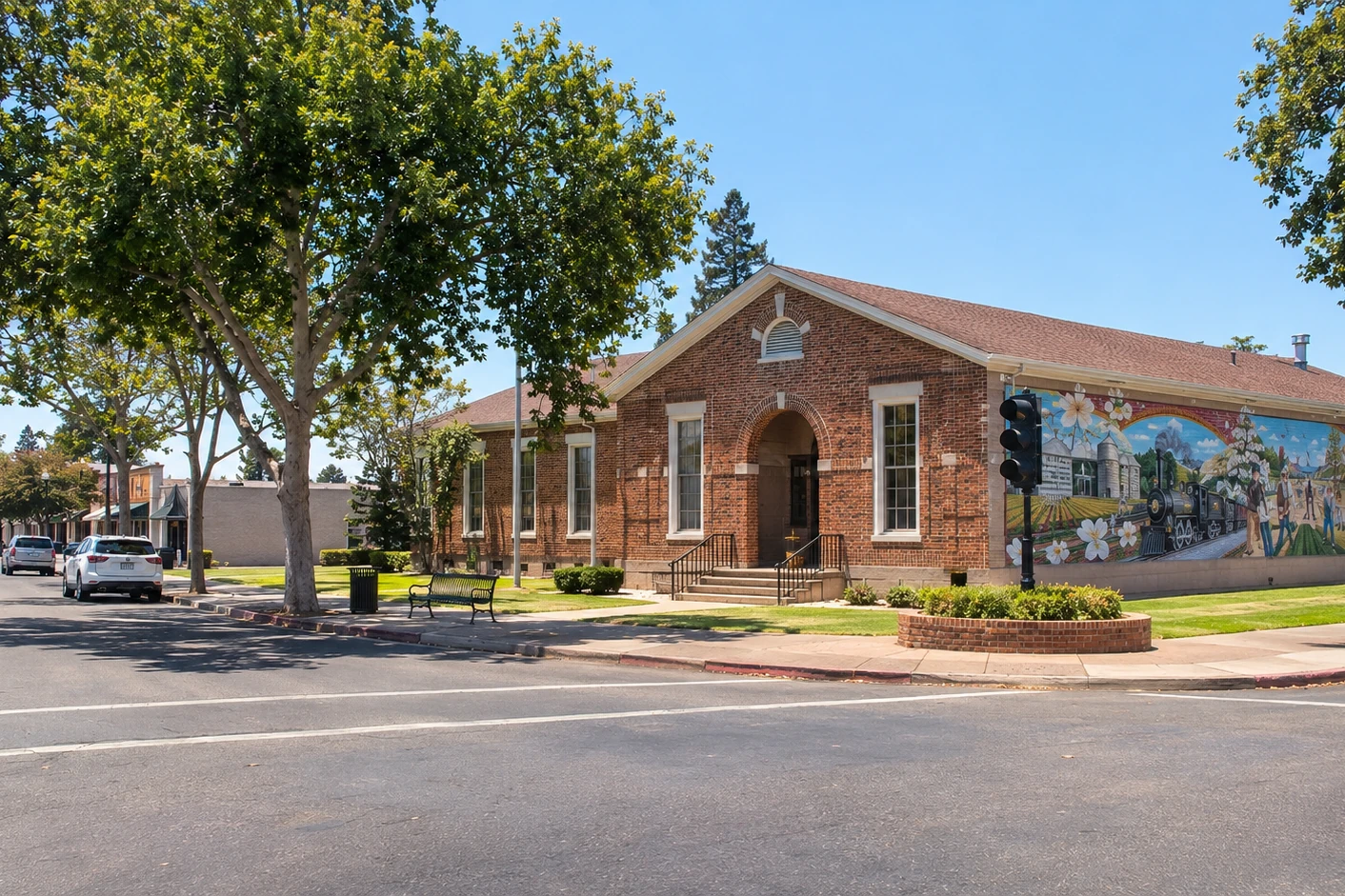
Livingston’s downtown along Main Street holds brick buildings from the early twentieth century, and the streets around it have pre-war and post-war houses with front porches and steps whose railing and connection details predate current standards. These older porches often carry many layers of paint and original framing that has been patched more than once. Work on them means bringing railings and load capacity up to code while keeping the look of the house, and checking for decay under the paint before deciding what can be kept.
Common building stock we work on
Much of Livingston’s housing was built from the 1990s onward as the city grew, much of it single-family with backyard decks and patios, a growing share of them composite. That stock is now at the age where builder-grade ledger flashing and first-generation finishes give out. Older houses near Main Street carry the porches described above. Manufactured homes, both on private lots and in parks, need the freestanding approach set out earlier. Small apartment buildings and townhome communities form the SB 721 and SB 326 inventory. Our certified construction crew scopes every project to the type of home, the materials used, and the code in effect at installation.
Neighborhoods served
Our certified Livingston crew covers Downtown Livingston and Main Street, North Livingston, the river bluff area, the B Street area, the F Street area, the Hammatt Avenue corridor, the Robin Avenue area, the Peach Avenue area, the Olive Avenue area, the Walnut Avenue area, and the wider Livingston community. ZIP code 95334 covers the city.
What we typically see
Across our Livingston inspections, our company most often documents: (1) composite boards bowed, pulled loose, or split at the ends because they were laid without the gaps and fastening valley heat requires — a Livingston-specific pattern given how hot exposed decks get here; (2) owners about to replace composite decking that only needed relaying; (3) decks and steps fastened directly to manufactured homes, pulling at the wall; (4) heat-driven checking and finish failure on exposed wood decks; (5) older porches with decay under many coats of paint; (6) railings on pre-2000 stock that fall short of the current CRC 42-inch height and 4-inch sphere rule. Every finding is captured in a written assessment with prioritized repair, replacement, or restoration scope.
Emergency response & remodeling
For Livingston properties with acute safety issues — sagging framing, loose railings, a deck or step pulling away from a manufactured home, visible rot at load-bearing connections, red-tagged structures, or storm damage — we offer expedited scheduling within 5–7 business days, ahead of our normal block scheduling for this part of the service area. We also handle full deck remodeling, with composite laid for local heat and decks for manufactured homes built to stand on their own.