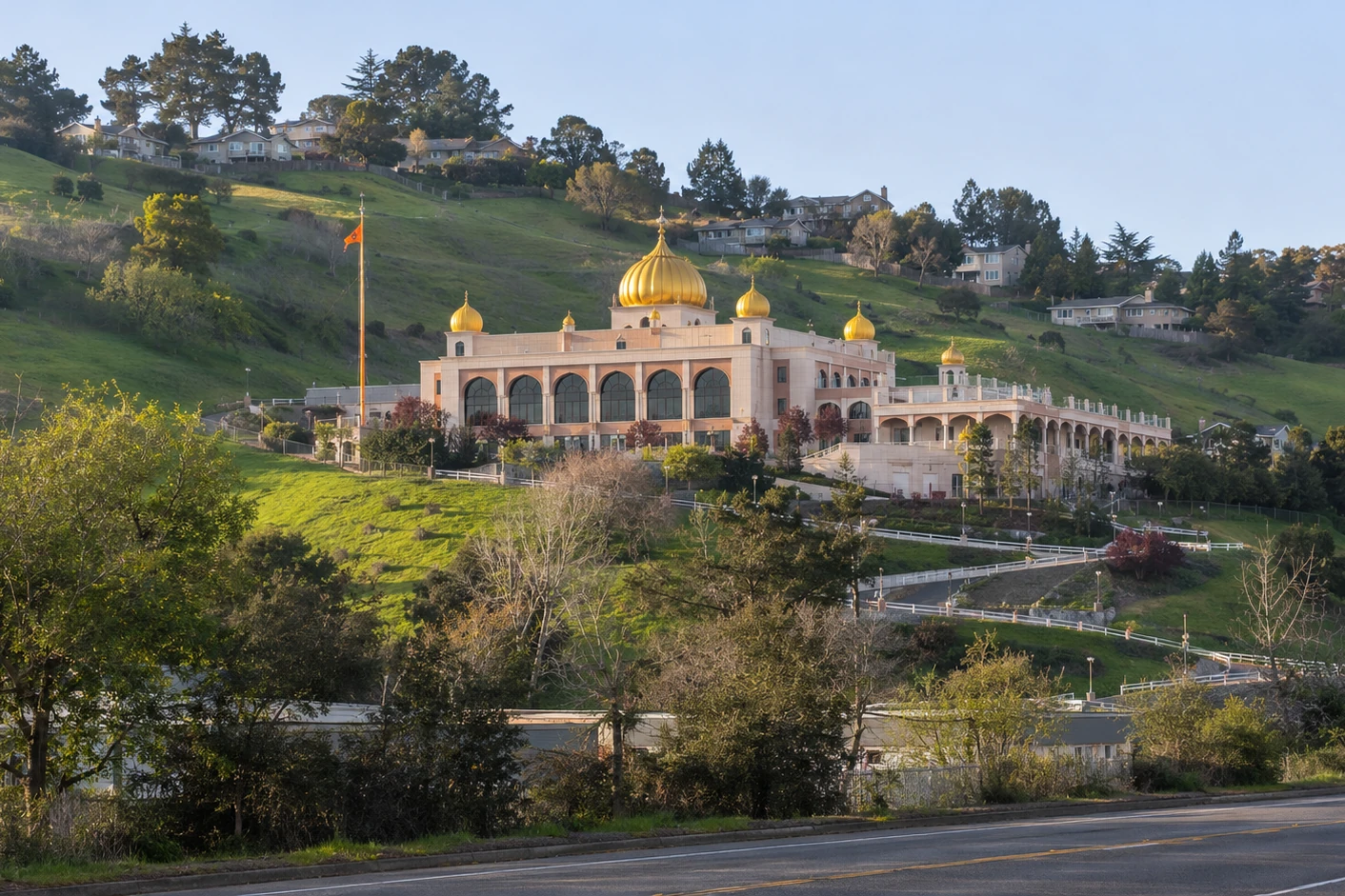
Climate considerations in El Sobrante
El Sobrante sits in a valley with ridges on either side, close enough to the bay for marine air and mild temperatures but sheltered from the worst of the wind. Summers are warm, winters are cool and wet with roughly 23 inches of rain between November and March, and there is no long hot dry stretch to drive moisture out of framing, so decay progresses quietly. Most of the hillsides are clay, which swells when wet and shrinks as it dries. On a slope, that seasonal cycle does more than move the ground up and down, which is why the first question on many El Sobrante decks is not how sound the wood is but which way the structure is moving.
Ground that moves downhill
On a clay slope the surface soil creeps downhill over time. Each wet season the clay swells and softens; each dry season it shrinks and cracks; and with every cycle gravity pulls it a little further down the slope. The movement is slow, often a fraction of an inch a year, but it adds up over decades and it always goes one way. A deck with posts set in that upper layer of soil gets carried along with it, so the posts lean downhill, braces work loose, and the frame racks out of square. The giveaway is direction: when every post on a structure leans the same way, toward the bottom of the slope, the cause is usually the ground rather than the framing. Straightening the posts without changing the footings buys a few years. The repair that lasts places footings deeper, below the layer that is moving, and adds bracing so the structure resists the pull. We measure how far and which way posts are out of plumb during the assessment, and where the movement is significant or appears to involve more than surface creep, we say so and suggest geotechnical input before a design is finalised.
When the buyer’s inspector lists the deck
Many El Sobrante homes are decades old and have been altered by several owners, so when one is sold, the buyer’s inspection report often lists deck items — loose railings, rotted boards or posts, missing flashing at the ledger, posts out of plumb. At that point the parties usually need one thing quickly: a written scope and estimate from a licensed contractor, so the items can be priced and discussed. We go through the report line by line, inspect each item on site, and give a written scope with each line cross-referenced to the report, so it is clear what has been addressed and what has not. Where we disagree with an item, or find something the report missed, we say so in writing. What we do not do is advise on the price, the negotiation, or anyone’s disclosure obligations. Those belong to the buyer, the seller, and their agents, and our paperwork is written to inform them, not to take a side.
The space under the deck
A hillside deck leaves useful space underneath it, and on many El Sobrante properties that space has been closed in with lattice, boards, or siding and turned into storage. Doing that changes the conditions the framing lives in. Air stops moving, the soil below stays damp, stored items hold moisture against posts and beams, and nobody can see the structure any more without emptying the space first. Joists and beams in an enclosure like that can decay for years while the deck surface looks fine. During the assessment we look inside any enclosed under-deck space. Where it is trapping moisture we suggest changes that let it ventilate and leave a way to inspect the framing, rather than removing the storage altogether.
Common building stock we work on
El Sobrante’s housing is mostly single-family, built on the valley floor and up the hillsides from the 1940s through the 1980s, with a lot of owner work and additions layered on since. Decks here come in every era of construction practice, often on long posts over slopes, with connection details and railing geometry from whenever each was built or rebuilt. Small apartment buildings and townhome communities near the main valley road form the SB 721 and SB 326 inventory, with original waterproofing and hardware at or past service life on the older ones. Our certified construction crew scopes every project to the era, the slope, the direction the ground is moving, and the code in effect at installation.
Neighborhoods served
Our certified El Sobrante crew covers the El Sobrante valley floor, Sobrante Ridge, May Valley, the Valley View Road corridor, the Hillcrest Road area, the Clark Road area, the Manor Road area, the Olinda Road area, the Sobrante Avenue area, the main valley road corridor, and the wider El Sobrante community. ZIP code 94803 covers most of the community.
What we typically see
Across our El Sobrante inspections, our company most often documents: (1) deck posts all leaning the same way, downhill, where soil creep on clay slopes has carried shallow footings along with it — an El Sobrante-specific pattern on its hillside lots; (2) posts straightened in earlier repairs without any change to the footings, leaning again a few years later; (3) deck items listed in buyers’ inspection reports that needed a written scope and estimate at short notice; (4) water-damaged framing inside lattice- or board-enclosed storage under hillside decks; (5) slow concealed water damage in a climate that never dries a structure out; (6) railings on pre-2000 structures that fall short of the current CRC 42-inch height and 4-inch sphere rule. Every finding is captured in a written assessment with prioritized repair, replacement, or restoration scope.
Emergency response & remodeling
For El Sobrante properties with acute safety issues — a deck that has shifted or racked noticeably, sagging framing, loose railings, visible rot at load-bearing connections, red-tagged structures, or storm damage — our emergency repair crew responds within 24–48 hours with temporary shoring and code-compliant stabilization. Where the ground is moving we stabilise the structure and tell you plainly what the footings need, rather than straightening posts that will lean again. We also handle full deck remodeling on hillside lots, with footings set below the moving layer and bracing designed in.