Climate considerations in North Fair Oaks
North Fair Oaks sits on flat ground only about 26 feet above sea level, between the hills and the bay. The climate is mild, with warm, mostly dry summers moderated by bay breezes and around 20 inches of rain falling between November and March. Heat is rarely the problem here. Winter rain is: it soaks wood stairs and decks that sit close to the ground or tight against a wall on a small lot, where they get little sun or air to dry out, and it finds any weak point in the waterproofing of a balcony or roof deck.
Backyard units and the stair at the door
Many lots in North Fair Oaks hold more than the main house: a converted garage, a backyard cottage, or a unit built over a garage and reached by an outside stair. A good number of these were added without permits over the years. Since January 1, 2025, a state law, AB 2533, has allowed owners of qualifying accessory dwelling units built without permits before January 1, 2020 to apply for a permit, and in general the unit cannot be refused simply because it does not meet current building codes. The County can still require the owner to correct health and safety problems. Whether a particular unit qualifies, and what the County asks for, are questions for the owner and the County rather than for a contractor. What we can say is that a rotted landing, a stair that moves, or a railing that gives way is a safety problem in its own right, and it is better fixed before anyone inspects the unit than listed as something to fix afterwards. We assess and rebuild these elements, with permits through the County when the work requires them.
Apartments above shops
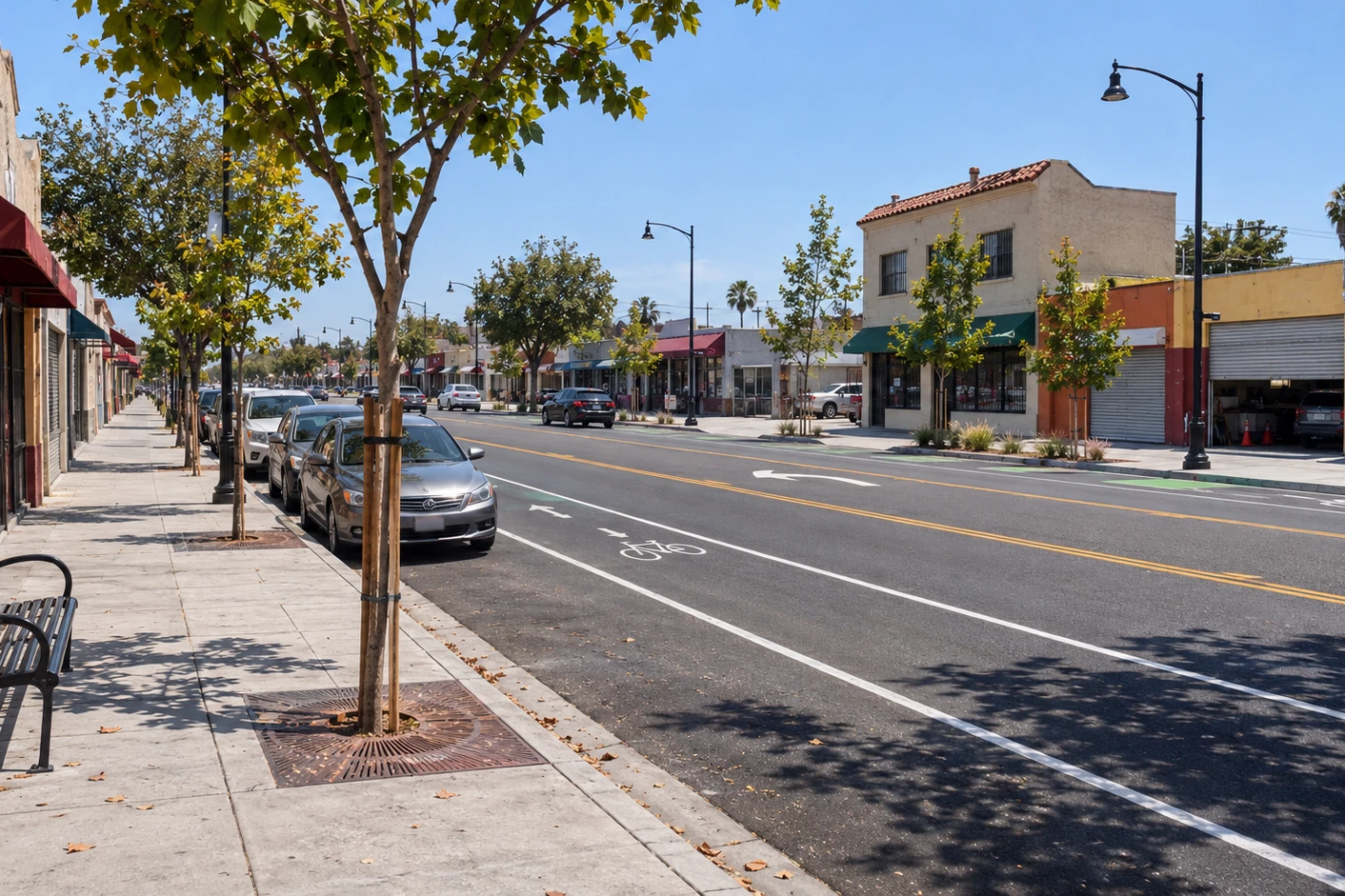
Along Middlefield Road and the other commercial streets, many buildings have shops or services on the ground floor and apartments above, often with balconies at the front or roof decks and outside stairs at the back. When the waterproofing on one of those balconies or decks fails, the water does not show up in the apartment. It shows up in the ceiling of the business underneath, so the first person to report the problem is usually the shop tenant, not the resident. By then the framing under the deck may have been wet for more than one season. Repairs here need to be planned around the business below: protecting the ceiling, keeping the shop entrance clear, and doing the noisy work outside opening hours where possible. SB 721 applies to buildings with three or more dwelling units, so a building with three or more apartments over shops falls under it even though the ground floor is commercial.
Small lots, close walls
With about 14,000 people on a little over a square mile, North Fair Oaks is very densely built. Lots are small, houses are close together, and decks, stairs, and landings are often squeezed into side yards or against a fence or wall. Wood in those positions stays damp longer after rain, collects leaves and soil at its base, and is hard to see from anywhere but right next to it. We check the bottom of every post and stringer and the point where each stair meets the ground, because that is where decay starts on tight sites.
Common building stock we work on
Much of North Fair Oaks is older, modest single-family housing, much of it now rented, with rear decks, front porches, and outside stairs that have been repaired piecemeal over many years. Backyard units of every kind sit behind many of those houses. Small apartment buildings and two-story mixed-use buildings along the commercial streets form most of the SB 721 inventory, with balcony waterproofing and stair hardware at or past service life. Newer townhome and condominium projects fall under SB 326. Our certified construction crew scopes every project to the type of building, who lives or works below it, and the code in effect at installation.
Areas served
Our certified North Fair Oaks crew covers the Middlefield Road corridor, the Fifth Avenue area, the Second Avenue area, the Spring Street area, the Edison Way area, the MacArthur Avenue area, the Semicircular Road area, the Marsh Road edge, the El Camino Real edge, the Eighth Avenue area, and the wider North Fair Oaks community. ZIP codes 94063 and 94025 serve the community.
What we typically see
Across our North Fair Oaks inspections, our company most often documents: (1) outside stairs and landings at backyard units with soft treads, loose railings, or rotted stringers — a North Fair Oaks pattern given how many lots carry a second dwelling; (2) balcony and roof-deck leaks over ground-floor shops, first noticed as ceiling stains in the business below; (3) posts and stair bases decayed in tight, damp side yards; (4) failed drains and scuppers on balconies over commercial space; (5) stairs and decks repaired piecemeal with mismatched framing and fasteners; (6) railings on pre-2000 stock that fall short of the current CRC 42-inch height and 4-inch sphere rule. Every finding is captured in a written assessment with prioritized repair, replacement, or restoration scope.
Emergency response & remodeling
For North Fair Oaks properties with acute safety issues — sagging framing, loose railings, a stair to a backyard unit that has started to fail, visible rot at load-bearing connections, red-tagged structures, or storm damage — our emergency repair crew responds within 24–48 hours with temporary shoring and code-compliant stabilization. We also handle full deck, stair, and balcony replacement, including work above operating businesses.