Climate considerations in San Anselmo
San Anselmo is wetter than many people expect: average rainfall is about 47 inches a year, with January the rainiest month. Summers are warm, with July highs around 85°F, and winter lows drop to around 41°F. Much of the town lies under oaks and other large trees, so decks and stairs stay shaded and damp for long periods after rain, and leaves collect in board gaps and at ledgers. Heavy winter rain also raises the creek quickly and saturates the ground around footings. Decay here usually starts where water sits longest: at post bases, stair stringers, and the ends of boards under trees.
Footings and the roots of large trees
The Town protects its largest trees. Under its private-tree rules, a heritage tree is one with a trunk 22 inches in diameter at breast height, and on a developed lot a permit is needed to remove one, to cut or prune it or its roots in a way that endangers it, or to raise the soil level around it. For deck work, that matters at the footings. Digging a new footing through a major root, or adding fill around a trunk, can count as damaging the tree. Before we plan a deck near a large tree, we measure the trunk and the distance to the work. Where roots are in the way, we move footings, hand-dig to find roots before setting posts, and use longer beams to span over them rather than cut them. If the work may affect a protected tree, we tell you to confirm with the Town before anything is dug.
Decks beside the creek
San Anselmo Creek runs through the middle of town, and many homes and some downtown buildings back onto it. Structures that once stood on a bridge over the creek downtown have been removed as part of flood-reduction work, which shows how seriously the creek is taken here. For private property the rule to know is state law: under Fish and Game Code section 1602, the state fish and wildlife department must be notified before work that may alter the bed, channel, or bank of a stream, and that includes creeks that are dry part of the year. The department then decides whether an agreement is needed. For a deck or stair beside the creek, the simplest approach is usually to keep footings and any digging back from the bank so the work stays clear of it. Where repair work would touch the bank itself, we say so in the report and suggest notifying the state before work begins.
Raised houses in the flats
In the low-lying parts of town, houses on the floodplain have been built on raised foundations since at least the 1920s. That puts the front door and back door well above the yard, so many of these homes have tall entry stairs, landings, and back decks several feet off the ground. Tall stairs and decks depend heavily on their posts, bracing, and stringers, and on older houses those are often original or patched more than once. We check every stringer, tread, and post base, and bring railings and handrails up to current standards where the work allows.
Common building stock we work on
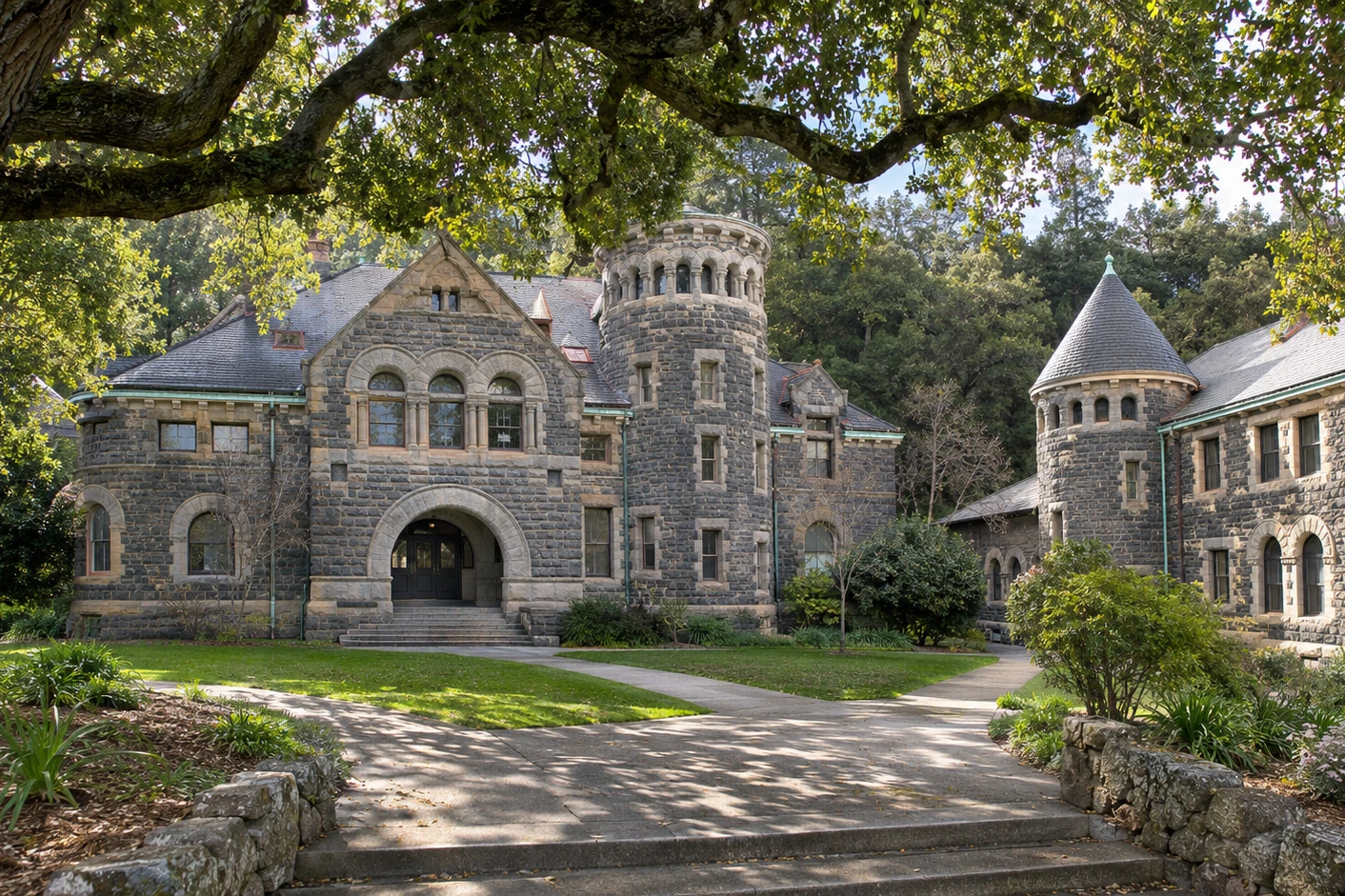
Much of San Anselmo’s housing is single-family. Older houses fill the flats and the streets near downtown, many on raised foundations with tall stairs. Hillside neighborhoods such as Hawthorne Hills and Morningside carry homes with decks on posts over sloping ground, often among large trees. Creekside lots have their own setback considerations. Small apartment buildings and condominiums near downtown form the SB 721 and SB 326 inventory. Our certified construction crew scopes every project to the site, the trees around it, its distance from the creek, and the code in effect at installation.
Neighborhoods served
Our certified San Anselmo crew covers Downtown San Anselmo, the Hub, the Flatlands, Barber Tract, Calumet Park, Hawthorne Hills, Morningside, Yolanda Park, the Butterfield Road area, the Sir Francis Drake Boulevard corridor, and the wider San Anselmo community. ZIP code 94960 covers the town.
What we typically see
Across our San Anselmo inspections, our company most often documents: (1) deck footings set on or through the roots of large trees, or plans to do so — a San Anselmo pattern given how much of the town grows under oaks; (2) creekside posts and stairs decayed near the bank, with repairs planned without checking whether state notification applies; (3) tall entry stairs on raised houses with weak stringers and post bases; (4) leaves and debris holding water in board gaps and at ledgers under trees; (5) detached decks assumed to be permit-exempt that do not meet all of the Town’s conditions; (6) railings on pre-2000 stock that fall short of the current CRC 42-inch height and 4-inch sphere rule. Every finding is captured in a written assessment with prioritized repair, replacement, or restoration scope.
Emergency response & remodeling
For San Anselmo properties with acute safety issues — sagging framing, loose railings, a stair pulling away from a raised house, visible rot at load-bearing connections, red-tagged structures, or storm damage from fallen limbs or high water — our emergency repair crew responds within 24–48 hours with temporary shoring and code-compliant stabilization. Tree removal and work in the creek are for an arborist or the appropriate specialist; we handle the deck and stair structure. We also handle full deck remodeling planned around trees and the creek.