Commercial Wood Deck Installation · CSLB #1060736
Wood Deck Installation for California Commercial & Multifamily Properties
We build wood decks for apartment communities, condominiums, HOAs, and hotels across California — pressure-treated, redwood, cedar, and tropical hardwood, framed to current code and protected where it matters most. Wood is the material California’s balcony laws were written about: SB 721 and SB 326 govern wood-framed elevated elements specifically, which means how a wooden deck is built and protected decides how it performs at every inspection for the rest of its life.
- CSLB #1060736 Licensed California contractor
- 9+ yrs Building commercial decks & balconies
- SB 721 / 326 Wood-framed EEE — built to pass
- Commercial Multifamily, HOA & hotel only
01 Why it matters
With wood, the frame outlives the surface — if it’s protected
A wood deck has two lives running on different clocks. The boards you walk on weather visibly and can be replaced. The frame beneath — joists, beams, ledger — is hidden, expensive to reach, and is what actually determines whether the deck lasts fifteen years or forty. The mistake that shortens that life almost always happens at construction, not during use.
Water is the whole story. Every gap between boards drips onto the joist tops below, and unprotected joist tops hold that moisture against the grain. Fasteners create paths straight into the wood. Ledger connections without proper flashing channel water into the building’s rim. None of it is visible from above, and all of it is decided by details that cost very little at build time and a great deal to correct later.
There’s a regulatory dimension unique to wood, too. SB 721 and SB 326 apply to wood-framed exterior elevated elements — so a wooden deck sits at the exact center of California’s inspection regime, on a six- or nine-year cycle, for its entire service life. Building it with protected joists, flashed connections, and the right fasteners is what turns those inspections into a formality instead of a remediation budget.
Decking boards are a finish. The frame under them is the asset — and it’s protected, or not, on the day the deck is built.

02 The D&B difference
What building a wood deck properly involves
We build wood decks as protected systems, not just assembled lumber — joists shielded, connections flashed, fasteners specified for the environment — with one CSLB-licensed crew and one warranty. That’s what separates wood deck builders working to inspection standards from a framing crew building to a picture.
The frame is protected before the boards go on
Joist tape and flashing over every joist top and beam, so water passing between the boards runs off the frame instead of sitting on it. It’s invisible in the finished deck and it’s the single biggest factor in how long the structure lasts.
Species and fasteners matched to the site
Pressure-treated, redwood, cedar, or tropical hardwood chosen for the exposure, the budget, and the maintenance the property can realistically commit to — with hot-dipped galvanized or stainless fasteners specified for coastal air where corrosion is a factor.
Built for the inspection cycle, not just for handover
Ledger connections flashed and framed per CBC 1604.8.1, guardrails to the 42″ / 4″ standard, and as-built documentation for your SB 721 / SB 326 file — from the contractor who’ll still be here at your next inspection.
03 · Service Areas
Where We Work in California
Every city links to a dedicated local page — crews, recent projects and compliance details for that area.
Sacramento Metro
11 cities
East Bay
18 cities
Don’t see your city? We likely still cover it — call (916) 848-2728.
04 How a project runs
How building a wood deck runs, start to finish
-
01
Assessment & design
We review the site, attachment points, load paths, and exposure, then help you choose species and layout around the property’s budget and maintenance capacity.
-
02
Permitting & engineering
We coordinate stamped engineering where required and move the deck through the building department’s permit process.
-
03
Framing
Pressure-treated joists, beams, and posts sized for the span, with ledger connections flashed and fastened per current code.
-
04
Joist protection & waterproofing
Joist tape, flashing, and drainage details installed before decking goes down — the step that isn’t visible later and can’t be added later.
-
05
Decking, railings & finish
Boards installed with correct spacing and fastening, guardrails and stairs to code, then sealed or stained as specified.
-
06
Inspection & handoff
We walk the deck through building-department inspection and hand over as-built documentation for the compliance file.
05 Scope
What’s included in a D&B wood deck build
Complete wooden deck installation — from framing through finish — handled in-house by one licensed crew, so the structure, the protection details, and the surface are never split between contractors.
- Site assessment, custom design, and species selection
- Permitting and stamped engineering coordination where required
- Framing — pressure-treated joists, beams, and posts sized for span and load
- Ledger connections flashed and fastened per CBC 1604.8.1
- Joist tape and flashing over all joist tops and beams
- Decking — pressure-treated, redwood, cedar, or tropical hardwood, correctly spaced and fastened
- Corrosion-rated fasteners and hardware specified for the environment
- Guardrails to the 42″ height / 4″ sphere standard
- Stairs, landings, and graspable handrails to code
- Drainage details and slope where the design requires them
- Sealing, staining, or finishing as specified
- Inspection sign-off and as-built documentation for the SB 721 / 326 file
Built to current code: CBC 1604.8.1 ledger connections · ASCE 7 load criteria · Title 24 · 42″ / 4″ guardrail standard
06 Investment
What it costs to build a wood deck
Wood decks are quoted after a site visit, because the cost of building a wooden deck is driven as much by structure and access as by the boards themselves — and species choice alone can swing the number several-fold.
What drives the number
- Deck size and the number of decks across the property
- Species — pressure-treated is the value option; redwood and cedar sit in the middle; tropical hardwoods like ipe are the premium end
- Structure — attached vs. freestanding, span lengths, post heights, and footings
- Elevation and whether the deck sits over occupied space
- Stairs, landings, and railing material and length
- Fastener and hardware specification (coastal exposure requires higher-grade metal)
- Site access, staging, and lift or crane requirements
- Permit jurisdiction and plan-review timeline
A note on the long-term number: pressure-treated costs least to build and most to maintain; hardwood costs most to build and least to maintain. Over a twenty-year hold the gap narrows considerably, so we quote both when the choice is genuinely open. Final pricing follows a site assessment — request a free estimate, no obligation.
In the field
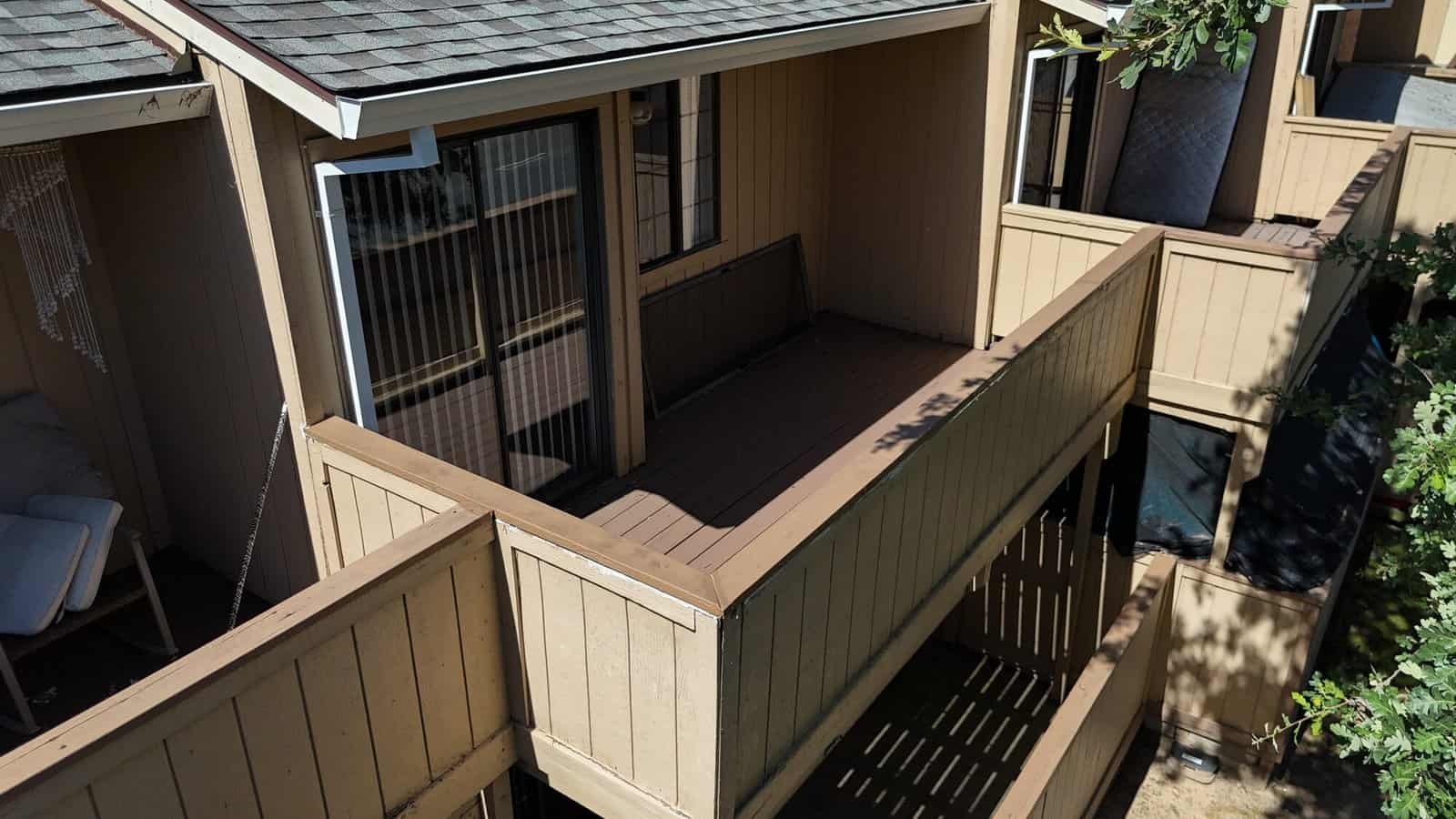
Wood deck builds
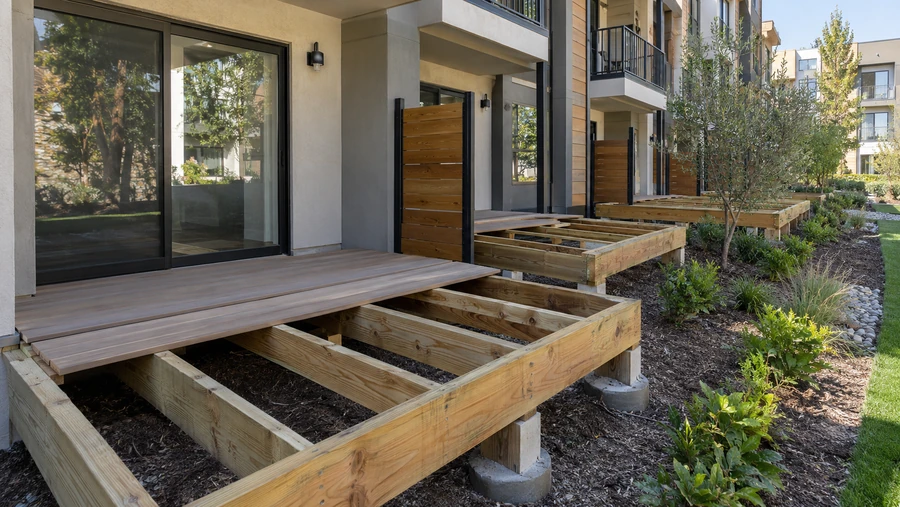
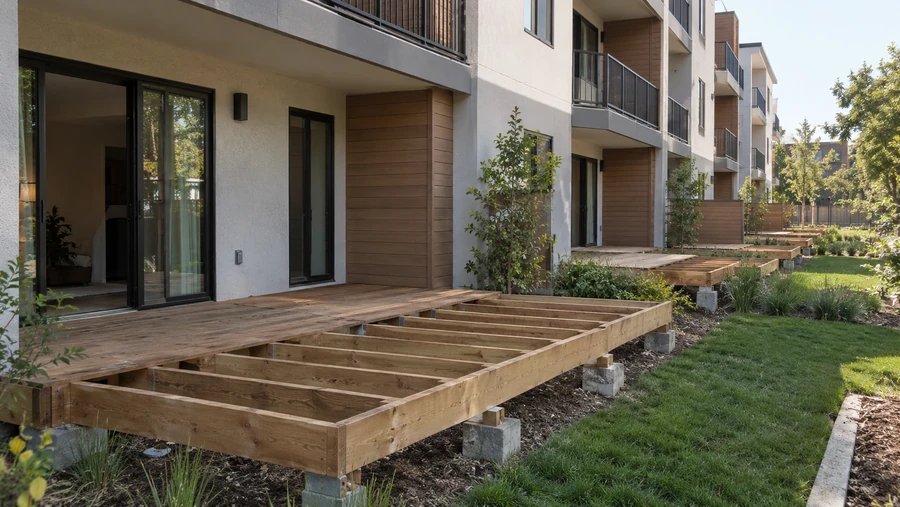
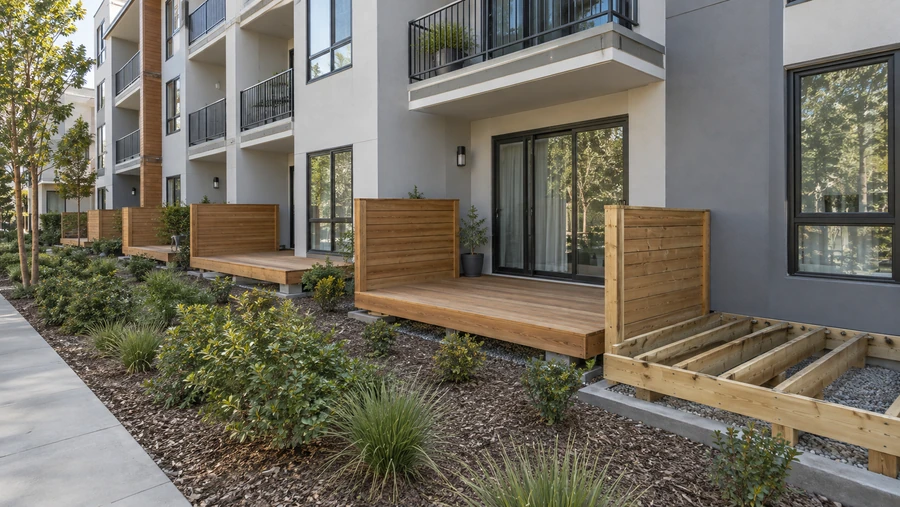
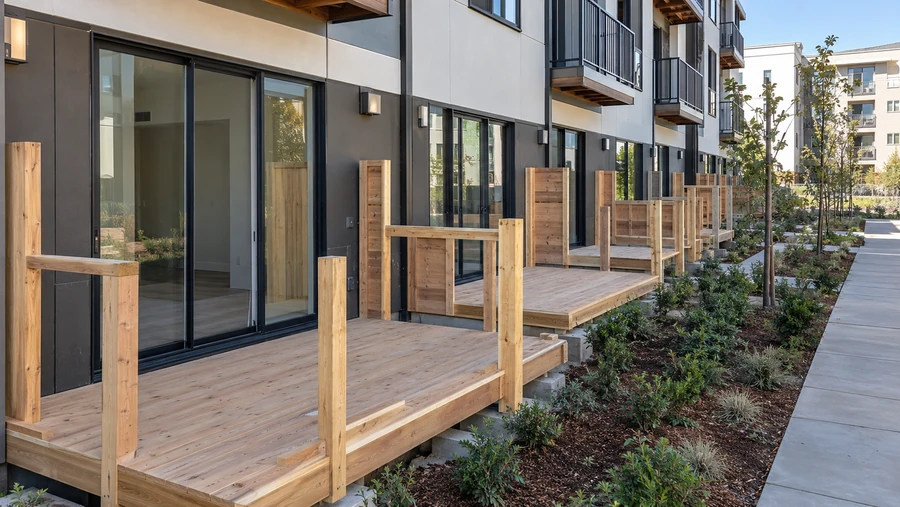
Joists set on piers, then boards, privacy screens and rails at ground floor units of an apartment building.
07 Project example
A recent wood deck build
An apartment building in the Bay Area was replacing the original unit decks, which had reached the end of their life after roughly twenty years — rot throughout the framing, traced back to joist tops that were never protected and ledger connections with no flashing. D&B framed the replacements in pressure-treated lumber, taped every joist top and beam, flashed the ledger connections to current code, and laid redwood decking for the finish the owner wanted facing the courtyard. Every deck passed inspection on the first walk, and the framing details went into the property’s SB 721 file.
The old decks rotted from the joists up, not the boards down. This time the frame is protected — that’s the difference between twenty years and forty. Property Owner · Bay Area apartment building
08 Case studies
Recent Projects, Documented
Real commercial properties — what the building needed, what we did, and what it delivered.
 Deck ConstructionCommunity-Wide Elevated Deck Replacement — San RamonEvery elevated deck across a hillside townhome community rebuilt to a single spec in one managed program —…View case study
  Deck ConstructionPatio Deck & Post Base Replacement Across a Bungalow Community — San RafaelDeck-by-deck replacement across a courtyard community, driven by the one detail that failed first — posts set straight…View case study
  Deck RepairEntry Porch Deck Replacement Across a Townhome Row — PleasantonTwenty-four front-door decks rebuilt with air beneath them and planting pulled back from the edge — because these…View case study
 09 Client feedback
What property managers say
They walked us through pressure-treated versus redwood honestly, including what each would cost us in maintenance over ten years. We went with redwood and don’t regret it.
The joist taping was something no other bidder even mentioned. Now I understand why our last decks failed where they did.
One contractor handled framing, decking, railings, and the documentation for our file. No coordinating between three crews.
10 FAQ
Wood deck questions
How much does it cost to build a wood deck?
The cost to build a wooden deck depends most on size, species, and structure. Pressure-treated framing with pressure-treated decking is the value option; redwood and cedar cost more and look better; tropical hardwoods like ipe are the premium choice with the longest service life. Elevation, stairs, railings, and site access all move the number too, so we assess on-site and give you a firm written price rather than a square-foot figure that shifts once we see the site.
Which wood is best for a deck in California?
It depends on what the property can commit to. Pressure-treated lumber is the most economical and structurally reliable, but needs sealing every few years. Redwood is locally sourced, naturally rot-resistant, and holds up beautifully with modest maintenance — a common choice in California for exactly that reason. Cedar is similar with a lighter tone. Tropical hardwoods like ipe are extremely dense and long-lived, at the highest material cost. We’ll match the species to your exposure, budget, and maintenance realities.
How long does a wood deck last?
A properly built and maintained wood deck typically lasts twenty to forty years, but that range is decided almost entirely by two things: whether the frame was protected at construction, and whether the surface is maintained. Decks that fail early nearly always fail in the framing — unprotected joists and unflashed ledgers — not in the decking boards.
Wood or composite — which should we choose?
Wood costs less up front, can be refinished to look new, and is straightforward to repair board by board. Composite costs more initially and needs far less maintenance, but can’t be refinished and still sits on a wood frame — so the structural inspection obligations don’t change either way. For properties with reliable maintenance programs, wood is often the better value; where maintenance is unpredictable, composite reduces the risk of neglect.
What maintenance does a wood deck need?
Cleaning annually and sealing or staining every two to three years, depending on species and sun exposure, plus an occasional check of fasteners and railing connections. Redwood and cedar can be left to weather to a silver-grey if you prefer that look, though sealing extends their life. We’ll leave you with a maintenance schedule specific to the species we install.
Are wood decks subject to SB 721 and SB 326?
Yes — more directly than any other material. Both laws specifically govern wood-framed exterior elevated elements, so a wooden deck more than six feet above grade at a multifamily or HOA property is inspected every six or nine years for its entire service life. That’s precisely why we build with protected joists and flashed connections, and document everything for your compliance file.
Can you replace decking on an existing wood deck?
Often, yes — if the framing is sound. We assess the joists, beams, and ledger before quoting, because replacing boards over a compromised frame is money spent on a deck that will still need rebuilding. If the structure is good, new decking is a cost-effective way to extend the deck’s life considerably.
Are you wood deck contractors near me in California?
We’re CSLB-licensed wood deck contractors (#1060736) working across the Bay Area, Central Valley, and Sacramento. Rather than comparing wood deck companies in your area, you can call one contractor who handles framing, protection details, decking, railings, and compliance documentation in-house.
11 Start here
Start your wood deck project with a free estimate
Tell us about the property — a new deck, decks reaching end of life, or a species decision you’re weighing — and we’ll assess the site and give you a free estimate covering design, species options, timeline, and cost. No obligation.
CSLB #1060736 · 9+ years · Insured & Bonded · Serving the Bay Area, Central Valley & Sacramento