Deck Railing Replacement · CSLB #1060736
Commercial Deck Railing Replacement in California
We replace deck railings across California — timber, powder-coated aluminum, cable, and glass, installed to current height and spacing on connections that carry code load. Replacing a railing is two jobs rather than one: taking the old one off, and dealing with whatever the old one was hiding. Nobody can tell you what the second job is until the first one is done.
- CSLB #1060736 Licensed California contractor
- 9+ yrs Opening sections before we quote, not after
- Priced up front What’s under the old posts, before removal
- Commercial Multifamily & HOA properties across California
01 Why it matters
Nobody can quote a railing replacement accurately from the outside
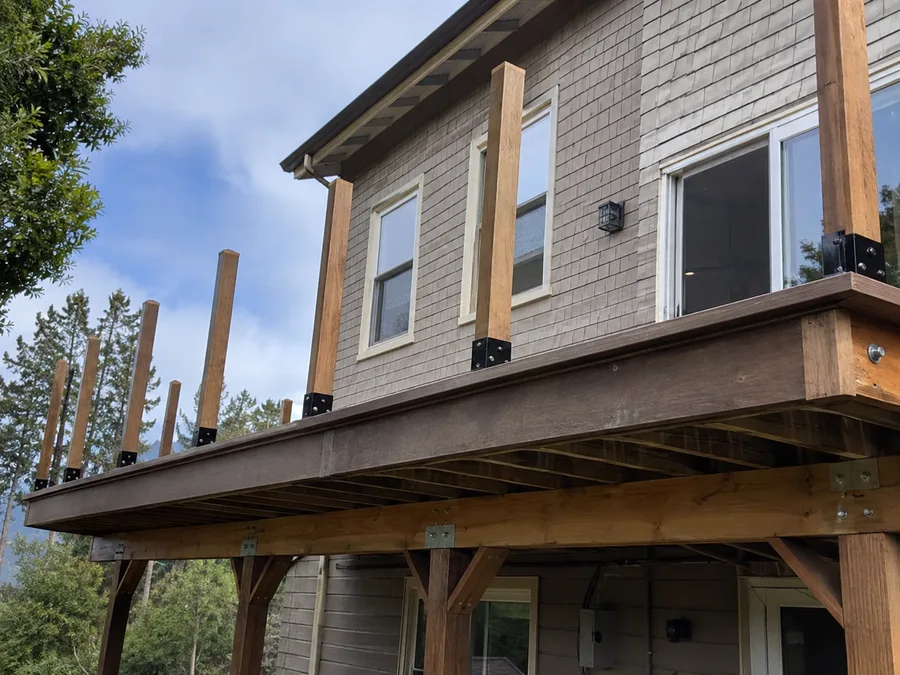
The part of a railing that matters is the part you can’t see: what the posts are fastened to. Some are bolted into the rim joist or into blocking, which is correct. Plenty on older decks are screwed into decking boards, which never had the structure to carry load in the first place. And nearly all of them are penetrations through the deck surface that were never flashed, which means water has been running down the posts into the frame for as long as the railing has been there.
So a railing replacement quote written without lifting anything is an estimate of the visible half. Sometimes the rim is sound and the job is exactly the length of railing you’re replacing. Sometimes a third of the post locations need new blocking and rot repair before a new post can go anywhere near them. We’d rather price that possibility in the estimate than present it as a change order once the old railing is in a skip.
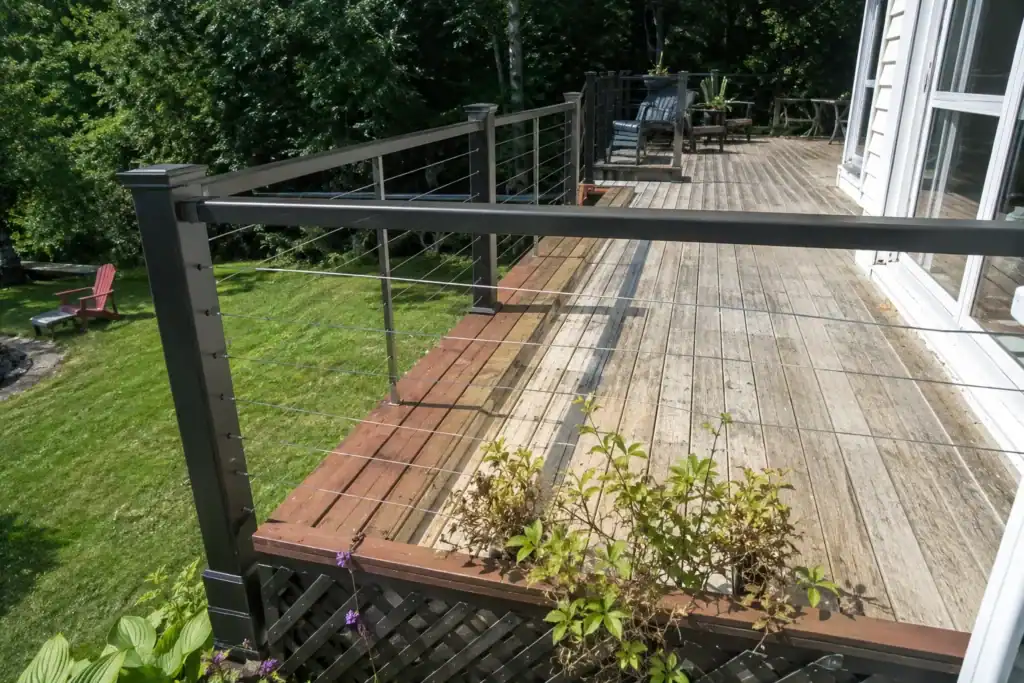
The other thing worth knowing before you start is that removal leaves marks. Posts that passed through the decking leave holes, surface-mounted bases leave footprints on weathered boards, and the new system will almost certainly need posts in different positions than the old one. Modern aluminum and cable systems have a fixed maximum post spacing, and old timber railings rarely met it — so replacement usually means more posts, in new places, with the deck made good where the old ones were.
You’re not buying a railing. You’re buying a railing plus whatever twenty years of unflashed posts did to the frame — and the second part only shows up once the first is off.
02 The D&B difference
What replacing deck railings properly involves
We open up before we price, and we make the deck good where the old railing was.
Post locations investigated before the quote
We lift a section and look at what the existing posts are fastened to, so the estimate reflects the job rather than the appearance of it. If the framing needs work, that number is in front of you before the crew arrives.
New posts anchored into structure and flashed
Rim joist or blocking, never decking alone, with every penetration flashed so the new railing doesn’t repeat what the old one did to the frame.
The deck surface made good
Old post holes filled or boards replaced, footprints addressed, and new post positions cut cleanly. A replacement should look like it was always that way, not like something was taken off.
03 · Service Areas
Where We Work in California
Every city links to a dedicated local page — crews, recent projects and compliance details for that area.
Sacramento Metro
11 cities
East Bay
18 cities
Don’t see your city? We likely still cover it — call (916) 848-2728.
04 How a project runs
How replacing deck railings runs, start to finish
-
01
Survey & opening up
Runs measured, existing railings checked against current requirements, and a section lifted so we can see what the posts are attached to.
-
02
Estimate
Railing length and system priced, with the framing work found at the survey included and a stated allowance for what similar posts are likely to reveal.
-
03
System selection
Material and infill chosen, with post spacing worked out for the new system so you know where posts will land before anything comes off.
-
04
Removal
Old railings and posts taken off and disposed of, penetrations and damage exposed.
-
05
Structural prep
Blocking added, rim repaired, rot removed, and post positions prepared for the new spacing.
-
06
Installation
Posts anchored into structure and flashed, rails, balusters, cable, or glass installed to current height and spacing.
-
07
Make good & handover
Deck surface repaired where the old railing was, load verified, and documentation provided — including the compliance file on commercial property.
05 Scope
What’s included in a D&B deck railing replacement
Complete railing replacement — removal through make-good — from one CSLB-licensed crew.
- Survey and measurement against current height and spacing requirements
- A section opened up before quoting to see what the existing posts are fastened to
- Removal and disposal of existing railings, posts, and hardware
- Rot repair and rim joist replacement where post penetrations let water in
- New blocking at every post location, including the new positions the system requires
- Post connections rated for the 200 lb lateral load requirement
- Flashing at every new post penetration
- Railing systems — timber, powder-coated aluminum, steel, cable, and glass
- Post spacing set to the new system’s requirement rather than the old layout
- Reinforced end and corner posts where cable tension or glass loading demands it
- Guardrails to the 42″ height and 4″ sphere standard on commercial and multifamily decks
- Stair rails and graspable handrails replaced alongside the deck run
- Deck surface made good where old posts and bases were removed
- Load verification on the finished assembly
- Documentation for the SB 721 / SB 326 compliance file
Built to current code: 42″ guardrail height · 4″ sphere rule · 200 lb concentrated lateral load · CBC 1604.8.1 connections · stair rail and handrail requirements
06 Investment
What deck railing replacement costs
Replacement is quoted per linear foot after a survey — and the honest version of that number has two parts.
What drives the number
- Total linear footage, including stair runs
- System and infill — timber, aluminum, cable, or glass, which span a wide range
- Post count, which the new system’s maximum spacing determines rather than the old layout
- Removal and disposal of the existing railing
- Corners, terminations, and gates
- Blocking and rim repair at post locations
- Rot removal where unflashed posts let water into the frame
- Deck boards replaced where old posts passed through them
- Reinforcement at end and corner posts for cable or glass systems
Why we open a section before quoting: it costs an hour and it’s the difference between a price and a guess. A replacement on a deck where the posts were correctly bolted into the rim is straightforward and prices tightly. A replacement on a deck where they were screwed into decking is a structural job wearing a railing job’s clothes. You can’t tell which from the outside, and a bid that doesn’t mention it hasn’t looked. On cable and glass specifically: they cost more than the railing itself suggests. Cable tension pulls end posts inward, so corner and terminal posts need substantially stronger anchorage than a picket rail ever did — which usually means structural work at those positions. Glass adds wind loading for the same reason. Both are worth it; neither is a straight swap. Final pricing follows a site survey — request a free estimate, no obligation.
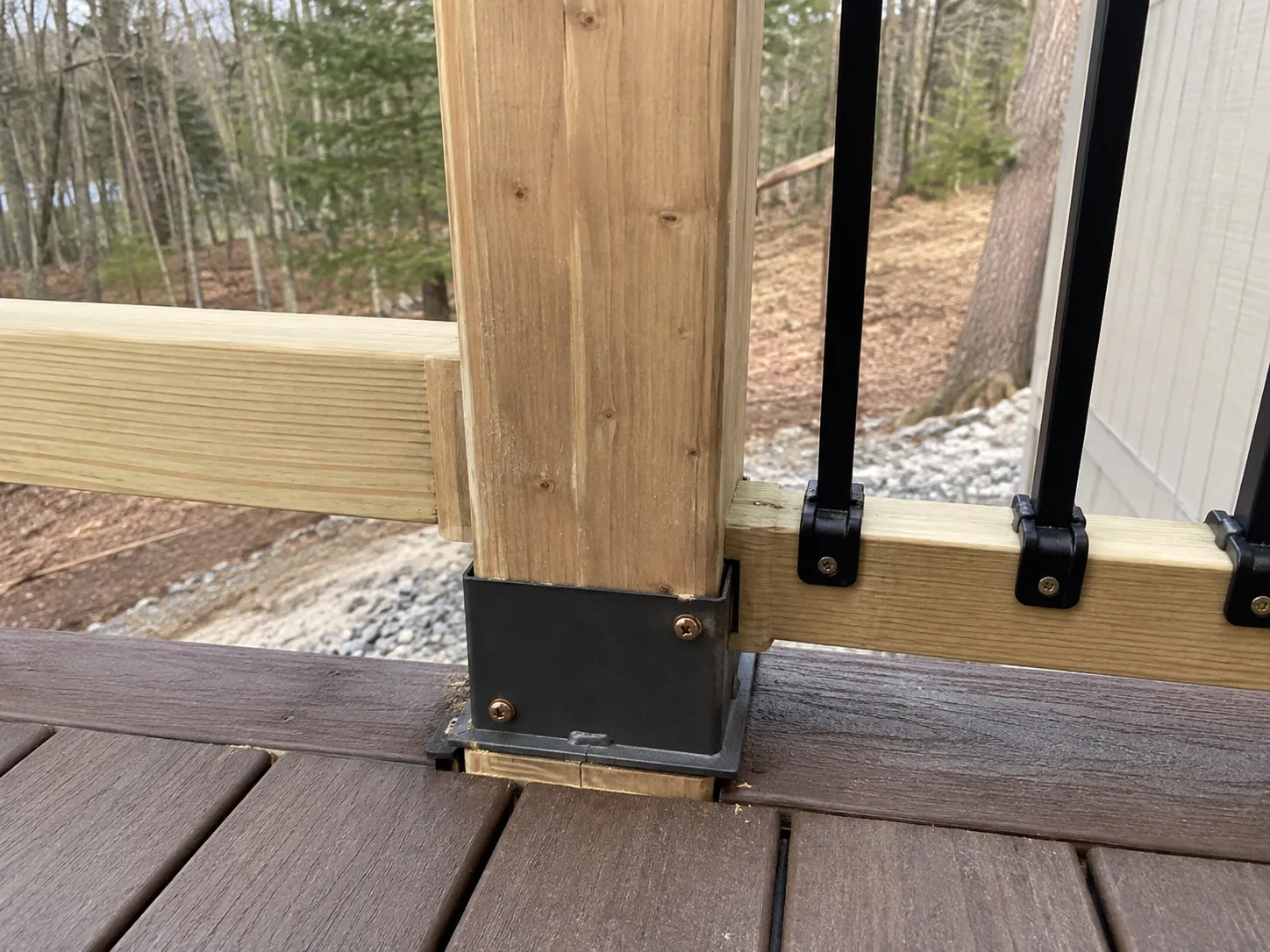
In the field
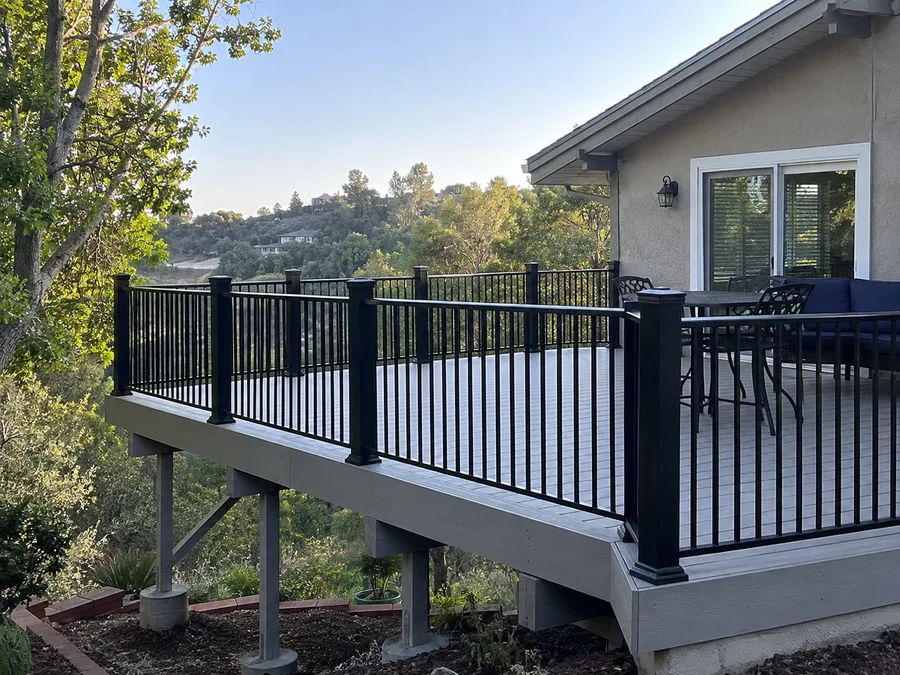
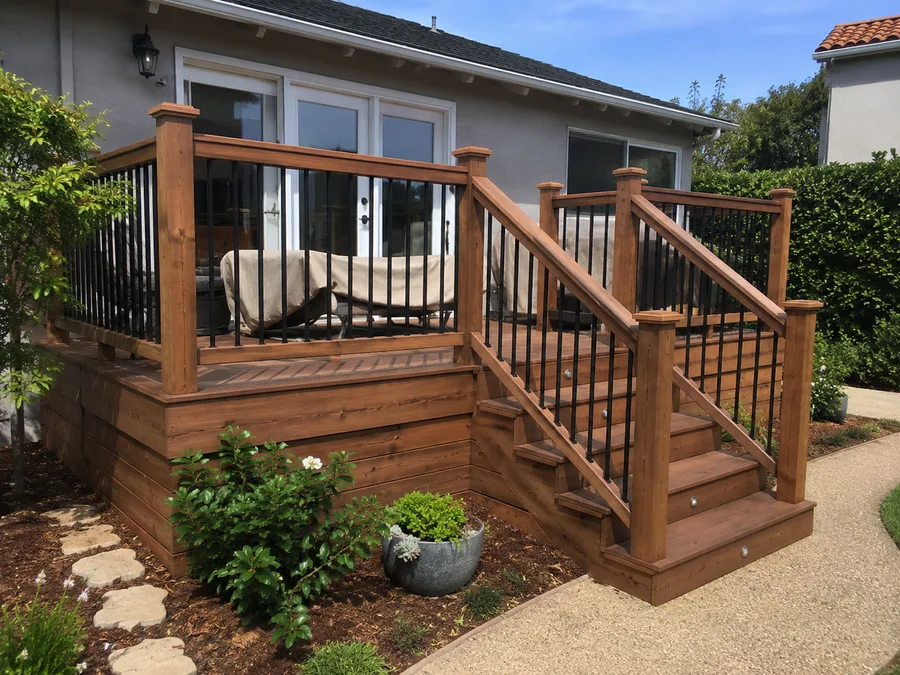
Railing replacement detail
New posts, new positions, and the deck made good where the old ones were.
07 Project example
A recent railing replacement
A client wanted the heavy timber railings on an eighteen-year-old deck swapped for cable so the view opened up. Before quoting, D&B lifted one section. Two of the four posts in that run were screwed into decking rather than the rim, and both had soft framing beneath where water had followed the fasteners down. That changed the job: the estimate included blocking at every post location, rot repair at the positions likely to match, and — because a cable system needs closer post spacing than the old timber layout — six posts rather than four along that run. All of it was priced before the old railing came off. Deck boards were replaced where the original posts had passed through, and the corner posts were reinforced for cable tension.
They opened one section before quoting. Everything they found was already in the price, which is not how the last two railing jobs went. Client · California
08 Case studies
Recent Projects, Documented
Real commercial properties — what the building needed, what we did, and what it delivered.
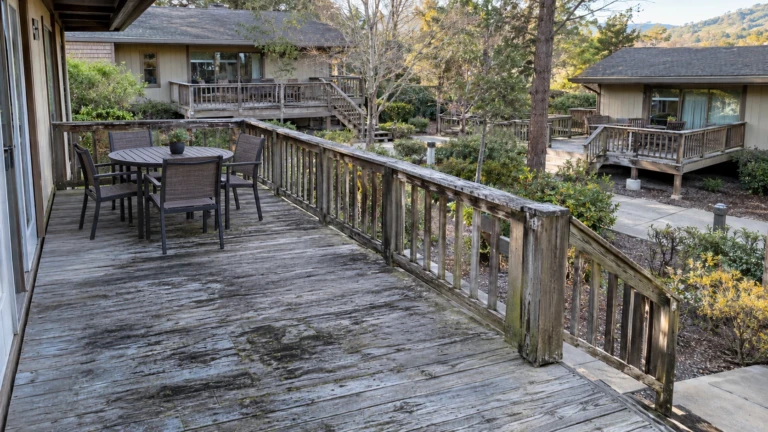 Deck RepairPrivate Deck & Guardrail Rebuild Across a Residential Community — Los AltosUnit-by-unit deck replacement where the guardrail was the real finding — railing posts rotted through at the rim,…View case study
 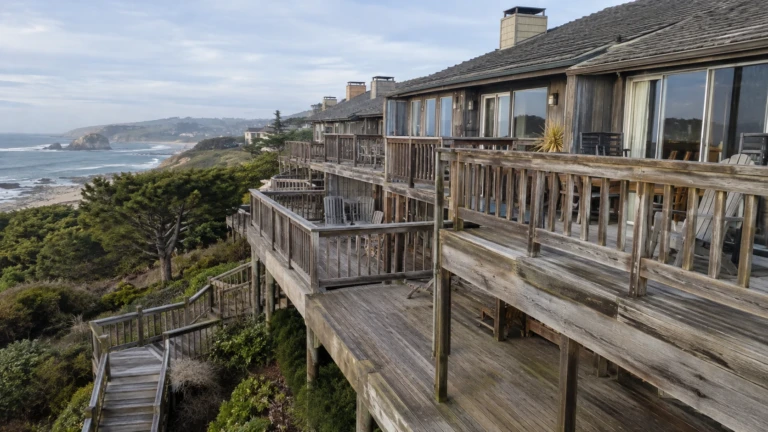 Deck RepairMulti-Level Ocean-View Deck & Stair Replacement — San MateoStepped decks cascading down a bluff, replaced surface and stairs first — because on a multi-level deck the…View case study
 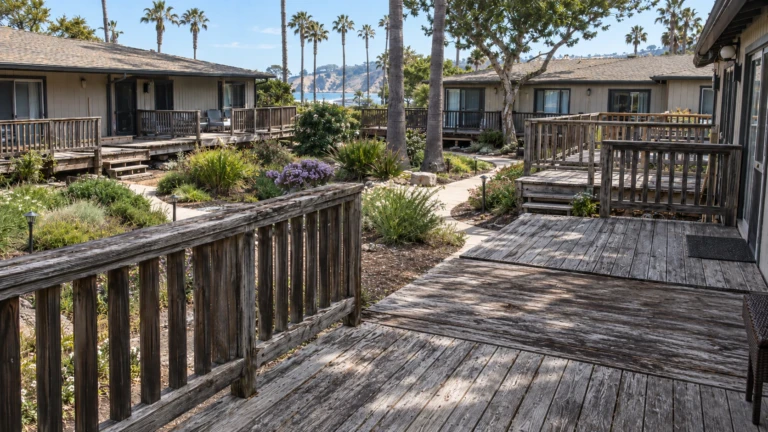 Deck ConstructionPatio Deck & Post Base Replacement Across a Bungalow Community — San RafaelDeck-by-deck replacement across a courtyard community, driven by the one detail that failed first — posts set straight…View case study
 09 Client feedback
What clients say
They took one section off before quoting and found rot at two posts. Better to know that in the estimate than halfway through.
Nobody had explained that cable needs posts closer together. We’d have been unhappy discovering that after the old ones were gone.
The boards where the old posts came through were replaced properly. The last contractor filled ours with caulk and left.
10 FAQ
Deck railing replacement questions
How much does it cost to replace deck railings?
It’s priced per linear foot, and the honest estimate has two parts: the railing itself, which is predictable, and whatever the old posts were fastened to, which isn’t. Aluminum, cable, and glass span a wide range on the first part. On the second, a deck where posts were correctly bolted into the rim prices tightly; a deck where they were screwed into decking needs blocking and often rot repair at every position. We open a section before quoting so both numbers are real.
Why does replacing a railing sometimes turn into structural work?
Because railing posts are penetrations through the deck surface that were rarely flashed. Water has been following those fasteners into the rim joist for as long as the railing has been up, and on older decks that’s often twenty years. The rot is invisible until the post comes out. That’s not a contractor finding extra work — it’s the reason the railing needs replacing being visible for the first time.
Will the new railing use the same post positions?
Usually not. Aluminum, cable, and glass systems have a maximum post spacing that older timber railings frequently exceeded, so a replacement typically means more posts in new positions. That’s worth knowing before removal, because it affects both the price and where blocking is needed — and because the deck has to be made good where the original posts were.
What does removal do to the deck surface?
Posts that passed through the decking leave holes that need boards replaced or repaired. Surface-mounted bases leave clean footprints on weathered decking, which show. And the new post positions need cutting in. We include making the surface good in the scope rather than leaving you with a new railing and a patched deck.
Is switching to cable or glass a straight swap?
No, and this catches people out. Cable is tensioned, and that tension pulls end and corner posts inward — so terminal posts need considerably stronger anchorage than a picket railing ever required, which usually means structural work at those positions. Glass adds wind loading for a similar reason. Both are excellent choices and both need more from the deck than the railing they’re replacing.
Do we have to go to 42 inches?
On commercial and multifamily decks, yes — that’s the current requirement, along with openings that won’t pass a 4-inch sphere and a 200-pound load capacity. Many existing railings are 36 inches, which is why replacement so often follows an inspection. Single-family residential is generally 36 inches. We confirm what applies to your property at the survey.
Can you replace the railings without replacing the deck?
Yes, and it’s one of the highest-impact changes available on a tired deck — new railings change how a deck reads more than new boards do. The only caveat is the framing at the post locations, which has to be sound or made sound regardless of what the rest of the deck looks like.
How long does railing replacement take?
A typical residential run is a few days. Multi-deck properties are phased so residents keep access, with each deck out of use only while its own railing is off. Framing repair extends that, which is another reason to establish the extent before starting rather than during.
Does railing replacement close an SB 721 or SB 326 finding?
It does when the finding is the railing, which it frequently is — guardrails are among the most cited items in both. We install to current requirements and document the work for the compliance file. Where the finding also covers framing or connections, that’s part of the same scope for us rather than a separate trade.
Are you deck railing replacement contractors in California?
We’re a CSLB-licensed contractor (#1060736) replacing deck railings across the Bay Area, Central Valley, and Sacramento. Survey, removal, framing repair, installation, and making the deck good come from one crew.
11 Start here
Get your railings replaced — free survey
Tell us how much railing you have and what you’d like instead. We’ll measure the runs, lift a section to see what the posts are fastened to, and give you an estimate with the railing and the framing priced separately — before anything comes off.
CSLB #1060736 · 9+ years · Insured & Bonded · Serving the Bay Area, Central Valley & Sacramento