Deck Joist Repair · CSLB #1060736
Commercial Deck Joist Repair in California
Our crews open up and rebuild deck framing on apartment, condo and HOA buildings throughout the Bay Area, the Central Valley and Sacramento. Joists sit under the decking where nobody sees them, so deck joist repair starts with opening the deck in the right places: at the ledger, along the joist tops and at the beam, the places where water can collect.
- CSLB #1060736 Licensed California contractor
- 9+ yrs Repairing deck framing on occupied buildings
- Rot cut out New hangers and ledger flashing every time
- Commercial & HOA Apartments, condominiums & HOA communities
01 Why it matters
A joist rots where water stays, and the repair has to change that spot
The American Wood Protection Association’s Colin McCown singles out connections where moisture can accumulate as places that need protection from water. He writes that wood at 20 to 30 percent moisture is wet enough to deteriorate, and that preservative does not always reach the core of pressure-treated lumber, so water getting in through deep checks can reach unprotected wood. His advice for decks is to keep water off the tops of joists and beams, and especially ledgers, with flashing compatible with pressure-treated wood.
Those are the places we open first: joist ends in their hangers at the ledger, joist tops under the decking, and joists where they bear on a beam. Where the California Residential Code applies, it also requires flashing where a deck attaches to a wood-frame wall, and flashing above deck ledgers.
So fixing deck joists is two jobs. The damaged wood is cut out or replaced, and the detail that let water sit there is corrected: new flashing at the ledger, new hangers and sealed cut ends. Otherwise a new joist would sit in the same conditions as the old one.
Replacing a rotted joist fixes the wood. Fixing the flashing and hangers around it is what keeps the new one dry.

02 The D&B difference
How we approach joist work on multifamily decks
We open the deck where water collects
Boards come up along the ledger and over any soft spot, and joist ends, tops and bearing points are probed. A visual check from below misses the tops of the joists.
Rot is removed, not reinforced
A new joist fastened against a decayed one leaves the decay in place. Rotted sections are cut out or the whole joist is replaced, and the remaining wood is probed until it is sound.
Hardware is replaced with the wood
Rusted hangers come off with the joists they held. New hangers are G185 galvanized or stainless steel, the fasteners match, and the ledger gets new flashing.
03 · Service Areas
Where We Work in California
Every city links to a dedicated local page — crews, recent projects and compliance details for that area.
Sacramento Metro
20 cities
East Bay
28 cities
North Bay
14 cities
Central Valley
13 cities
South Bay & Peninsula
27 cities
Don’t see your city? We likely still cover it — call (916) 848-2728.
04 How a project runs
How fixing deck joists runs on an occupied building
-
01
Assessment
We come out at no charge within a week, lift decking along the ledger and over soft spots, and probe each exposed joist.
-
02
Quote
Within five business days, broken down into joists to replace, joists to sister, hangers, ledger flashing and decking.
-
03
Shoring
Where a repair takes load off the framing, the area is shored and access is closed until it is safe.
-
04
Framing
Rotten joist repair: decayed joists replaced or cut back to sound wood, new joists fastened alongside where needed, cut ends finished per AWPA M4.
-
05
Hardware and flashing
New galvanized or stainless hangers and fasteners, new flashing at the ledger.
-
06
Decking
Deck boards reinstalled or replaced, and the area reopened.
05 Scope
What our joist work covers
Joists Hardware and flashing Around the joists
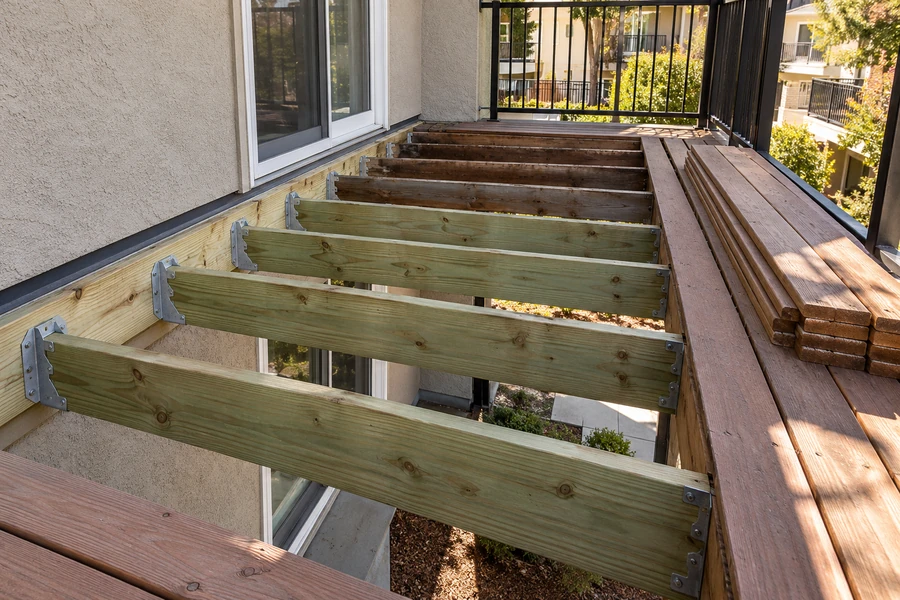
- Replacement of decayed, split and broken joists
- Rotten joist end repair at the ledger and the beam
- New full-length joists fastened alongside sound joists that sag or bounce
- Field-cut ends of pressure-treated lumber finished per AWPA M4
- Rusted or under-fastened joist hangers replaced
- G185 galvanized or stainless steel hangers, with matching fasteners
- Ledger flashing replaced, compatible with copper-based pressure-treated lumber
- Ledger and beam checked at every repaired joist
- Decking removed and reinstalled or replaced
- Shoring where load is taken off the framing
Built to current code: CRC R703.4 flashing where decks attach to the wall and above deck ledgers · CRC R507.2.3 deck fasteners and connectors · CBC 1604.8.3 deck attachment · Field cuts in pressure-treated wood finished per AWPA M4, referenced in CBC 2303.1.9 · Health & Safety Code 17973 (SB 721) exterior elevated elements
06 Investment
What sets the price of joist repair
We quote after seeing the framing, joist by joist.
What sets the number
- Number of joists to replace or sister
- How much decking has to come up
- Hangers and fasteners to replace
- Ledger flashing and any ledger repair
- Shoring and access below the deck
- Number of decks and balconies
Why each joist is priced apart: some joists need full replacement, some a new end, some a new hanger, and some nothing. Listing them one by one keeps the cost on the framing that needs it.
Final pricing follows an on-site assessment. Request a free estimate — no obligation.
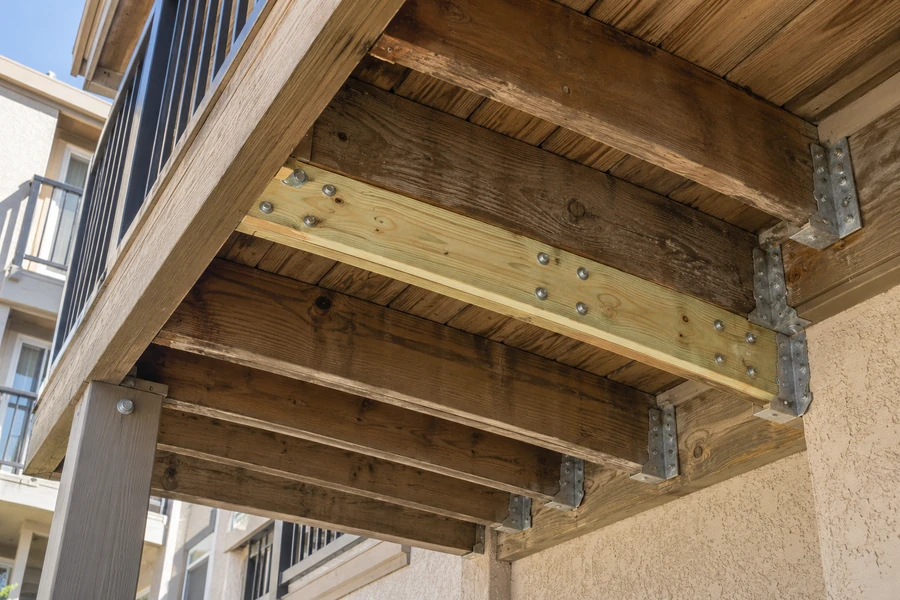
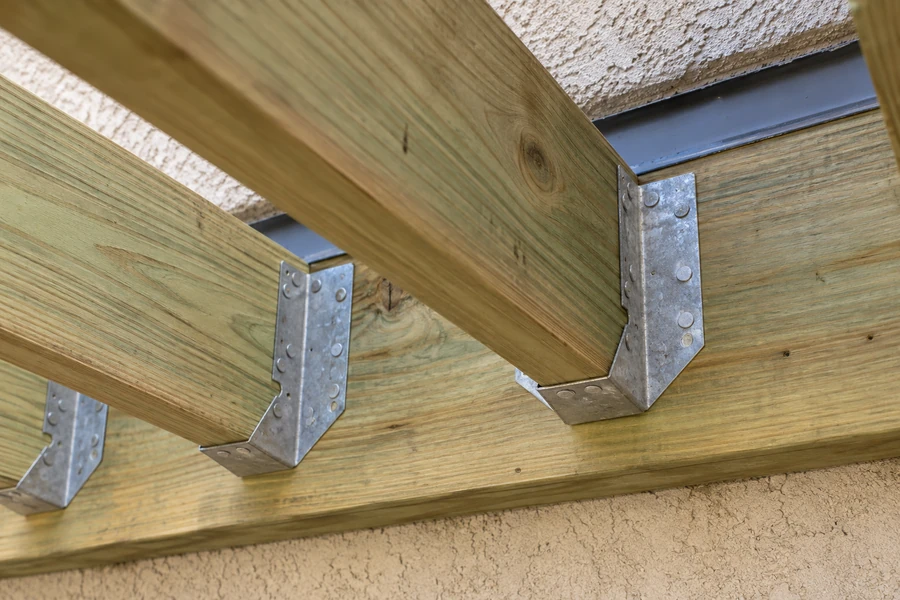
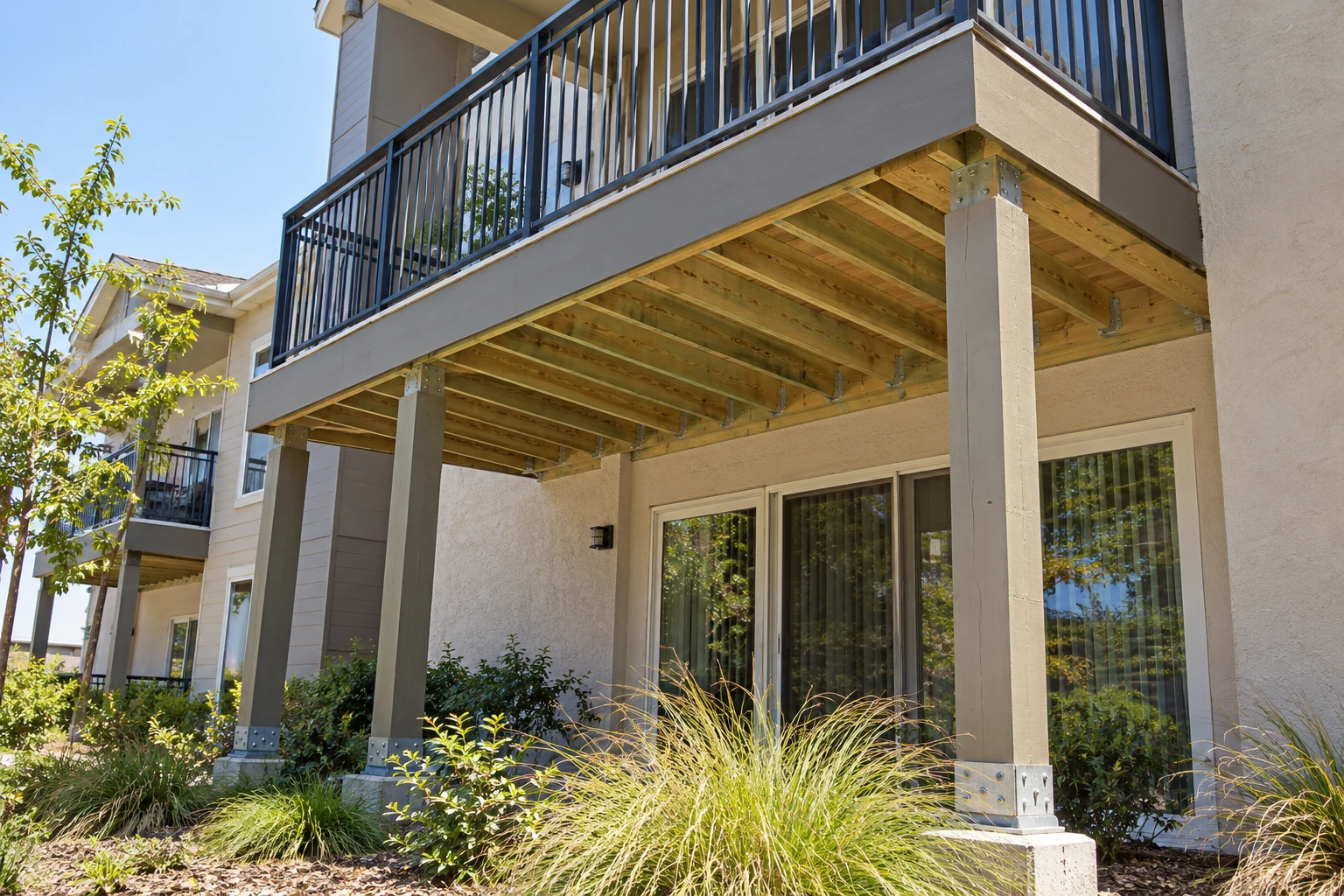
In the field
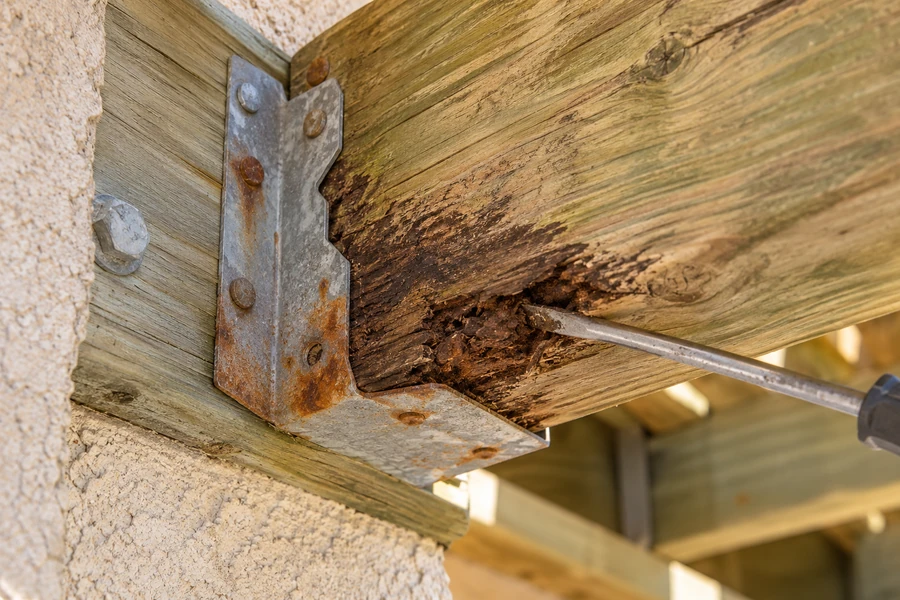
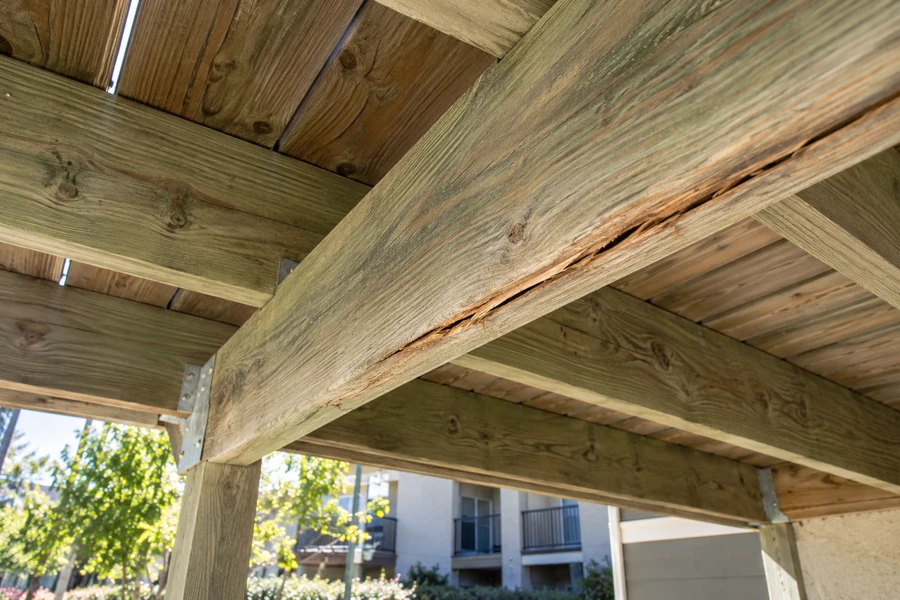
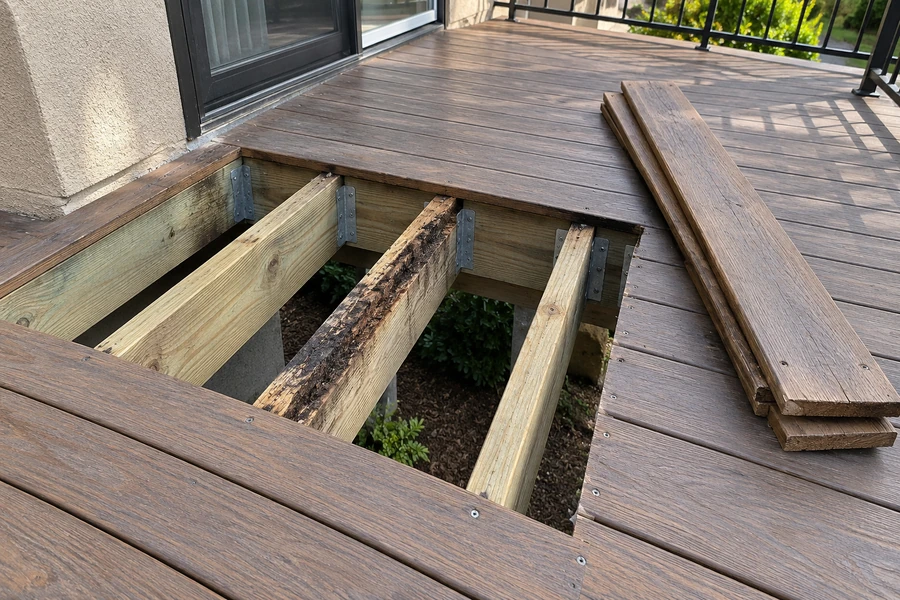
Rotted joist ends, split members, decayed tops and new framing
Joists on multifamily decks before and during repair.
07 Project example
A recent joist repair on second-floor apartment decks
An SB 721 inspection flagged soft wood at the wall line of several decks. With the decking up along the ledger, the joist ends in the hangers were decayed, and the ledger had no flashing above it. We shored the decks, replaced the decayed joists with new pressure-treated joists in new galvanized hangers, sealed every cut end, installed flashing above the ledger, and reinstalled the decking.
The inspector found soft wood at the wall. They showed us why it was there, fixed the joists and the flashing, and the next inspection was clean. Property Manager · California apartment community
08 Case studies
Recent Projects, Documented
Real commercial properties — what the building needed, what we did, and what it delivered.
 WaterproofingBalcony & Exterior Stair Waterproofing — 32-Unit Multifamily Community, SacramentoThe rot wasn't out at the edge — it was where the deck met the wall. We stripped…View case study
 Balcony RepairBalcony Replacement with Trex Composite Decking — 18 Balconies, AntelopeThe rot had already reached the beams and posts. We rebuilt the framing under every balcony and re-decked…View case study
 Balcony RepairBalcony & Elevated Walkway Replacement — 24 Balconies, LodiEvery balcony and second-floor walkway rebuilt from the framing up — new waterproof deck system, new code-height guardrails,…View case study
09 Client feedback
What property managers say
The inspector found soft wood at the wall. They showed us why it was there, fixed the joists and the flashing, and the next inspection was clean.
They lifted boards along the wall before giving us a number. The quote listed every joist, and the work matched it.
Our balconies bounced. They added new joists beside the old ones, and the residents noticed the difference the first day.
10 FAQ
Questions about rotted, split and weak deck joists
How do you repair a rotted deck joist?
To repair rotted deck joist damage, we remove the decayed wood. Depending on how far the decay goes, the joist is replaced or its damaged end is cut back to sound wood and supported, and cut ends of pressure-treated lumber are finished per AWPA M4. The flashing or detail that let water sit there is corrected at the same time.
Can you reinforce deck joists instead of replacing them?
For sound joists that sag or bounce, yes: we fasten a new full-length joist alongside each one. For rotted wood, no. Reinforcing a rotted joist leaves the decay in place, so on our projects decayed wood is cut out or replaced first.
What causes rot at the joist ends?
AWPA’s Colin McCown names connections where moisture can accumulate as places that need protection from water, and advises keeping water off the tops of joists, beams and especially ledgers with flashing. A joist end at the ledger sits against the wall, so a missing or failed ledger flashing is the first thing we check.
Is a split deck joist dangerous?
It depends on the split. STRUCTURE magazine’s article on seasoning checks says checks affect shear in bending members, which is seldom the governing design value, while splits along the length of a member are more often the result of excessive loads on it. We take a split along a joist as a reason to check the load and the span, and to repair split deck joist damage by replacing or reinforcing the joist.
What hangers and fasteners go on a repaired joist?
The California Residential Code table for deck fasteners and connectors calls for metal connectors, such as joist hangers, in G185 zinc-coated galvanized steel or hot-dip galvanized steel, with stainless steel as the alternative. Nails and bolts are hot-dipped galvanized, with stainless steel, silicon bronze or copper as alternatives, and anything within 300 feet of a salt water shoreline must be stainless steel. AWC’s deck guide notes that aluminum flashing must not be used with copper-based preservatives such as ACQ or copper azole.
Does SB 721 cover deck joists?
In buildings with three or more multifamily units, Health and Safety Code 17973 covers balconies, decks, walkways and stairways more than six feet above ground, including their supports, and requires an assessment of their load-bearing components and associated waterproofing elements. Joists are part of that structure.
What does the joist work cost?
It depends on the number of joists, how much decking comes up, hangers, ledger flashing and shoring. The price comes after we have seen the framing on a no-cost visit.
Do you work in my area?
Yes. We handle multifamily and HOA properties in the Bay Area, the Sacramento region and the Central Valley; the number to call is (916) 848-2728.
11 Start here
Book deck joist repair for your property — free walk-through in California
Send photos from under the deck, especially along the wall, and any SB 721 or SB 326 inspection findings. We walk the framing within a week and send a joist-by-joist price within five business days.
CSLB #1060736 · 9+ years · Insured & Bonded · Commercial, multifamily & HOA properties across the Bay Area, Central Valley & Sacramento