Worn Deck Repair · CSLB #1060736
Commercial Worn Deck Repair in California
We repair worn and weathered decks on apartment communities, condominiums and HOA properties across the Bay Area, Central Valley, and Sacramento. An old deck rarely wears evenly. Boards on the path from the door to the steps go first, boards under the roof overhang last, and that difference decides which boards are replaced, which are sanded and refinished, and where boards come up so we can check the framing.
- CSLB #1060736 Licensed California contractor
- 9+ yrs Repairing decks on occupied buildings
- Planned board by board Only what is worn gets replaced
- Commercial & HOA Apartments, condominiums & HOA communities
01 Why it matters
A worn deck shows where it needs repair
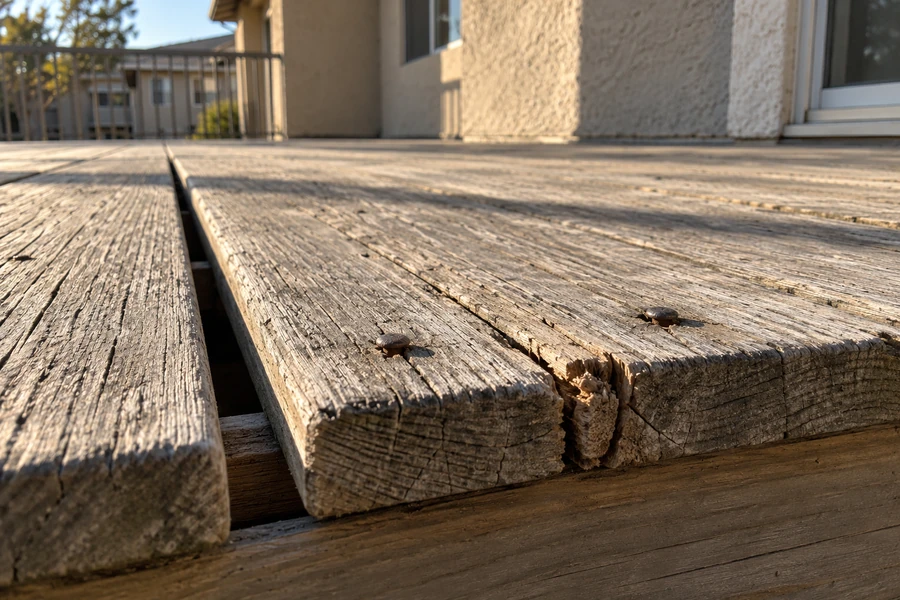
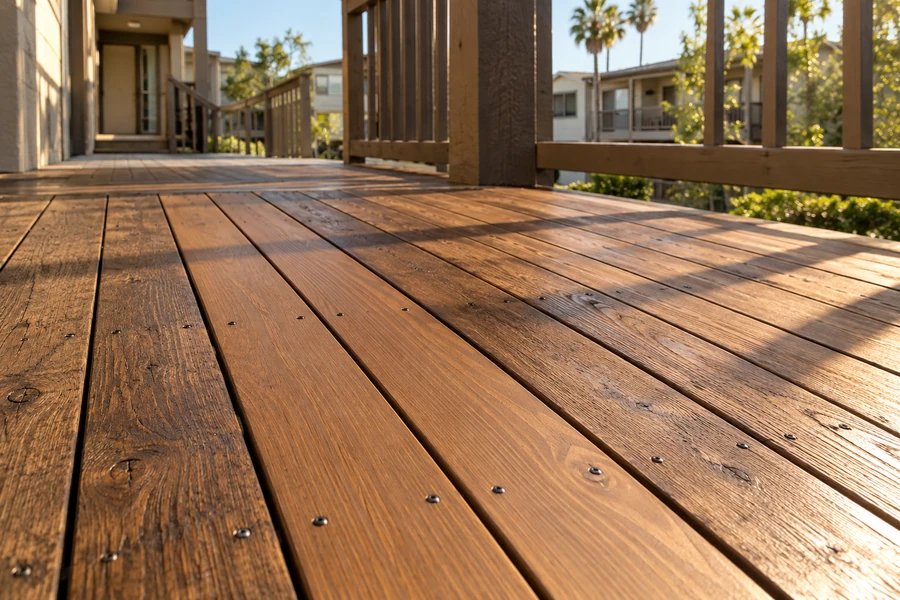
Sun and rain break down the outer layer of wood fibres and wash them away. That is why a weathered board turns grey and rough. The damage is shallow, so on most boards sanding removes it. Foot traffic adds wear along one line: on a ground-floor patio deck it runs from the sliding door to the steps, and the boards there turn rough and splintered, and their nails start to stand up, before the rest. Boards under the roof overhang get less sun and rain and often still have some colour.
Water leaves a different mark. Look for a band of darker boards along a planter, a shaded edge or the wall that stays dark after the rest of the deck has dried. Grey, rough wood is a surface problem. Wood that stays wet is where water damage starts, once its moisture stays above about 20 percent. Those are the boards we lift to look at the tops of the joists underneath.
So old deck repair is planned zone by zone instead of one fix for the whole surface. Boards that are split through, soft, or worn deeper than sanding can reach are replaced. The rest are cleaned, sanded and refinished, and new and original boards are stained together so the colour comes out close. Popped nails are replaced with deck screws. The budget goes to the boards and framing that need it.
The worn path tells you which boards to replace. The dark edge that stays damp tells you where to lift boards and look underneath.

02 The D&B difference
How we plan the repair zone by zone
The deck is mapped before it is quoted
Each area is marked as replace, sand and refinish, or open up. The quote follows the same zones, so you see what each part of the work is for.
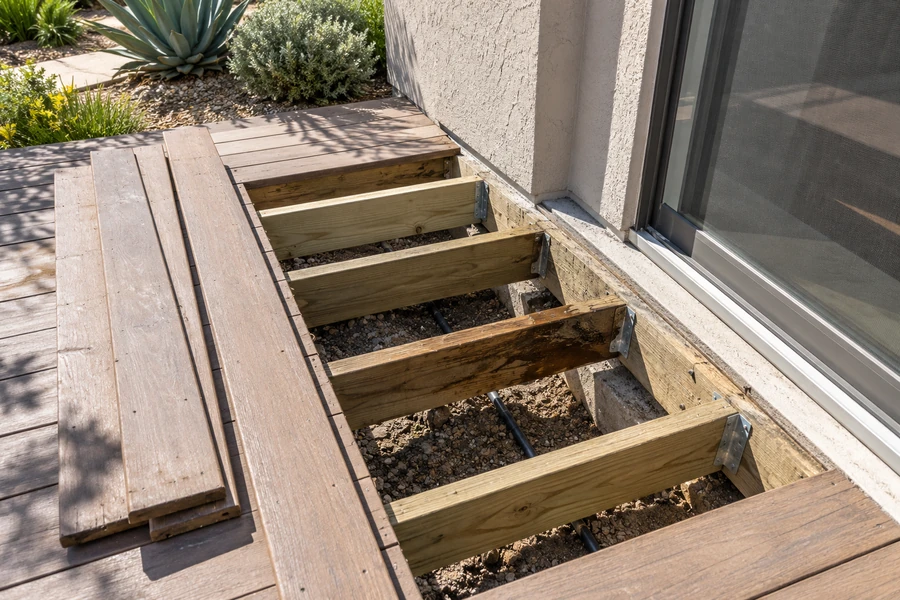
Boards come up where water sits
Where boards stay dark and damp, we lift a few and probe the joist tops and the connection at the wall. Framing repairs are made before any board goes back down.
New and original boards are finished together
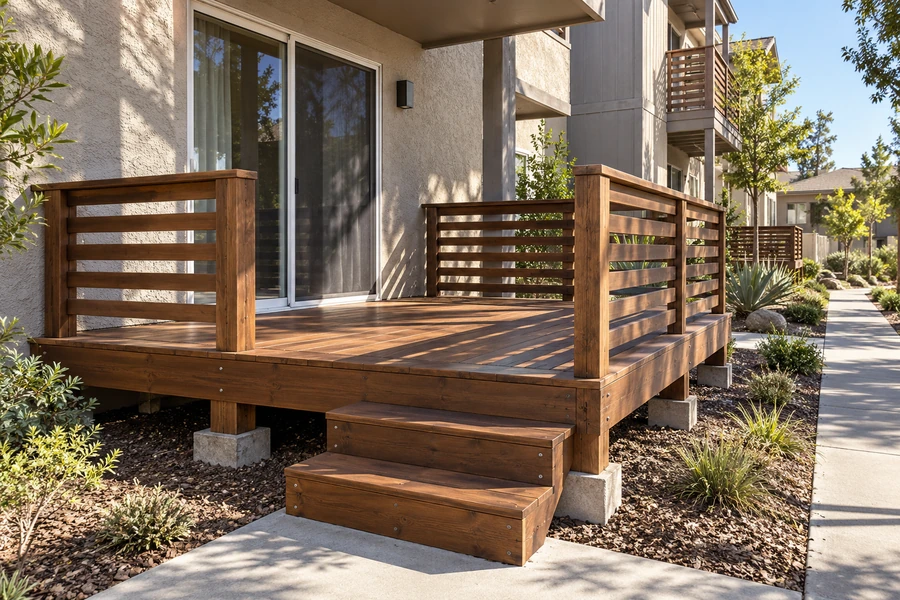
Replacement boards match the existing size and species where it is available. After sanding, the whole deck gets one finish, so the repair does not show as a patchwork.
03 · Service Areas
Where We Work in California
Every city links to a dedicated local page — crews, recent projects and compliance details for that area.
Sacramento Metro
20 cities
East Bay
28 cities
North Bay
14 cities
Central Valley
13 cities
South Bay & Peninsula
27 cities
Don’t see your city? We likely still cover it — call (916) 848-2728.
04 How a project runs
How an old deck repair runs
-
01
Assessment
A free property assessment, scheduled within a week. We walk every deck, mark the wear zones and the damp areas, and lift boards where the surface points to water.
-
02
Quote
An itemized quote within five business days, broken down by deck and by zone.
-
03
Scheduling
On occupied properties, decks are worked on one at a time, with residents notified before their deck is out of use.
-
04
Framing and boards
Joist and ledger repairs where they are needed, then replacement boards and new screws.
-
05
Surface preparation
Cleaning and sanding of the boards that stay.
-
06
Finish
Stain or sealer over the whole deck, steps included, once the wood is ready for it.
05 Scope
What our old deck restoration covers
Boards Framing Steps and railings Finish
- Replacement of boards that are split through, soft, or worn too deep to sand
- Boards in traffic lanes replaced, sound boards kept
- Popped nails pulled and replaced with deck screws
- Sanding to restore old deck boards that are grey and rough but sound
- Joist tops checked and repaired under damp areas
- Ledger and flashing checked where boards along the wall come up
- Post bases and piers checked for contact with soil
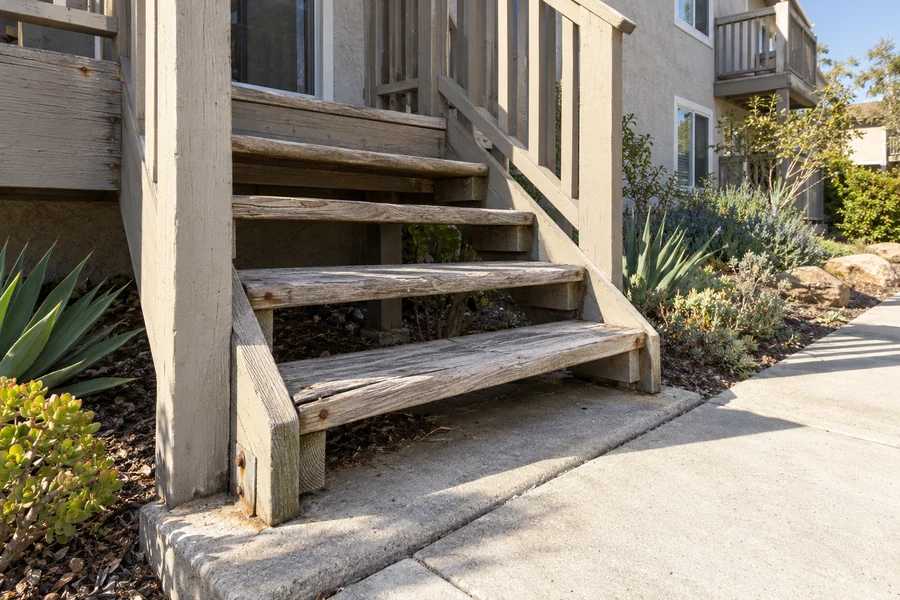
- Split and rounded treads replaced
- Stringer ends checked where they sit on the pad or ground
- Loose railing posts and rails repaired or replaced
- Cleaning and sanding of the whole surface
- Penetrating stain or sealer applied to new and original boards together
Built to current code: CBC 1604.8.3 deck attachment where the ledger is repaired · 42″ guardrail height · 4″ sphere rule · 200 lb concentrated load on replaced guardrails · SB 721 and SB 326 requirements for elevated decks and balconies
06 Investment
What the repair costs
We price after a free assessment, and you receive an itemized quote within five business days.
What sets the number
- Deck size and the number of decks on the property
- The share of boards that need replacing
- Framing repairs found under damp areas
- Steps and railings
- The finish chosen
- Access and how many decks can be worked on at once
Why mapping keeps the number down: on many old decks the wear is concentrated in a few areas. Replacing boards only in those areas and refinishing the rest costs less than new decking across the whole surface, as long as the framing is sound.
What we will not price: full board replacement on a deck where sanding removes the wear. If the boards are sound, we say so.
Final pricing follows an on-site assessment. Request a free estimate — no obligation.
In the field
Weathered deck restoration, before and after
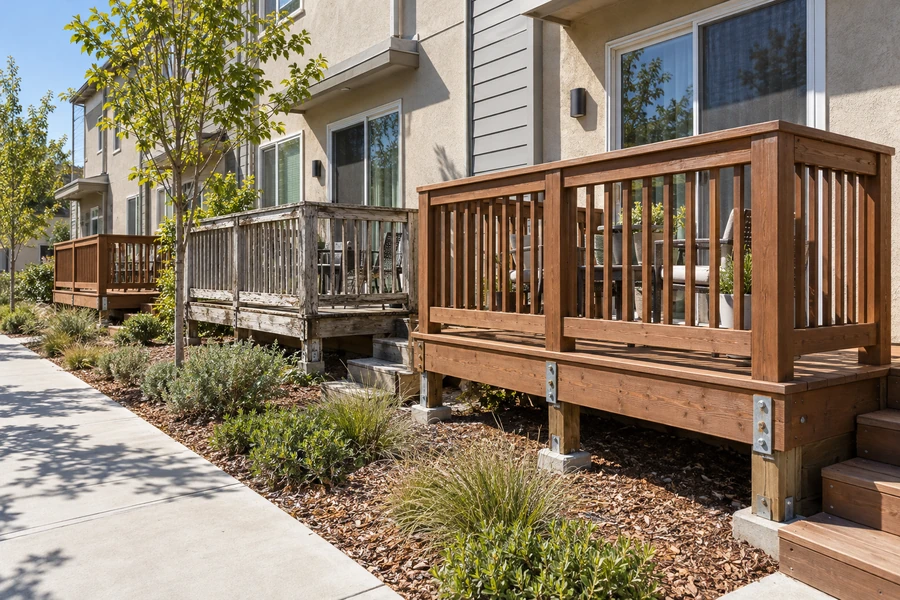
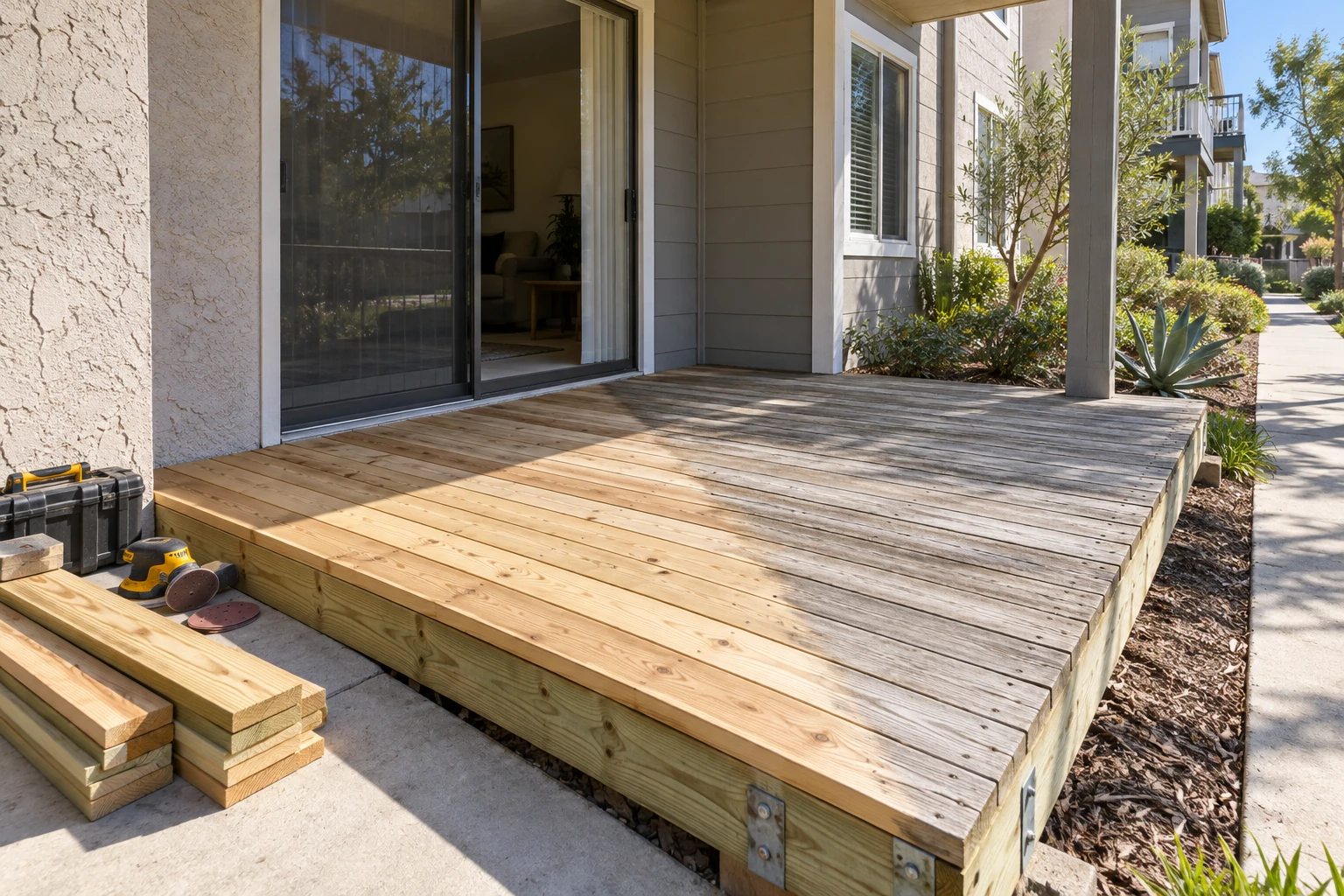
Worn boards and steps, decks restored next to decks still waiting, and finished surfaces.
07 Project example
A recent repair of worn patio decks
The association asked us to restore old deck surfaces on its ground-floor patio decks, which had turned grey and splintered. Every deck had the same worn lane from the sliding door to the steps. The decks with planters along one side also had a band of darker boards that stayed damp after the rest had dried. We lifted boards along those edges and found soft joist tops on two decks, which were repaired before the boards went back. Boards in the lanes were replaced, the rest were sanded, and each deck was stained as a whole.
Every deck had the same worn path to the steps, so we expected the same repair everywhere. It was the shaded edges by the planters that needed the framing work. Community Manager · California townhome community
08 Case studies
Recent Projects, Documented
Real commercial properties — what the building needed, what we did, and what it delivered.
 Deck RepairTrex Stair Replacement — Apartment Community, Elk GroveThe paint had not failed evenly. It held on the risers and gave out on the treads, worst…View case study
 Deck RepairElevated Restaurant Dining Deck Restoration — SaratogaA multi-level hillside dining deck taken from failing boards and moisture-damaged connections back to a sound, sealed structure…View case study
 Deck RepairTrex Deck, Walkway & Stair Replacement — 12-Unit Apartment Community, Menlo ParkResidents walked the same tired wood the whole way from the parking lot to their front door —…View case study
09 Client feedback
What property managers say
Every deck had the same worn path to the steps, so we expected the same repair everywhere. It was the shaded edges by the planters that needed the framing work.
The steps were the worst part, with rounded and split treads. They replaced the treads and kept the stringers that were still sound.
The quote was broken down deck by deck: what would be replaced, what would be sanded and what would be opened up. The board could see what each line was for.
10 FAQ
Worn deck repair questions
Should an old deck be restored or replaced?
The framing decides that more than the boards do. If the joists, beams and connections are sound and most boards are worn only at the surface, we restore old deck surfaces by replacing the boards that are past saving and sanding and refinishing the rest. If the framing is decayed across much of the deck, new boards on it would not last, and replacement is the better spend.
What does old deck restoration involve?
A walk of the deck to map the wear, boards lifted where the surface stays damp, framing repairs where needed, replacement of failed boards, new screws in place of popped nails, cleaning, sanding, and a finish applied over the whole deck. On a property with many decks, we do the same for each one and quote them separately.
Can badly weathered boards be saved?
Often, yes. Weathering from sun and rain affects a thin layer at the surface, so a grey, rough board that is still firm usually sands back to sound wood. We repair weathered deck boards this way when they are not split through and not soft. Boards that are cupped, split along their length or soft when probed are replaced.
Why do nails keep popping up on an old deck?
Boards take on water and dry out over and over, swelling and shrinking each time, and that slowly works nails out of the joists. When fixing an old deck, hammering them back in does not hold for long. When repairing old decks, we pull popped nails and fasten the boards with deck screws.
Do you need a permit for repairing an old deck?
California’s building codes do not require a permit for ordinary repairs, but that exemption does not cover removing or cutting a structural beam or load-bearing support. Replacing deck boards and refinishing usually falls under ordinary repair, while replacing joists, beams, posts or the ledger usually needs a permit. Each city and county applies the rules in its own way, so we confirm with them and handle the permit when one is required.
Is it safe to sand and repair old pressure-treated decking?
Industry stopped using CCA, a preservative that contains arsenic, in lumber for decks after December 31, 2003, so decks built before 2004 may have it. The EPA does not call for removing existing CCA decks. When we repair decking of that age, we follow the EPA’s precautions: dust masks, goggles and gloves when sanding or cutting, dust and offcuts collected and disposed of, and no burning of scrap.
What finish works on old, worn boards?
On worn boards, we use penetrating stains and sealers on sanded wood. They soak into the boards and wear down gradually, so they can be renewed without stripping. Film-forming coatings such as paint sit on top of the wood, and on a traffic lane they tend to wear through and peel. On CCA pressure-treated decks, the EPA notes that regular coats of a penetrating finish, such as an oil-based semi-transparent stain, may reduce how much of the chemical leaves the wood.
Do ground-floor patio decks fall under SB 721 or SB 326?
No. The inspections under SB 721 and SB 326 cover exterior elevated elements, such as balconies and decks, with a walking surface more than six feet above the ground. A low patio deck is outside that scope. On the same property, upper balconies and elevated decks usually are covered, and we can repair both in one program.
Do you repair patio decks that serve as residents’ backyards?
On townhome and condominium communities, a ground-floor patio deck often serves as a resident’s backyard, and repairing those decks is the work described on this page. For other kinds of property, a call or a few photos of the deck are usually enough for us to say whether the job fits what our crews do.
Are you deck repair contractors near me?
We work across the Bay Area, Central Valley and Sacramento, with free property assessments scheduled within a week. Repairs, carpentry, permitting and finishing come from one CSLB-licensed contractor (#1060736). Call (916) 848-2728 and give us the city, and we will tell you when we can walk the decks.
11 Start here
Book a free assessment for your old deck restoration in California
Tell us how many decks the property has, how they are worn, and whether any boards stay dark and damp after rain. We schedule the assessment within a week and send an itemized quote within five business days.
CSLB #1060736 · 9+ years · Insured & Bonded · Commercial, multifamily & HOA properties across the Bay Area, Central Valley & Sacramento