Commercial Fiberglass Deck Repair · CSLB #1060736
Fiberglass Deck Repair for California Commercial & Multifamily Properties
Fiberglass deck repair for apartment communities, condominiums, HOAs, and hotels across California — cracked laminate, blistering and delamination, worn topcoat, and the plywood substrate underneath where water has already got in. A fiberglass deck is a waterproofing system, not just a surface, so repairing it properly means finding out what’s under the laminate before anything goes back over it.
- CSLB #1060736 Licensed California contractor
- 9+ yrs Repairing commercial decks & balconies
- SB 721 / 326 Findings repaired & documented
- Commercial Multifamily, HOA & hotel only
01 Why it matters
Fiberglass hides the damage it’s meant to prevent
A fiberglass deck is a laminate — glass mat and resin bonded over a plywood substrate, finished with a topcoat. Done well, it’s an excellent waterproofing system and lasts for decades. Its weakness is that it’s rigid and opaque: it doesn’t sag, stain, or feel spongy the way an exposed wood deck does when the structure beneath it starts to fail. It looks solid right up until it isn’t.
That matters because the failure mode is nearly always the same. Water finds a way through — a hairline crack from substrate movement, an opening at a railing post, an unsealed edge at a doorway or wall — and then it can’t get out. Sealed beneath the laminate, it soaks into the plywood and stays there. The substrate softens, delaminates from the resin above it, and the fiberglass begins to blister or flex. By the time anything is visible on the surface, the wood underneath has usually been wet for years.
Which leads to the single most expensive mistake made on these decks: sealing over the damage. Applying new resin or topcoat across a crack without opening it up traps the moisture that caused it, and the repair fails again from underneath — often faster than the original. On multifamily and HOA properties there’s a compliance dimension too: the wood structure beneath is exactly what SB 721 and SB 326 inspect, and soft substrate is a finding that returns until the water source is actually resolved.
Fiberglass doesn’t warn you. It looks perfect over plywood that’s been soaked for years — which is why the first step is never resin.

02 The D&B difference
What proper fiberglass deck repair involves
We repair fiberglass decks substrate-first — moisture-test, open up what’s compromised, replace the wet plywood, then rebuild the laminate and topcoat as a continuous system.
We test before we resin
Moisture readings across the deck and at every transition, so the repair is scoped to where the water actually reached rather than to where the crack shows. Sealing over damp substrate is how a repair becomes two repairs.
The substrate gets replaced, not covered
Where plywood has softened, it comes out and is replaced back to sound material, with the framing beneath checked while access is open. A laminate is only as good as what it’s bonded to.
Laminate rebuilt to bond, not just to cover
New glass and resin are lapped into feathered, prepared edges so the repair becomes part of the original laminate rather than a patch sitting on it — then finished with topcoat and slip-resistant aggregate to match the surrounding deck.
03 · Service Areas
Where We Work in California
Every city links to a dedicated local page — crews, recent projects and compliance details for that area.
Sacramento Metro
11 cities
East Bay
18 cities
Don’t see your city? We likely still cover it — call (916) 848-2728.
04 How a project runs
How repairing a fiberglass deck runs, start to finish
-
01
Assessment
We sound the deck for delamination, take moisture readings across the surface and at all transitions, and inspect the underside where accessible to determine how far water has travelled.
-
02
Scope & estimate
You get a written scope with photographs and a firm price, including how much substrate we expect to open and what happens if the damage extends further.
-
03
Opening up & substrate repair
Damaged laminate is cut back to sound material, wet plywood removed and replaced, and any rot in the joists, ledger, or blocking beneath repaired.
-
04
Laminate rebuild
Edges are ground and feathered, new glass mat and resin laid in with proper overlap, and the repair integrated into the surrounding laminate.
-
05
Topcoat & detailing
Topcoat applied with slip-resistant finish, and all transitions re-detailed: wall junctions, door thresholds, railing posts, drains, and perimeter edges.
-
06
Documentation & handoff
We walk the deck with you and hand over photo documentation for the compliance file.
05 Scope
What we repair on fiberglass decks
Laminate, topcoat, substrate, and the framing beneath — handled in-house by one licensed crew, so the waterproofing layer and the structure carrying it are never split between contractors.
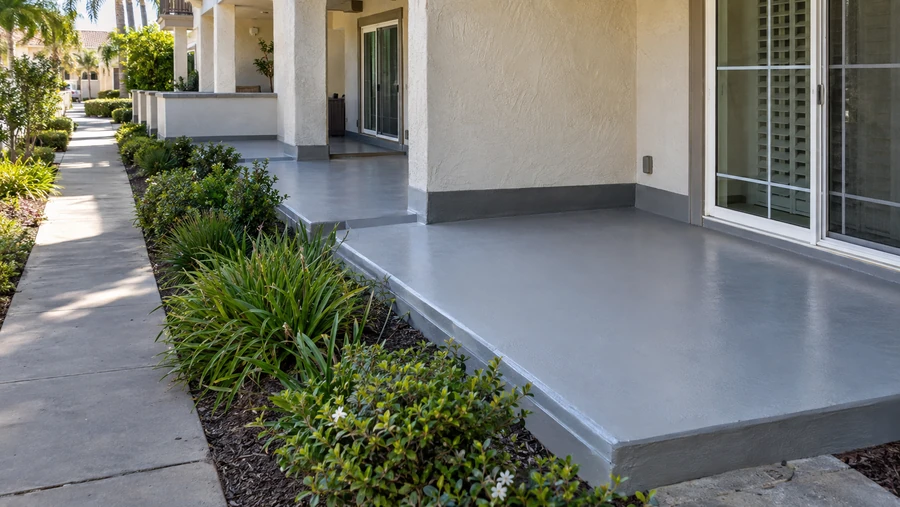
- Cracked laminate — structural cracks opened, substrate assessed, and laminate rebuilt with proper overlap
- Surface crazing and hairline cracks — assessed to determine whether they’re cosmetic topcoat checking or a sign of movement below
- Blistering and delamination — areas where the laminate has lost bond, cut out and re-laminated
- Soft spots and rotted plywood — substrate replaced back to sound material
- Framing repair beneath — rotted joists, ledger connections, and blocking repaired while access is open
- Transitions and terminations — wall junctions, door thresholds, and perimeter edges re-detailed and sealed
- Railing post penetrations — sealed and flashed where posts pass through the laminate
- Drainage — scuppers and drains repaired, and slope corrected where water is ponding
- Worn topcoat — recoated with slip-resistant finish
- Full recoat — where cracking is widespread and spot repair no longer makes economic sense
- SB 721 / 326 remediation — findings repaired and documented for the compliance file
Substrate first: moisture-tested before any resin goes down · wet plywood replaced, never covered · laminate lapped into feathered edges · slip-resistant topcoat matched to the surrounding deck
06 Investment
What fiberglass deck repair costs
Fiberglass deck repair is priced after an on-site assessment, because the fiberglass deck repair cost is driven by what’s under the laminate — and that’s the one thing nobody can see from the surface or from a photograph.
What drives the number
- How far moisture has travelled through the plywood substrate
- Whether damage reached the framing — joists, ledger, or blocking
- Area of laminate to be opened and rebuilt
- Number of separate repair areas versus one continuous zone
- Condition of transitions, thresholds, and railing penetrations
- Whether the topcoat is spot-repaired or the deck fully recoated
- Colour and texture matching to the surrounding deck
- Deck size, height, and access
- Whether the work is tied to an SB 721 / 326 finding on a deadline
Spot repair or full recoat? When cracking is confined to a few areas and the substrate is otherwise sound, spot repair is far more economical. Once cracks are appearing across the deck, each repair buys less time than the last, and a full recoat over a properly repaired substrate usually costs less than three rounds of patching. We’ll tell you which situation you’re in and price both where the choice is genuinely open. Final pricing follows an on-site assessment — no obligation.
In the field
Fiberglass deck repair
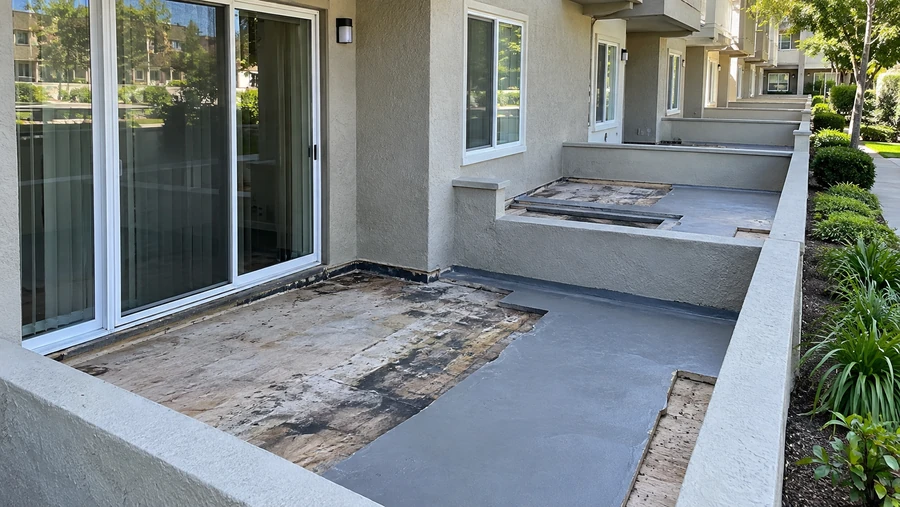
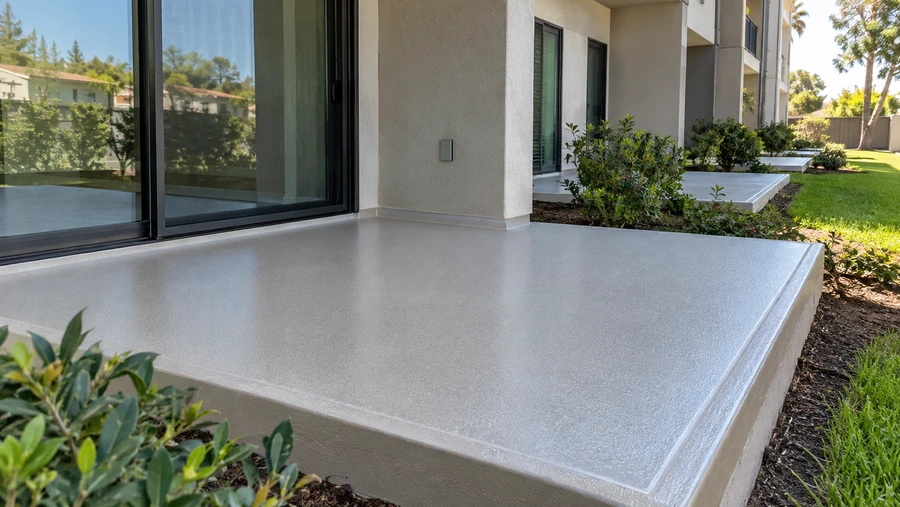
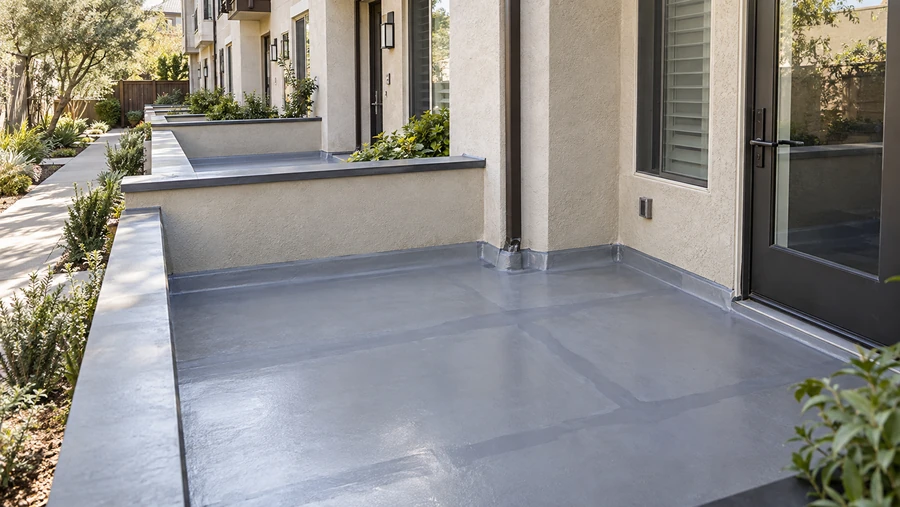
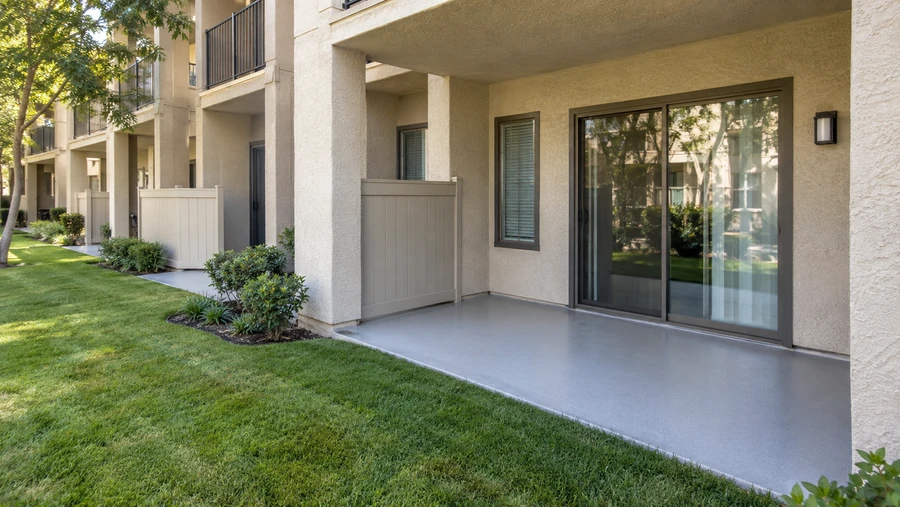
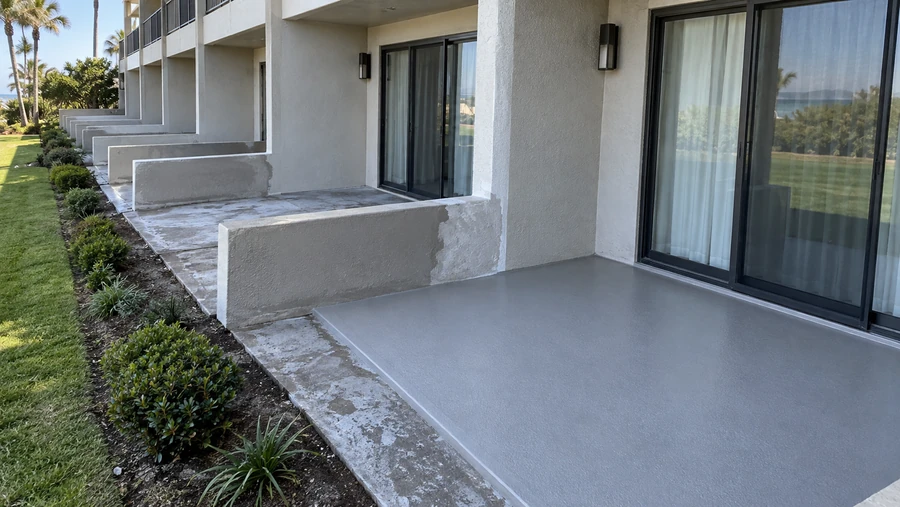
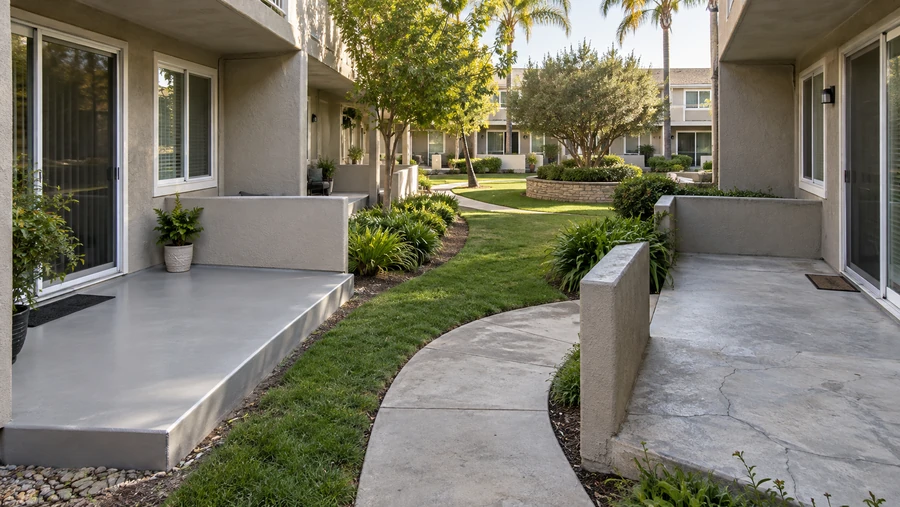
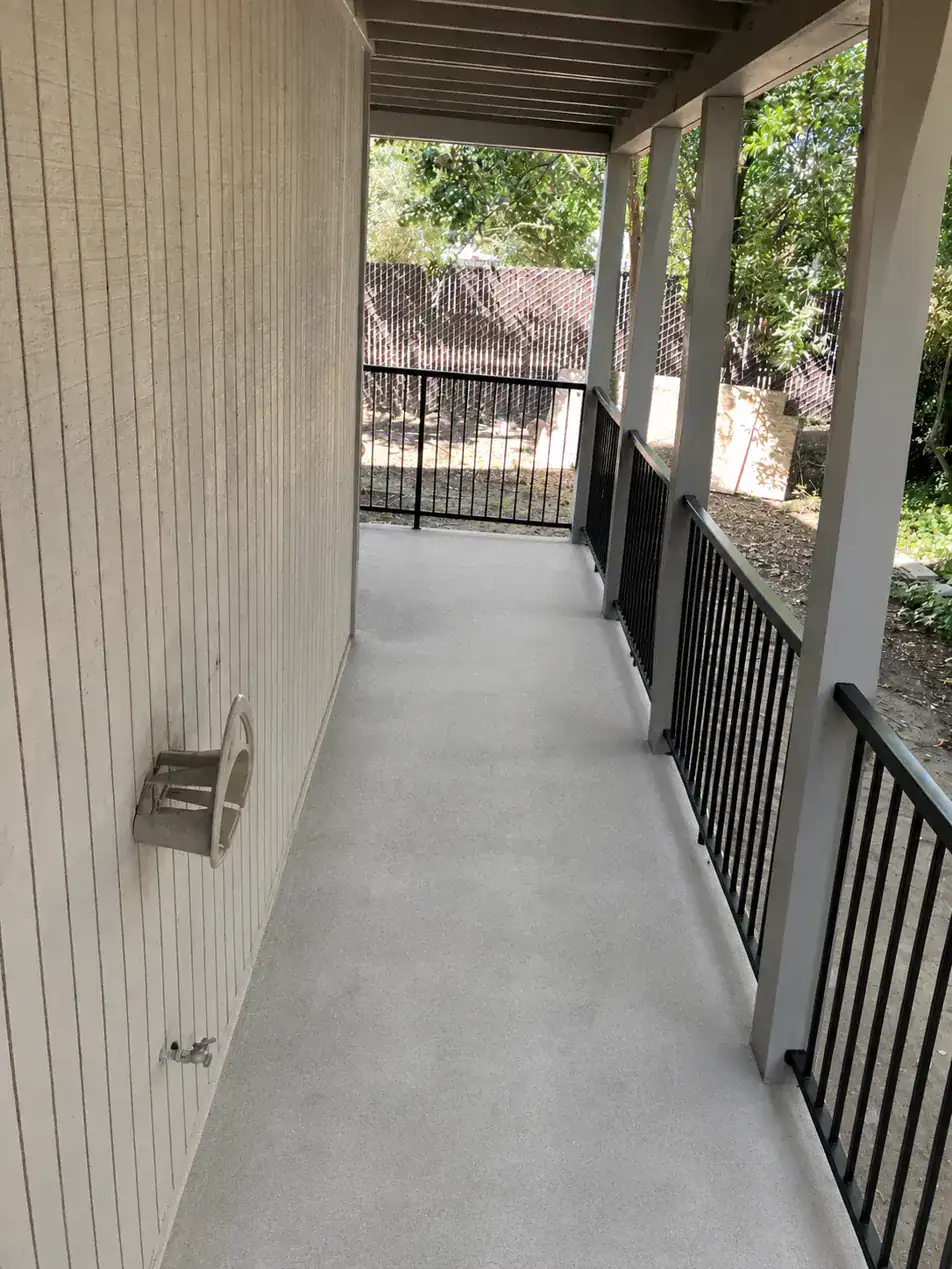
Ground-floor patio decks stripped to the substrate and recoated with a textured gray topcoat.
07 Project example
A recent fiberglass deck repair
An apartment building in the Bay Area had fiberglass decks flagged during its SB 721 inspection — hairline cracking on several, and two with visible blistering. A previous contractor had resined over the cracks the year before, and they had reopened. On assessment, moisture readings showed the plywood was saturated across a wide area on both blistered decks, with the water entering at unsealed railing post penetrations. D&B cut back the laminate to sound material, replaced the wet plywood, repaired moisture damage at two joists, re-laminated with properly feathered overlaps, sealed and flashed every post penetration, and recoated with a matched slip-resistant finish.
The previous repair sealed the water in. It looked fixed for about eight months, and then it came back worse. Property Manager · Bay Area apartment building
08 Case studies
Recent Projects, Documented
Real commercial properties — what the building needed, what we did, and what it delivered.
 Deck RepairCoastal Shared Deck & Walkway Restoration — Daly CityA large shared elevated deck on the coast — surface, framing and connections all degraded by years of…View case study
  Deck RepairPool Deck Replacement at an Apartment Community — RosevilleA large wood pool deck worn to trip hazards at the water's edge — decking, steps and the…View case study
  Deck RepairElevated Deck Reconstruction & Waterproofing — 24 Balconies, SacramentoOpen board decks sitting directly over enclosed garages. Every gap between the boards was a route for water…View case study
 09 Client feedback
What property managers say
Another contractor quoted us on recoating the surface. D&B took moisture readings first and showed us the plywood was soaked. Completely different job — and the right one.
They found the water was coming in around the railing posts, not through the cracks we’d been worrying about. Fixed the actual source.
Straightforward advice on which decks were worth spot-repairing and which needed a full recoat. No upselling.
10 FAQ
Fiberglass deck repair questions
Can a cracked fiberglass deck be repaired?
Yes, but the crack itself is the easy part. Fiberglass deck crack repair means opening the crack up, checking whether water has reached the plywood beneath, replacing any wet substrate, and then rebuilding the laminate with properly feathered and overlapped edges so the repair bonds into the original. Filling a crack from the top without checking underneath seals moisture in and the repair reopens, usually within a season or two.
What’s the difference between hairline crazing and a real crack?
Fine crazing in the topcoat is often cosmetic — surface checking from UV exposure and age, which a recoat addresses. Cracks that run through the laminate itself are structural, and they almost always mean the substrate beneath is moving: plywood that’s absorbed moisture, joist spans that deflect, or spans never rated for the load. We determine which you have by sounding the deck and taking moisture readings, because the two look similar and cost very differently to resolve.
Why is my fiberglass deck blistering or bubbling?
Blistering means the laminate has lost its bond with the substrate, and the usual cause is moisture trapped underneath. Water gets into the plywood through a crack or an unsealed transition, then expands as vapour when the deck heats up, pushing the laminate away from the wood. It’s a reliable indicator that the substrate below is already wet, which is why blistered areas always get opened rather than recoated.
Can you repair a fiberglass deck over living space?
Yes — fiberglass roof deck repair over occupied rooms is a significant part of our work, and it’s where getting the substrate right matters most. Water passing the laminate on a deck over living space reaches the ceiling below, so we assess the full extent of moisture before repairing rather than closing up a section and hoping the leak was local.
How much does fiberglass deck repair cost?
It depends on how much substrate is wet, which isn’t visible until the laminate is opened. A localized crack repair on a sound deck is contained work; a deck where plywood is saturated across a wide area means substrate replacement and possible framing repair, which is a different order of cost. We take moisture readings on-site and give you a firm written price rather than a figure that changes once work starts.
Should we repair the deck or recoat the whole thing?
Spot repair makes sense when damage is confined and the substrate is otherwise dry. Once cracks are appearing in multiple areas, each patch tends to buy less time than the last, and a full recoat over properly repaired substrate usually works out cheaper than repeated rounds of spot work. We’ll show you both options with pricing where the choice is genuinely open.
Will the repair match the rest of the deck?
Topcoat can be colour-matched closely, though aged fiberglass has usually faded and chalked from UV exposure, so a repaired area may read slightly newer at first. Where appearance matters — visible amenity decks, entrances — recoating the full deck gives a uniform finish. We’ll be straight about what a spot repair will look like before you commit to it.
Are fiberglass decks covered by SB 721 and SB 326?
Yes, where the structure beneath is wood-framed and the deck sits more than six feet above grade at a multifamily or HOA property. The laminate is a waterproofing layer over a wood assembly, and it’s that wood structure the inspection addresses — which is why soft spots and cracking on a fiberglass deck routinely appear as findings.
Do you offer fiberglass deck repair near me in California?
We handle fiberglass deck repairs across the Bay Area, Central Valley, and Sacramento as a CSLB-licensed contractor (#1060736) — substrate, laminate, topcoat, and the framing beneath, from one crew.
11 Start here
Get your fiberglass deck assessed — free estimate
Tell us what you’re seeing — cracking, blistering, a soft spot underfoot, or water showing below — and we’ll sound the deck, take moisture readings, and give you a free estimate covering scope, timeline, and cost. If a previous repair has reopened, we’ll tell you why.
CSLB #1060736 · 9+ years · Insured & Bonded · Serving the Bay Area, Central Valley & Sacramento