What Is Best Deck Material
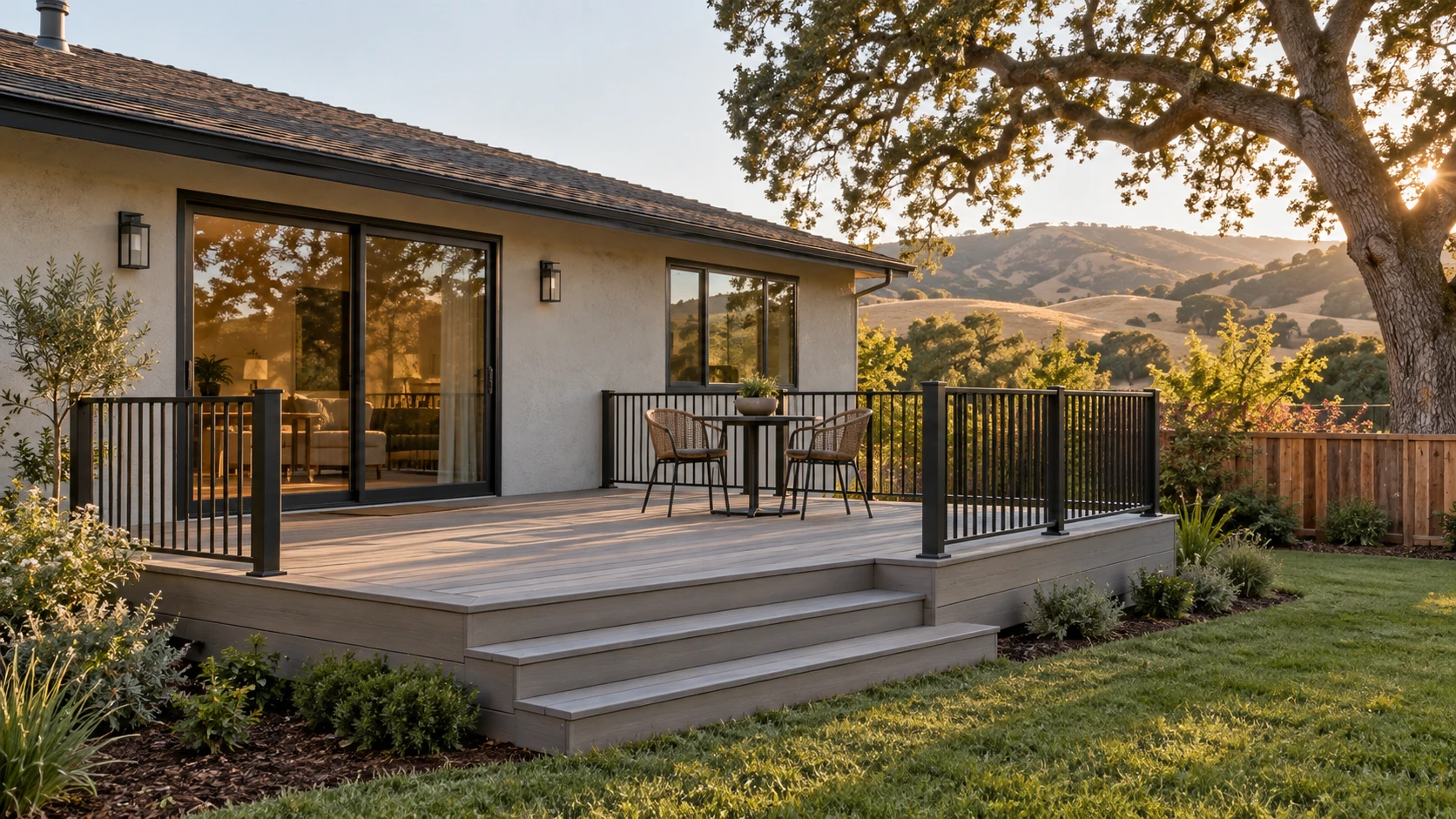
The best material for a deck on one property can be a poor pick on the next. A board that lasts for decades on a shaded Peninsula lot can get too hot to walk on in a Modesto backyard. A wood surface that suits a Craftsman home can fail plan review in a mapped fire zone.
Decks & Balcony builds and resurfaces backyard platforms, balconies, and apartment walkways in the Bay Area, the Sacramento region, and Central Valley towns. This guide lays out the main deck material choices and how they compare on durability, upkeep, heat, and fire rules. It also covers California rules that narrow the list.
How to Compare the Best Deck Materials
Brochures rank boards by color and warranty length. Those two facts rarely decide whether an owner is happy ten years later. To compare decking material fairly, we check the same points in the same order on every project:
- Is the parcel inside a fire hazard severity zone mapped by CAL FIRE?
- Does the surface sit over a room, garage, or parking, or over open ground?
- How much sun, fog, or shade will the boards get through the year?
- Who will clean, seal, or refinish the surface, and how often?
- Is it a single home or a multifamily property?
- Does the existing frame meet the joist spacing the new boards need?
The first two questions can rule out options early. The rest decide which product is the most durable decking material for the site. A product that fails one point drops off.
Owners who ask what is the best material for decks usually mean the boards. The frame underneath is almost always pressure-treated lumber. So we inspect joists, beams, and the ledger first.
Budget comes last on that list, not first. Once the fire map, the space below, and the upkeep plan are clear, the deck building material options usually shrink to two or three. Prices are compared only then.
Types of Deck Material Used on California Homes
Most California surfaces fall into three groups: wood, wood-plastic composite and PVC, and metal. Knowing the type of decking explains most differences in upkeep and lifespan. Local conditions shape the choice as much as taste does. Fire maps, coastal fog, and inland heat each favor a different group.
Wood Boards
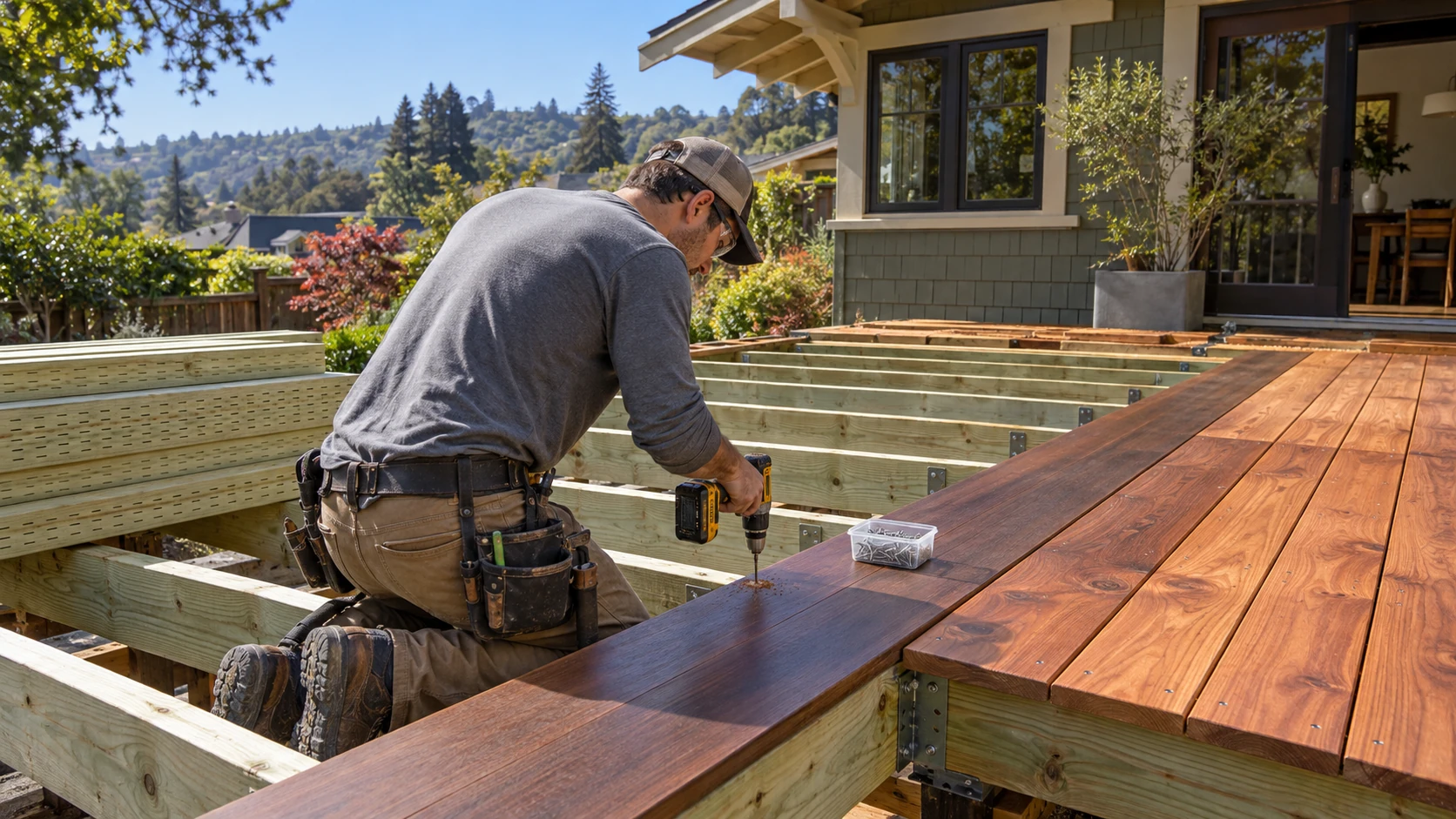
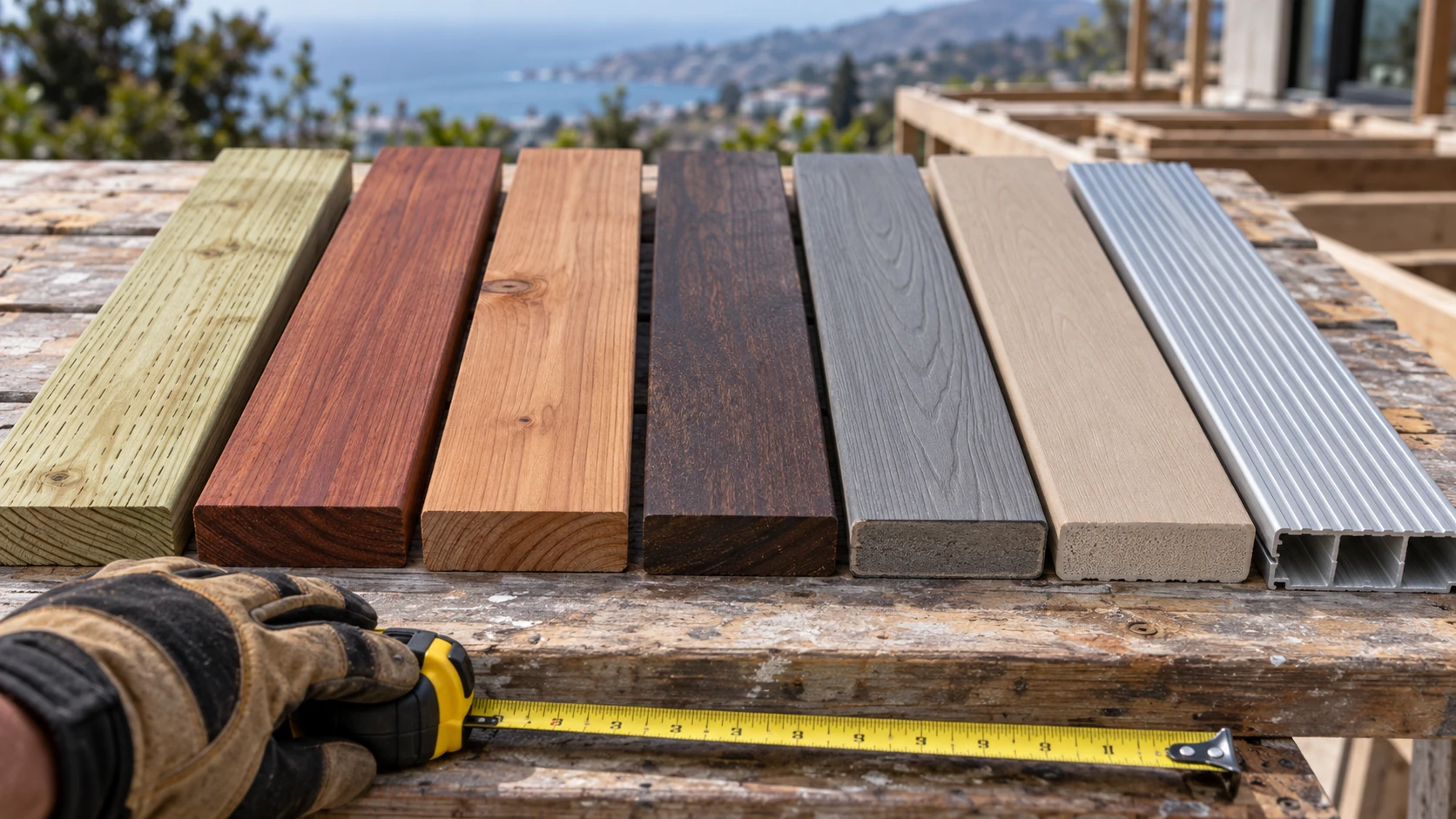
Pressure-treated fir or pine is the cheapest decking material at most lumber yards. The preservative helps it resist rot, but the boards check, split, and need sealing every few years. Redwood and cedar heartwood resist decay naturally, and our wood construction crews install both. Heartwood grades such as Construction Heart hold up better than grades with sapwood.
Tropical hardwood such as ipe is the densest of the different deck materials. It rates about 3,680 pounds on the Janka hardness scale, so it wears slowly under heavy foot traffic. It also needs pre-drilled holes and stainless screws.
Thermally modified wood is heated in a controlled kiln without added chemicals. It absorbs less water and moves less than unmodified lumber. The heat also makes it more brittle, so it is used for boards, not framing. It suits owners asking what is the best material for decking that is still real wood.
Composite and PVC Boards
Composite boards blend wood fiber with plastic, often recycled, under a protective cap. They never need sanding or staining, which puts them on every decking material list for owners tired of refinishing. Our composite installation crews set the frame to the maker’s joist spacing.
PVC boards contain no wood fiber, so they absorb almost no water. They weigh less than composite and resist mold better than wood. For wet, shaded spots and pool surrounds, PVC is often the best decking material of the synthetic group.
Each brand sells several lines. In the Trex range, each step up brings a harder shell, more colors, and a longer warranty. The top rated decking material in a catalog is usually its top line.
Aluminum Boards
Aluminum is less common than wood or composite among the types of material for decks on California homes. Metal boards do not rot, need no stain, and do not burn. The boards look less natural than wood and are harder to trim on site.
On fire-zone parcels where plain wood is ruled out, aluminum adds to the deck building material options. It also has no stain schedule. That helps on upper-floor balconies.
Most projects mix these groups. A common setup is a pressure-treated frame with composite boards and aluminum railings. Choosing what is best decking material for each part separately often works better than one product for everything.
Deck Building Materials Comparison by Upkeep, Heat, and Fire Rating
The table below shows how common deck building material options behave on a typical California property. Prices are left out. Framing, stairs, and railings often change the total more than the boards.
| Board type | Rot resistance | Refinishing | Heat in full sun | Fire zone path |
|---|---|---|---|---|
| Pressure-treated wood | Resists with preservative | Seal every few years | Moderate | Not compliant without fire-retardant treatment |
| Redwood or cedar heartwood | Natural resistance | Stain to keep color | Moderate | Not compliant without fire-retardant treatment |
| Ipe and other hardwoods | High natural resistance | Oil, or let it gray | Lower than dark composite | Check the specific product |
| Thermally modified wood | Improved by heat treatment | Oil, or let it gray | Moderate | Check the specific product |
| Capped composite | Does not rot | Washing only | High in dark colors | Only listed boards |
| PVC | Does not rot | Washing only | High in dark colors | Only listed boards |
| Aluminum | Does not rot | None | Varies by color and finish | Noncombustible |
Each row shows a trade-off. No top rated decking material leads every column. Composite and PVC need the least upkeep, wood stays cooler underfoot, and aluminum performs best in a fire zone.
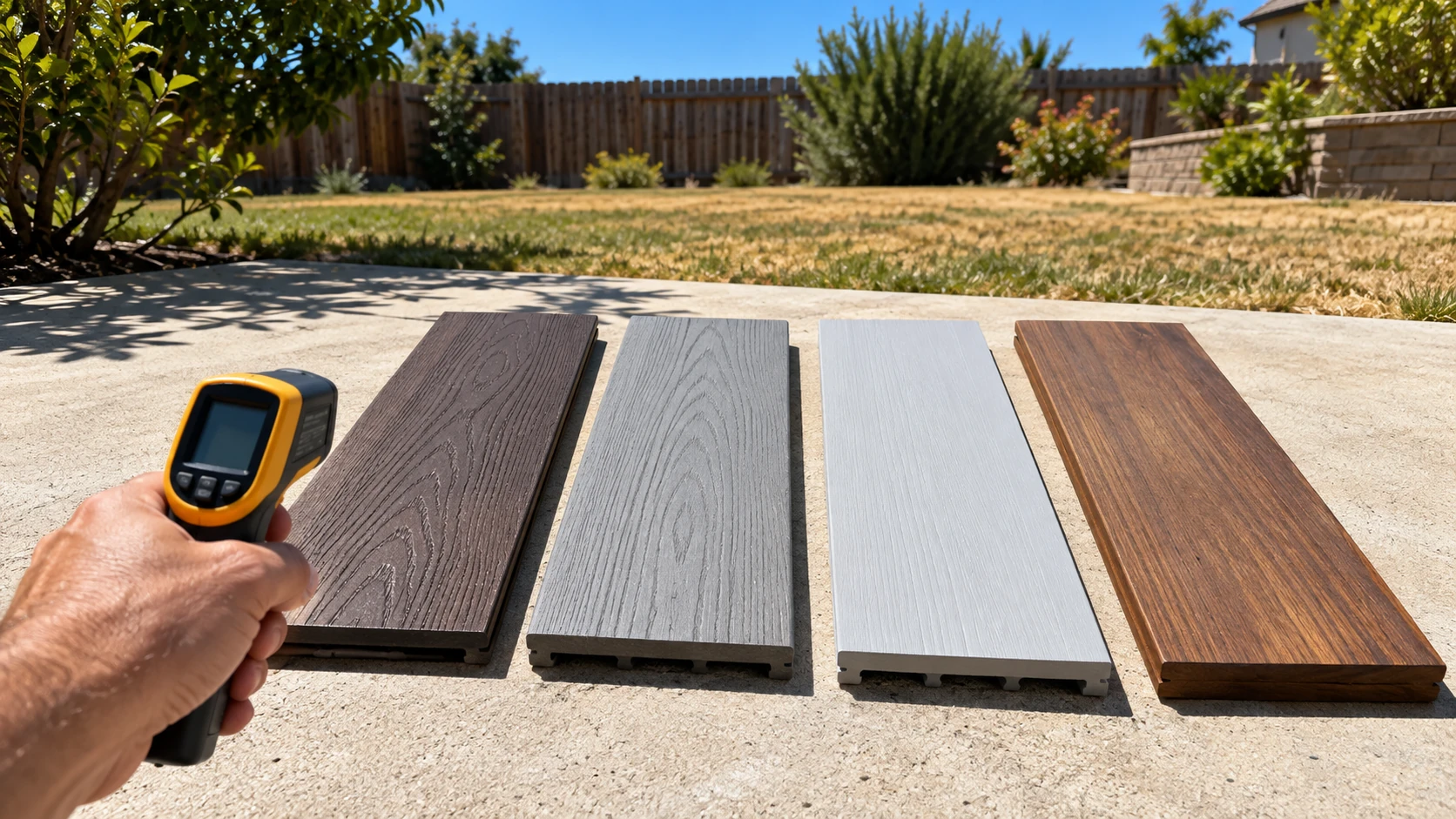
In a retailer’s own sun test in Florida, several composite boards passed 140°F, while a hardwood board stayed about 20 degrees cooler. That was not an independent study. Anyone deciding what decking material is best for a sunny yard should look at light colors first.
Lifespan follows the same pattern. Capped boards carry the longest written warranties, and dense hardwood wears slowest among woods. Still, a long lasting deck material on top does not help if the joists under it rot first.
Lowest Total Cost Over the Life of the Surface
The most cost effective decking material has the lowest total over the years you plan to own it. That total includes cleaning, sealing, and repairs. The purchase price is only one part.
Owners looking for what is the best low maintenance deck material usually end up with capped composite or PVC. Neither needs stain. Trex suggests a spring and fall cleaning for its early composite lines.
California HOA boards must review their reserve study every year under Civil Code section 5550. Wood refinishing appears there as a recurring cost. For those boards, the best deck materials are often the ones that remove that line.
Warranty Terms for Homes and Rental Buildings
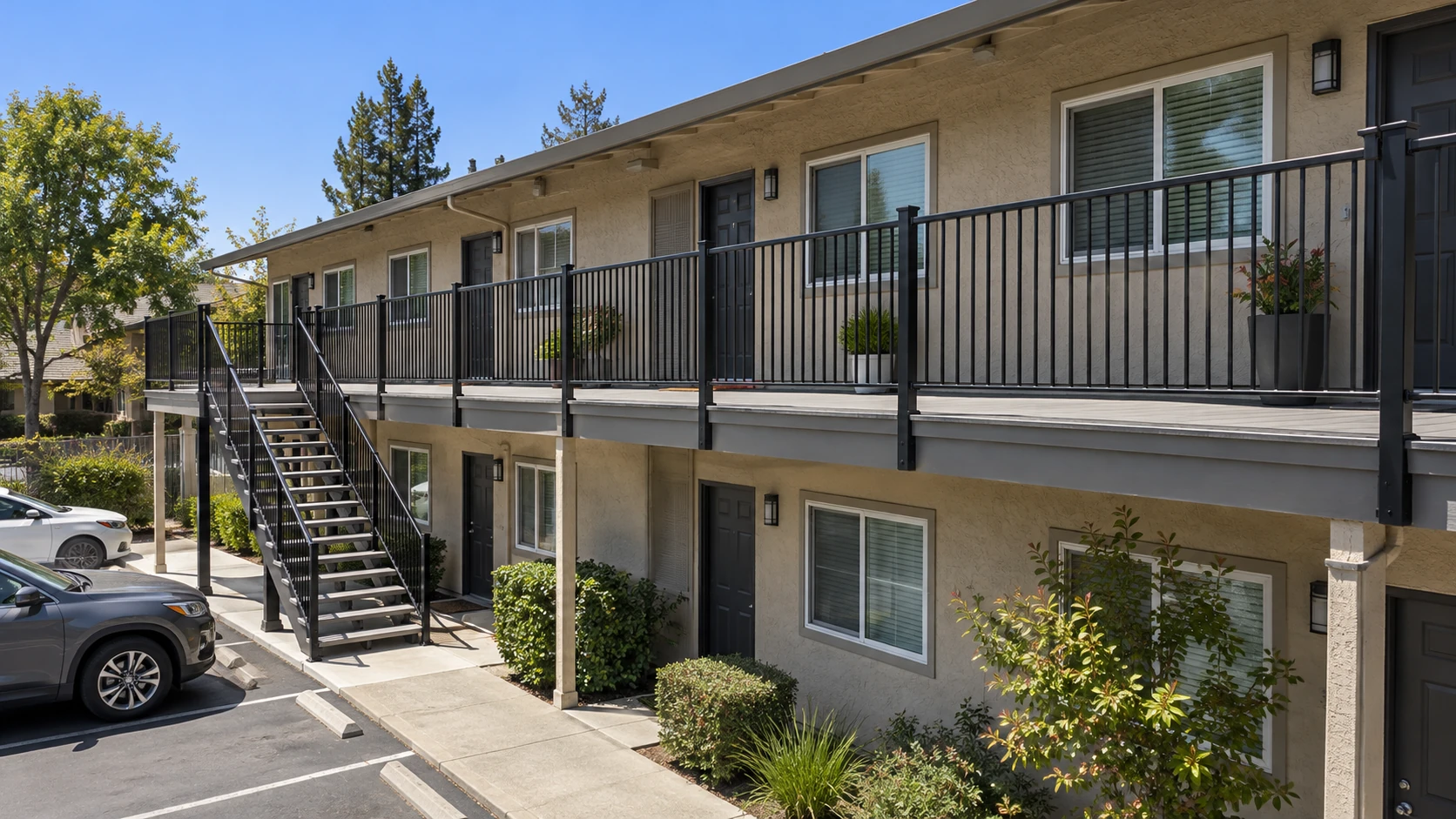
Trex sells composite lines with 25, 35, and 50-year residential warranties, but apartment walkways and condo balconies fall under a 10-year commercial term. TimberTech gives its Advanced PVC line a 50-year fade and stain limited warranty. For a homeowner, what is the best decking material to use can depend on those residential terms.
Framing adds cost the board price does not show. Composite and PVC usually need joists at 16 inches on center, and closer for diagonal layouts. When we weigh what is the best type of decking material for an older structure, that frame construction work is part of the comparison.
Pressure-treated lumber still makes sense in some cases. A low platform, a surface under a roof, or a utility landing can justify it. With a sealing schedule planned from day one, it can be the best decking material for that use.
Not sure how this applies to your building?
A licensed contractor answers — free, same-day callback.
Best Decking Material for California Heat, Fog, and Fire Zones
Summer heat waves in Stockton, Modesto, and Sacramento often push afternoons past 100°F, and dark boards get uncomfortable for bare feet. There, the best outdoor deck material is often a light composite color, a heat-reducing line, or a dense hardwood. Strong UV also grays unfinished wood quickly.
Near San Francisco Bay and on the ocean side of the hills, fog keeps boards damp most mornings. Mildew grows in shade, and wood that stays wet decays faster. When owners there ask what is the best material for outdoor decking, the usual answer is capped composite, PVC, or a sealed heartwood grade.
Many South Bay yards get both: hot summer afternoons and damp winters under oak trees. The best material for a deck in that setting handles sun and moisture alike. That usually means a light capped board or heartwood sealed on schedule.
Walking Surface Rules in Fire Hazard Severity Zones
For new construction inside CAL FIRE hazard zones, the wildfire chapter of the building code controls the walking surface. Plain wood boards do not meet it. The main paths for a good decking material there are:
- Noncombustible boards, such as metal boards or a lightweight concrete surface.
- Exterior fire-retardant-treated lumber rated for weather exposure.
- Heavy timber construction as the code defines it.
- Boards that pass the State Fire Marshal test SFM 12-7A-4, and meet the ignition-resistance rules.
Ipe often reaches Class A in the ASTM E84 tunnel test. Wildfire rules, however, use a separate test with burning brands and flames under the boards. A top rated decking material on a national list may still fail that test. Trex released its Refuge PVC line in January 2026 with both a Class A rating and ignition resistance.
CAL FIRE released updated hazard maps for cities and towns in early 2025. A parcel outside a zone a few years ago may be inside one now. We check the current map, not the one on the original permit, before listing deck building material options for a hillside lot.
Some cities apply the same rule to existing homes. Berkeley’s 2026 permit checklist requires ignition-resistant or noncombustible walking surfaces in high fire hazard zones. In the Berkeley hills, the best material for a deck comes from the compliant list first.
Decking Surface Options Over Living Space, Pools, and Balconies
Some deck surfaces must also keep water out of the space below. A balcony over a bedroom or a walkway over parking works as part of the roof. Gapped boards cannot do that alone, so the structure needs a sloped substrate and a membrane, or a waterproof coating that serves as the walking surface.
For those structures, what is the best material for deck flooring depends on the membrane first. Our balcony waterproofing systems carry manufacturer warranties of 10 to 25 years when installed to the maker’s specs. A coating, tile, or boards on sleepers then go on top.
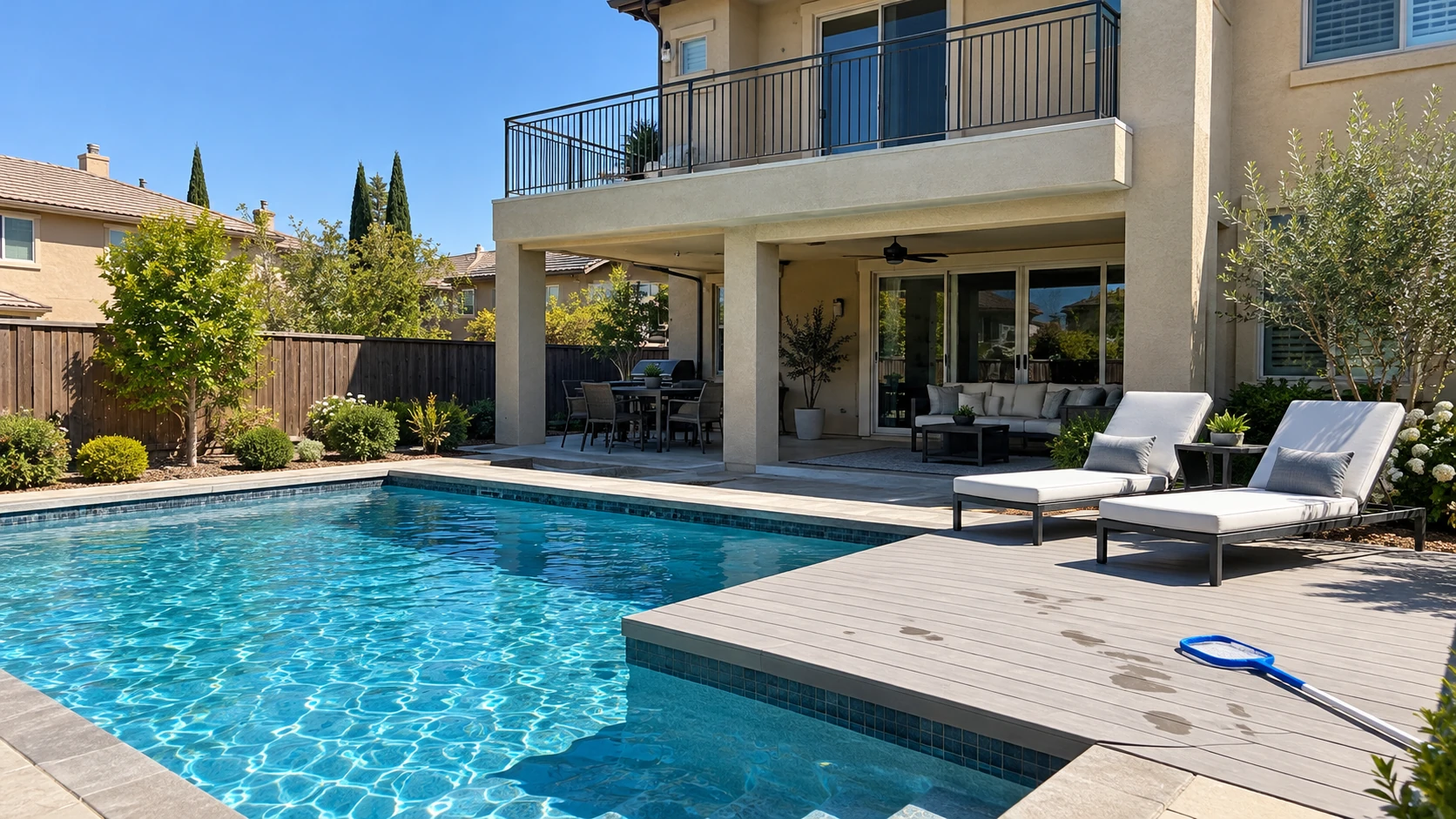
Pool surrounds have their own limits. Constant splashing, bare feet, and pool chemicals rule out boards that splinter or soak up water. On our poolside projects, PVC and capped composite in light colors are the usual deck material choices.
State balcony inspection laws, SB 721 for rentals and SB 326 for condos, focus on the load-bearing structure. The board brand does not change the inspection. The best deck building material for a multifamily walkway lets inspectors reach the frame and comes off one section at a time, so residents keep a way out.
Choose the Right Surface With a Free Site Visit in Northern California
The quickest way to decide what is the best material to build a deck for your lot is a joint inspection on site. We check the sun, the fire map, and the frame. Then we look at what sits below.
Homeowners learn how each option ages in their climate. Property managers get a short list based on commercial warranty terms and upkeep. After the visit, you receive a written comparison of two or three suitable products. It shows what is the best material to use for a deck at your address.
Schedule a free site visit to review your deck material choices with our team. Our office returns calls within the business day. The itemized scope arrives within five business days.

Related service
Deck Building
Licensed, insured and SB 721/326-fluent — from assessment to sign-off, one accountable team.
About the author
Tom Marsden
Retired Property Inspector · Reviewed under CSLB #1060736
Tom Marsden is a retired property inspector with 20 years of experience. Starting as a general contractor, he transitioned to inspections, specializing in multi-family dwellings. Known for his straightforward approach and ability to simplify complex regulations, Tom became a respected figure in the local property management community. Now retired, he mentors new inspectors and writes about building safety, focusing on balcony inspections and maintenance. In his free time, Tom enjoys restoring vintage sailboats and volunteering at the local community center.
More from Tom Marsden

