What Is the Best Rated Deck Stain
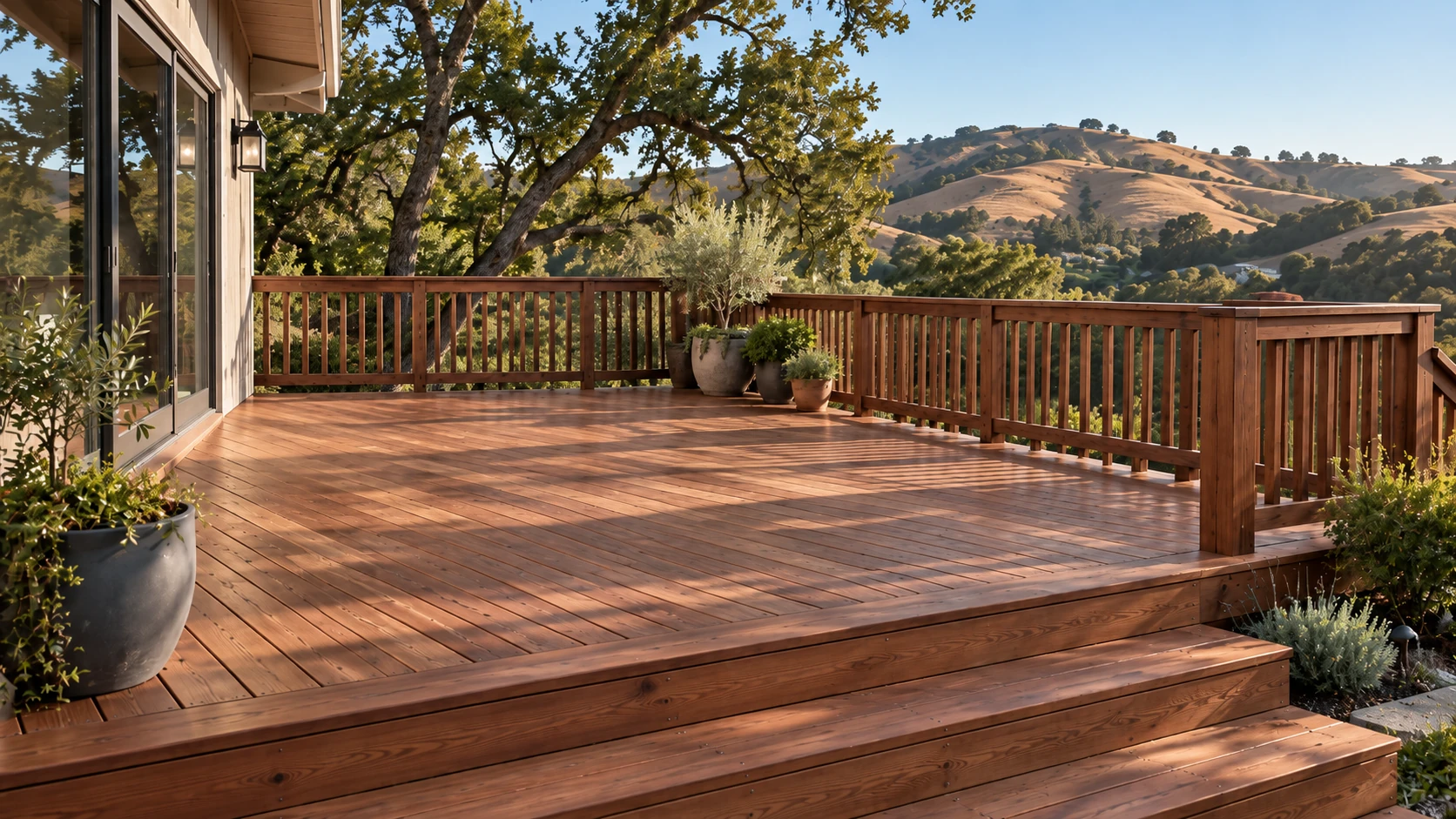
Every manufacturer calls its product the best, and a store display does not show which one lasts longest. What is the best rated deck stain for a given structure depends on three things. They are the type of finish, the wood under it, and how much sun and moisture reach the boards. Independent testing helps, but only when you know what the tests measure.
Decks & Balcony refinishes walkways, balconies, and backyard structures from the Bay Area to Sacramento and the Central Valley. This guide explains how the best rated deck stains get their scores and which type suits which deck. It also covers what California air rules change and where a finish stops and waterproofing has to start.
How the Best Rated Deck Stains Are Tested
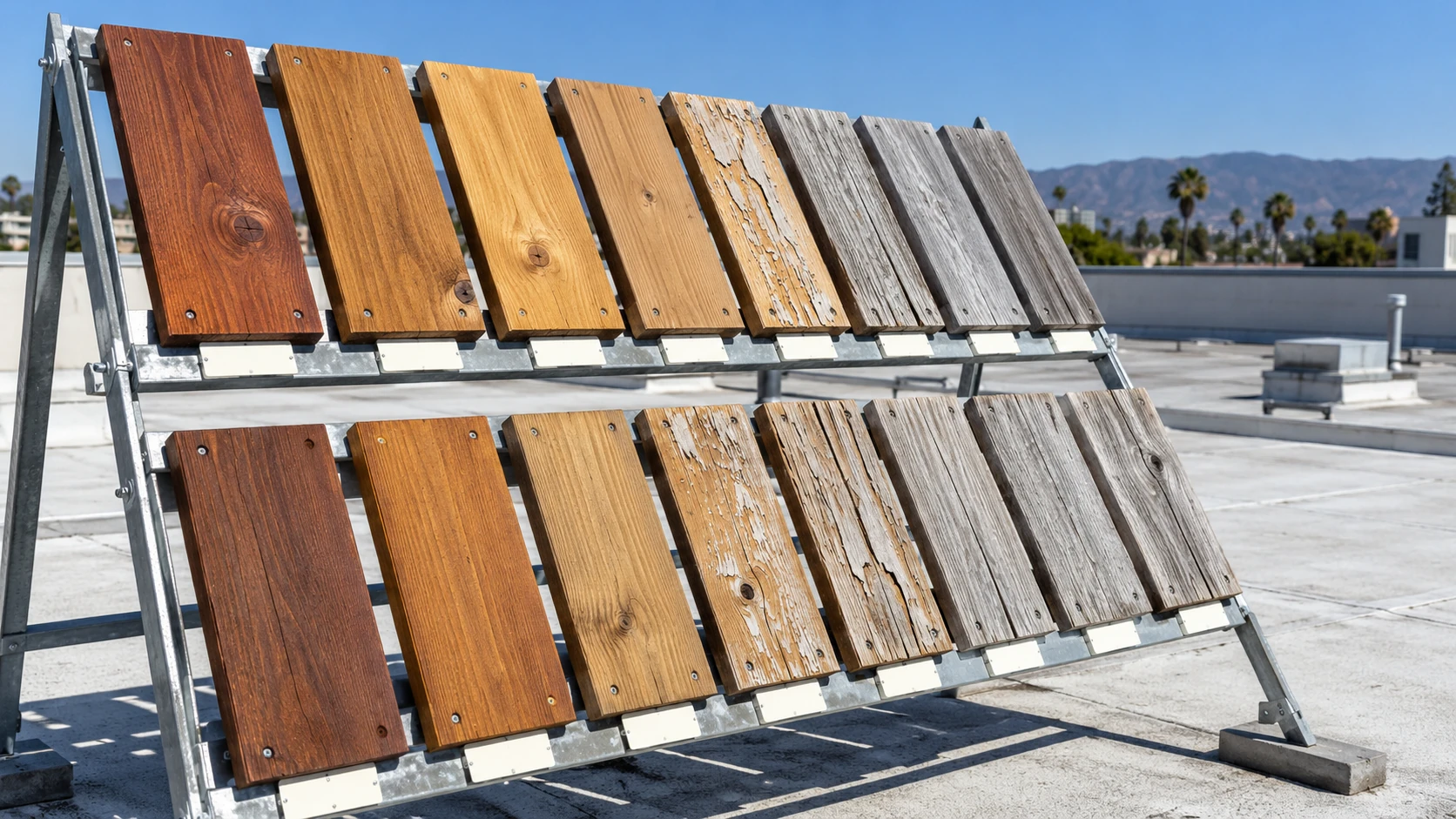
To rate the best deck stains, Consumer Reports engineers brush two coats onto pine boards. The boards go on the roof of the group’s headquarters in Yonkers, New York, facing south and set at an angle to take more sun and rain. Each product stays there for up to three years. One year counts as about one year on a walking surface, or three years on a fence. The gap comes from position: sun and rain hit flat boards directly, water sits on them longer, and foot traffic wears the coating away.
Ratings like these measure how a finish ages, not how it looks in the can. The highest rated deck stains score well on four checks:
- Cracking and peeling of the coating as the wood moves.
- Color change from sun exposure.
- Resistance to dirt that sticks to the surface.
- Resistance to mildew, which matters most on shaded and coastal walkways.
Consumer Reports also retests products, because manufacturers change formulas. In its May 2026 update, Behr, Olympic, and Valspar were among the brands of deck stains with highly rated solid products. Clear sealers scored lowest as a group.
Still, a name on a list is only a starting point. The best deck stain for a building still depends on the wood, the exposure, and the finish already on the boards.
Clear, Semi-Transparent, or Solid: Which Type Lasts Longest
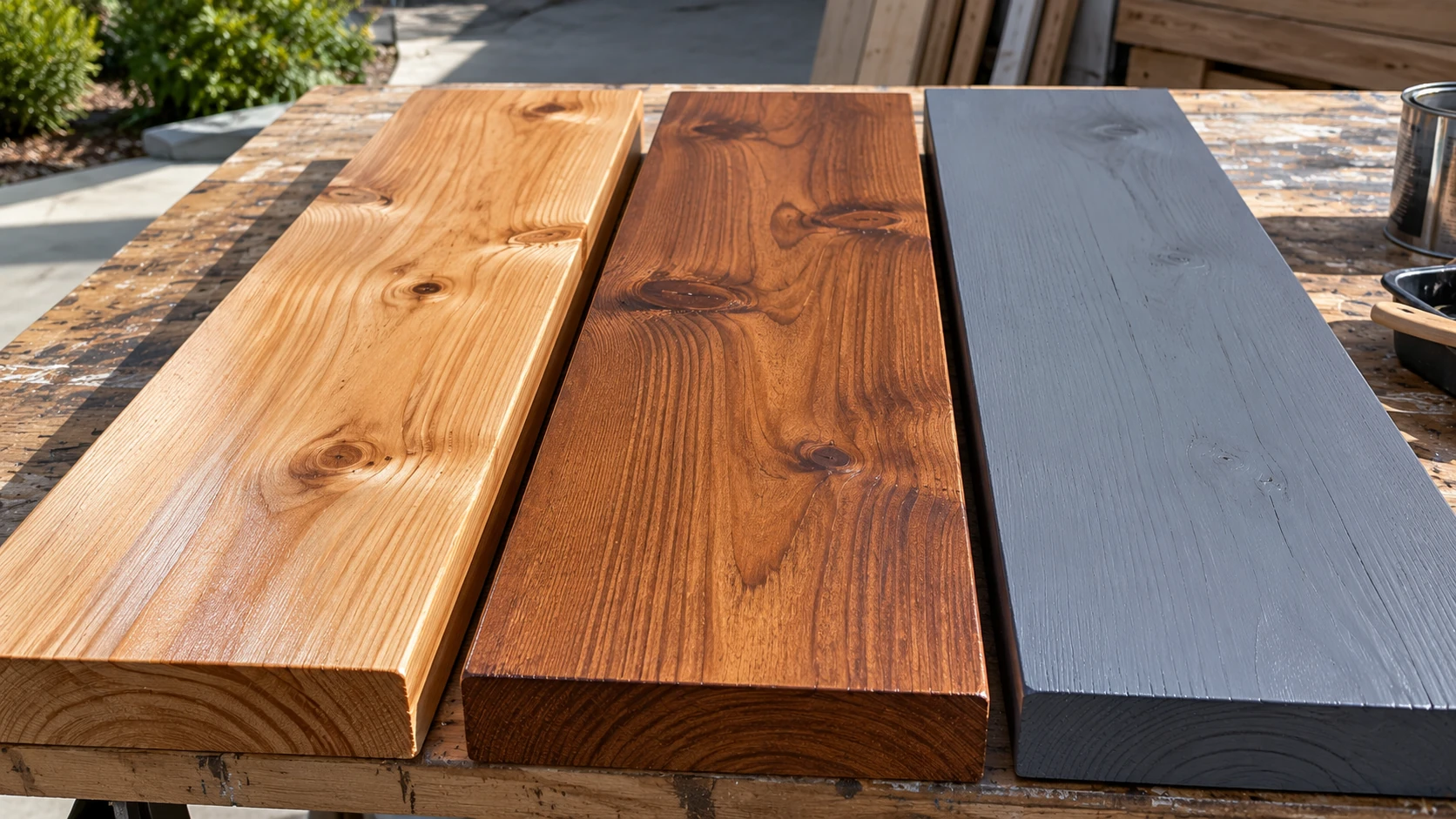
Type matters more than brand. Pigment blocks UV light, and UV is what grays and breaks down wood fibers. A clear sealer has little pigment, so the wood grays even under a fresh coat. A high quality deck stain of the wrong type will still fail early.
| Type | What you see | Life on a walking surface in Consumer Reports testing | Where it fits |
|---|---|---|---|
| Clear sealer | Full grain and natural color | About one year; reapply annually | Short-term protection on new wood |
| Semi-transparent | Grain visible under a color tint | Two to three years | Sound wood with grain worth showing |
| Solid | Wood texture, grain hidden by color | Three to five years | Older, weathered, or patched boards |
Products in the group of best semi transparent deck stains soak into the wood and let the grain show. They wear by fading rather than peeling, so a recoat needs cleaning, not stripping. That makes them the usual choice for redwood and cedar, including the surfaces our wood deck building crews install.
The best deck stain, solid in color, works more like a thin paint. It hides weathering, mismatched boards, and repairs, and it lasts longest in Consumer Reports testing. The tradeoff is a surface film that can peel and crack. Going back to a semi-transparent product later means stripping that film first.
Even a top rated semi transparent deck stain needs a new coat every two to three years underfoot. Owners who want fewer recoats and do not mind losing the grain usually move to solid color.
Oil-Based or Water-Based Stain Under California Air Quality Rules
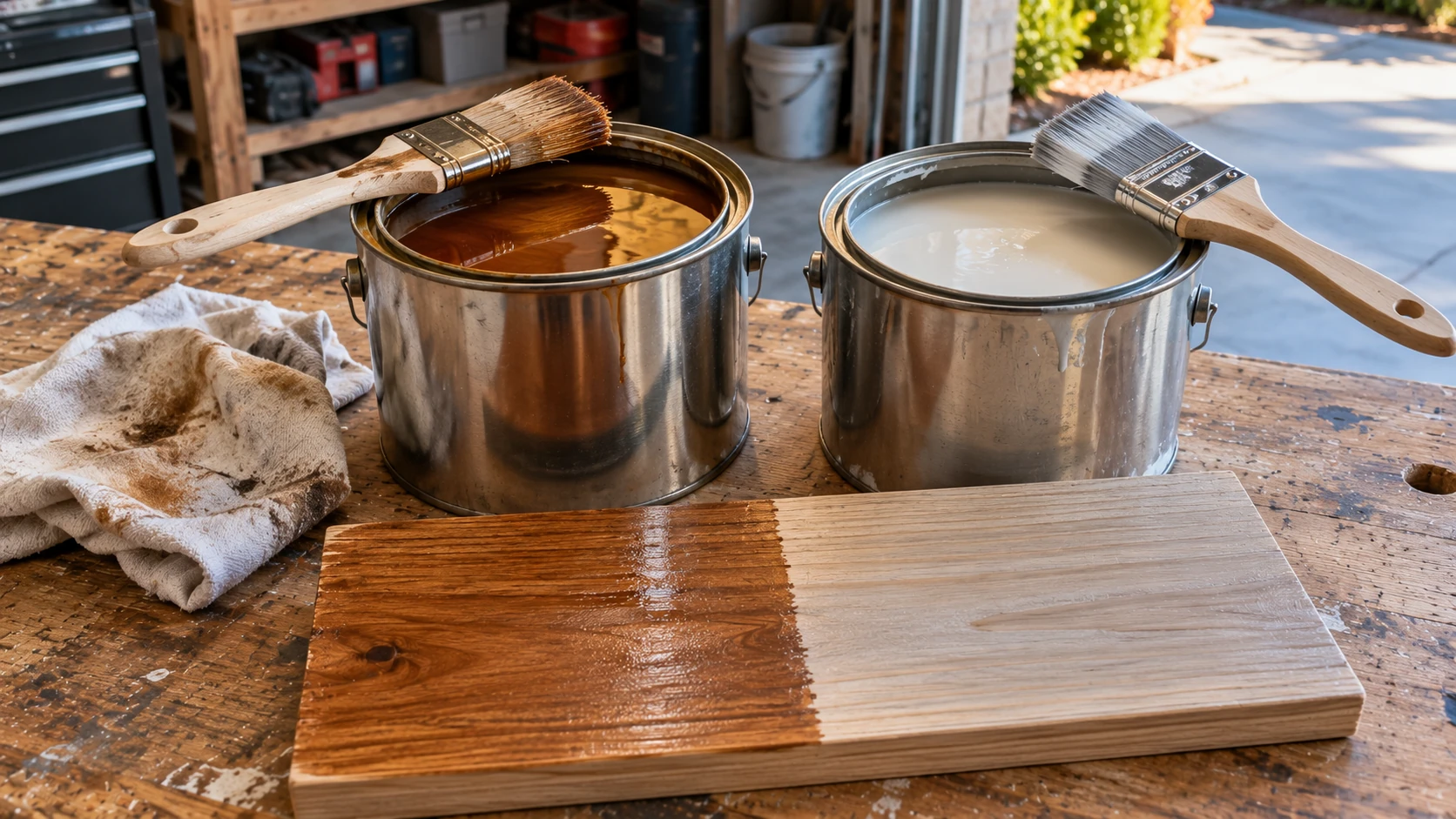
Oil-based finishes penetrate deeply and wear evenly, which is why many owners still ask for the best oil stain for decks. Water-based products dry faster and clean up with water. Both types can perform well when the surface is prepared correctly.
California adds a limit that changes what is on the shelf. Local air districts cap the volatile organic compounds, or VOC, in exterior coatings, and the cap applies to every good deck stain sealer sold here. The Feather River district north of Sacramento, for example, allows 250 grams per liter in exterior stains today. Its rule also sets a lower 100-gram limit that applies if federal ozone findings trigger it.
As a result, the formula sold in California is not always the one tested elsewhere. The best brand of deck stain in a national review may sell a different version here. Before choosing a product, we check its data sheet against the limit in the district where the property is.
That check also shortens the list for the best deck stain in each region. A product that meets the local limit and holds up in Central Valley sun beats a higher score on a national list.
What to Read on a Product Data Sheet
The answer to what is the best stain for deck boards is often in the technical data sheet, not on the label. The sheet lists the VOC content, coverage per gallon, the number of coats, and the wait between coats. It also gives the temperature range for application and how long the surface must stay dry afterward.
Two lines on that sheet explain many of the failures we see. One is the wait time for new PT lumber. The other is whether the product can go over the finish already on the boards. A best deck stain and sealer on paper still peels over an incompatible coating or on wood that has not dried.
Best Deck Stain for Pressure Treated Wood, New Wood, and Weathered Boards
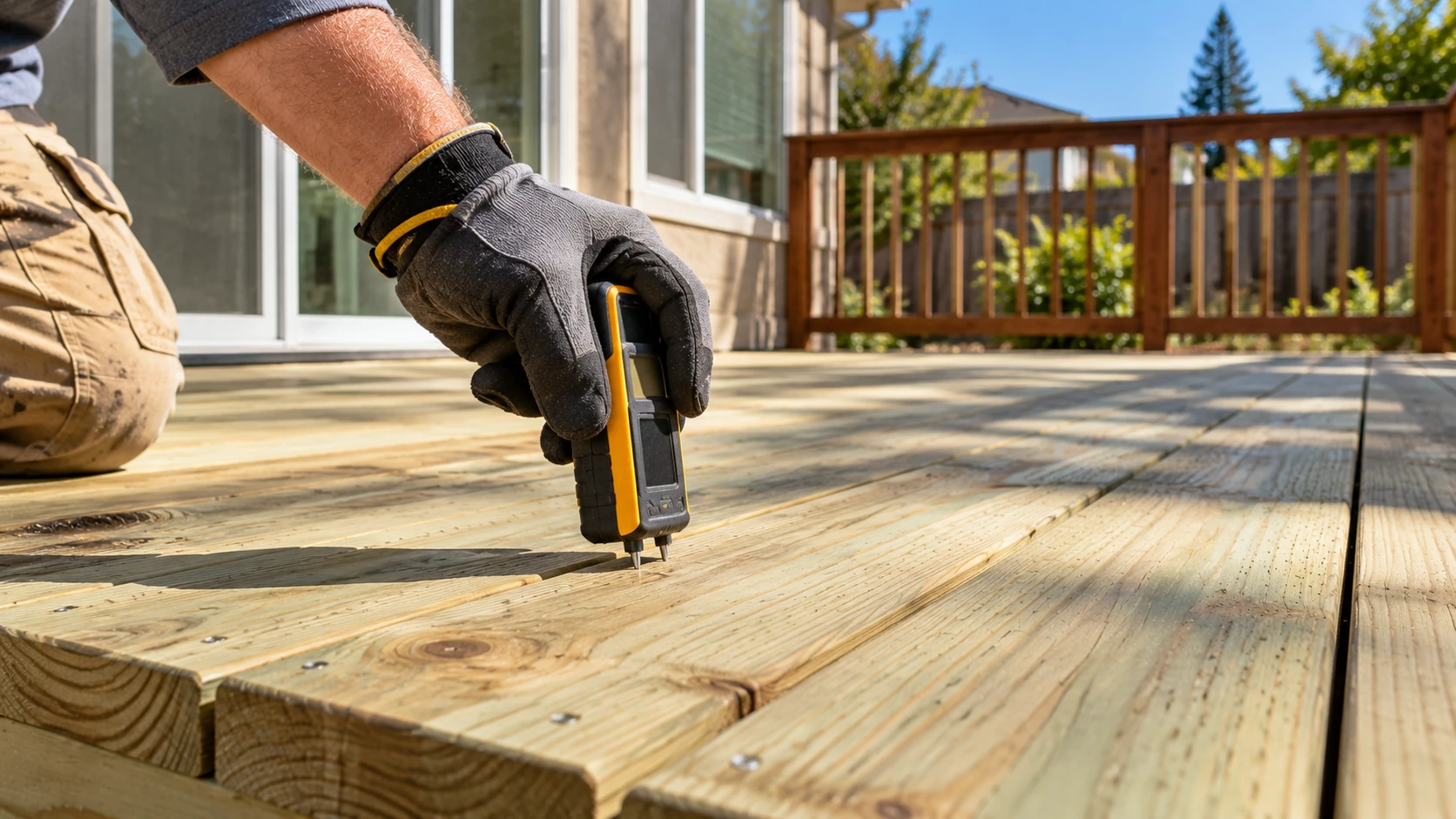
New lumber needs time first. Most PT lumber arrives wet, and a finish applied too early sits on the surface and peels. The best deck stain for pressure treated wood is a penetrating product applied once the boards are dry enough to absorb it. On new decks we build, the first coat is scheduled after a moisture check of the boards.
The best stain for new wood deck boards of redwood or cedar is usually a semi-transparent penetrating finish. It protects the wood and keeps the grain owners paid extra for. Capped composite boards are a different case, because they do not need stain at all.
The best stain for older decks depends on what is already on them. Weathered boards with an old semi-transparent finish can take a new penetrating coat after cleaning and brightening. Boards with peeling film need stripping, or a solid product that covers it.
Even the best wooden deck stain does nothing for a soft ledger or rotted joists under the boards. A fresh coat over damaged framing hides the problem instead of fixing it. That is why our deck restoration work starts with the frame.
Not sure how this applies to your building?
A licensed contractor answers — free, same-day callback.
Best Stain for Decks in Full Sun, Shade, and Coastal Fog
Sun is the main reason a finish fails inland. Summer afternoons in Sacramento, Stockton, and Modesto often pass 100°F, and months of strong UV fade the color and dry out the surface. The best outdoor deck stains for a south- or west-facing surface carry more pigment. A darker semi-transparent or a solid color lasts longer there.
Along the Bay shoreline and the coast, the problem is moisture. Marine fog leaves the wood wet most mornings, and mildew grows on the surface and in the gaps. On a shaded walkway, the best stain for wood decks is the one that scores well on mildew resistance.
Fire zones raise a different question. Inside the fire hazard severity zones on CAL FIRE maps, no coating turns ordinary wood decking into ignition-resistant decking. The decking itself has to meet the state’s wildfire standards, and the best decking wood stain remains a finish, not fire protection.
The best deck stain still fails when it goes on in the wrong weather. In Northern California the dry season runs from late spring into fall, and that is when we schedule refinishing. In Central Valley heat we avoid coating boards in direct midday sun. The product dries before it soaks in and leaves lap marks. Most data sheets also give a minimum temperature and a dry time before rain, and we plan the work around both.
How to Apply the Best Deck Stain and Sealer So It Lasts
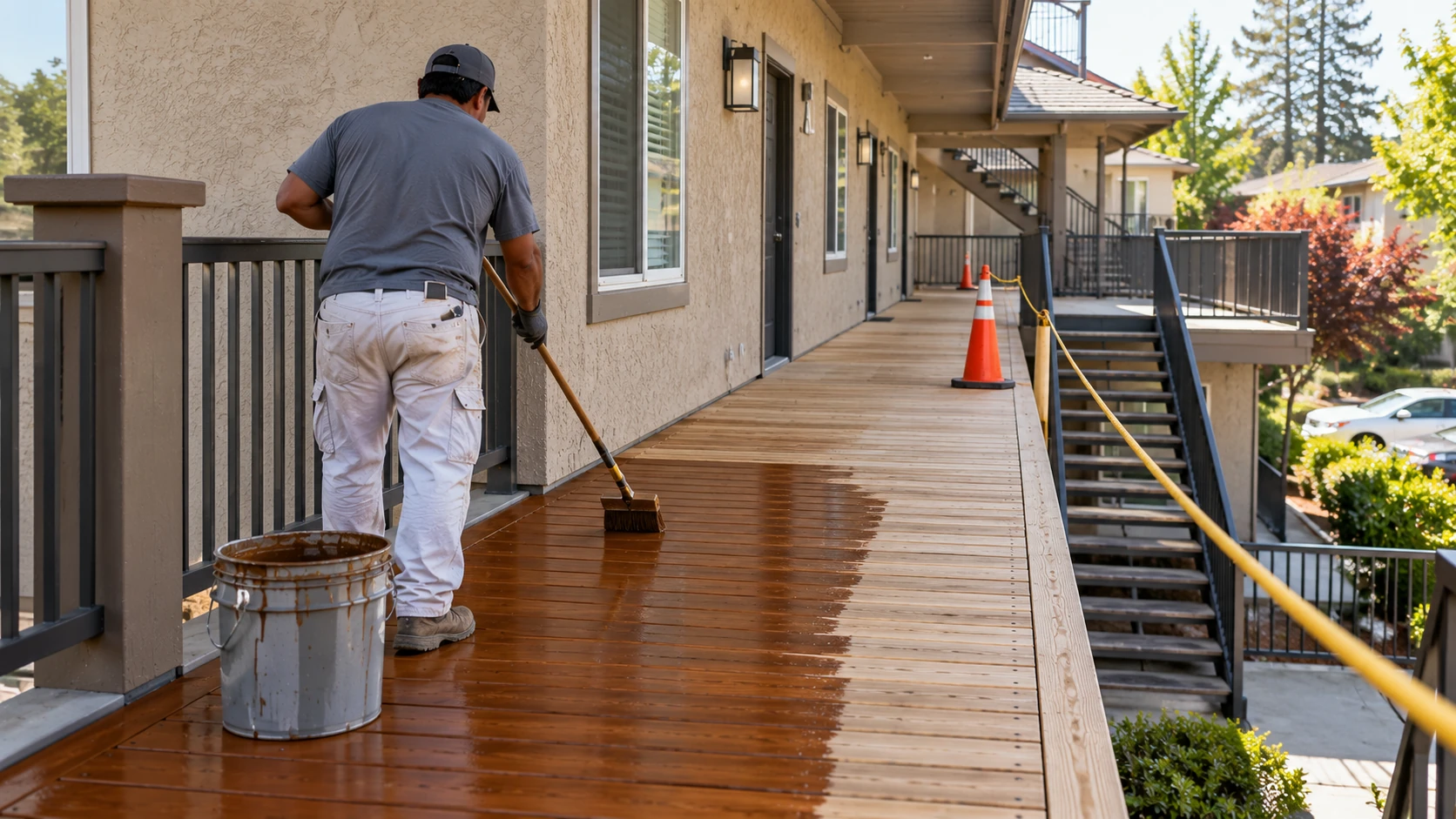
Preparation decides how long any product lasts. The highest quality deck stain on a dirty or damp surface fails as fast as a cheap one. On the properties we maintain, the work follows this order:
- Check the frame and replace damaged boards before any finish goes on.
- Clean the surface and the gaps with a wood cleaner, then rinse.
- Strip old film where it is peeling, and use a brightener after stripping.
- Let the wood dry fully, and plan the work for a stretch of dry days.
- Apply thin coats with a brush or pad, working along the full length of each board.
- Recoat on the schedule the product and the exposure call for.
A good deck stain sealer applied this way can reach its tested life. Skipping the cleaning or coating damp wood is a common reason a finish peels in its first year.
Many popular deck stains are oil-based, and they need one safety step after the work. Rags soaked in drying oils can heat up and catch fire on their own as they cure. Used rags should be laid flat outside to dry or sealed in a metal can filled with water.
A finish and waterproofing are not the same thing. The best deck waterproofing stain helps boards shed rain, but water still passes between the boards. On a balcony or walkway over a unit, parking, or storage, the surface needs a deck waterproofing system with a membrane.
Refinishing Walkways and Balconies on Apartment and HOA Properties
On a shared walkway, the work has to fit around the residents. Most products need a dry period before foot traffic, so we phase the job one section or one stairway at a time and keep a route open to every unit. Choosing among the best rated deck stains for these buildings also means checking how long each one keeps people off the boards.
California balcony law adds a timing rule of its own. SB 721 and SB 326 inspections look at load-bearing parts and the waterproofing around them, and a fresh coat can hide the water stains and soft spots an inspector needs to see. On buildings in an inspection cycle, the best deck stain sealer goes on after the inspection and any repairs, not before them.
Order Staining or Restoration for Your Property in Northern California
We look at the wood, the old finish, the exposure, and the frame before suggesting a product. Then we tell you which type fits, how often it will need a recoat, and whether the structure needs repair first. That is how we pick the best deck stain for a specific surface rather than from a list.
For apartment communities and HOAs, refinishing can be part of an annual maintenance plan, so every walkway and balcony is cleaned and recoated on schedule. Top rated wood deck stains need that schedule too, or they never reach their tested life.
A good choice of best deck stain and sealer starts with someone looking at the boards. Ask for a free on-site assessment of your walkways, balconies, or backyard deck. We reply on the same business day, and within five business days you receive an itemized written scope with no obligation to proceed.

Related service
Deck Restoration
Licensed, insured and SB 721/326-fluent — from assessment to sign-off, one accountable team.
About the author
Tom Marsden
Retired Property Inspector · Reviewed under CSLB #1060736
Tom Marsden is a retired property inspector with 20 years of experience. Starting as a general contractor, he transitioned to inspections, specializing in multi-family dwellings. Known for his straightforward approach and ability to simplify complex regulations, Tom became a respected figure in the local property management community. Now retired, he mentors new inspectors and writes about building safety, focusing on balcony inspections and maintenance. In his free time, Tom enjoys restoring vintage sailboats and volunteering at the local community center.
More from Tom Marsden

