Pressure Treated Wood for Decking
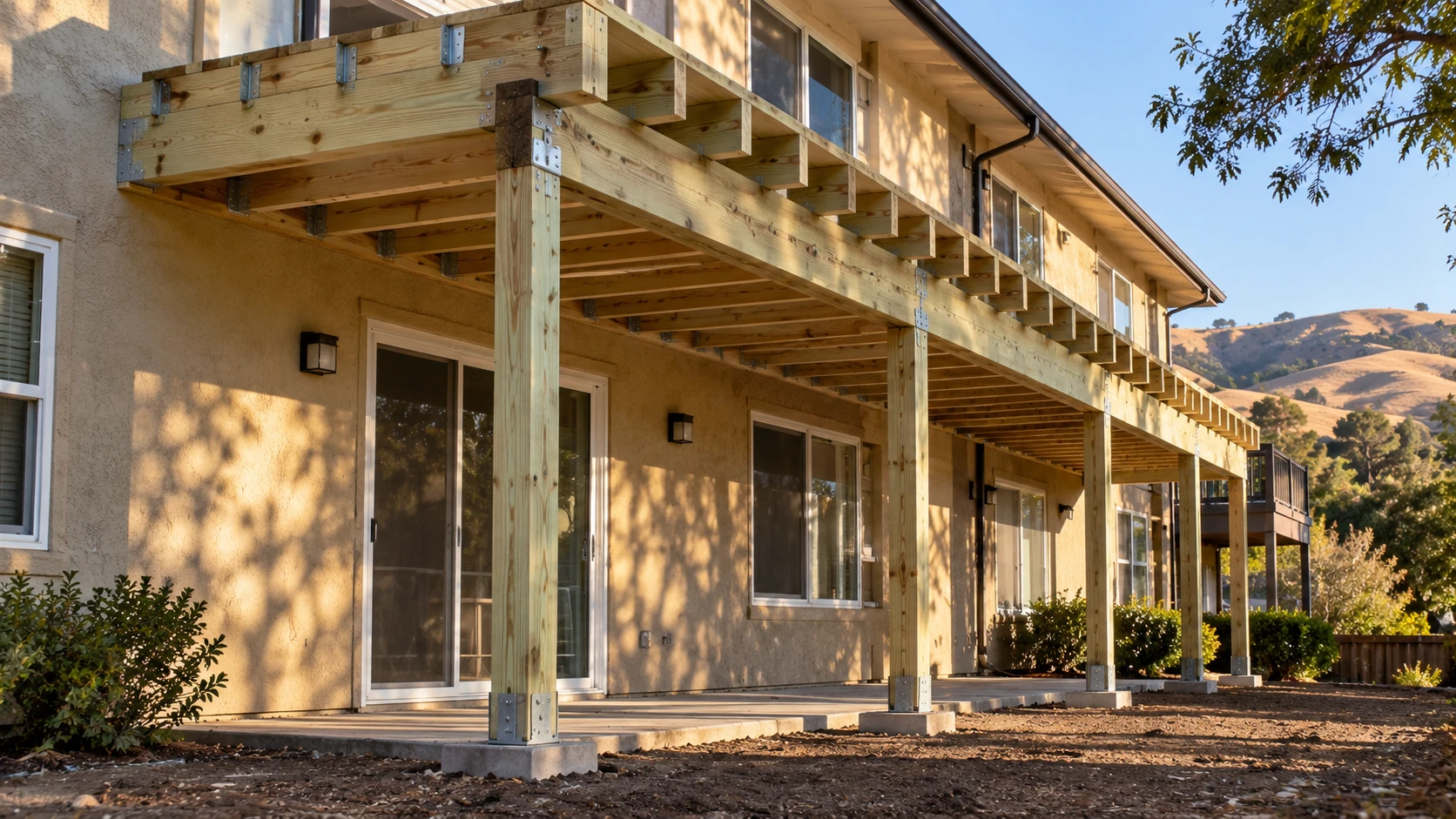
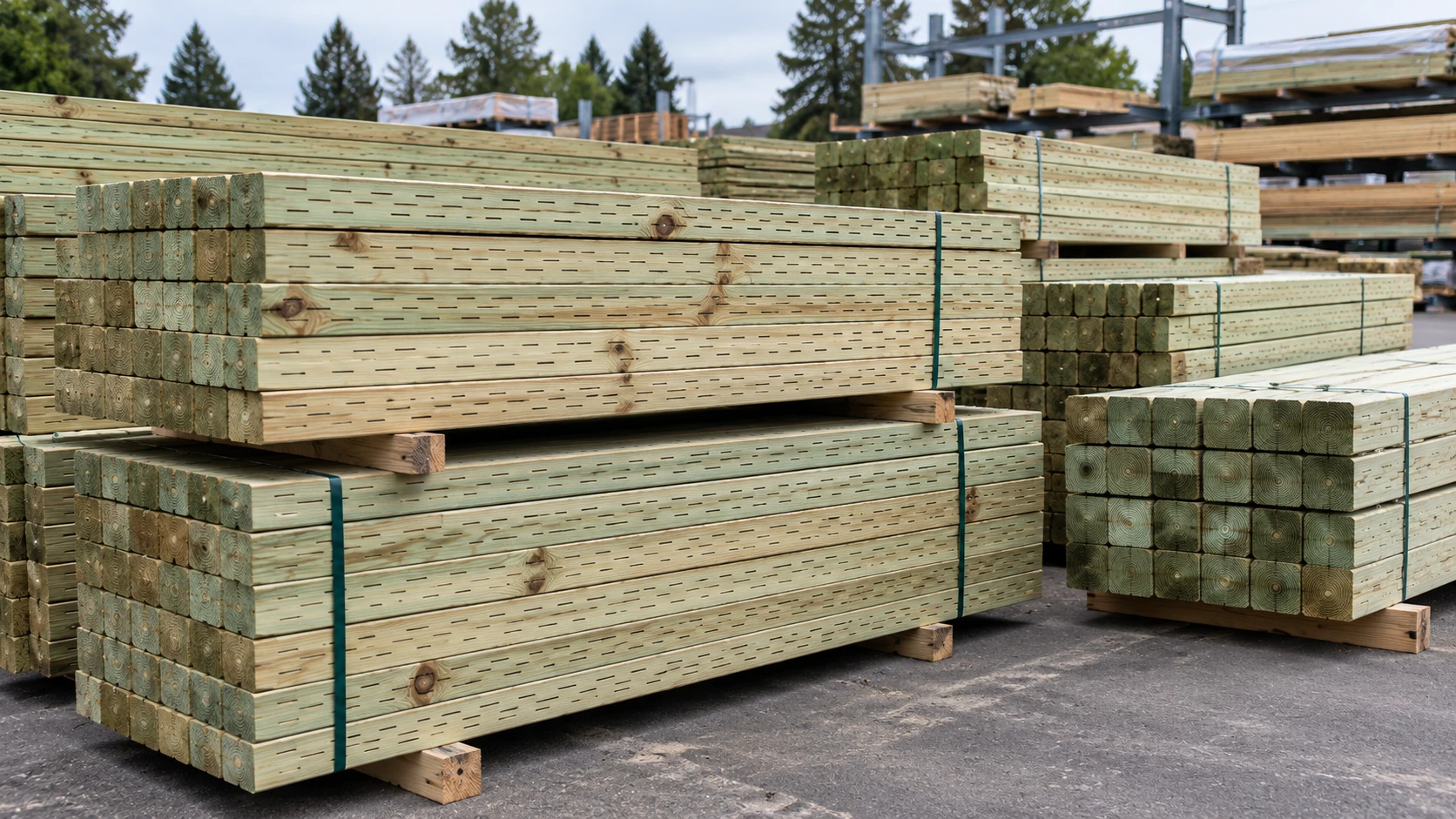
Almost every deck frame in Northern California is built from the same material. Pressure treated wood for decking is the default for posts, beams, and joists, and on budget projects it covers the walking surface as well. It is also the material owners understand least. One stack of green-tinted lumber at the yard can hold several protection levels meant for very different jobs.
Decks & Balcony frames apartment walkways, condo balconies, and backyard decks with PT lumber every week. This guide covers how pressure-treated lumber decking is made, how types and grades differ, and which deck parts need which level. It also explains when cedar or composite fits better. The last part covers how California handles the lumber at the end of its life.
What Does Pressure Treated Mean for Deck Lumber
The preservative is forced deep into the wood instead of being brushed on. If you have wondered what PT wood is, those two letters simply stand for pressure-treated. Boards go into a sealed steel cylinder, the air is pulled out, and a water-based copper preservative is pumped in under high pressure. The solution soaks into the cells, where it helps the wood resist rot and decay.
The chemistry has changed over time. Until the end of 2003, most residential lumber was protected with chromated copper arsenate, known as CCA. Under an agreement with EPA, CCA has not been allowed for residential decks since January 1, 2004. For a builder today, what pressure treated lumber means is lumber protected with copper-based preservatives. The common ones are ACQ, copper azole, and micronized copper azole.
That copper matters on site, because it corrodes ordinary steel hardware. On PT wood decking and framing, joist hangers, post bases, screws, and bolts have to be hot-dip galvanized or stainless steel. Near the Bay and the coast, where salt air speeds up corrosion, we use stainless.
Decks are only one use. Asked what pressure treated wood is used for, the wood industry’s own guide lists more than decks. It names fence posts and pickets, planter boxes, landscape walls, and sill plates on concrete foundations. Each of those jobs needs its own protection level, and the level depends on the type of lumber.
Types of Pressure Treated Wood and How They Are Graded
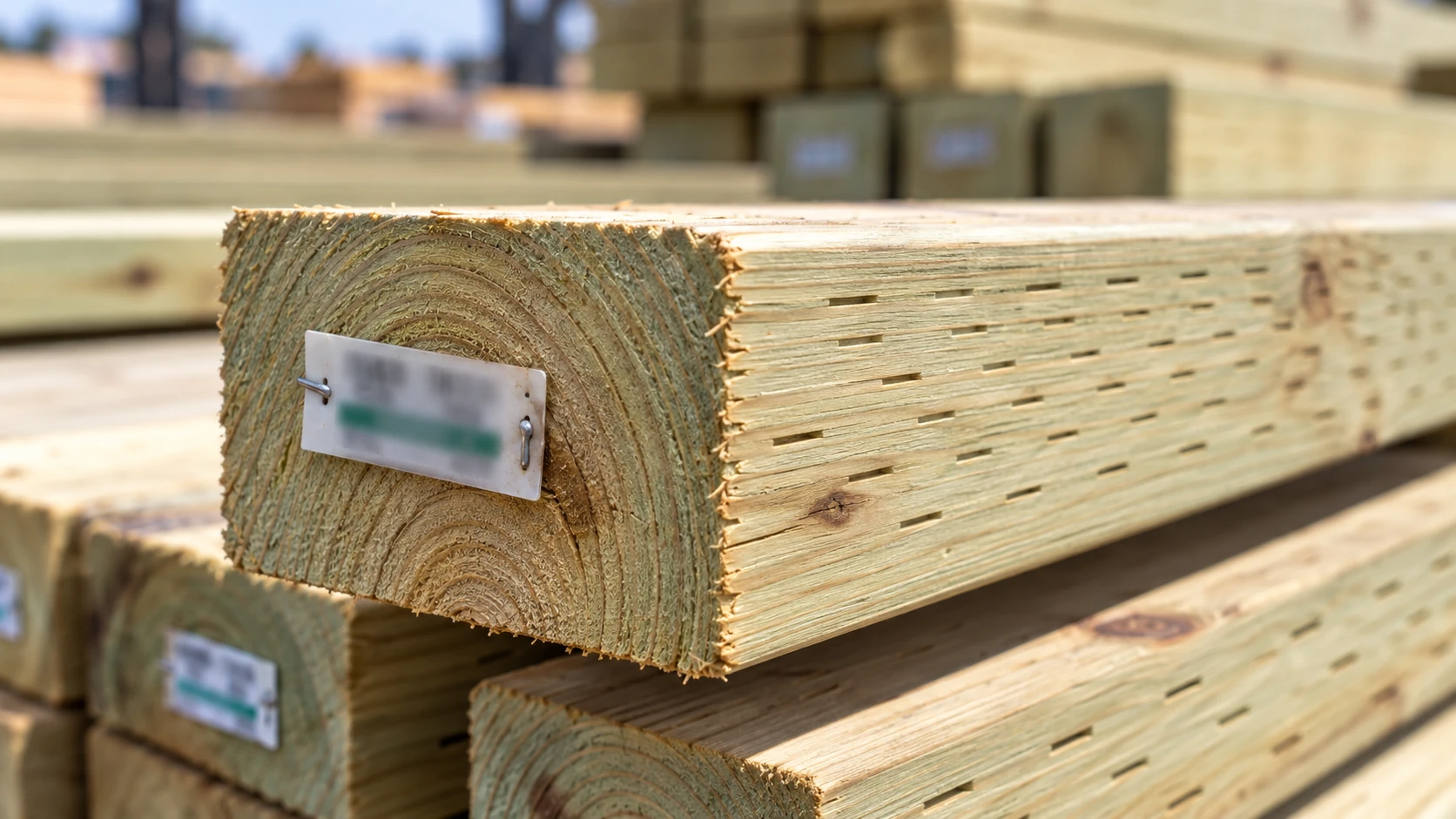
The different types of pressure treated wood sold for decks differ mainly in how much preservative stays in the wood. That amount is called retention and is measured in pounds per cubic foot. The American Wood Protection Association, or AWPA, sorts PT lumber into use categories by exposure. Each category has its own minimum retention for each preservative.
| AWPA use category | Exposure | Typical deck parts | Minimum retention, micronized copper azole |
|---|---|---|---|
| UC3B – Above ground | Outdoors, off the ground, able to dry | Deck boards, railings, balusters | 0.06 lb per cubic foot |
| UC4A – Ground contact, general use | In soil, or in conditions similar to soil contact | Posts and ledgers; joists and beams that are low, hard to replace, or critical to the structure | 0.15 lb per cubic foot |
| UC4B – Ground contact, heavy duty | Severe exposure and critical parts | Permanent wood foundations and parts under heavy exposure | 0.23 lb per cubic foot |
Other preservatives use different numbers for the same categories, so the category matters more than the figure. That category is the main difference between pressure treated lumber types on the shelf.
Grades of pressure treated wood are a separate matter. The protection level comes from the plant that applied the preservative. The structural grade, such as No. 1 or No. 2, comes from a lumber grading agency. Both marks are printed on the lumber, and we check five things before boards leave the yard for our jobs:
- The end tag, stapled to the end of the board, showing the preservative and the AWPA use category.
- The retention level on that tag, which must match the category the drawings call for.
- The producer’s name and a statement that the lumber follows AWPA standards.
- The grade stamp on the face, showing the species, structural grade, and grading agency.
- A KDAT mark, meaning the lumber was kiln-dried after pressure treatment.
For pressure-treated lumber decking on the West Coast, the species is usually Douglas fir or hem-fir. Both need incising, rows of small cuts in the surface, to take the preservative. Those marks are normal and do not lower the grade.
Pressure Treated Wood for Deck Framing
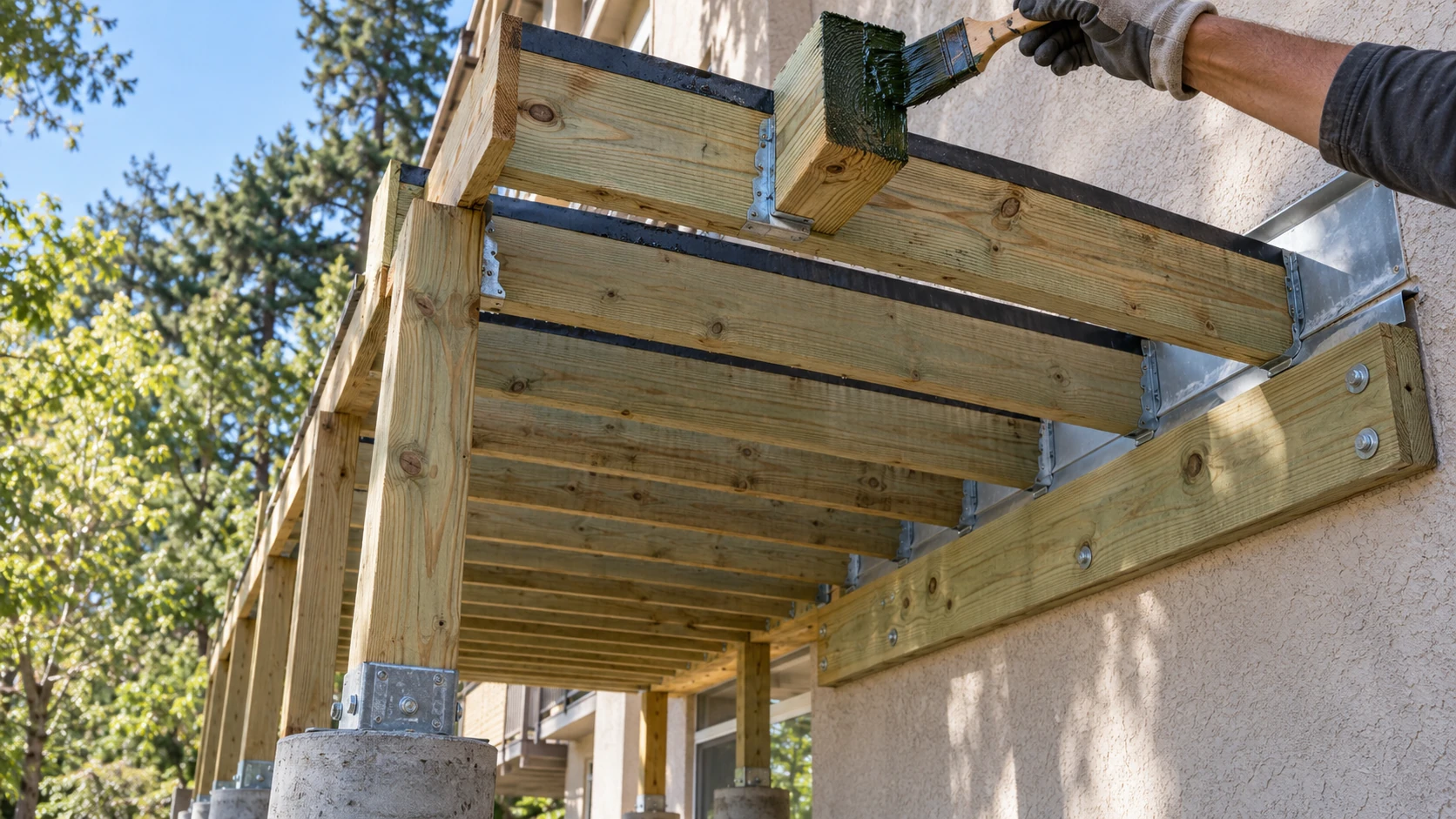
The frame is where the protection level decides the service life. AWPA lists posts and ledgers as ground-contact components. Joists and beams may need the same rating when they are hard to replace and critical to the structure. Its rules also call for ground-contact lumber in two common cases. One is parts less than 6 inches above the ground on concrete, and the other is a deck with no air moving underneath. For a frame, these rules decide more than the pressure treated grades printed on the board face.
Owners sometimes ask whether they need pressure treated wood for a deck frame at all. In this market the answer is yes for anything near soil or concrete. The rating matters as much as the material.
On every project that uses pressure treated wood for decking, we specify UC4A for posts, ledgers, and low or hard-to-reach joists and beams. The price difference is small. Replacing a rotted joist under a finished walkway is not.
Cuts and holes need attention too. Preservative rarely reaches the center of a thick post, so every cut end and drilled hole exposes wood with little protection. AWPA Standard M4 covers how those cut surfaces are handled on site, and it applies to pressure treated lumber deck boards cut on site too. On the decks we build, crews seal cut ends before each piece goes in and tape the joist tops.
What the California Residential Code Requires
Section R317 of the California Residential Code, and its match in the California Building Code, require decay-resistant wood in exposed spots. These include wood touching the ground, posts in concrete that touches soil, and framing within 8 inches of exposed earth. The code allows two options: lumber protected to AWPA standards or naturally durable heartwood. Pressure-treated lumber decking and framing must meet AWPA Standards U1 and M4 and carry an accredited agency’s quality mark.
The naturally durable woods the code accepts include the heartwood of redwood and cedar. One more rule matters during construction. Lumber closed in where it cannot dry must be at 19 percent moisture content or less before it is covered. That applies to balconies with a membrane or a closed soffit, where joists under PT wood decking cannot dry out later.
Pressure Treated Boards for Decking
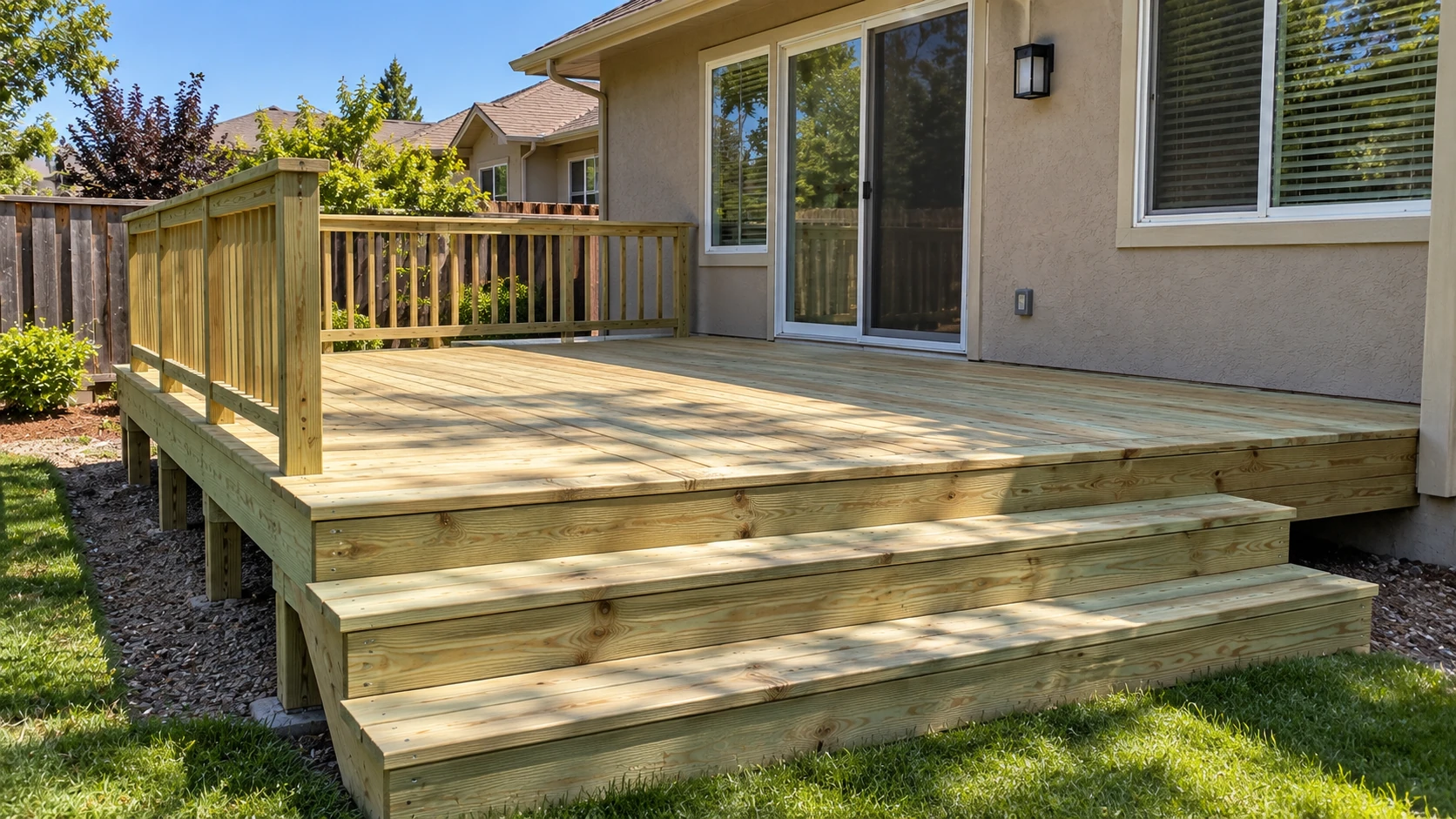
On the walking surface, pressure treated wood for decking is usually 2×6 lumber rated for above-ground use. Some yards also stock 5/4 boards. They cost the least of any decking and go down the fastest. That is why they remain common on rental properties, back-of-house walkways, and ground-level decks.
Most pressure-treated lumber leaves the plant wet. PT wood decking shrinks as it dries. Boards installed wet are laid tight and open to an even gap over the following months. Lumber marked KDAT has already been dried. It costs more and moves less, so it suits surfaces where the gaps have to stay even from the first day.
Owners often ask about the best pressure treated wood for decking. In practice it is the straightest board in the highest grade the yard carries, at the correct use category, preferably KDAT. Choose boards with few large knots, full edges, and no splits at the ends.
The surface needs regular care, and the frame needs inspection. Our PT deck building service plans both from the start. Pressure treated wood for deck boards that is cleaned and sealed on schedule lasts much longer than boards left to weather.
Not sure how this applies to your building?
A licensed contractor answers — free, same-day callback.
When to Use Pressure Treated Wood and When Cedar or Composite Fits Better
For posts, beams, and joists, PT lumber is the standard choice in this market. It is strong, widely stocked, and accepted by building departments across California. On the surface, the choice of decking boards, pressure treated or not, depends on budget, foot traffic, and real upkeep.
Cedar is the most common comparison. In a pressure treated wood vs cedar for deck decision, cedar heartwood resists decay naturally, weighs less, and looks better as a surface. It is also softer and costs more. Redwood heartwood, the other naturally durable wood common on California decks, has similar strengths. We use cedar deck building where appearance leads. PT lumber stays underneath as the frame, because cedar is not the right choice for framing close to the ground.
The other alternatives to pressure treated wood for deck surfaces are composite boards, Trex, hardwood, and thermally modified timber. All of them still sit on a PT frame. The choice usually comes down to how long the owner plans to keep the building and who pays for refinishing.
Fire zones add one more check. In fire hazard severity zones mapped by CAL FIRE, standard PT wood decking usually does not meet the state’s wildfire requirements. The preservative protects against rot, not fire. Fire-retardant-treated lumber is a different product, and the decking has to match what the building department accepts.
How to Care for a Pressure Treated Wood Deck
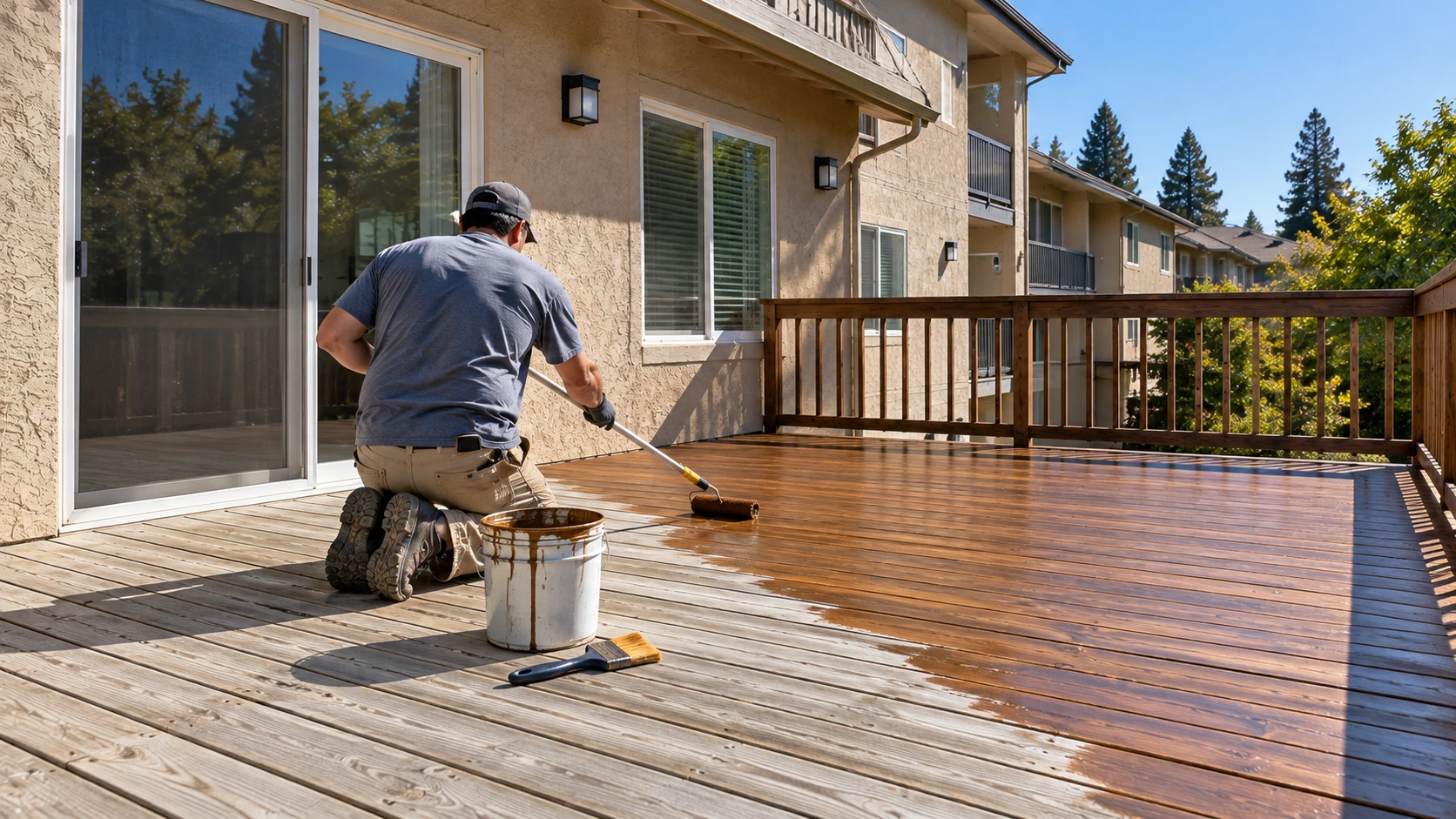
A PT deck is the cheapest to build and needs the most attention afterward. Maintenance for a pressure treated wood deck runs on a two- to three-year cycle. Skipping it shortens the life of the surface. Our annual maintenance plans follow this order:
- Let new boards dry enough to absorb a finish, and set the date by checking the wood rather than the calendar.
- Clean the surface and clear debris from the gaps between boards.
- Apply a penetrating sealer or stain with UV protection to every face you can reach.
- Check board ends and screw holes for splits, and replace boards that have cracked through.
- Inspect posts, ledgers, and joists underneath for soft spots, rust stains, and loose hardware.
- Repeat the cleaning and sealing every two to three years, or sooner on full-sun surfaces.
Sealing pressure treated boards for decking on that schedule reduces checking and cupping. Where the frame already shows rot, a new coat on the surface will not help, and the next step is deck repair.
California has its own rule for the end of the cycle. When a deck is torn out, the removed pressure-treated decking and framing count as pressure-treated wood waste. It cannot be burned or mixed with other wood waste, and it goes to landfills authorized to accept it. We include that disposal in every rebuild quote.
How Northern California Weather Affects PT Decking
Weather sets the pace of the care cycle. In Sacramento and the Central Valley, long sunny summers dry the surface fast. Without a UV-blocking finish, decking boards, pressure treated or not, check and split sooner. Near the Bay and the coast, fog keeps boards damp for months, so mildew and soft board ends show up first.
Cut ends matter more in this climate. The copper in the preservative protects only wood that still has it, so cut ends and drilled holes that were never sealed are the weak points in pressure treated lumber deck boards and posts, and we detail them accordingly.
Plan a Pressure Treated Wood Deck in Northern California
A good plan for pressure treated wood for decking starts with the use category for each part and the hardware that goes with it. We read the end tags and set the framing to ground-contact rating where AWPA calls for it. Then we tell you plainly whether PT boards, cedar, or composite fit your surface best.
Whether to use pressure treated wood for a deck on a home, apartment community, or HOA property is decided on site. Schedule a free on-site assessment and a licensed contractor will call back the same business day. The written, itemized scope follows within five business days, with no obligation.

Related service
Pressure-Treated Deck Building
Licensed, insured and SB 721/326-fluent — from assessment to sign-off, one accountable team.
About the author
Tom Marsden
Retired Property Inspector · Reviewed under CSLB #1060736
Tom Marsden is a retired property inspector with 20 years of experience. Starting as a general contractor, he transitioned to inspections, specializing in multi-family dwellings. Known for his straightforward approach and ability to simplify complex regulations, Tom became a respected figure in the local property management community. Now retired, he mentors new inspectors and writes about building safety, focusing on balcony inspections and maintenance. In his free time, Tom enjoys restoring vintage sailboats and volunteering at the local community center.
More from Tom Marsden

