Commercial Pressure-Treated Deck Building · CSLB #1060736
Pressure-Treated Deck Building for California Commercial & Multifamily Properties
We build decks in pressure-treated lumber for apartment communities, condominiums, HOAs, and hotels across California — structure and surface in the same material. Pressure-treated is the least expensive deck to build and the most demanding to keep, and it’s worth understanding both halves of that before you choose it.
- CSLB #1060736 Licensed California contractor
- 9+ yrs Building & framing decks that carry people
- Right ratings Ground-contact posts, hardware matched to the chemistry
- Commercial Multifamily, HOA & hotel only
01 Why it matters
It’s the one material that is both the deck and the frame
Every deck we build sits on pressure-treated lumber. Composite, Trex, redwood, cedar — all of them are surfaces fastened to a treated frame, because nothing else is both structurally rated and protected against decay at a price that makes sense. A pressure-treated deck is simply the case where the same material does both jobs, which makes it the cheapest deck to build by a clear margin.
What owners underestimate is that not all pressure-treated lumber is the same. It’s treated to different retention levels for different exposures: one rating for above-ground use, a heavier one for ground contact. Posts, and any framing sitting close to soil, need the ground-contact rating. Using above-ground material where the ground can reach it is a quiet and common error — the lumber looks identical, costs a little less, and fails a decade early in exactly the places that are hardest to replace.
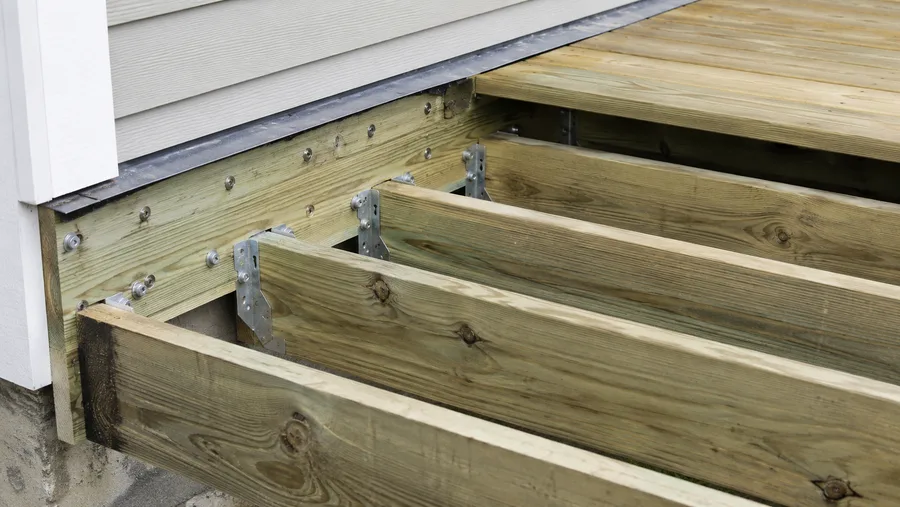
Then there’s the metal. Modern treatments use copper-based chemistry that corrodes ordinary galvanised hardware, and a deck is held together entirely by hangers, bolts, and connectors. Hot-dipped galvanised or stainless throughout isn’t an upgrade on treated lumber — it’s the specification, and it’s the difference between a connection that lasts as long as the wood and one that doesn’t.
Pressure-treated is under every deck on this site. The only question is whether it’s also on top of one.

02 The D&B difference
What building a pressure-treated deck properly involves
We build treated decks to the specification the material actually requires, which is where most of the difference between a fifteen-year deck and a thirty-year one is decided.
The right treatment rating in the right place
Ground-contact material for posts and anything near soil, above-ground for the rest. It costs marginally more to specify correctly and it’s the single cheapest decision available on a treated deck.
Hardware matched to the chemistry
Hot-dipped galvanised or stainless connectors, hangers, and fasteners throughout. A galvanised bracket in contact with copper-treated lumber corrodes from inside a connection nobody will inspect until something moves.
Boards laid for wood, not for composite
Freshly treated lumber arrives wet and shrinks as it dries, so decking is laid tight and gaps as it seasons — the opposite of composite, which is gapped at installation and expands. Crews that treat both materials the same way produce decks with gaps you can drop a phone through.
03 · Service Areas
Where We Work in California
Every city links to a dedicated local page — crews, recent projects and compliance details for that area.
Sacramento Metro
14 cities
East Bay
21 cities
Don’t see your city? We likely still cover it — call (916) 848-2728.
04 How a project runs
How building a deck with pressure-treated lumber runs, start to finish
-
01
Assessment & design
Site, span, load path, and exposure reviewed, and an honest conversation about whether treated decking or a composite surface on a treated frame suits how the property is maintained.
-
02
Specification
Treatment ratings assigned by location, hardware grade set for the chemistry and the environment, and board and railing details agreed.
-
03
Engineering & permitting
Stamped engineering and permits where the structure or jurisdiction require them.
-
04
Foundations & structure
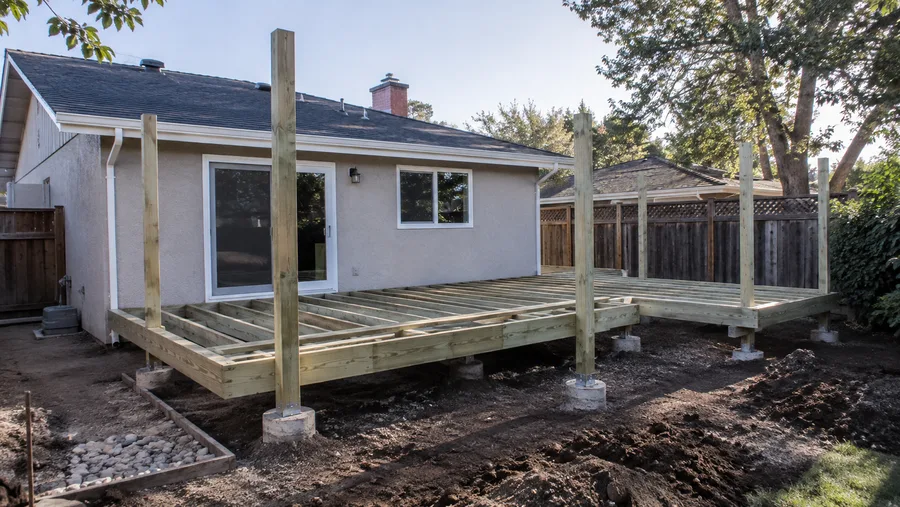
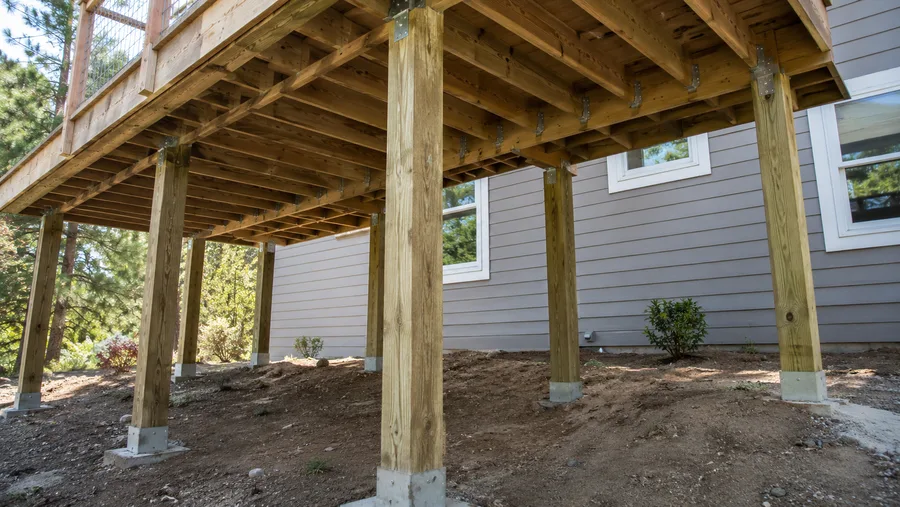
Footings, ground-contact posts on metal bases clear of soil, beams and joists sized for span.
-
05
Ledger & connections
Ledger flashed and fastened per CBC 1604.8.1, with rated hardware at every connection.
-
06
Decking & railings
Boards laid tight to allow for drying shrinkage, guardrails to the 42″ / 4″ standard, stairs and handrails to code.
-
07
Finish & handoff
Sealing scheduled for when the lumber has dried enough to accept it, plus as-built documentation and a maintenance schedule.
05 Scope
What’s included in a D&B pressure-treated deck build
Complete pressure-treated deck construction — footings to handrail — from one CSLB-licensed crew.
- Site assessment, span and load-path design
- Treatment ratings specified by location — ground contact for posts and framing near soil
- Footings and piers, with metal post bases holding timber clear of grade
- Pressure-treated joists, beams, and posts sized for span and load
- Ledger connections flashed and fastened per CBC 1604.8.1
- Hot-dipped galvanised or stainless connectors, hangers, and fasteners throughout
- Joist tape and flashing over joist tops and beams
- Pressure-treated decking laid tight to allow for drying shrinkage
- Guardrails to the 42″ height and 4″ sphere standard, in timber or aluminum
- Stairs with code risers, treads, and graspable handrails
- Sealing or staining scheduled once the lumber has dried sufficiently
- Maintenance schedule reflecting what treated timber actually needs
- Stamped engineering and permit coordination where required
- As-built documentation for the SB 721 / SB 326 compliance file
Built to current code: CBC 1604.8.1 ledger connections · ASCE 7 load criteria · Title 24 · 42″ / 4″ guardrail standard · treatment retention ratings by exposure
06 Investment
What it costs to build a pressure-treated deck
Treated decks are quoted after a site assessment, and they are reliably the least expensive deck to build. The number worth looking at alongside that is what keeping one costs.
What drives the number
- Deck size, elevation, and span
- Foundations — number, depth, and site conditions
- Treatment ratings, since ground-contact material costs more than above-ground
- Hardware grade, which the chemistry and the environment dictate rather than the budget
- Railing material — treated timber, or aluminum where maintenance matters more than match
- Stairs, which use more material per foot than deck area
- Access, staging, and phasing around residents
- Permits and engineering where required
The honest comparison: treated decking is roughly the cheapest surface available and the most demanding to maintain — cleaning and re-sealing on a two- to three-year cycle, indefinitely. Composite costs substantially more to build and removes that cycle entirely. Over a ten- to fifteen-year hold the two converge and often cross, which means the right answer depends on whether your property will genuinely do the maintenance. On properties with an in-house crew and a real schedule, treated is excellent value. On properties where the last re-seal was five years ago, it isn’t, and we’ll say so. Where per-square-foot pricing misleads: a rate for treated decking is boards and labour. It doesn’t cover foundations, the ledger connection, railings, stairs, or the hardware upgrade the material requires — which together frequently exceed the decking itself. Compare bids on scope rather than rate. Final pricing follows a site assessment — request a free estimate, no obligation.
In the field
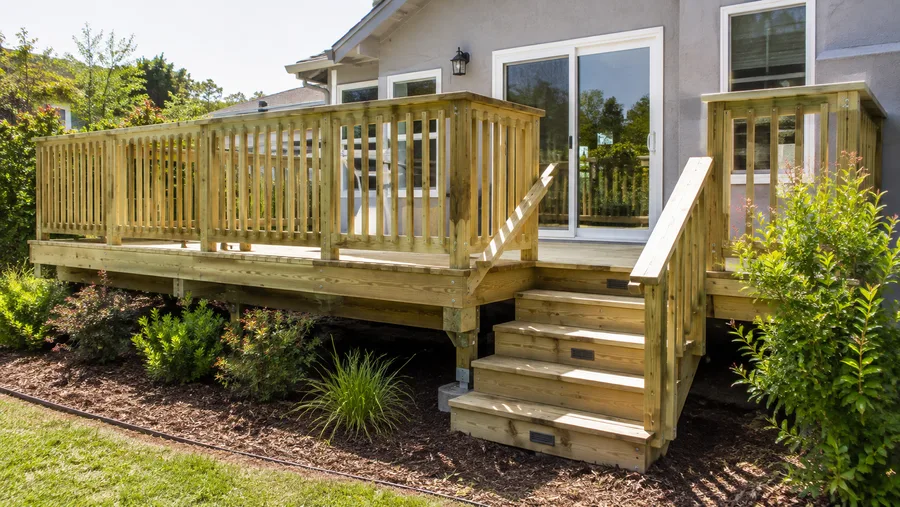
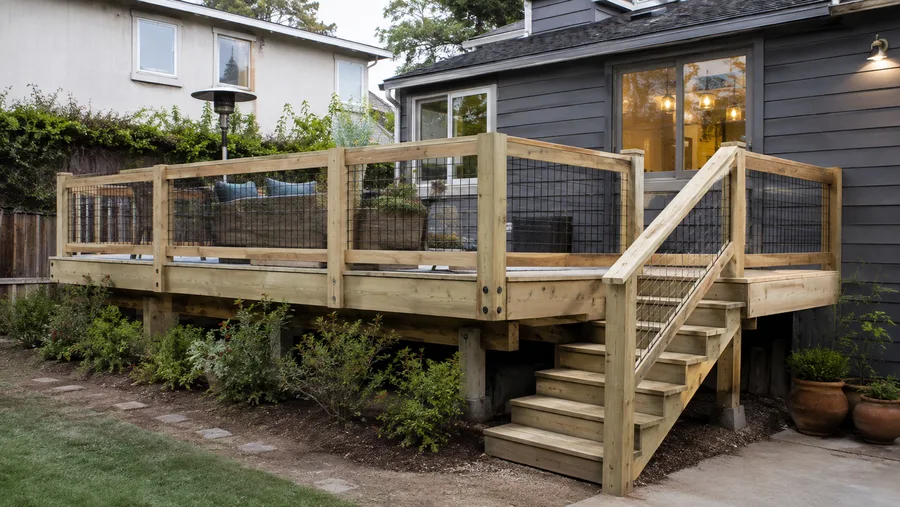
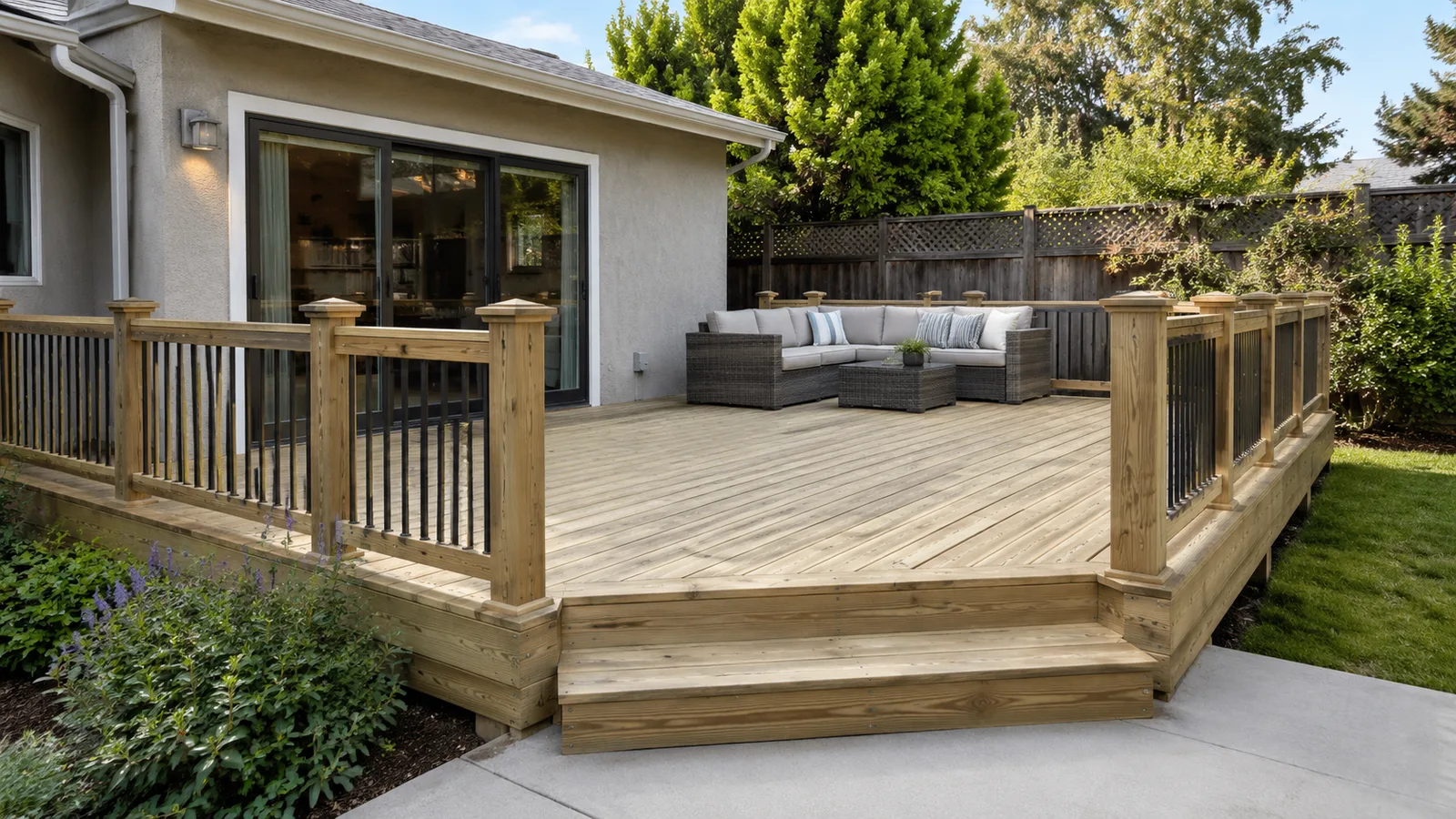
Pressure-treated deck detail
The material that frames every deck, and finishes some of them.
07 Project example
A recent pressure-treated deck project
An apartment community needed its back-of-house decks and service walkways rebuilt and had a fixed budget that ruled composite out. Treated lumber was the right call for the use — utility areas with an in-house maintenance crew who would actually re-seal them. What the tear-out showed was why the previous decks had lasted barely a decade: above-ground-rated material had been used for posts sitting in soil contact, and standard galvanised hangers had corroded where they met the treated joists. D&B rebuilt with ground-contact material at every post, metal bases holding timber clear of grade, and hot-dipped galvanised hardware throughout, then handed over a re-sealing schedule the maintenance team could work to.
Same material, same budget, and it will last twice as long — because this time the posts are rated for the ground they’re standing in. Regional Property Manager · California apartment community
08 Case studies
Recent Projects, Documented
Real commercial properties — what the building needed, what we did, and what it delivered.
 Deck ConstructionCommunity-Wide Elevated Deck Replacement — San RamonEvery elevated deck across a hillside townhome community rebuilt to a single spec in one managed program —…View case study
  Deck ConstructionPatio Deck & Post Base Replacement Across a Bungalow Community — San RafaelDeck-by-deck replacement across a courtyard community, driven by the one detail that failed first — posts set straight…View case study
  Deck RepairCoastal Shared Deck & Walkway Restoration — Daly CityA large shared elevated deck on the coast — surface, framing and connections all degraded by years of…View case study
 09 Client feedback
What property managers say
They asked whether we’d actually be re-sealing these decks before recommending the material. Nobody had ever asked us that — they just quoted what we said we wanted.
The posts on the old decks were rated for above ground and buried in dirt. That one detail is why we were rebuilding after eleven years.
Boards went down tight and gapped out evenly as they dried, exactly as they said they would. The last contractor gapped them like composite and we ended up with slots.
10 FAQ
Pressure-treated deck questions
How much does it cost to build a pressure-treated deck?
Less than any other decking material, which is the main reason it’s chosen. The build cost is driven by size, elevation, foundations, railings, stairs, and the hardware grade the material requires — not by the boards, which are the cheapest part. What deserves equal weight is the maintenance cost, because treated decking needs cleaning and re-sealing on a two- to three-year cycle for as long as you own it.
What’s the price per square foot for a pressure-treated deck?
Rates you’ll find published are boards and labour. They exclude foundations, the ledger connection, railings, stairs, and the corrosion-rated hardware treated lumber requires — which on most decks add up to more than the decking itself. We quote scope rather than rate, because a per-square-foot figure isn’t comparable between two bids that included different things.
Is pressure-treated cheaper than composite in the long run?
Only if the maintenance actually happens. Treated is far cheaper to build and needs re-sealing every couple of years indefinitely; composite costs more up front and removes that cycle. Over ten to fifteen years the two converge, and which one wins depends entirely on whether your property re-seals on schedule. We’ll ask about your maintenance history before recommending either, because the honest answer is different for different properties.
What’s the difference between above-ground and ground-contact treated lumber?
The amount of preservative retained in the wood. Above-ground material is rated for framing that stays clear of soil and can dry; ground-contact carries a heavier retention and is required for posts and for anything sitting close to the ground. The two look identical, which is exactly why the wrong one gets used — and it fails early, in the members that are hardest to replace.
Why do fasteners matter on treated lumber?
Modern treatments use copper-based chemistry that corrodes ordinary galvanised hardware, and every load path in a deck runs through metal. Hot-dipped galvanised or stainless connectors and fasteners are the specification rather than an upgrade. The corrosion happens inside connections nobody looks at, so it’s invisible until something moves.
Should treated deck boards be gapped when installed?
No — laid tight. Treated lumber arrives wet from the treatment process and shrinks as it dries, so boards installed snug open to an even gap over the first season. This is the opposite of composite, which expands and must be gapped at installation. Crews that apply the composite habit to treated timber leave decks with slots wide enough to lose things through.
When can a new treated deck be sealed or stained?
Not immediately. The lumber has to dry enough to accept the finish, and the timing depends on the season and how wet the material was on delivery. Sealing too early traps moisture and the finish doesn’t hold. We give you a date rather than a rule of thumb, and it goes into the maintenance schedule at handover.
Does a pressure-treated deck need SB 721 or SB 326 inspection?
Yes, where it’s more than six feet above grade at a property with three or more units. Pressure-treated is wood, and those laws govern wood-framed exterior elevated elements — the treatment slows decay considerably but does not remove the structure from the inspection cycle.
When would you recommend treated over composite?
Where the property has a maintenance crew that will genuinely re-seal on schedule, and on utility areas — service walkways, back-of-house decks, and access routes where appearance matters less than budget. On resident-facing amenity decks at properties without a reliable maintenance programme, we’d usually recommend a composite surface on a treated frame instead, and we’ll say so even though it’s the more expensive quote.
Are you pressure-treated deck builders near me in California?
We’re a CSLB-licensed contractor (#1060736) building treated timber decks across the Bay Area, Central Valley, and Sacramento, exclusively on commercial, multifamily, and HOA properties. Foundations, framing, decking, railings, and compliance documentation come from one crew.
11 Start here
Get your treated deck priced properly — free estimate
Tell us about the property, what the deck is for, and how it will be maintained. We’ll assess the site and give you a written estimate — and an honest view on whether treated lumber is the right surface or just the cheapest one.
CSLB #1060736 · 9+ years · Insured & Bonded · Serving the Bay Area, Central Valley & Sacramento