Commercial Cedar Deck Building · CSLB #1060736
Cedar Deck Building for California Commercial & Multifamily Properties
We build cedar decks for apartment communities, condominiums, HOAs, and hotels across California — cedar decking and railings on properly framed, flashed, and protected structures. Cedar is chosen for how it looks and how it weathers, and both of those depend far more on the grade you buy than on the word “cedar” appearing in the quote.
- CSLB #1060736 Licensed California contractor
- 9+ yrs Building cedar decks across California
- Heart-grade cedar Specified & stated in every quote
- Commercial Multifamily, HOA & hotel only
01 Why it matters
Cedar’s decay resistance lives in the heartwood, not in the name
Western red cedar has a reputation for lasting outdoors, and it earns it — but not uniformly across the board. The natural extractives that resist decay are concentrated in the heartwood, the darker inner wood of the tree. Sapwood, the pale outer band, has very little of that protection and behaves much like any untreated softwood. A board can be entirely genuine cedar and still rot in a few seasons if it’s mostly sapwood.
This is why cedar decks perform so inconsistently, and why two quotes both saying “cedar decking” can describe materially different products. Clear heart grades carry the decay resistance cedar is bought for. Knotty and sapwood-heavy grades cost considerably less, look similar when new, and don’t perform the same way. When a property tells us its cedar deck failed early, the grade is almost always the explanation.
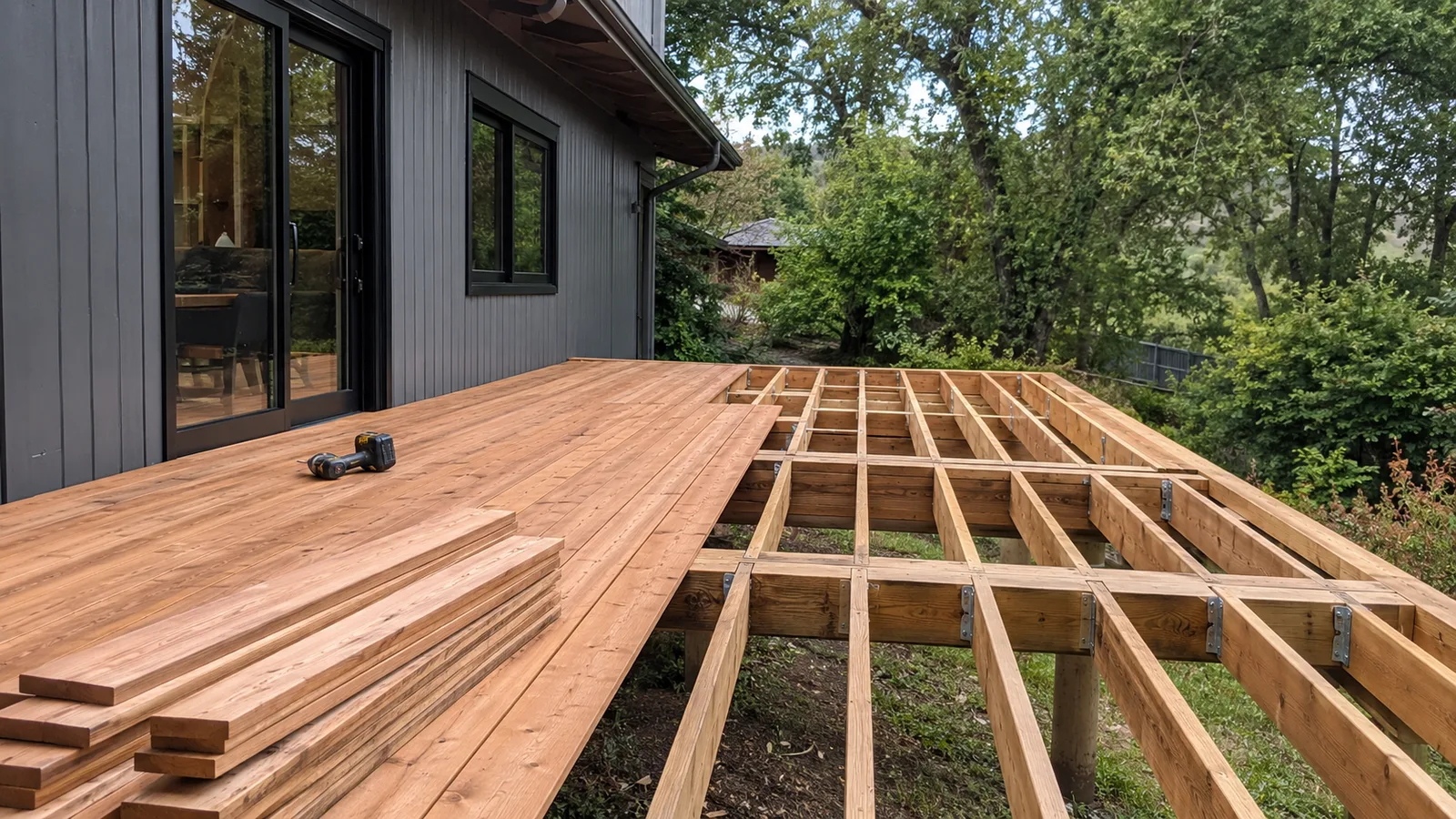
The second thing worth knowing is where cedar belongs in the assembly. It’s a decking and railing material rather than a framing one — softer and structurally weaker than the pressure-treated lumber the frame needs. So a cedar deck is cedar on top of a treated structure, and everything that determines how long the deck lasts still happens below the boards.
Two quotes can both say “cedar decking” and describe wood that behaves completely differently. The grade is the specification; the species is just the name.

02 The D&B difference
What building a cedar deck properly involves
We specify cedar by grade rather than by species name, and we build the structure beneath it as carefully as the surface you’re paying for.
Grade specified and stated
Heart-grade cedar where decay resistance is what you’re buying, and knotty grades only where the exposure and the budget genuinely justify them. Whichever we recommend, the grade is written into the quote so you can compare bids on the same basis.
Stainless fasteners, because cedar reacts
Cedar contains extractives that react with ordinary steel and leave black staining around every fastener. Stainless is the specification for visible fixings, and it’s the difference between a deck that ages evenly and one spotted with dark rings by its second winter.
The frame beneath treated and protected
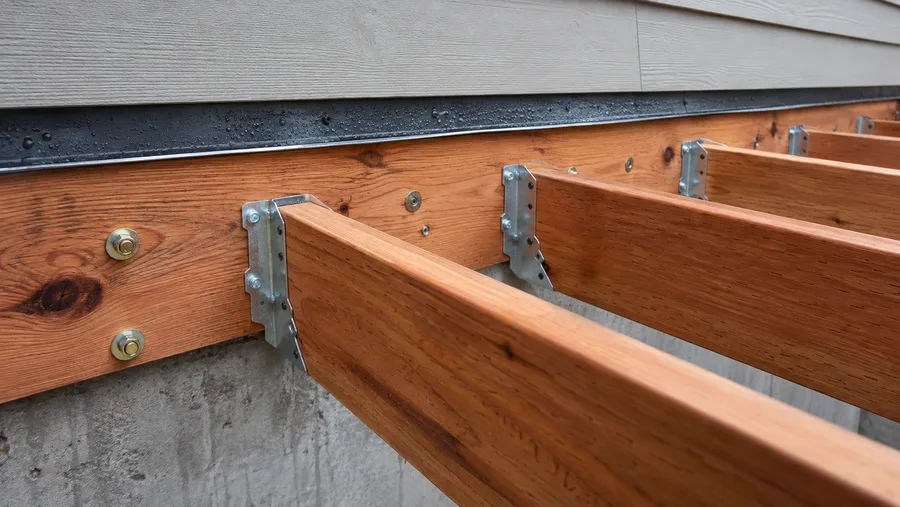
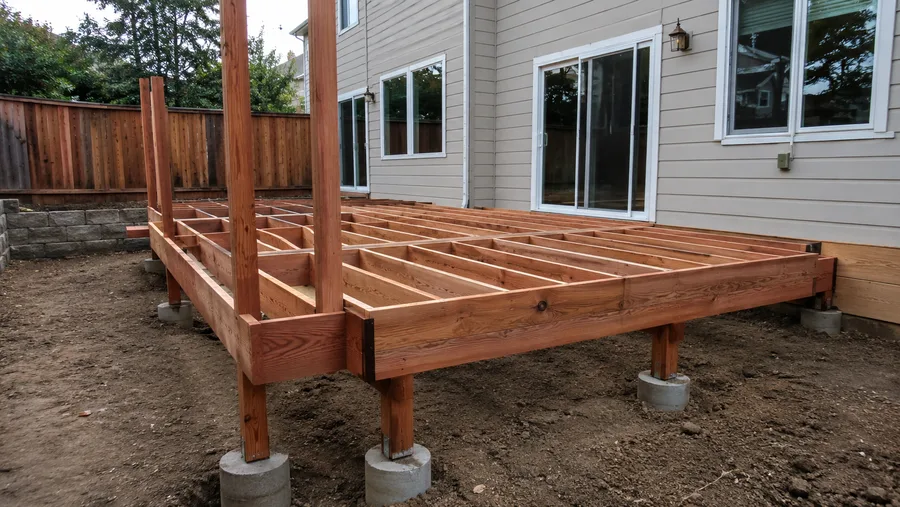
Pressure-treated framing, ledger flashed and fastened per CBC 1604.8.1, joist tape over the joist tops, and metal post bases keeping timber clear of grade. Cedar on top of an unprotected frame is money spent on the visible half.
03 · Service Areas
Where We Work in California
Every city links to a dedicated local page — crews, recent projects and compliance details for that area.
Sacramento Metro
14 cities
East Bay
21 cities
Don’t see your city? We likely still cover it — call (916) 848-2728.
04 How a project runs
How building a cedar deck runs, start to finish
-
01
Assessment & design
Site, span, exposure, and an honest conversation about grade against budget — including whether redwood is the better value for your property.
-
02
Specification
Cedar grade for decking and railings, treated framing and treatment ratings, stainless fastener schedule, and finish approach agreed before ordering.
-
03
Engineering & permitting
Stamped engineering and permits where the structure or jurisdiction require them.
-
04
Foundations & framing
Footings and piers, metal post bases clear of grade, treated joists and beams sized for span.
-
05
Ledger & protection
Ledger flashed and fastened per code, joist tape and flashing across the frame before decking.
-
06
Cedar decking & railings
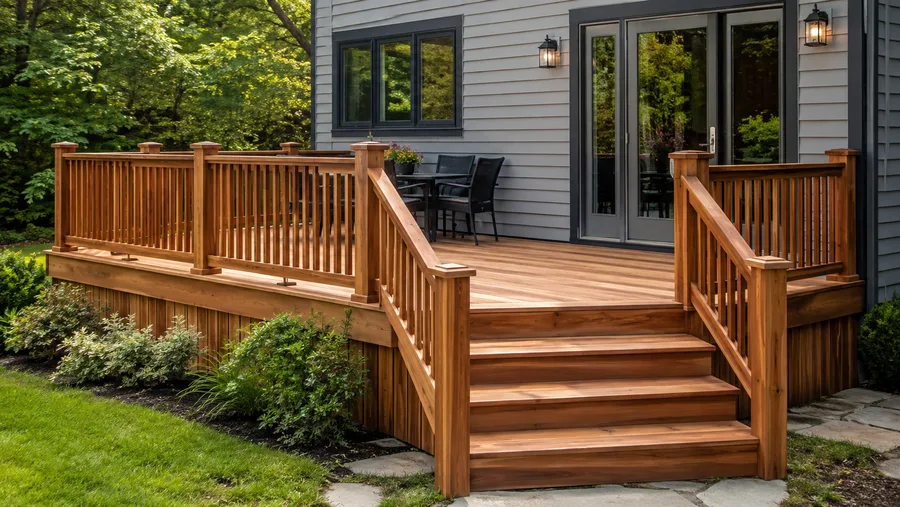
Boards laid and fastened with stainless fixings, cedar railings and stairs to the 42″ / 4″ standard where specified.
-
07
Finish & handoff
Sealing or staining as agreed, plus as-built documentation and a maintenance schedule written for cedar.
05 Scope
What’s included in a D&B cedar deck build
Complete cedar deck construction — treated structure, cedar surface — from one CSLB-licensed crew.
- Site assessment, span and load-path design
- Cedar grade specified and stated in the quote
- Stamped structural engineering and permit coordination where required
- Footings and piers, with metal post bases holding timber clear of grade
- Pressure-treated framing — joists, beams, and posts sized for span and load
- Ground-contact treatment ratings where framing sits near soil
- Ledger connections flashed and fastened per CBC 1604.8.1
- Joist tape and flashing over all joist tops and beams
- Cedar decking laid and fastened with stainless fixings
- Cedar or aluminum guardrails to the 42″ height and 4″ sphere standard
- Stairs with code risers, treads, and graspable handrails
- Sealing or staining, or a deliberate decision to let the cedar weather
- Maintenance schedule written for cedar rather than generic timber
- As-built documentation for the SB 721 / SB 326 compliance file
Built to current code: CBC 1604.8.1 ledger connections · ASCE 7 load criteria · Title 24 · 42″ / 4″ guardrail standard
06 Investment
What it costs to build a cedar deck
Cedar decks are quoted after a site assessment. The material sits between pressure-treated and tropical hardwood on price, and within cedar itself the grade moves the number substantially.
What drives the number
- Cedar grade — clear heart costs considerably more than knotty, and performs differently
- Deck size, elevation, and span
- Foundations — number, depth, and site conditions
- Treated framing and treatment ratings
- Stainless fastener schedule, which cedar requires for visible fixings
- Cedar railings versus aluminum, and stair runs
- Access, staging, and phasing around residents
- Permits and engineering where required
A California note worth having before you commit: cedar comes from the Pacific Northwest, while redwood is locally sourced here. Redwood offers similar natural decay resistance, the same heartwood-versus-sapwood distinction, and on many California projects it prices better and arrives faster. If you want a natural, warm-toned timber deck, we’ll price both — and on a fair number of properties we end up recommending redwood even though the enquiry started with cedar. On ownership cost: cedar is a natural timber and needs cleaning and re-finishing on a two- to three-year cycle to hold its colour. Left alone it silvers to grey, which is a legitimate aesthetic rather than a failure — but it’s a decision worth making deliberately rather than discovering. Final pricing follows a site assessment — request a free estimate, no obligation.
In the field
Cedar deck detail
Cedar on top, treated structure underneath.
07 Project example
A recent cedar deck project
An apartment community had a cedar amenity deck barely seven years old with boards already soft in places and black rings around every fastener. Neither problem was mysterious once the boards came up. The original decking had been a knotty, sapwood-heavy grade with little of the decay resistance cedar is bought for, and the fixings had been galvanised rather than stainless, so the cedar’s own extractives had stained the wood around every screw. D&B re-boarded in heart-grade cedar with stainless fixings, repaired the framing and flashed the ledger properly while the deck was open, and taped the joist tops before the new boards went down.
We paid for cedar the first time too. What we got was cedar in name — nobody had told us grades existed. Community Manager · California apartment community
08 Case studies
Recent Projects, Documented
Real commercial properties — what the building needed, what we did, and what it delivered.
 Deck ConstructionCommunity-Wide Elevated Deck Replacement — San RamonEvery elevated deck across a hillside townhome community rebuilt to a single spec in one managed program —…View case study
  Deck ConstructionPatio Deck & Post Base Replacement Across a Bungalow Community — San RafaelDeck-by-deck replacement across a courtyard community, driven by the one detail that failed first — posts set straight…View case study
  Deck RepairElevated Restaurant Dining Deck Restoration — SaratogaA multi-level hillside dining deck taken from failing boards and moisture-damaged connections back to a sound, sealed structure…View case study
 09 Client feedback
What property managers say
Our previous cedar deck failed in seven years and nobody could explain why. Turned out the grade was the answer, and it was in nobody’s quote because nobody was asked.
They talked us into redwood over cedar on price and availability, which cost them margin and saved us weeks. That’s why we called them for the next building.
Stainless fixings throughout. The last deck had black rings around every screw within two winters and we thought that was just what cedar did.
10 FAQ
Cedar deck questions
How much does it cost to build a cedar deck?
Cedar sits between pressure-treated and tropical hardwood on material cost, and the grade moves the number substantially within cedar itself — clear heart costs considerably more than knotty. Beyond the boards, the cost is driven by size, elevation, foundations, framing, railings, and stairs. We quote after a site assessment and state the grade in the estimate so you can compare bids properly.
What’s the cost per square foot for a cedar deck?
A rate is only meaningful if two quotes assume the same grade, and they usually don’t. Published per-square-foot figures also exclude foundations, the ledger connection, joist protection, railings, and stairs, which together generally exceed the decking cost. Compare scope and grade rather than rate.
Why did our cedar deck rot so quickly?
Almost always the grade. Cedar’s decay resistance is concentrated in the heartwood; the pale sapwood has very little of it and behaves like any untreated softwood. Knotty and sapwood-heavy grades are genuine cedar, cost much less, and don’t last the way clear heart grades do. If a cedar deck failed early, that’s the first thing we look at.
Why are there black marks around the screws on our cedar deck?
Cedar contains natural extractives that react with iron, and ordinary steel or galvanised fixings produce dark staining around each fastener within a season or two. It’s a chemistry issue rather than a defect in the wood. Stainless fixings avoid it entirely, which is why we specify them for anything visible on cedar.
Cedar or redwood for a California deck?
Both are naturally decay-resistant softwoods with the same heartwood-versus-sapwood distinction, and they look broadly similar. The practical difference here is supply: redwood is sourced in California while cedar comes from the Pacific Northwest, so redwood often prices better and arrives sooner. We price both when a client asks for cedar, and on a good number of California projects we end up recommending redwood.
Can cedar be used for the framing as well as the decking?
It isn’t the right material for it. Cedar is softer and structurally weaker than the pressure-treated lumber a frame needs, and it costs far more. Cedar belongs on the surface and in the railings, where it’s seen; the structure below should be treated lumber, flashed and protected. A cedar deck is cedar on a treated frame.
Does cedar have to be sealed, or can it weather naturally?
Both are legitimate. Left unfinished, cedar silvers to a soft grey over a season or two — many owners prefer that and it isn’t a failure. Sealing preserves the warm colour and slows UV erosion of the surface fibres, at the cost of re-finishing every two to three years. What matters is deciding deliberately, because switching later means stripping weathered wood back first.
How does cedar hold up on a busy commercial deck?
It’s a soft timber, which means it dents and scratches more readily than pressure-treated, hardwood, or composite. On a high-traffic amenity deck with furniture being moved, that shows. Cedar suits properties that want warmth and natural appearance and accept some patina; where hard wear is the priority we’d steer you elsewhere and say why.
Are you cedar deck builders near me in California?
We’re a CSLB-licensed contractor (#1060736) building cedar decks across the Bay Area, Central Valley, and Sacramento, exclusively on commercial, multifamily, and HOA properties. Framing, flashing, decking, railings, and compliance documentation come from one crew.
11 Start here
Get your cedar deck priced properly — free estimate
Tell us about the property and what you want the deck to look like in ten years. We’ll assess the site, state the grade in the estimate, and price cedar against redwood so you’re comparing materials rather than words.
CSLB #1060736 · 9+ years · Insured & Bonded · Serving the Bay Area, Central Valley & Sacramento