Commercial Wood Deck Building · CSLB #1060736
Wood Deck Building for California Commercial & Multifamily Properties
We build wood decks for apartment communities, condominiums, HOAs, and hotels across California — pressure-treated, redwood, cedar, and hardwood, framed and flashed to last decades rather than seasons. Wood is still the default choice on most commercial properties, and the difference between a deck that reaches fifteen years and one that reaches thirty-five has almost nothing to do with which species you pick.
- CSLB #1060736 Licensed California contractor
- 9+ yrs Building wood decks that reach thirty years, not fifteen
- Detail-driven Flashed ledgers & protected framing, not just species
- Commercial Apartments, condos, HOAs & hotels
01 Why it matters
The species gets the attention. The details decide the outcome.
Owners choosing a wood deck spend most of the decision on the boards — pressure-treated against redwood, cedar against hardwood — and comparatively little on the parts that determine how long the deck lasts. That’s backwards. The decking is the visible, replaceable layer. What determines service life is the frame beneath it and four details that cost very little to do properly and a great deal to correct later.
Those four are the same on every wood deck we build. Water off the boards has to run off the joists rather than sit on them, which means tape and flashing over the joist tops. The ledger connection into the building has to be flashed and fastened to current code, because it is the single most common failure point in wood deck construction. Timber has to be kept clear of soil and standing water, which is what metal post bases are for. And the hardware has to be rated for treated lumber and the local environment, because a deck is held together entirely by metal that nobody will look at again once the boards are down.
Get those right and a wood deck is a thirty-year asset that can be re-boarded and repaired indefinitely. Get them wrong and no species saves it. We have taken apart redwood decks that failed at fifteen years because the ledger was never flashed, and pressure-treated decks still sound at thirty because it was.
We’ve replaced redwood decks at fifteen years and repaired treated decks at thirty. The difference was the flashing, not the wood.

02 The D&B difference
What building a wood deck properly involves
We build wood decks around the details that never get photographed, because those are the ones that decide whether you’re re-boarding in ten years or rebuilding.
Joists protected before the boards go on
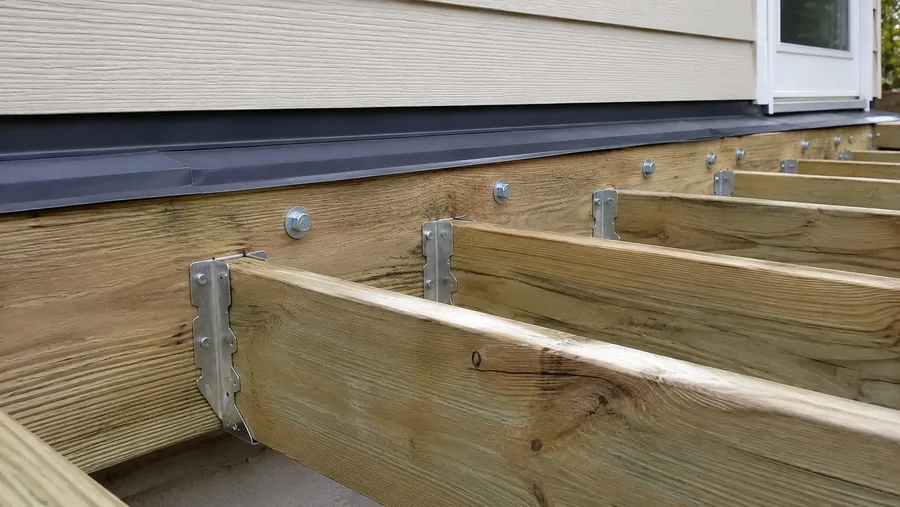
Joist tape and flashing over every joist top and beam. It’s invisible in the finished deck, adds little to the cost, and is the single biggest factor in how long the frame lasts.
Ledger connections flashed and fastened to code
The deck-to-building connection detailed per CBC 1604.8.1, with flashing integrated into the wall rather than sealed against it. This is where wood decks fail most often, and where a failure takes the building’s framing with it.
Hardware and post bases specified, not defaulted
Hot-dipped galvanised or stainless connectors matched to treated lumber and the local environment, and metal bases holding posts clear of soil. Both are the difference between connections that outlast the wood and connections that don’t.
03 · Service Areas
Where We Work in California
Every city links to a dedicated local page — crews, recent projects and compliance details for that area.
Sacramento Metro
14 cities
East Bay
21 cities
Don’t see your city? We likely still cover it — call (916) 848-2728.
04 How a project runs
How building a wood deck runs, start to finish
-
01
Assessment & design
Site, span, load path, exposure, and an honest conversation about species against budget and the maintenance the property will actually do.
-
02
Specification
Framing material and treatment ratings, decking species, hardware grade, railing and stair details agreed before anything is ordered.
-
03
Engineering & permitting
Stamped engineering and permits where the structure or jurisdiction require them.
-
04
Foundations & framing
Footings and piers, metal post bases clear of grade, joists and beams sized for span.
-
05
Ledger & protection
Ledger flashed and fastened per code, then joist tape and flashing across the frame before decking.
-
06
Decking, railings & stairs
Boards laid and fastened for the species, guardrails to the 42″ / 4″ standard, stairs with code risers, treads, and graspable handrails.
-
07
Finish & handoff
Sealing or staining scheduled appropriately, plus as-built documentation and a maintenance schedule.
05 Scope
What’s included in a D&B wood deck build
Complete wood deck construction — footings to handrail — from one CSLB-licensed crew, so the framing, the flashing, and the surface are never split between contractors.
- Site assessment, span and load-path design, species selection
- Stamped structural engineering and permit coordination where required
- Footings and piers, with metal post bases holding timber clear of grade
- Pressure-treated framing — joists, beams, and posts sized for span and load
- Ground-contact treatment ratings where framing sits near soil
- Ledger connections flashed and fastened per CBC 1604.8.1
- Joist tape and flashing over all joist tops and beams
- Decking — pressure-treated, redwood, cedar, or hardwood
- Hot-dipped galvanised or stainless connectors and fasteners throughout
- Guardrails to the 42″ height and 4″ sphere standard, in timber or aluminum
- Stairs with code risers and treads, and graspable handrails
- Drainage and slope where the design requires it
- Sealing, staining, or finishing as specified
- Maintenance schedule matched to the species installed
- As-built documentation for the SB 721 / SB 326 compliance file
Built to current code: CBC 1604.8.1 ledger connections · ASCE 7 load criteria · Title 24 · 42″ / 4″ guardrail standard
06 Investment
What it costs to build a wood deck
Wood decks are quoted after a site assessment. They are the least expensive decks to build, and the honest way to look at the number is alongside what keeping one costs.
What drives the number
- Deck size, elevation, and span
- Foundations — number, depth, and site conditions
- Species — pressure-treated is the value option, redwood and cedar sit above it, hardwood is the premium end
- Framing material and treatment ratings
- Hardware grade, which the treatment chemistry and the environment dictate
- Railing material and length, and whether stairs are included
- Access, staging, and phasing around residents
- Permits and engineering where required
Build cost against ownership cost: wood is the cheapest deck to build and the most demanding to maintain — cleaning and re-sealing on a two- to three-year cycle for as long as you own it. Composite costs substantially more up front and removes that cycle entirely. Over a ten- to fifteen-year hold the two converge, so the right answer depends on whether your property genuinely re-seals on schedule. On properties with a maintenance crew and a real programme, wood is excellent value. On properties where the last re-seal was five years ago, we’ll usually recommend the more expensive option and explain why. Why per-square-foot rates don’t compare: a published wood deck cost per square foot is boards and labour. It excludes foundations, the ledger connection, joist protection, railings, and stairs — which on most decks total more than the decking itself. Two bids at the same rate can differ by a third on scope alone. Final pricing follows a site assessment — request a free estimate, no obligation.
In the field
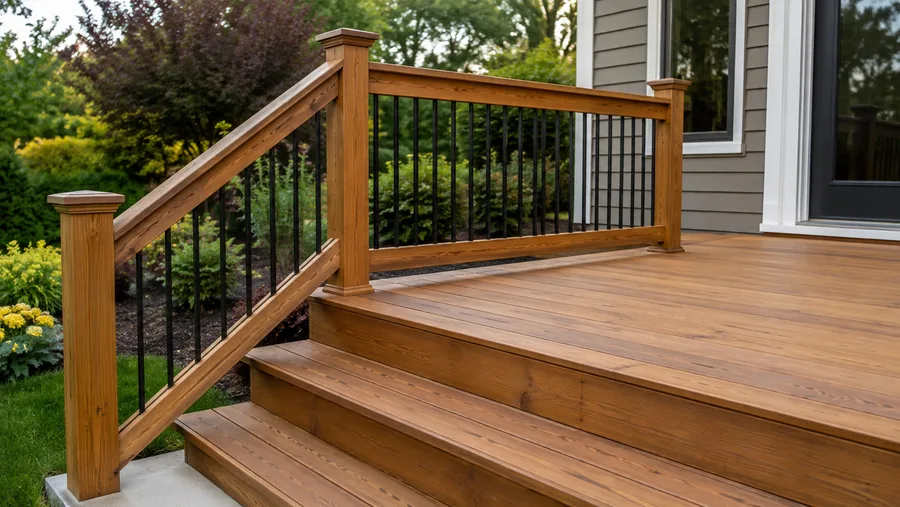
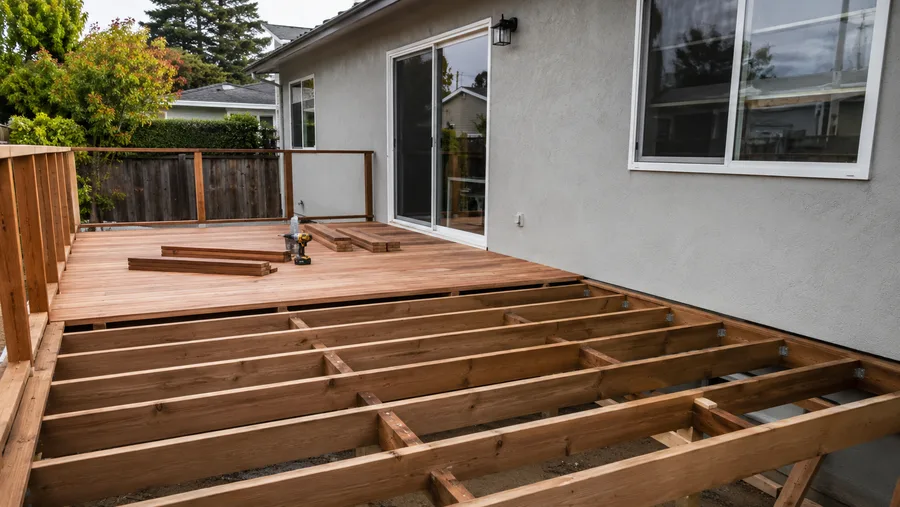
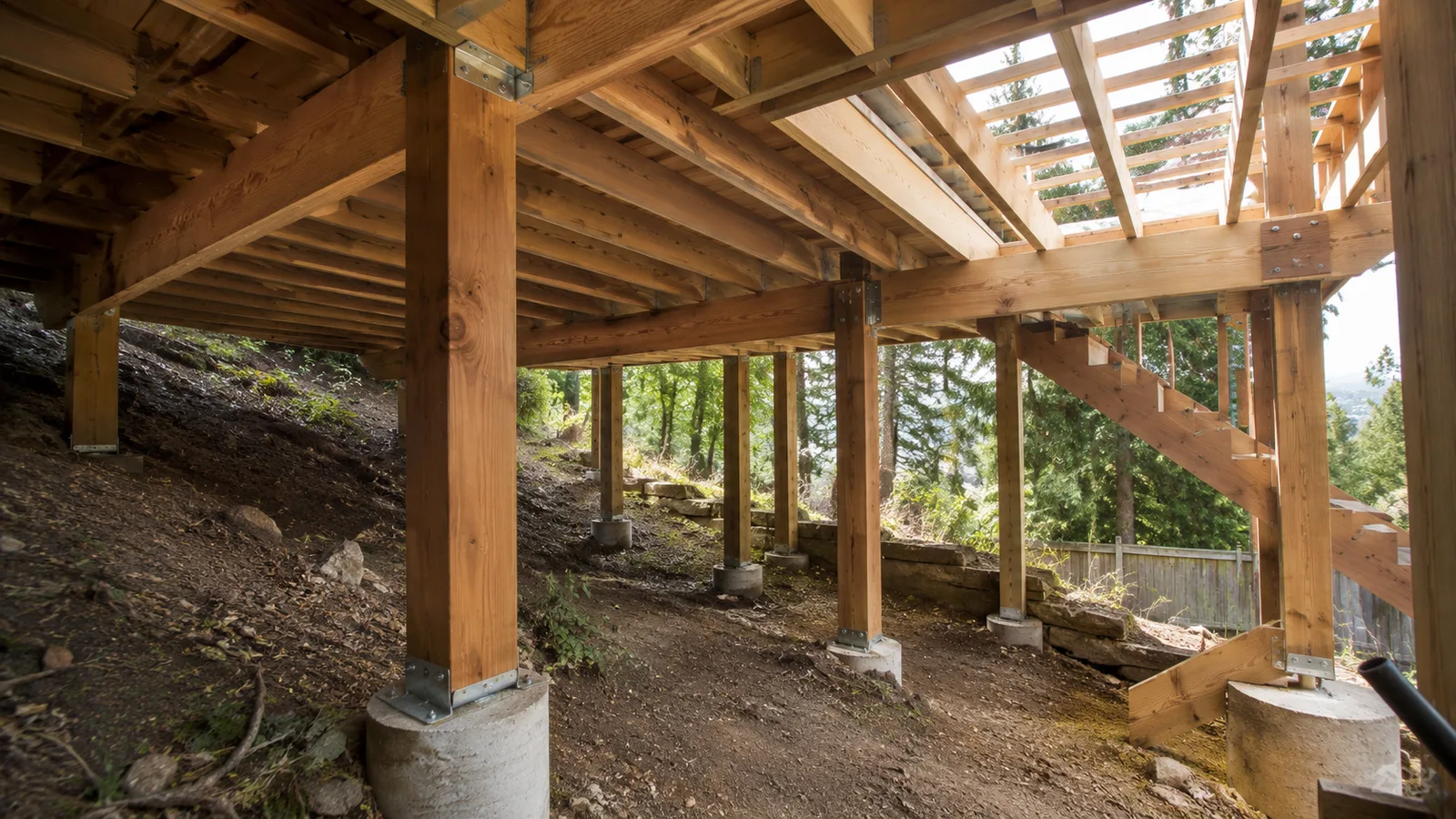
Wood deck detail
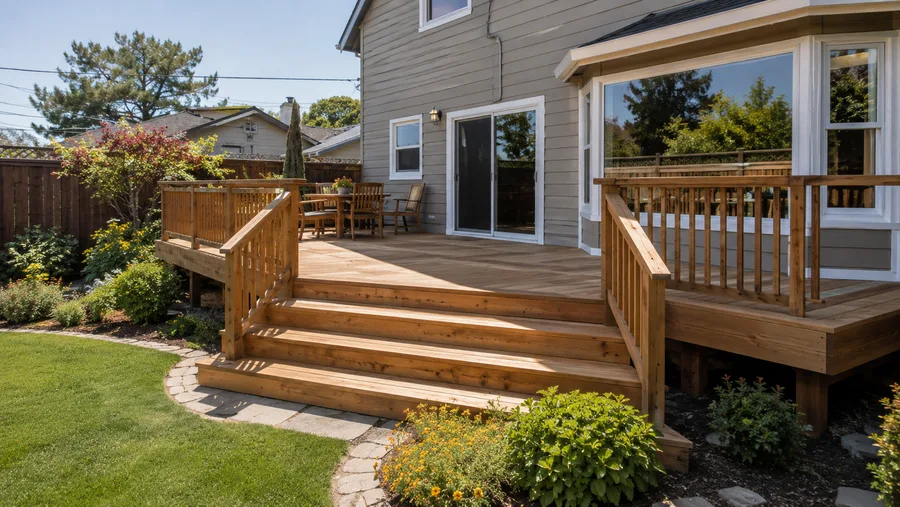
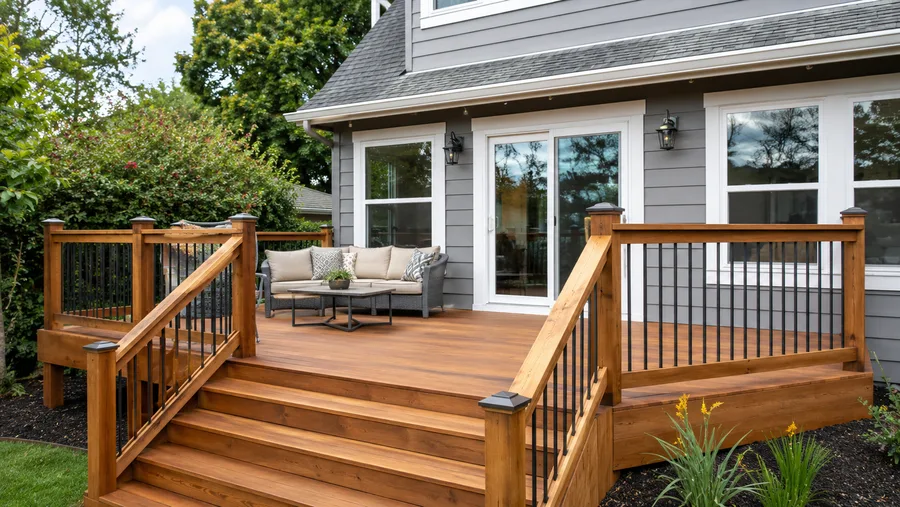
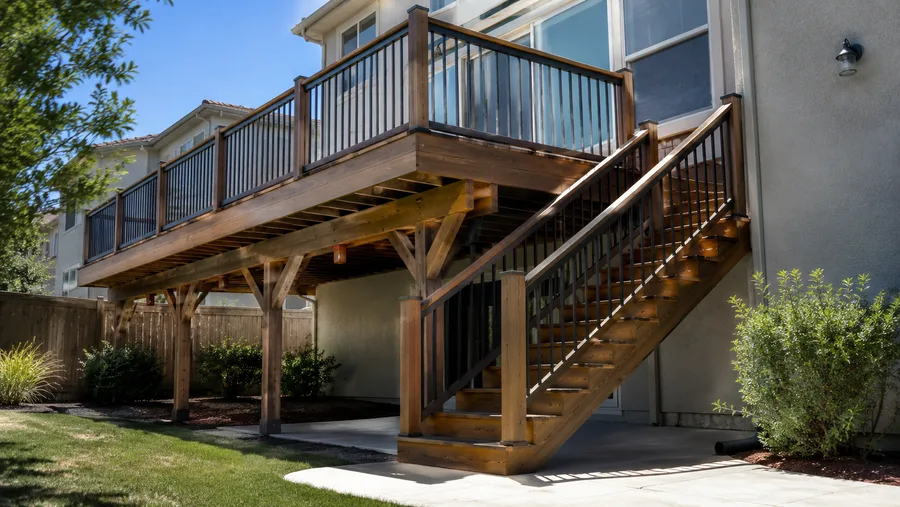
The frame, the flashing and the connections that decide how long a wood deck lasts.
07 Project example
A recent wood deck project
An apartment community was rebuilding an elevated common-area deck that had reached the end of its life after roughly eighteen years. The decking was the obvious problem; the tear-off showed the real one. The original ledger had been fastened without flashing, and water tracking behind it had reached the building’s rim framing — damage that had nothing to do with the deck boards and everything to do with a detail that costs very little at build time. D&B repaired the rim, rebuilt the ledger connection flashed and fastened to current code, taped every joist top, set the posts on metal bases clear of grade, and re-decked in redwood with hot-dipped galvanised hardware throughout. The owner has a deck that can be re-boarded rather than rebuilt next time.
Eighteen years and the boards were the least of it. The connection into the building had been leaking the whole time and nobody had looked. Regional Property Manager · California apartment community
08 Case studies
Recent Projects, Documented
Real commercial properties — what the building needed, what we did, and what it delivered.
 Deck ConstructionCommunity-Wide Elevated Deck Replacement — San RamonEvery elevated deck across a hillside townhome community rebuilt to a single spec in one managed program —…View case study
  Deck ConstructionPatio Deck & Post Base Replacement Across a Bungalow Community — San RafaelDeck-by-deck replacement across a courtyard community, driven by the one detail that failed first — posts set straight…View case study
  Deck RepairEntry Porch Deck Replacement Across a Townhome Row — PleasantonTwenty-four front-door decks rebuilt with air beneath them and planting pulled back from the edge — because these…View case study
 09 Client feedback
What property managers say
We asked three contractors about redwood versus treated. One of them asked how often we re-seal. That question told us more than the other two quotes combined.
The ledger on the old deck had never been flashed. Eighteen years of water into the building, and it wasn’t on any inspection report because you can’t see it.
Tape over every joist before the boards went down. It adds almost nothing and it’s the reason we’ll be re-boarding this deck instead of rebuilding it.
10 FAQ
Wood deck questions
How much does it cost to build a wood deck?
Wood is the least expensive deck to build, and the cost is driven by size, elevation, foundations, species, railings, and stairs rather than by the boards alone. What deserves equal weight is the maintenance cost, because wood needs cleaning and re-sealing every two to three years for as long as you own it. We quote the build and give you the ownership picture alongside it.
What’s the cost per square foot to build a wood deck?
Published rates are boards and labour on an assumed simple deck. They leave out foundations, the ledger connection, joist protection, railings, and stairs — which together usually exceed the decking cost. It’s why two bids at the same per-square-foot rate can differ by a third. Compare scope, not rate.
Which wood should we use?
Pressure-treated is the value choice and structurally the standard for framing regardless of what goes on top. Redwood is locally sourced, naturally decay-resistant, and holds up well in California with modest maintenance. Cedar behaves similarly with a lighter tone. Tropical hardwoods last longest and cost most. On a commercial property the more useful question is usually how much maintenance the property will genuinely do, because that moves the answer more than the species comparison does.
Is wood cheaper than composite over time?
Only where the maintenance actually happens. Wood is far cheaper to build and needs re-sealing indefinitely; composite costs more up front and removes that cycle. Over ten to fifteen years the two converge and often cross. We’ll run the comparison against your actual re-finishing spend rather than a generic figure — and if the honest answer is composite, we’ll say so even though wood is the cheaper quote.
What makes one wood deck last twice as long as another?
Four details, none of them the species. Joist tape and flashing so water off the boards doesn’t sit on the frame; a ledger connection flashed and fastened to current code; metal post bases keeping timber clear of soil; and hardware rated for treated lumber and the local environment. All four are invisible in the finished deck and all four cost little at build time.
What does a small wood deck cost to build?
Less than a large one, but not proportionally. The fixed costs — permits, mobilisation, the ledger connection, engineering where required — don’t shrink with the deck, and railings and stairs are priced by length rather than area. A per-square-foot figure quoted for a small deck will always look worse for that reason. We should also note plainly that our work is commercial, multifamily, and HOA property rather than single-deck residential projects.
How do we choose a wood deck contractor?
Two questions settle most of it. First, are they licensed for structural work — a deck carries people at height and is a structure, not joinery. Second, who owns the flashing and the ledger connection? If framing, waterproofing details, and railings are split across trades, every interface is a place where a failure becomes an argument about whose scope it was. One licensed contractor with a single warranty across the whole assembly removes that.
Does a wood deck need SB 721 or SB 326 inspection?
Yes, where it’s more than six feet above grade at a property with three or more units. Both statutes govern wood-framed exterior elevated elements specifically, which puts wood decks squarely inside them. We build to that standard and document the work for your compliance file.
Are you wood deck builders near me in California?
We’re CSLB-licensed wood deck builders and contractors (#1060736) working across the Bay Area, Central Valley, and Sacramento, exclusively on commercial, multifamily, and HOA properties. Foundations, framing, flashing, decking, railings, stairs, and compliance documentation come from one crew.
11 Start here
Get your wood deck priced properly — free estimate
Tell us about the property, what the deck is for, and how it will be maintained. We’ll assess the site and give you a written estimate covering the structure and the details — plus an honest view on whether wood is the right surface or just the cheapest one.
CSLB #1060736 · 9+ years · Insured & Bonded · Serving the Bay Area, Central Valley & Sacramento