How Much Weight Can a Balcony Hold
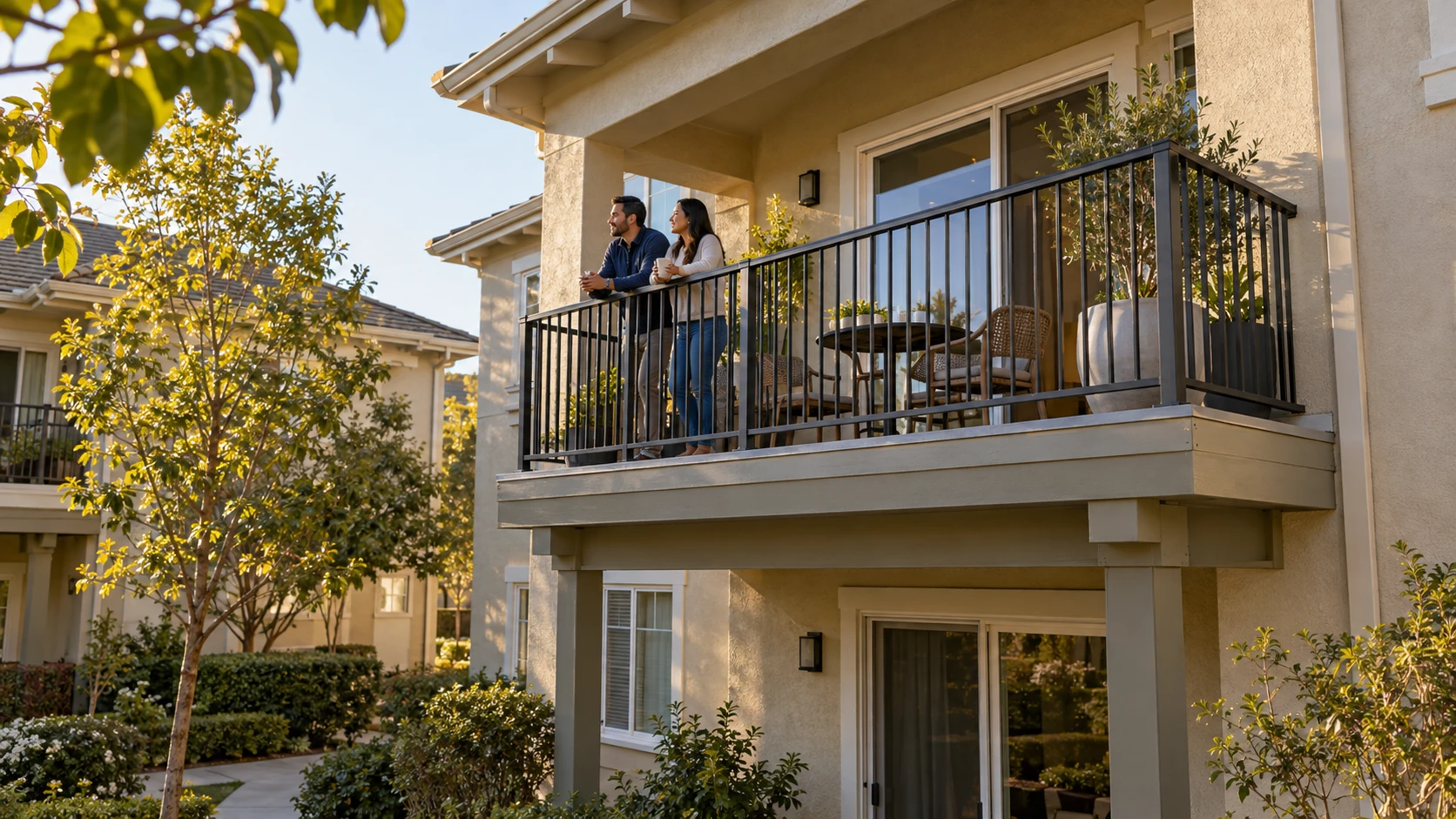
The building code gives the quick answer to how much weight can a balcony hold, and it depends on the type of building. In California, a house balcony is designed for a live load of 40 pounds per square foot. On apartment and condo buildings, the current code usually raises that figure to 60. Those numbers cover people and furniture, and the weight of the structure itself comes on top.
Decks & Balcony inspects, repairs, and rebuilds raised outdoor floors on homes and multifamily buildings. Our crews work from San Jose and the East Bay to Sacramento. This guide explains where balcony weight limits come from and how the structure carries its load. It also covers concrete slabs, the heaviest items owners put outside, and the rules for condos and rentals.
Balcony Live Load in California Building Codes
Engineers split the weight on an outdoor floor into two parts. Live load is everything that moves or can be moved: people, furniture, grills, and planters. For houses, the state residential code puts the balcony live load at 40 pounds per square foot. It uses the same value for decks.
Apartment buildings, condos, and hotels are designed under the California Building Code instead. There, the floor must carry 1.5 times the live load of the area it serves, up to 100 pounds per square foot. Private apartment rooms are designed for 40. That puts the typical apartment balcony weight capacity under the current code at 60 pounds per square foot.
Dead load is the weight of the structure itself, including joists, sheathing, the surface, and the guard. The deck span tables in the residential code assume 10 pounds per square foot for a wood frame with boards. Tile set in mortar weighs more, so an engineer adds it to the dead load before sizing the framing.
| Load type | House (residential code) | Apartment or condo (building code) |
|---|---|---|
| Live load on the floor | 40 pounds per square foot | 1.5 times the area served, usually 60 pounds per square foot |
| Example: 6 by 10 foot floor (60 square feet) | 2,400 pounds of live load | 3,600 pounds of live load |
| Dead load assumed in wood deck tables | 10 pounds per square foot | Set by the engineer for the actual materials |
| Guard design load at the top rail | A single 200-pound force | A single 200-pound force or 50 pounds per foot of rail |
What 40 Pounds per Square Foot Means in Practice

Forty pounds per square foot can sound small, but it applies to every square foot at the same time. On the 60-square-foot example above, it adds up to 2,400 pounds spread evenly across the floor. That equals about twelve adults at 200 pounds each, standing apart from one another.
These figures are design minimums, not a promise for every structure. They show how much weight can a balcony hold when it was built to code and is still in good condition. Older buildings were designed under the rules of their time. Hidden damage can also lower the real capacity well below the original design.
How Are Balconies Supported
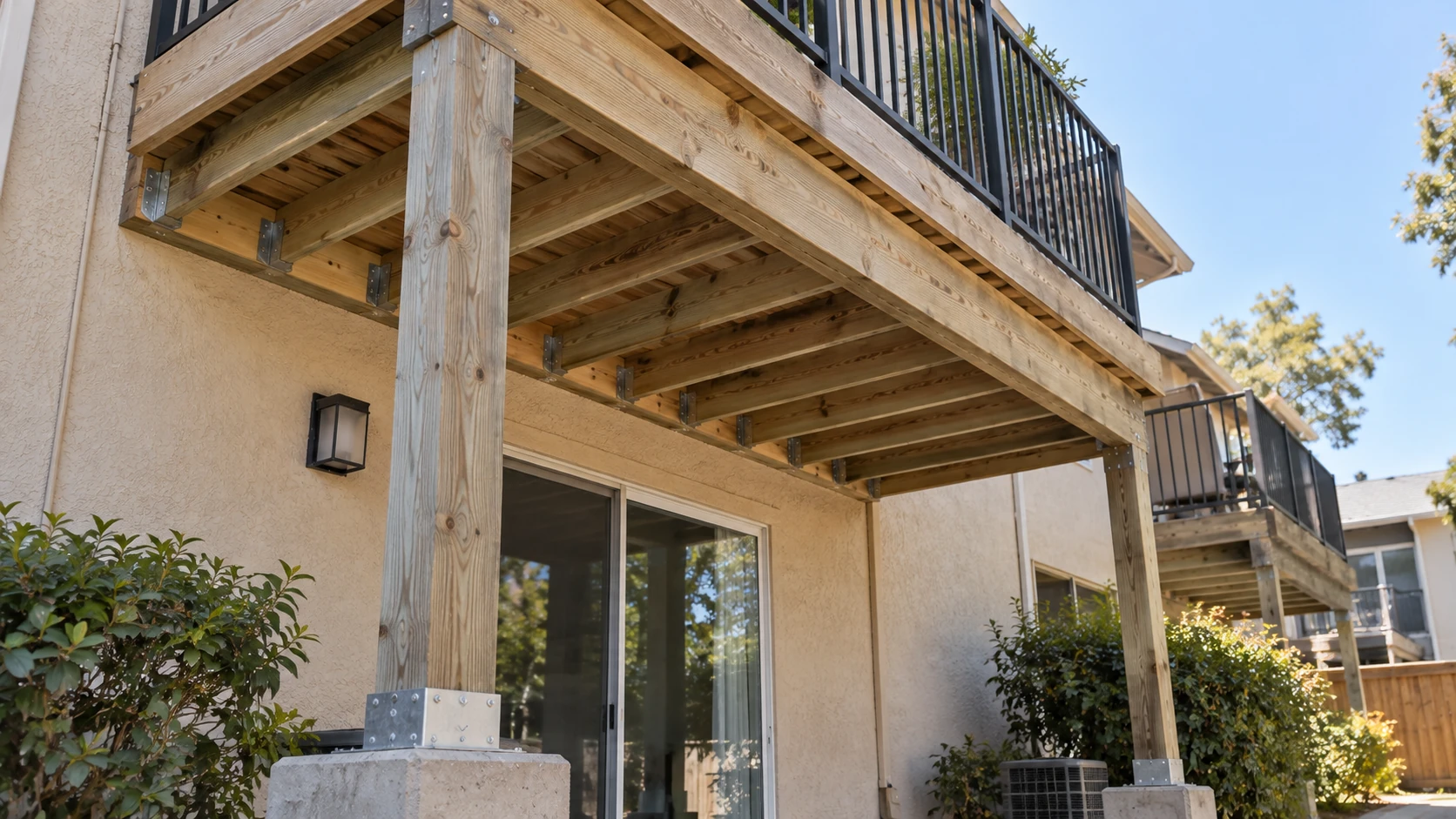
Every raised floor sends its load to the ground through a chain of parts. A cantilevered design uses joists that run out past the wall from the floor system inside the building. A supported design sits on posts and a beam, much like a raised deck. Our deck building crews frame that type the same way. Some smaller platforms hang from steel brackets or rods fixed to the wall.
The load path is just as important as joist size. Weight moves from the surface to the joists and then to a beam, a ledger, or the floor framing. From there it reaches the foundation. Knowing how are balconies supported on your building tells an inspector where to look. The weakest connection, not the strongest joist, sets the real limit.
The 2015 collapse at the Library Gardens apartments in Berkeley showed how this works. Thirteen people were standing on the platform, and the expert report found that their weight was well within the design limits. Dry rot had already destroyed the cantilevered joists. By that night, the answer to how much weight can a balcony hold had dropped far below the number on the plans.
How Much Weight Can a Concrete Balcony Hold
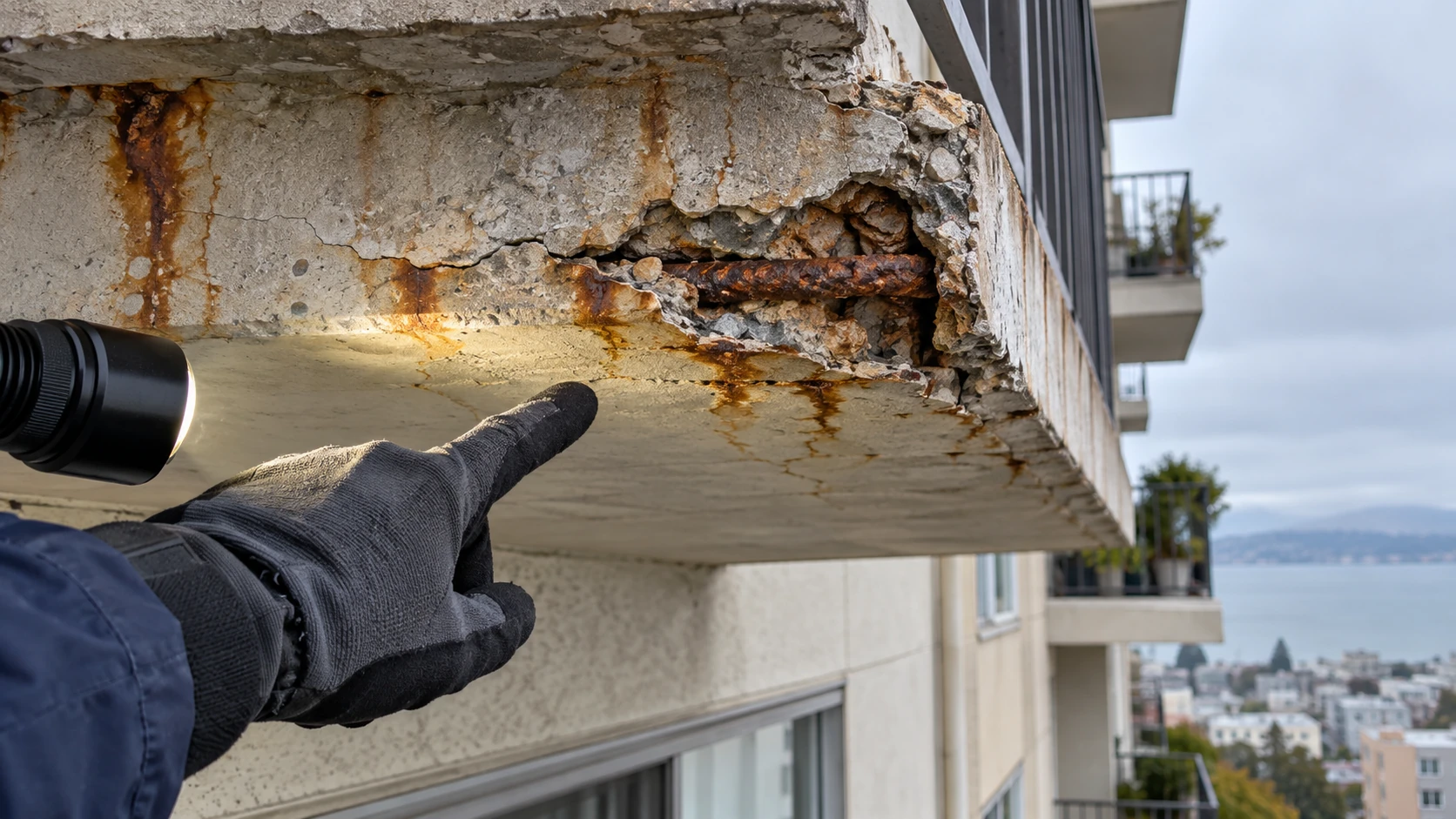
Concrete balconies are common on mid-rise and high-rise buildings in San Francisco, Oakland, and San Jose. They are designed for the same code loads as wood ones. The slab is reinforced with steel bars, and the structural engineer sizes its thickness and reinforcement. On paper, how much weight can a concrete balcony hold has the same answer. It is the live load in the code for that building type.
Concrete loses capacity in a different way. Water that reaches the steel causes rust, and rust expands and cracks the concrete around it. Rust also lowers how much weight can a balcony hold, because the corroded bars lose steel. Rust stains, cracks along the edges, and pieces of concrete falling off are signs that an engineer needs to check the slab.
California’s inspection laws for these structures focus on wood. SB 721 and SB 326 cover elements higher than six feet. Those elements must rely in whole or in substantial part on wood. A slab built entirely of concrete and steel falls outside those programs, as our comparison of SB 721 and SB 326 explains. Mixed designs, such as a concrete topping over wood joists, can still fall inside them.
What Weighs the Most on a Balcony
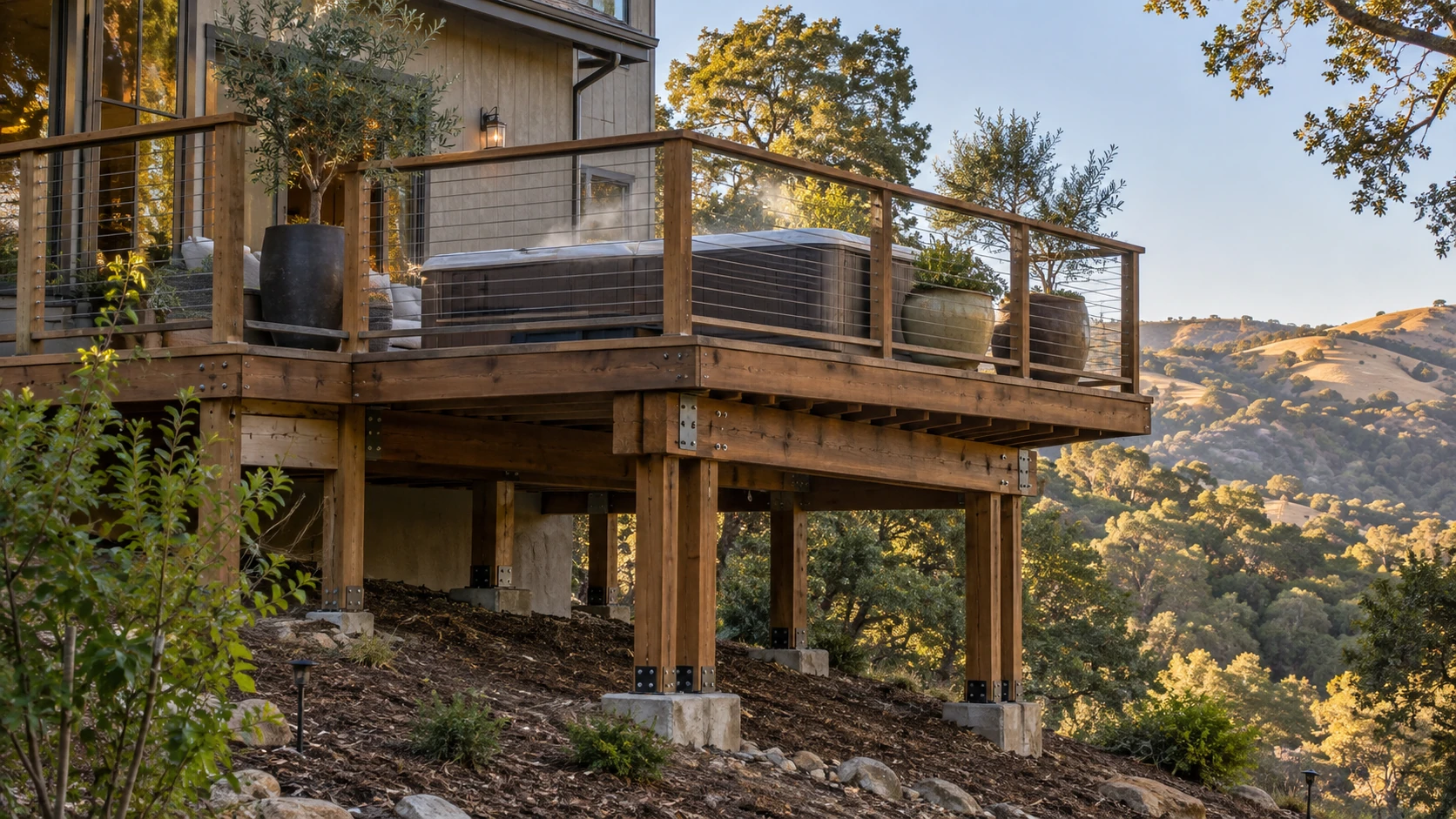
People rarely overload a sound structure by standing on it. The risk comes from heavy items that stay in one spot and press on a small area day after day. These are the items most likely to exceed balcony weight limits:
- Hot tubs, spas, and large water features.
- Large planters and raised beds filled with wet soil.
- Outdoor kitchens, stone counters, and pizza ovens.
- New tile or stone pavers laid over an existing surface.
- Heavy storage, such as appliances, safes, or exercise equipment.
Water shows the problem clearly, because it weighs about 8.34 pounds per gallon. A hot tub holding 300 gallons carries about 2,500 pounds of water alone. Spread over a 7 by 7 foot footprint, that is roughly 51 pounds per square foot. The shell and the bathers come on top of that. It already exceeds the 40-pound design value of a house, which is why a hot tub needs an engineer’s review first.
Location on the floor also matters. On a cantilevered design, a heavy item near the outer edge stresses the joists more. The same item placed near the wall puts less strain on them. Moving a planter does not raise the balcony live load the structure was designed for. It can, however, reduce the strain on a weak connection.
Parties are the other common case. Code loads assume weight spread across the whole floor, while guests often gather along the guard to look at the view. Crowds rarely exceed balcony weight limits on a sound structure. On a damaged one, they concentrate stress at the edge.
Not sure how this applies to your building?
A licensed contractor answers — free, same-day callback.
Condo Balcony Weight Limit and Apartment Rules
Many HOAs set their own rules for what owners may place outside their units. A condo balcony weight limit may appear in the CC&Rs or house rules. It often takes the form of a ban on hot tubs, large planters, or tile installations. When the documents are silent, the association can ask its engineer for a letter based on the original drawings.
Condo associations had to complete their first SB 326 inspection by January 1, 2025, and must repeat it every nine years. A licensed structural or civil engineer or architect inspects a random sample of elements. Our SB 326 inspection reports note overloaded areas along with water damage and failed waterproofing.
Renters usually find the rules for outdoor space in the lease. Building owners under SB 721 must keep inspection reports for two cycles. They must also give them to buyers when the property is sold. Those reports are the best record of the apartment balcony weight capacity in practice, because they describe the actual condition of the framing.
How to Check Your Balcony Before Adding Weight
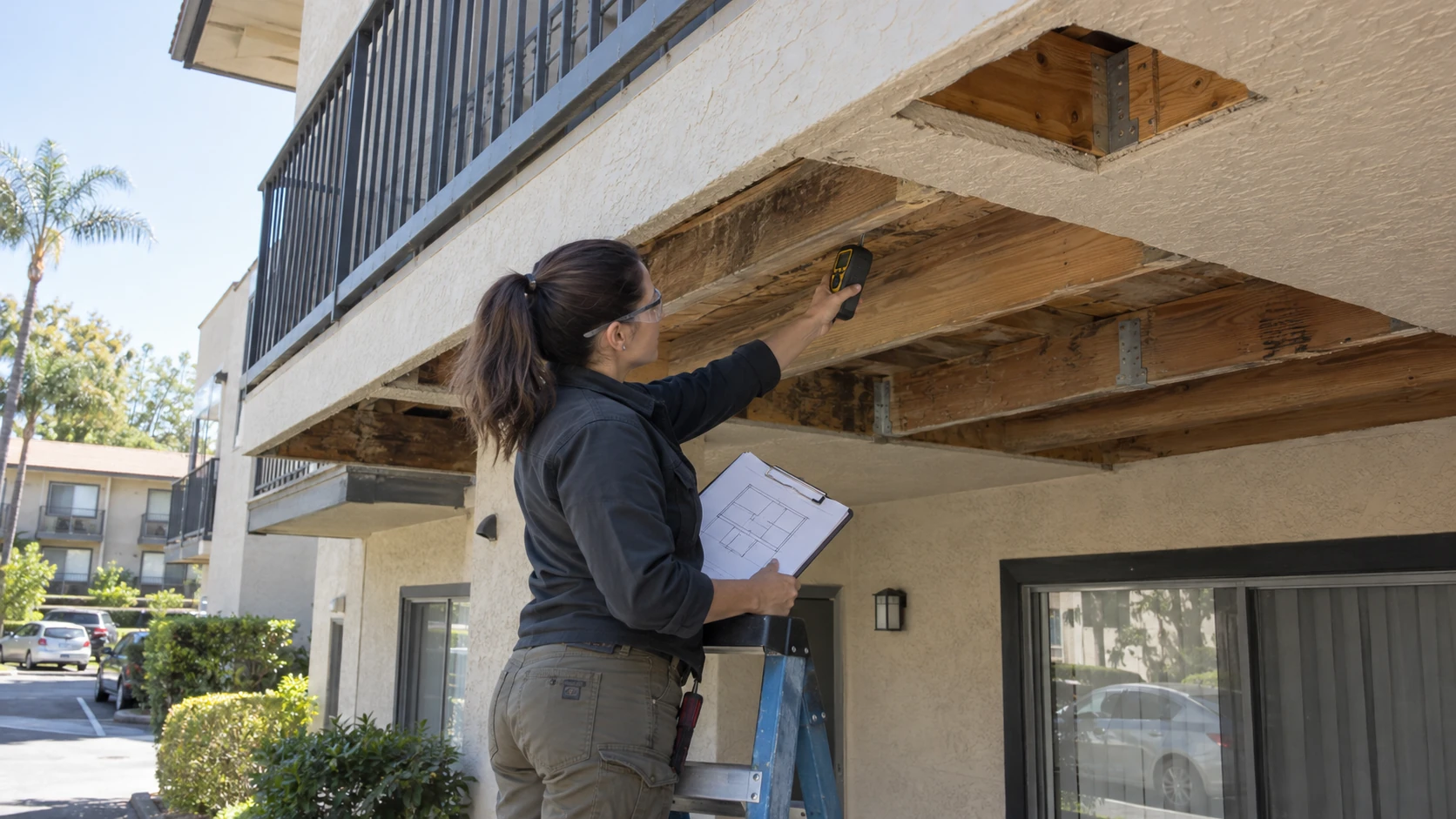
Before placing anything heavy outside, find out what the structure was built for and what shape it is in now. Both answers are needed, because a strong design can still be weakened by water damage. Owners who ask how much weight can a balcony hold for a specific project can follow these steps:
- Request the original permit drawings from the city building department.
- Read the latest SB 721 or SB 326 inspection report, if the building has one.
- Measure the floor area and list the weight of each heavy item you plan to add.
- Look for sagging, a bouncy floor, cracks, rust stains, or gaps at the wall.
- Hire a licensed engineer to review any hot tub, outdoor kitchen, or tile project.
- Complete any repairs before the new weight goes on.
Several warning signs point to water damage inside the frame. Stains on the ceiling below, soft spots, and peeling coatings are covered in our guide to the signs a balcony needs waterproofing. If any of them appear, keep heavy items off until the structure has been checked.
Repairs often restore the original capacity. Rotted joists can be replaced or sistered, ledgers can be reattached, and failed waterproofing can be rebuilt. Our balcony repair work starts with finding where the load path is weak, so the structure can again carry its design balcony live load.
Only a licensed professional can put a capacity in writing for a specific structure. Permit calculations are prepared by a licensed engineer or architect, based on the actual framing and its condition. For a hot tub or a stone floor, that letter is the reliable answer to how much weight can a balcony hold on your property.
Get Your Balcony Inspected or Reinforced in Northern California
Our inspectors check framing, connections, waterproofing, and guards on single-family houses and multifamily properties. Each inspection shows the condition that decides how much weight can a balcony hold today and what repairs would restore it. For HOAs and rental owners, we also confirm which elements fall under state inspection laws.
Owners planning a hot tub, an outdoor kitchen, or a tile floor get a clear answer before buying anything. If the framing needs reinforcement, the scope shows each item and the order of work. If it does not, you get that answer in writing.
Ask for a free balcony assessment before adding a hot tub, planters, or a new surface. Our office returns calls on the same business day. An itemized written scope follows within five business days, listing the work your balcony weight limits require.

Related service
Structural Assessment
Licensed, insured and SB 721/326-fluent — from assessment to sign-off, one accountable team.
About the author
Tom Marsden
Retired Property Inspector · Reviewed under CSLB #1060736
Tom Marsden is a retired property inspector with 20 years of experience. Starting as a general contractor, he transitioned to inspections, specializing in multi-family dwellings. Known for his straightforward approach and ability to simplify complex regulations, Tom became a respected figure in the local property management community. Now retired, he mentors new inspectors and writes about building safety, focusing on balcony inspections and maintenance. In his free time, Tom enjoys restoring vintage sailboats and volunteering at the local community center.
More from Tom Marsden

