How to Waterproof a Balcony
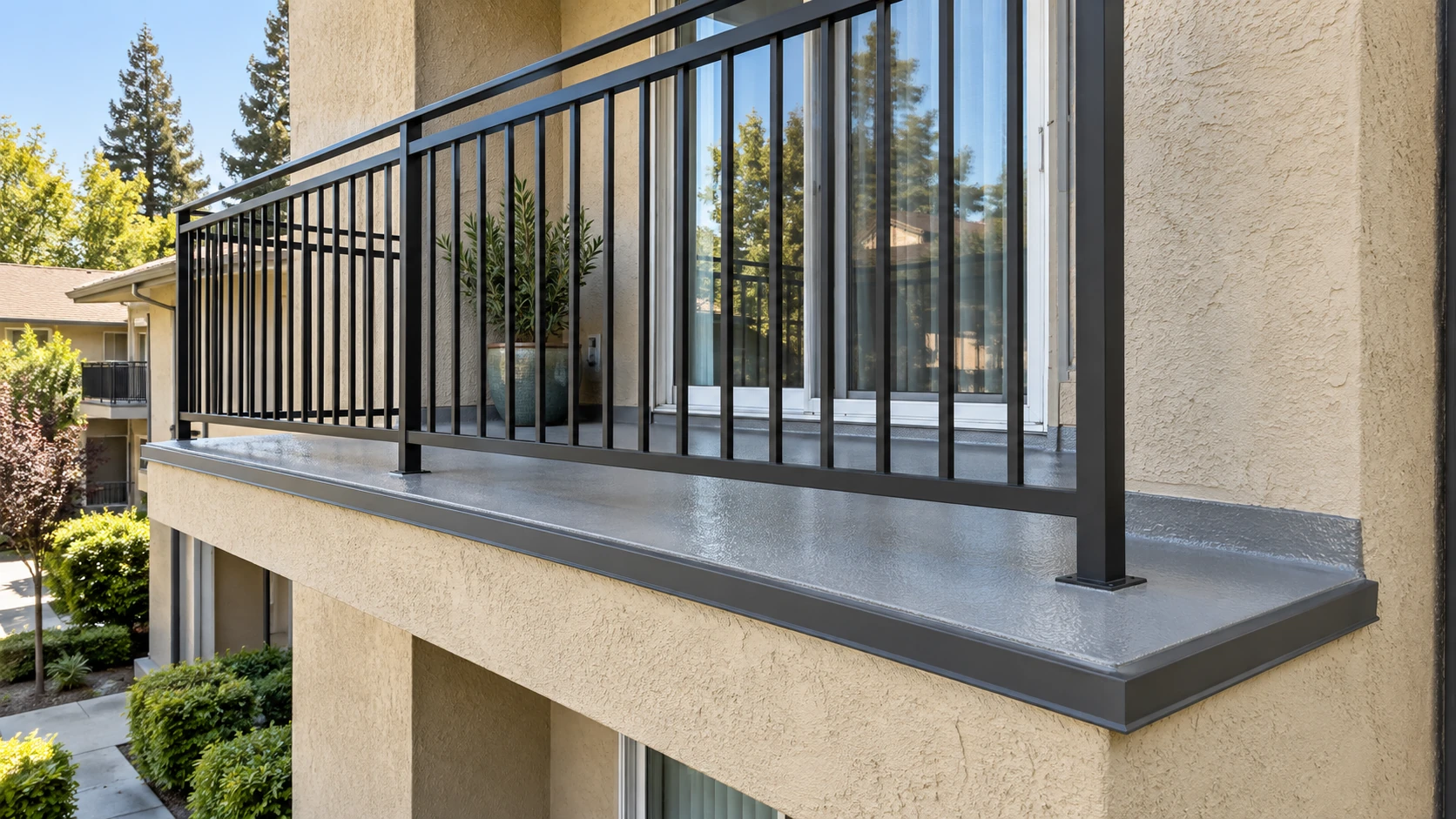
Learning how to waterproof a balcony starts with one fact: on many buildings, the surface people walk on also works as the roof of the space below. Water that gets past it reaches the framing, the wall, and often the room below. The right method depends on what the deck is built from and what sits under it.
Decks & Balcony repairs and seals raised decks and walkways on houses, condos, and rental buildings across Northern California. This guide covers exterior balcony waterproofing from the choice of system to the final drainage test. It also explains tile, wood, and concrete surfaces and the inspection laws that apply to them.
Why Exterior Balcony Waterproofing Fails in California
Most of the state has no hard freeze, so ice is rarely the problem. Our guide to how long deck membranes last points to the sun instead. Long dry summers dry out the membrane, and it cracks when the winter rains arrive. The same guide notes that waterproof balcony coatings on south- and west-facing decks need renewal sooner.
Leaks rarely start in the middle of the floor. They start where the surface meets something else: the wall, the door threshold, a post, or a drain. When waterproofing a balcony deck, those joints get the most attention, because a sound coating with an open edge still lets water into the frame.
State law counts this protective layer as part of the structure. SB 721 lists the elements it covers: flashings, membranes, coatings, and sealants that protect load-bearing parts. SB 326 inspections for condos look at the same layer, so failed balcony waterproofing systems show up in both reports.
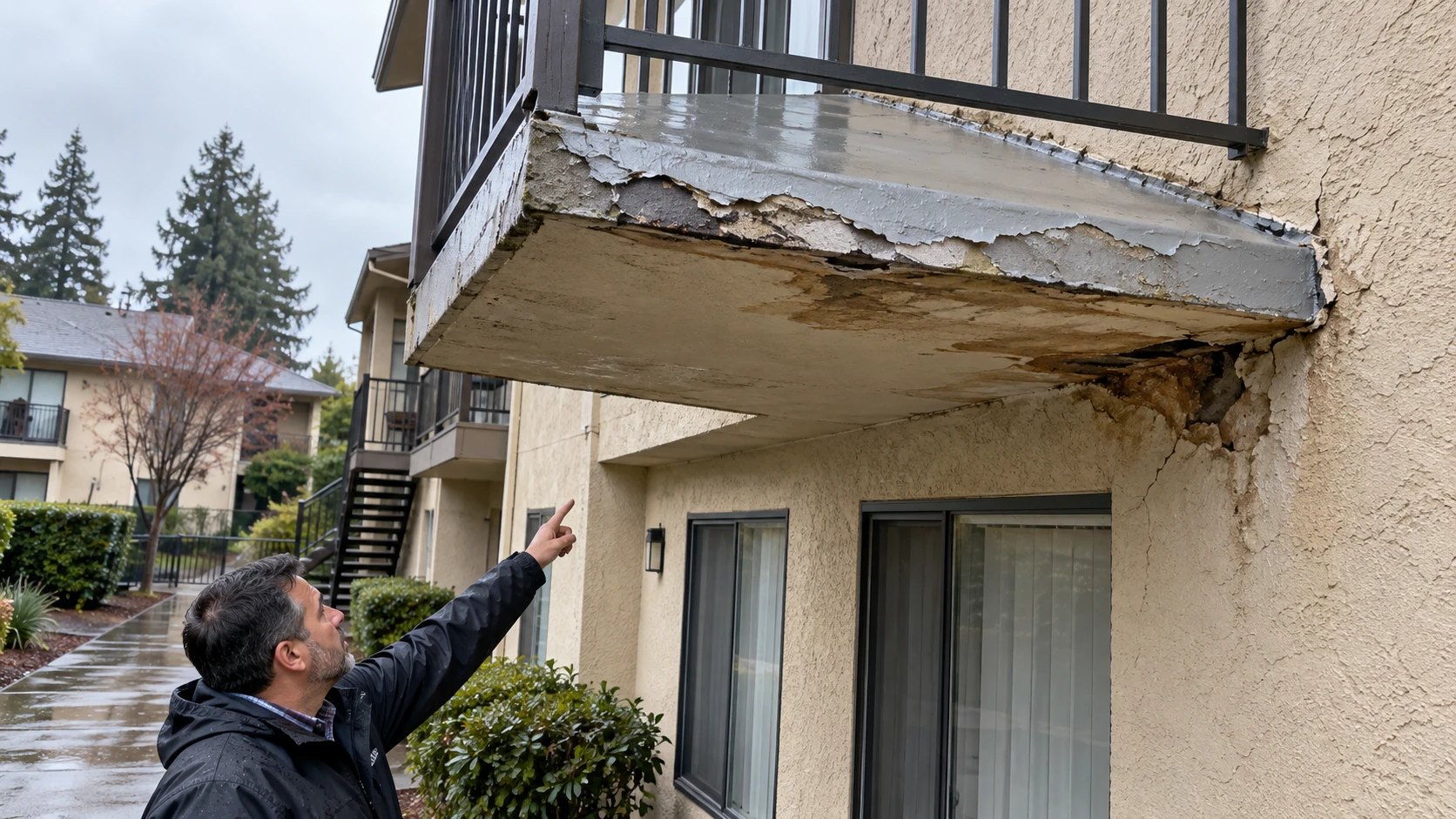
Owners usually start asking how to waterproof a balcony after they see damage below it. Common signs are stains on the ceiling under the deck, soft spots underfoot, and peeling or blistered coating. On concrete, rust stains and white mineral deposits at cracks point to water moving through the slab.
Balcony Waterproofing Systems Compared
Several types of membrane are used on California buildings, and each suits a different deck. The table compares the main waterproof balcony flooring options by how they work and how long they typically last. The service life figures come from our lifespan guide and assume correct installation and normal care.
| System | How it works | Typical service life | Where it fits |
|---|---|---|---|
| Sheet membrane | Factory-made sheets rolled out and sealed at the seams | 20 to 25 years | Simple shapes with few penetrations |
| Liquid-applied membrane | Coats rolled or troweled on in layers | 10 to 15 years | Complex shapes, posts, and corners |
| Multi-layer reinforced system | Liquid layers with reinforcing mesh | 15 years or more | High traffic and multifamily walkways |
| Cementitious coating | Cement-based layers over metal lath | 5 to 7 years | Hard surfaces with little movement |
| Membrane under tile or pavers | Hidden layer below the finish surface | Depends on the membrane chosen | Tile, stone, or pedestal pavers |
Most waterproof balcony coatings used as walking surfaces are tested as complete systems. Many carry evaluation reports under the ICC-ES criteria for walking decks, known as AC39. The report lists the approved substrate, the layers, and the installation limits the inspector will check.
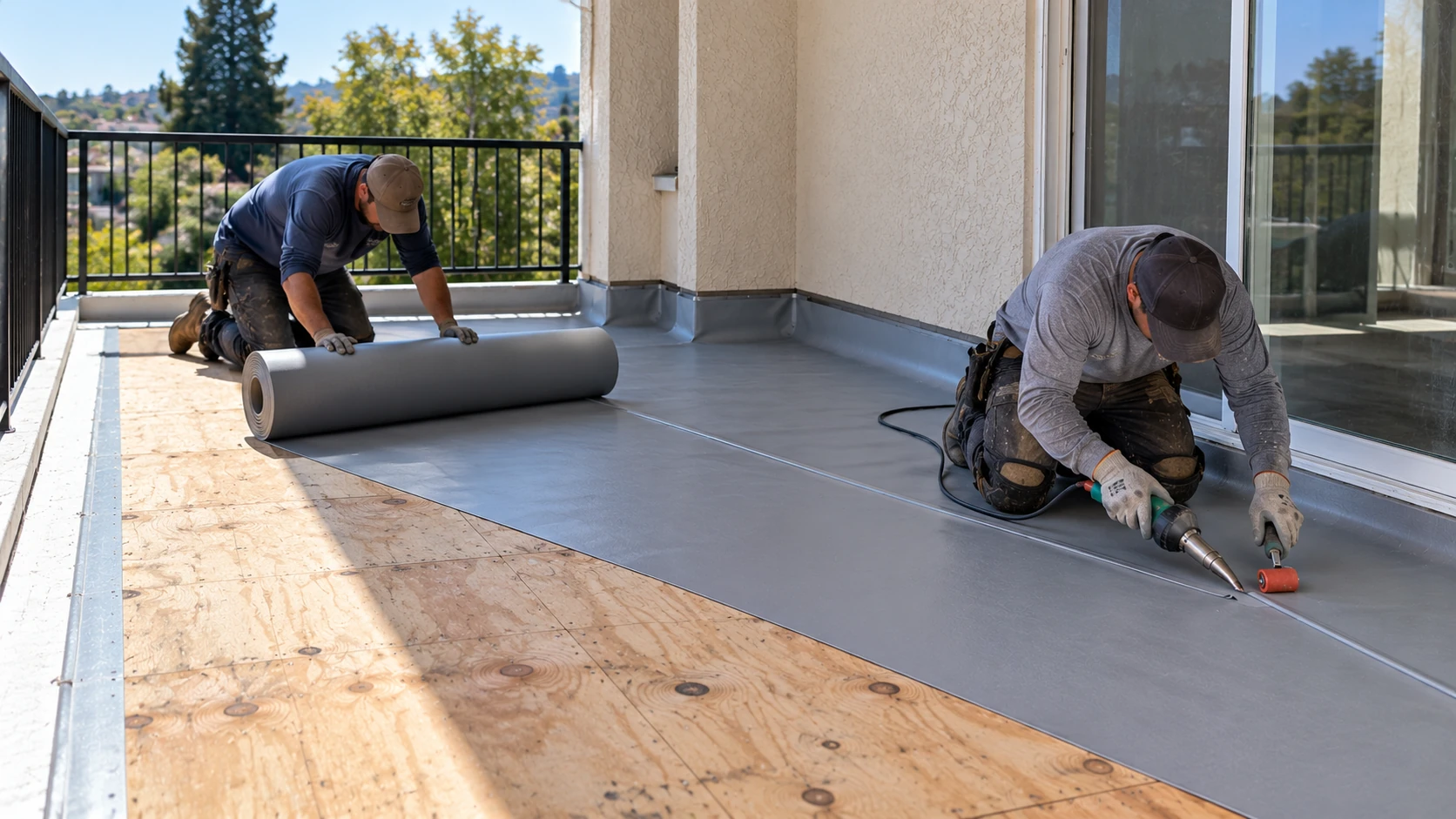
A sheet product can also serve as the finished surface. As a waterproof balcony floor covering, it is laid with sealed seams and turned up the wall at the edges. Our deck waterproofing work matches the system to the shape of the deck and the traffic it carries.
Some owners want stone or wood on top instead of a coated surface. In that case, how to waterproof a balcony floor comes down to the hidden membrane below the finish. Pavers sit on pedestals, or boards sit on sleepers, and rainwater runs underneath them to the drain.
How to Waterproof a Balcony Floor Step by Step
Sequence matters more than the brand of coating. Each layer protects the one under it, and a skipped step usually shows up as a leak within a few seasons. This is how to waterproof a balcony deck the way we do it on our projects:
- Inspect the surface, flashing, and drains, and take moisture readings.
- Remove failed coatings, tile, or sheet goods down to the substrate.
- Replace rotted framing or sheathing and repair cracked concrete.
- Correct the slope so water runs away from the wall.
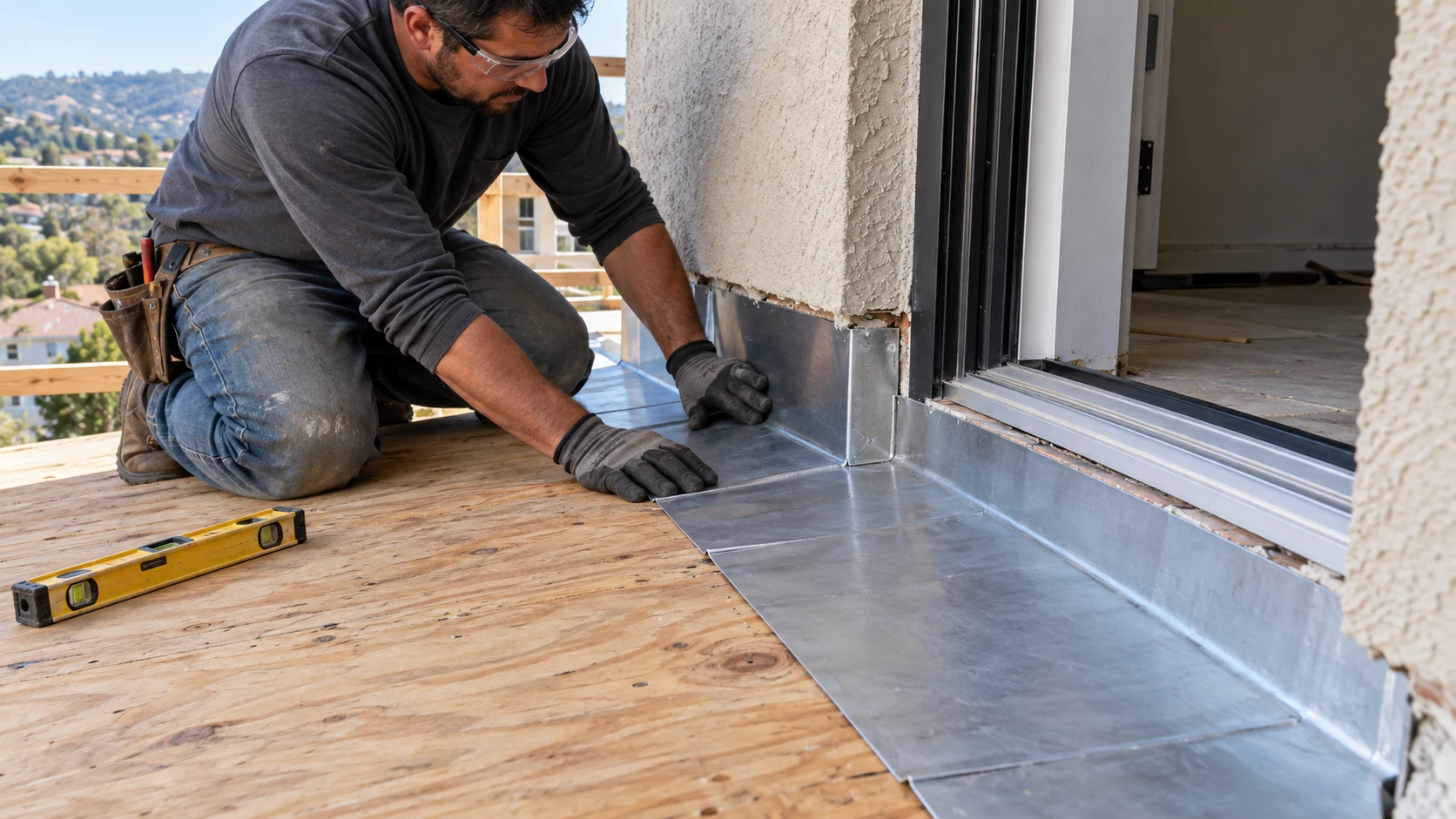
- Install flashing at the wall, door threshold, edges, posts, and drains.
- Apply the membrane or coating exactly as the manufacturer specifies.
- Install the finish surface and test the drainage with water.
- Hand over photos and records for the SB 721 or SB 326 file.
Weather controls the schedule. One widely used deck system, for example, may only be installed in dry weather between 60°F and 95°F, with no rain expected. For anyone planning how to waterproof a balcony in Northern California, the dry months from late spring to fall are the usual working window.
Slope is checked before any membrane goes down. Walking deck systems and exterior tile guidelines commonly call for at least 1/4 inch of fall per foot. Knowing how to waterproof a second floor balcony also means protecting the room below, so the old surface comes off in sections while the units stay occupied.
A water test and records finish the job. After the coating cures, the crew floods or sprays the surface and checks that water reaches the edge or drain. On rental and HOA buildings, waterproofing a balcony deck also means saving photos of each layer for the next SB 721 or SB 326 inspection.
Wood and Concrete Decks Need Different Methods
The steps above apply to every deck, but the base material changes the details. Wood framing flexes and can rot, while concrete stays rigid and can crack and rust inside. That is why the substrate is checked first and the membrane is chosen to match it.
Wood-Framed Decks and Plywood Sheathing
A wood deck moves with temperature and moisture, so the membrane must flex with it. Learning how to waterproof a wooden balcony starts with the sheathing. One evaluation report, for example, requires exterior plywood at least 5/8 inch thick with all edges blocked.
The wall line is a common failure point on wood decks. On a 32-unit Sacramento apartment project, the old coating stopped at the stucco without a proper termination. Water ran into the wall for years and rotted the framing there. The fix began with rebuilding that joint and adding a termination that sheds water.
Rotted joists and sheathing must be replaced before any membrane goes down. Where the damage is extensive, our deck building crews reframe the platform first. Only then does waterproofing a balcony deck make sense, because no coating can protect wood that has already lost its strength.
Waterproofing Concrete Balconies
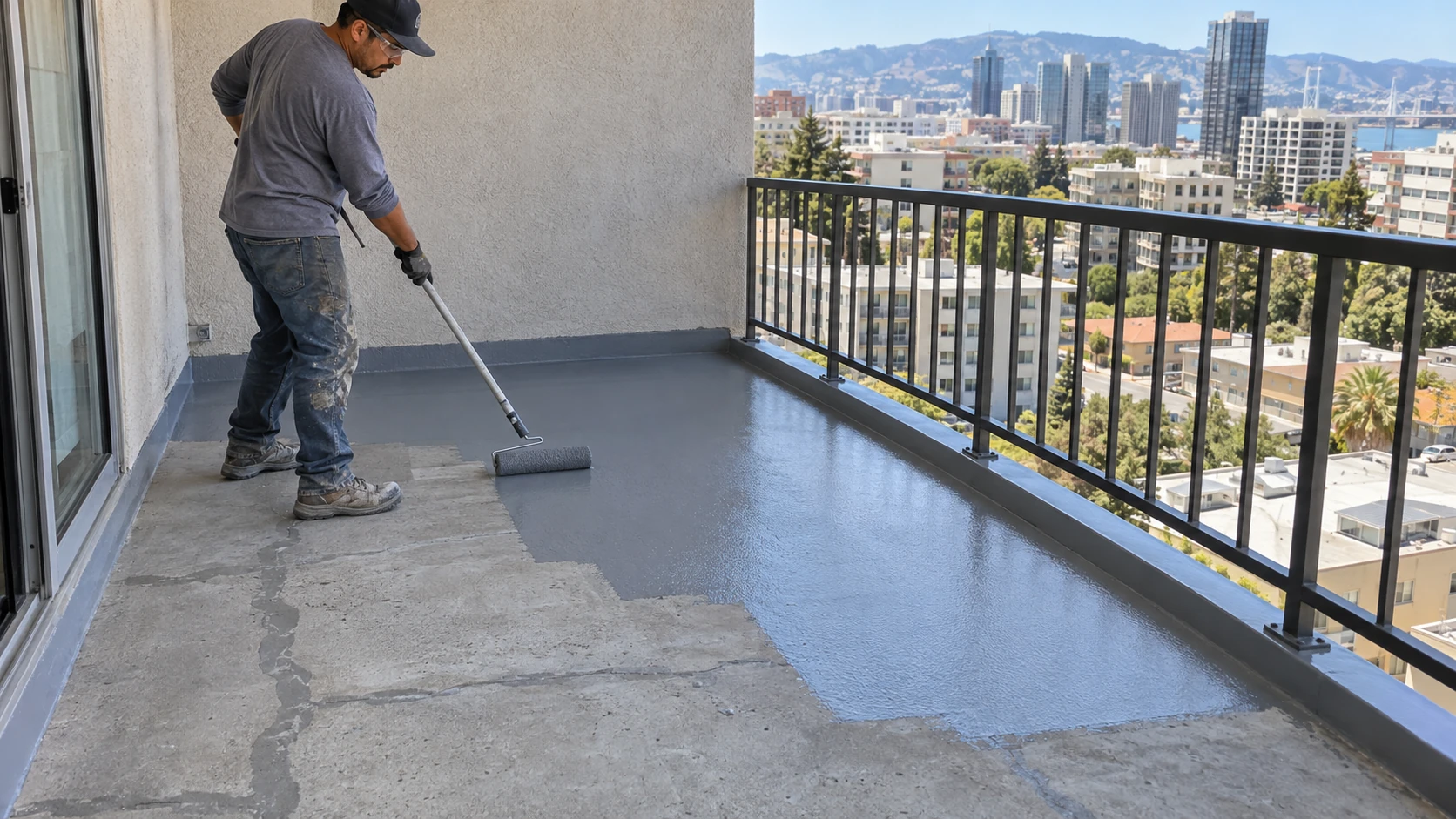
Concrete does not rot, but water still damages it. Moisture reaches the steel reinforcing bars, the bars rust, and the rust cracks the slab from inside. Waterproofing concrete balconies therefore starts with sealing cracks and repairing any spalled areas.
Clear penetrating sealers are a common choice for sealing balcony floor slabs. They repel water and leave the surface looking the same. Their makers note, however, that they will not stop water through cracked concrete or failed flashing.
Owners asking how to seal balcony floor concrete should match the product to the use. A slab over open air may only need a sealer, kept on a reapplication schedule. A slab over a room or garage needs a full membrane, the same as a wood deck.
When waterproofing concrete balconies over living space, the edges matter as much as the slab. The membrane turns up the wall, the door threshold gets flashing, and drains are cleared and tested before the coating goes on. Cracks that open again after repair are a sign of movement that an engineer should check.
Not sure how this applies to your building?
A licensed contractor answers — free, same-day callback.
Balcony Tile Waterproofing
Tile and grout do not stop water on their own. The protection comes from a membrane installed under the tile, sloped to drain and tied into the edges. For how to waterproof a balcony for tile, industry guidance points to bonded membranes meeting the ANSI A118.10 standard and rated by the maker for exterior use.
An existing tiled deck is harder to fix. Sealing the grout from above does not replace a missing or failed membrane underneath. In most cases, how to waterproof a tiled balcony means removing the tile, repairing the substrate, installing the membrane, and setting new tile.
Movement joints are part of the system. Exterior tile guidelines require them, with additional joints on raised decks. Without them, the tile cracks as the structure moves, so planning the joints is part of how to waterproof a balcony floor with tile.
How Much Does It Cost to Waterproof a Balcony
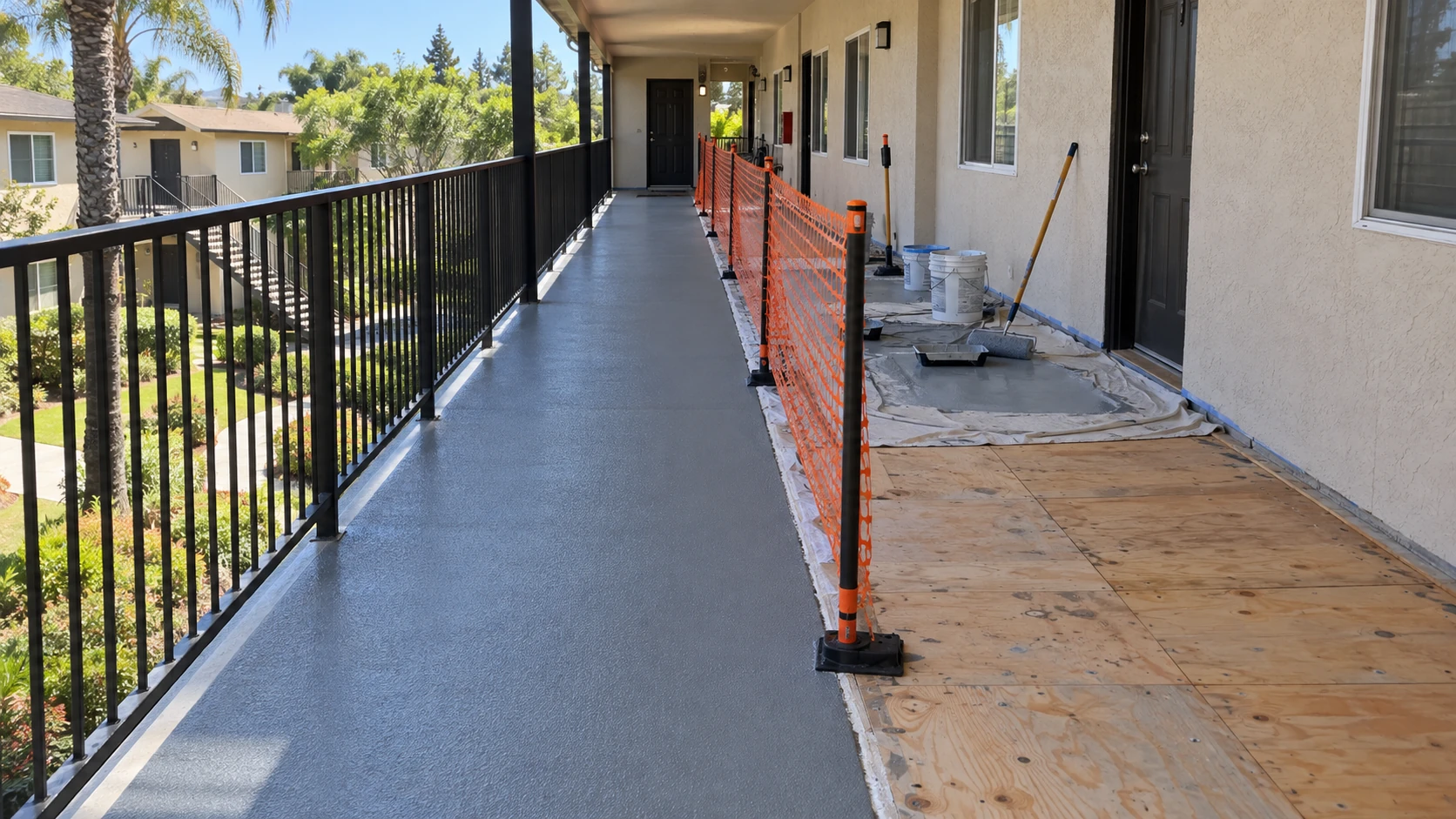
The price depends far more on the condition underneath than on the coating itself. Two decks of the same size can need very different work once the old surface comes off. We price exterior balcony waterproofing only after a site assessment. These items affect the total the most:
- Size of the deck and the number of units on the building.
- Height and access for crews and materials.
- Rotted framing, sheathing, or cracked concrete found during removal.
- The system chosen and the finish surface on top.
- Removal of old tile or multiple coating layers.
- Stucco and siding work at the wall and door flashing.
- Phasing on occupied buildings, so residents keep access.
Time on site is easier to estimate. A typical deck takes one to four days, depending on repairs and curing times. The waterproof balcony flooring options you choose also matter, because liquid layers need drying time between coats. Our membrane installation crews phase larger buildings so residents can stay in their units.
Regular care keeps the cost down later. Our lifespan guide suggests a yearly check, ideally before and after the rainy season, along with clear drains and timely resealing of joints. With that care, waterproof balcony coatings are more likely to reach the full service life their makers expect.
Schedule a Leak Inspection and Membrane Repair in Northern California
We inspect the surface, the flashing, and the framing before specifying a system. We explain in writing what failed, what the repair involves, and how to waterproof a balcony of your type so it lasts. For rental buildings and HOAs, we also prepare the records the next state inspection will need.
Schedule a free leak assessment for your property. Our office returns calls within the business day. An itemized scope in writing arrives within five business days, covering the repairs and the exterior balcony waterproofing system we propose.

Related service
Balcony Waterproofing
Licensed, insured and SB 721/326-fluent — from assessment to sign-off, one accountable team.
About the author
Tom Marsden
Retired Property Inspector · Reviewed under CSLB #1060736
Tom Marsden is a retired property inspector with 20 years of experience. Starting as a general contractor, he transitioned to inspections, specializing in multi-family dwellings. Known for his straightforward approach and ability to simplify complex regulations, Tom became a respected figure in the local property management community. Now retired, he mentors new inspectors and writes about building safety, focusing on balcony inspections and maintenance. In his free time, Tom enjoys restoring vintage sailboats and volunteering at the local community center.
More from Tom Marsden

