How to Care for Decking
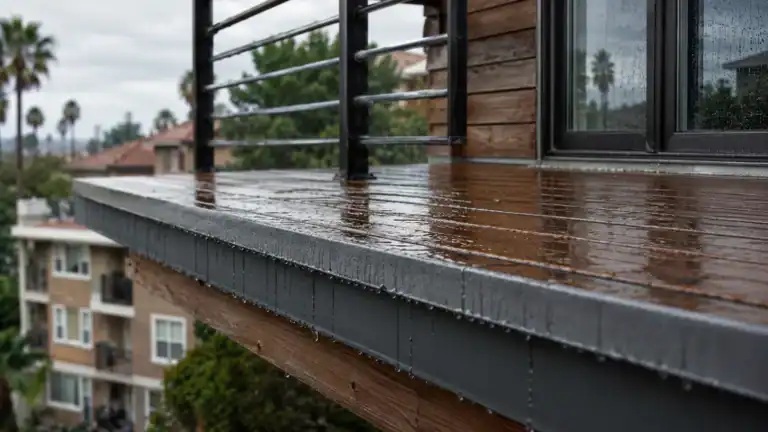
Every deck is on a maintenance schedule whether anyone writes one down, and the only question is who sets it: the owner or the weather. Low maintenance decking is a real category and a good one. The phrase describes the boards rather than the structure, and the structure is the part that fails.
What follows is the working version of maintenance of decking in Northern California. What each material needs, how often, and what the frame needs regardless of the surface. Also where owners lose decks by doing nothing for six years. Decks & Balcony repairs the result of that gap often enough to write the guide.
What Low Maintenance Decking Actually Means
Composite and PVC removed the sanding and staining cycle permanently. That is a genuine change. On a property that has been refinishing wood every few seasons, it is the whole argument for switching. What it did not remove is water, debris, movement, and the wood frame carrying all of it.
No maintenance decking does not exist, in any material, at any price. The boards can stop needing a finish. The joists underneath still rot when water sits on them, the ledger still needs its flashing intact, and hardware still corrodes. On multifamily and HOA property that structure falls under SB 721 or SB 326, and the inspector reads the frame rather than the surface.
Choosing a low maintenance deck material is therefore a decision about where the work goes, not whether it exists. Wood moves the effort to the surface on a predictable cycle. Composite moves it to inspection and cleaning. Both need the same attention below the boards. That is the part the way a deck is built either helps with or makes impossible.
Records are part of the job on income property. Manufacturer coverage on composite assumes the boards were cleaned the way the maker specifies, so deck care and maintenance notes are worth keeping with the warranty paperwork. The same file serves the next inspection cycle, where a documented program reads differently from a deck nobody has touched.
Wood Decking Maintenance
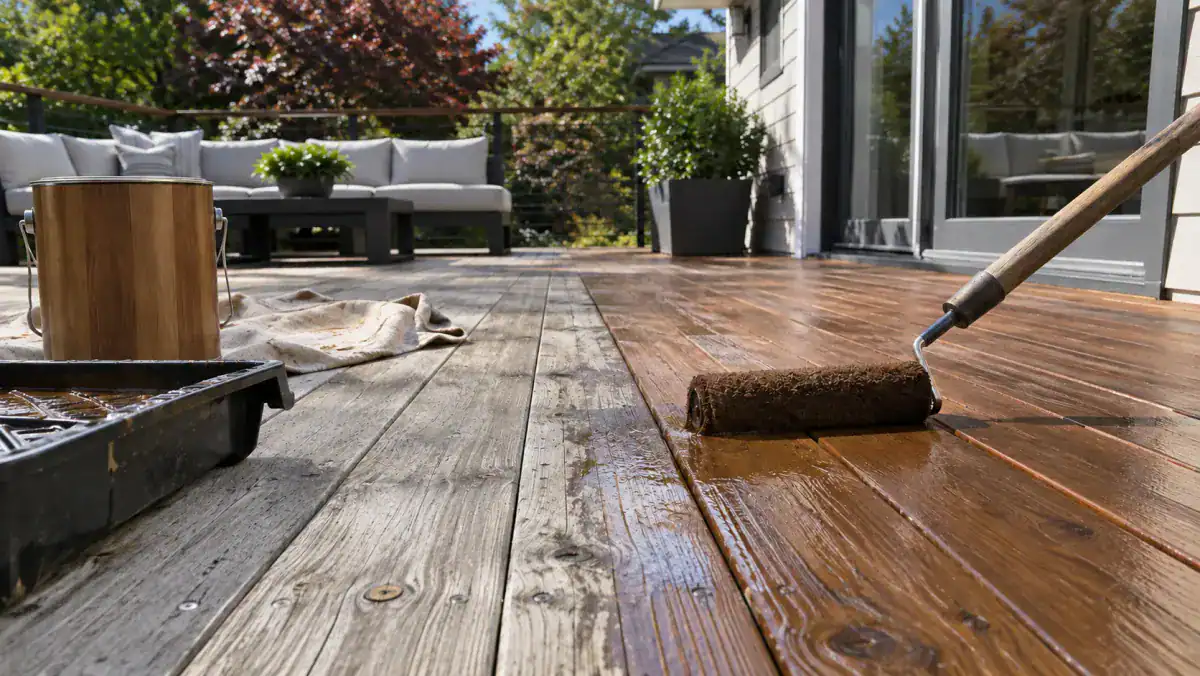
Treated wood deck maintenance is the most forgiving and the most frequently skipped. Pressure-treated boards arrive wet unless they were kiln-dried after treatment, and they have to dry before anything is applied. After that the cycle is clean, dry, seal, and repeat every one to three years depending on exposure. Skip it and the boards check, cup, and split. Water gets into the end grain, and from there into the framing.
Cedar deck maintenance asks for a gentler hand. Cedar is soft, so aggressive washing tears the surface fibers and leaves a fuzzy finish that holds dirt. It also reacts with the wrong fasteners. Black staining around screw heads on an older cedar deck is usually that reaction rather than rot. A clean, a brightener to reset the surface, and a penetrating finish is the whole routine.
Redwood deck maintenance follows the same pattern with one difference. Heartwood resists decay well on its own, so the finish is mostly about color. Left alone, redwood silvers to gray without losing much structural life. That is a legitimate choice, provided somebody still checks the fasteners and the framing, because a weathered surface no longer signals what is happening below it. Where a finish has failed unevenly across a whole deck, restoration resets the surface faster than spot work does.
Dense hardwood behaves differently again. The maintenance of ipe wood decking and of mahogany comes down to oil with UV inhibitors, applied thin and more often than most owners expect. Skip the oil and these boards go silver quickly. Refinishing them later takes more work than any softwood surface. The density that makes them durable also makes them slow to accept anything.
Composite Decking Maintenance and Trex Care
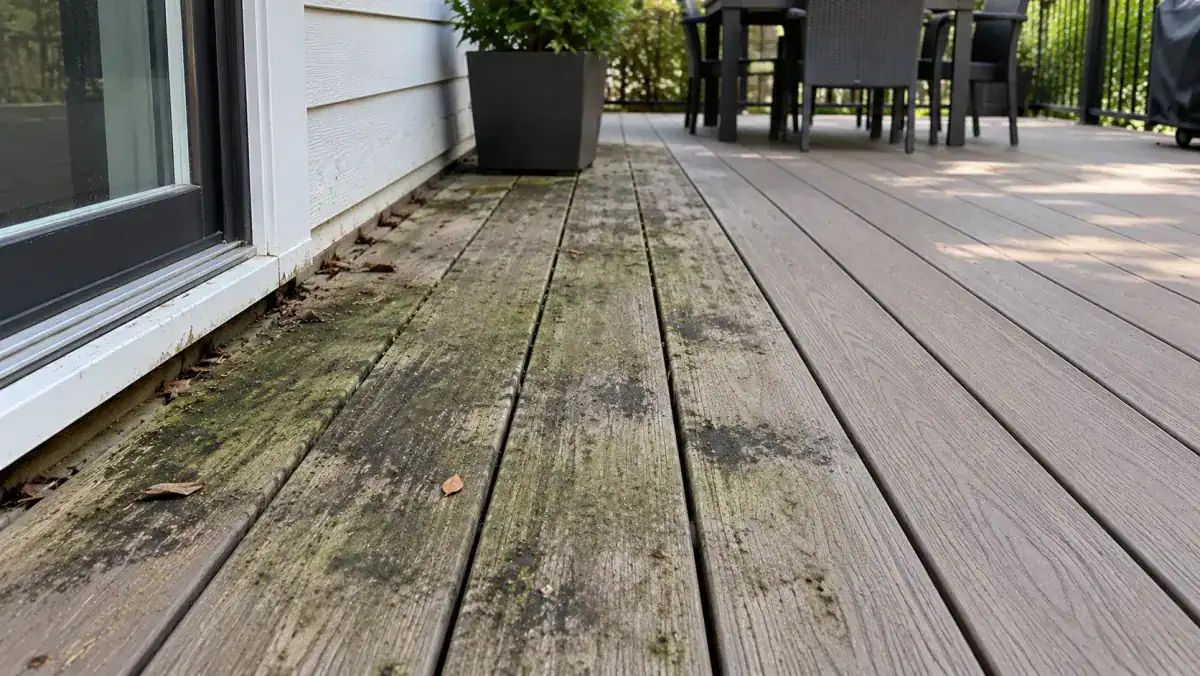
Composite deck maintenance is washing, and the timing matters more than the effort. Pollen, leaves, and organic debris left in the gaps feed surface mold. Once mold sets into the embossing, it takes far more than a rinse to remove. Twice a year with soap, water, and a soft brush handles almost everything on a residential deck, and shaded or coastal properties need it more often.
Trex decking maintenance and the routine for other capped composites follow the manufacturer’s instructions, and that is not a formality. The wrong cleaner, the wrong pressure, or an abrasive pad can void product coverage on a board that would otherwise outlast the frame. Our Trex deck work hands over the maintenance sheet with the as-built documentation for exactly that reason.
| Surface | What it needs | How often | What ruins it |
|---|---|---|---|
| Pressure-treated lumber | Clean, dry, and re-seal | Every one to three years | Water in split end grain |
| Cedar | Gentle clean, brightener, penetrating finish | Annually to every two years | Aggressive washing and wrong fasteners |
| Redwood | Clean, then finish if color matters | Every one to three years | Neglected fasteners and framing |
| Ipe and other hardwood | Thin coats of UV-inhibiting oil | Once or twice a year | Letting the finish fail completely |
| Composite and Trex | Soap, water, soft brush | Twice a year, more in shade | Debris in the gaps and wrong cleaners |
| PVC | Wash and rinse | Twice a year | Abrasives and heat sources |
One habit covers most of it. Knowing how to care for Trex composite decking, or any capped board, means sweeping the gaps before washing the surface. Water without debris removal carries the problem deeper into the assembly. The gap between boards is a drainage channel, and a blocked one turns the joist below into a shelf holding water.
Two things behave differently from wood and catch owners out. Scratches on a capped board cannot be sanded away, so furniture pads and a lifted rather than dragged grill matter more than they do on timber. Dark colors also hold heat on a west-facing surface. A rarer version comes from low-E glass. A slightly bowed double-pane window can focus reflected sunlight hot enough to distort boards, and manufacturers exclude that damage. Learning how to care for Trex decking is mostly learning what not to do to it, since the finish is manufactured rather than applied.
The Half That Is Not the Surface
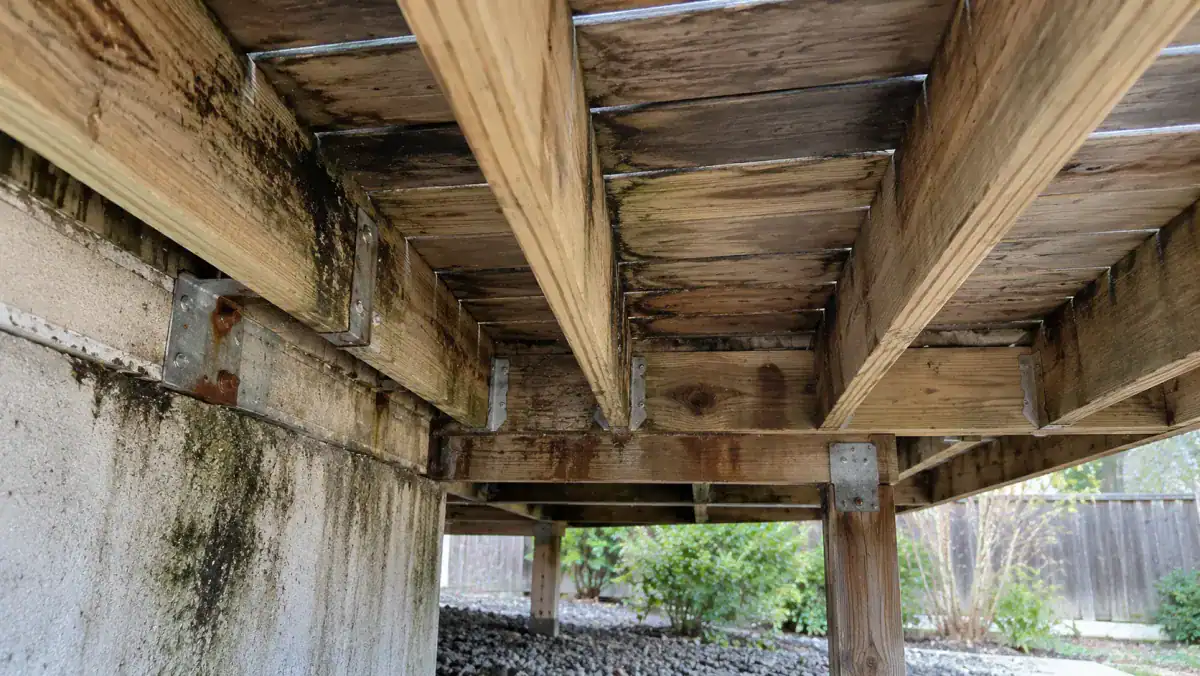
Real maintenance of decking starts underneath. Water passes between the boards on every deck, lands on the joist tops, and either runs off or sits there. Joist tape and flashing decide which. On an elevated deck the same water reaches the ledger. That connection failing takes the building’s framing with it, not just the deck.
Deck maintenance that prevents repairs is mostly looking. Twice a year, walk the structure with a flashlight and check for the things that predict work:
- Dark staining or soft spots at the ledger and at joist ends.
- Rust streaks below hangers, bolts, and post bases.
- Posts sitting directly on concrete or soil rather than on metal bases.
- Debris packed in the board gaps, especially at the wall line.
- Standing water under the deck after rain, or soil built up against posts.
- Railings that move when pushed, and loose or missing balusters.
- Fasteners backing out of the surface, or screw heads sitting proud of the boards.
- Planters, mats, and furniture pads that keep the same patch of surface wet.
Consistent deck care is mostly this list plus a broom. Anything on it that appears twice in a row is worth a professional look. A repeat usually means the water has a route rather than an accident. On a deck neglected for years, book the look before the wash: cleaning removes the staining that shows where water travels. An annual maintenance plan exists to catch those patterns on schedule rather than after a failure.
Not sure how this applies to your building?
A licensed contractor answers — free, same-day callback.
A California Care Calendar
Pressure treated deck maintenance and every other kind runs on this state’s two seasons rather than four. Winter brings sustained rain and the mold that follows it, while summer brings UV that breaks down finishes faster than water does. The work splits neatly across those, and doing it in the right order saves repeating it.
- Late spring: wash the surface, clear every gap, and check the drainage path under the deck.
- Early summer: re-seal or oil wood surfaces once the boards are properly dry.
- Mid-summer: check for UV damage on finishes and for fading or heat movement on composite.
- Early fall: clear leaves and needles before they compost in the gaps and against the wall line.
- Before the first rains: inspect flashing, sealant joints, and any coating for cracks or lifting.
- Through winter: keep debris off the surface and water moving away from posts and footings.
New structures start their own clock. Pressure treated wood deck maintenance begins with waiting, because sealing boards that still hold treatment moisture traps it under the finish. The test is a spoonful of water on the surface. If it beads, the wood is not ready; if it soaks in, it is.
Two deck maintenance tips matter more than the rest in this climate. Clear the underside of dry debris if the property sits in a fire hazard severity zone. That space collects embers as readily as it collects leaves. And never leave planters or rubber mats in one place, because the surface under them stays wet long after everything else has dried.
Rooftop deck maintenance is a different discipline, since the deck is also a roof. Drains and scuppers get cleared before every rainy season. The membrane gets inspected at edges and penetrations, and nothing gets fastened through the waterproofing without the system’s detail. Deck waterproofing holds for the ten to twenty-five years its maker rates it for when it is maintained, and fails early when it is not.
Products, Tools, and What to Skip
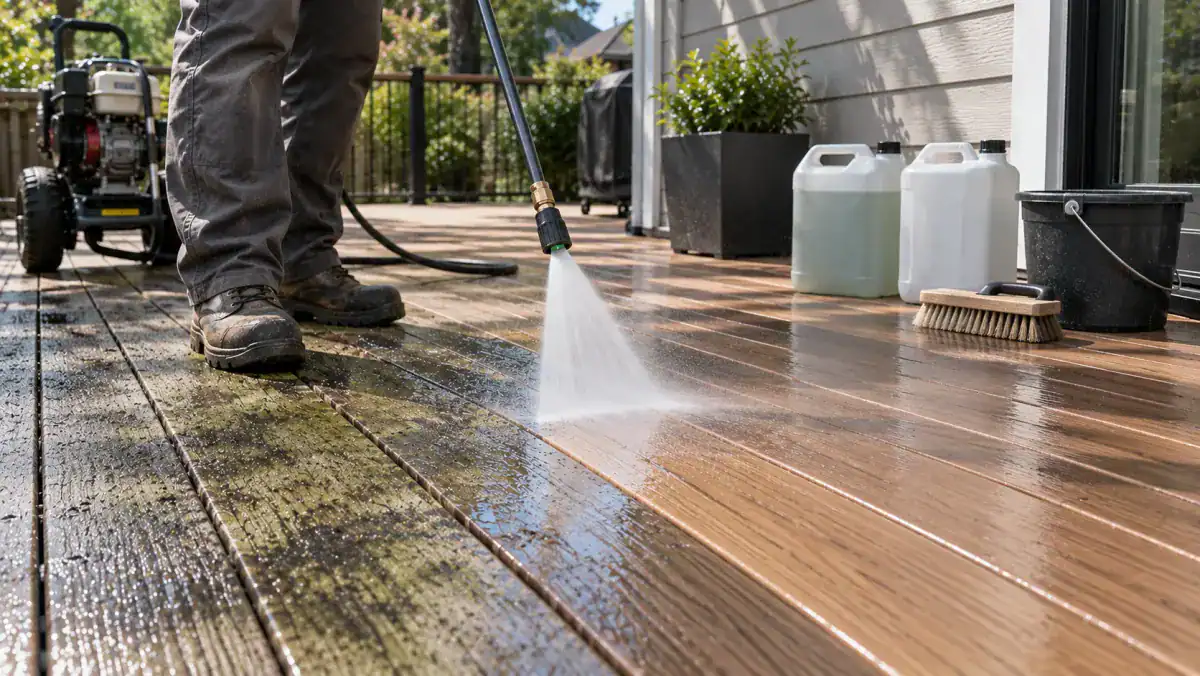
Deck care products divide into three jobs: cleaning, brightening, and finishing. A cleaner lifts dirt and mildew, and a brightener resets the surface after an alkaline cleaner and evens out the color. A finish is either penetrating, which soaks in and wears away, or film-forming, which sits on top and eventually peels. Penetrating finishes are easier to live with on a deck, because failure means reapplying rather than stripping.
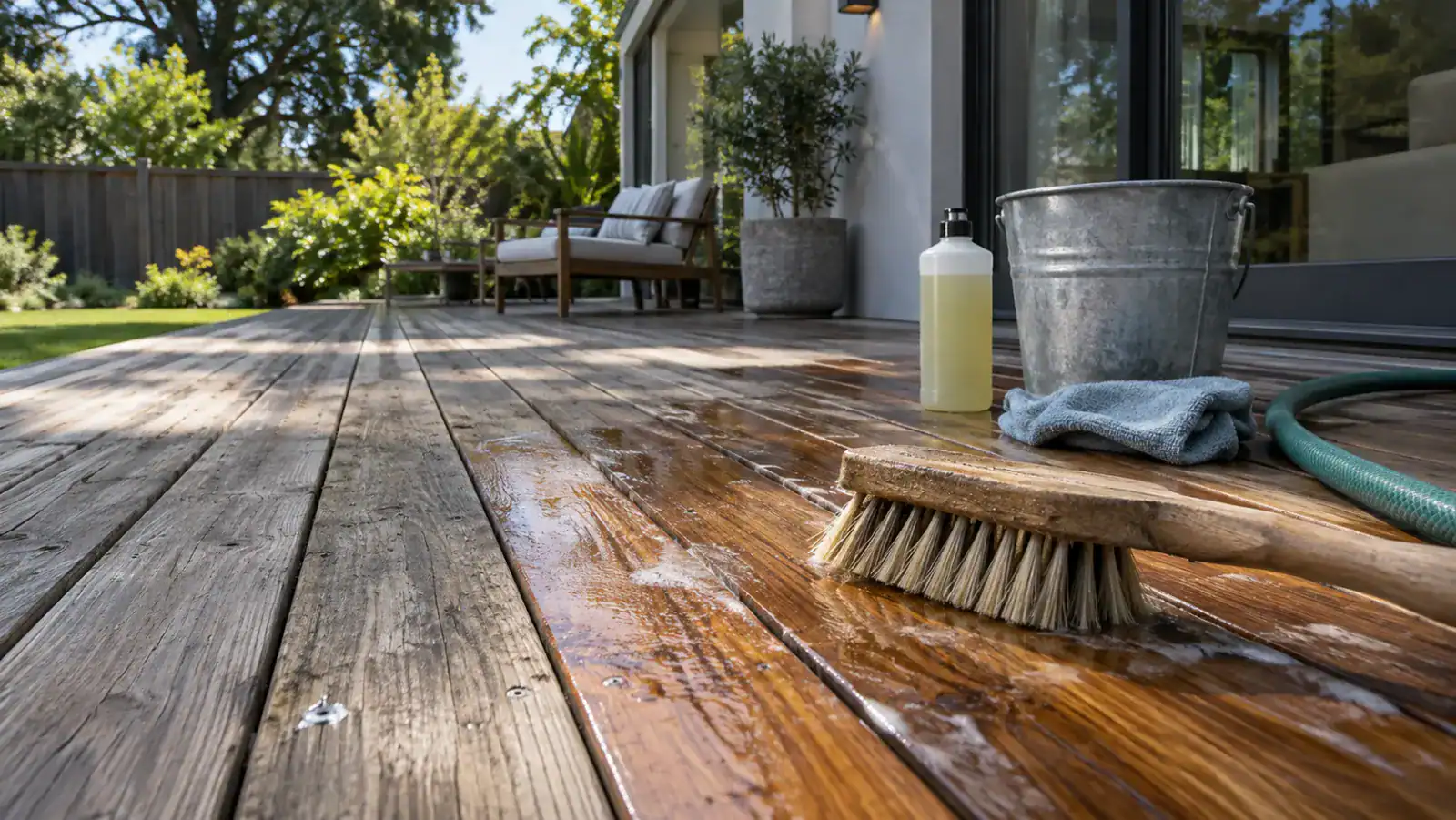
Pressure washing is where most surfaces get damaged by their owners. High pressure erodes soft grain, fuzzes cedar and redwood, and drives water into joints that were designed to shed it. The safest decking maintenance tips here are simple. Use the widest fan tip available, and keep the wand moving and well back from the boards. On composite, follow the manufacturer’s limits rather than guessing at them.
Decking care products also need to match the fasteners and the frame, not just the boards. Chlorine-based cleaners left to sit can attack metal connectors and lighten wood unevenly, while oxygen-based cleaners are gentler on the whole assembly. Whatever goes down on the surface eventually reaches the joists below. That is one more reason to sweep the gaps first and rinse thoroughly afterward.
Tools matter less than sequence, and the useful kit is short. A stiff-bristle brush that is not wire, a pump sprayer, a plastic scraper thin enough to clear board gaps, and a hose. Wooden decking maintenance goes wrong most often when a finish gets applied over a surface that is still damp, so a dry stretch of two or three days before sealing is worth waiting for.
Put the Deck on a Schedule
Deck maintenance cost is almost entirely a function of what got deferred. A cleaned and sealed deck stays a cleaning-and-sealing job. The same deck left for six years becomes framing repair, and the price difference is not close. On the properties we inspect, the expensive ones are rarely old, they are unattended.
Low maintenance decking still needs a plan, and a portfolio needs one in writing. We build annual programs for apartment communities, HOAs, and hotels. They cover surface care, structural checks, and the documentation the next SB 721 or SB 326 inspection will ask for. Request a free on-site assessment and a licensed contractor follows up the same business day. The scope comes back itemized, with no obligation.

Related service
Annual Maintenance Plans
Licensed, insured and SB 721/326-fluent — from assessment to sign-off, one accountable team.
About the author
Tom Marsden
Retired Property Inspector · Reviewed under CSLB #1060736
Tom Marsden is a retired property inspector with 20 years of experience. Starting as a general contractor, he transitioned to inspections, specializing in multi-family dwellings. Known for his straightforward approach and ability to simplify complex regulations, Tom became a respected figure in the local property management community. Now retired, he mentors new inspectors and writes about building safety, focusing on balcony inspections and maintenance. In his free time, Tom enjoys restoring vintage sailboats and volunteering at the local community center.
More from Tom Marsden