Rooftop Deck Waterproofing · CSLB #1060736
Commercial Rooftop Deck Waterproofing in California
We waterproof roof decks and rooftop terraces across the Bay Area, Central Valley, and Sacramento — membrane systems beneath decks, and traffic-bearing coatings that serve as the walking surface themselves. Those are two different approaches with different lifespans, different maintenance, and different failure modes, and choosing between them is the decision that shapes everything else.
- CSLB #1060736 Licensed California contractor
- 9+ yrs Waterproofing commercial roof decks
- Nothing through the membrane Pedestals and curbs, never fasteners
- Commercial & HOA Apartments, condominiums, HOAs & hotels
01 Why it matters
Two systems, and the choice decides everything after it
There are two ways to waterproof a roof deck and they are not variations on a theme. In the first, the waterproofing is a roofing membrane and the deck sits above it on pedestals, touching nothing. The membrane is shielded from sunlight and foot traffic by the deck, which is why it outlasts an exposed surface by a wide margin. In the second, a traffic-bearing coating is itself the surface — you walk directly on the waterproofing, there’s no deck above it, and what you gain in simplicity you pay for in wear.
The pedestal approach protects the membrane and hides it. That trade is the whole of what owners need to understand. A leak beneath a pedestal deck arrives at the ceiling below in one place and enters the membrane somewhere else entirely, because water travels freely across a surface nobody can see — so finding it means lifting deck sections. A deck that wasn’t designed to be lifted turns a half-day investigation into a demolition. Roof drains end up under the deck too, and a blocked drain beneath a pedestal deck is completely invisible: water simply stands on the membrane, week after week, with no symptom at all until something below gets wet.
One rule sits above both approaches and it isn’t negotiable: nothing gets fixed through the membrane. Every fastener driven through a waterproofing layer is a penetration and eventually a leak, and no sealant changes that over the life of a roof. Pedestals exist precisely so that a deck can carry load without making holes. Where a design genuinely requires an attachment, it gets a proper curb detailed into the membrane — not a screw and a bead of mastic.
A blocked drain under a pedestal deck has no symptom. Water stands on the membrane for months and the first sign is a ceiling.

02 The D&B difference
What proper roof deck waterproofing involves
The system is chosen against how the roof will be used
Pedestal-set deck over a protected membrane, or a traffic coating as the surface. We set out the trade — lifespan, access, maintenance, and what a leak costs to find — before anything is specified.
Nothing penetrates the waterproofing
Load is spread on pedestals; where an attachment is unavoidable it gets a curb detailed into the system. No fasteners through the membrane, no exceptions negotiated on site.
Drains stay reachable
Deck sections designed to lift, and drain positions recorded and marked. A roof drain you can’t reach is a roof drain nobody services, and on a pedestal deck that failure is silent.
03 · Service Areas
Where We Work in California
Every city links to a dedicated local page — crews, recent projects and compliance details for that area.
Sacramento Metro
14 cities
East Bay
21 cities
Don’t see your city? We likely still cover it — call (916) 848-2728.
04 How a project runs
How a waterproofing roof deck project runs
-
01
Roof assessment
Existing membrane type, age, condition and remaining life, structural capacity, slope, and how the roof currently drains.
-
02
System selection
Protected membrane with a pedestal deck above, or a traffic-bearing coating as the surface, with the trade-offs stated rather than assumed.
-
03
Scope & estimate
Membrane work, deck work, and drainage separated as lines so you can see what you’re choosing.
-
04
Preparation
Failed material removed rather than covered, substrate cleaned and repaired, moisture verified before anything is applied.
-
05
Membrane installation
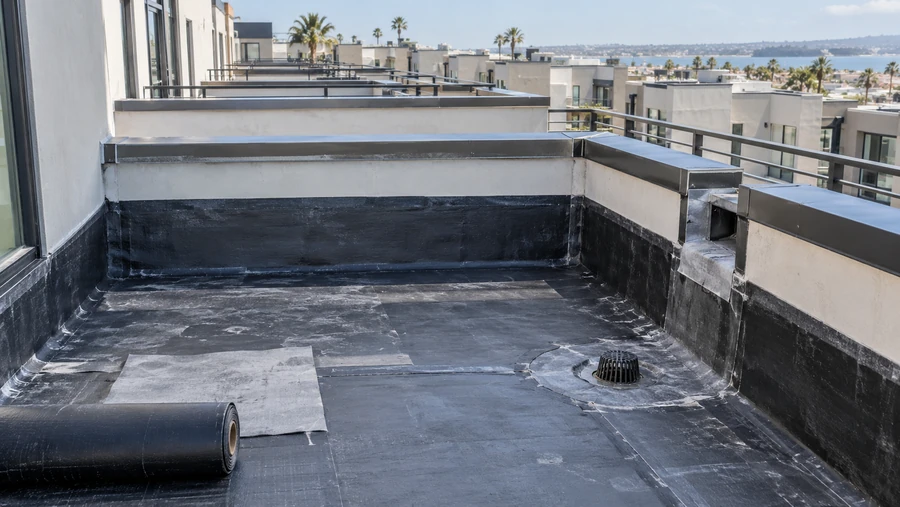
System installed continuously, turned up at parapets and walls, with every penetration, drain and scupper detailed individually.
-
06
Deck above, where specified
Pedestal-set surface that spreads load, lifts in sections, and leaves drains reachable.
-
07
Handover
Documentation, photographs of the membrane before it was covered, drain locations recorded, and a maintenance schedule.
05 Scope
What we install
Complete rooftop deck waterproofing, membrane through surface, from one CSLB-licensed crew.
- Roof assessment — membrane type, age, remaining life, structural capacity, drainage
- Waterproof roof deck systems compared, with trade-offs stated in writing
- Waterproof membranes for decks — sheet and fluid-applied systems
- Waterproofing membrane for flat roof areas and waterproofing membrane for roof deck build-ups
- Traffic-bearing coatings where the membrane is the walking surface
- Failed material stripped rather than covered
- Substrate repair and moisture verification before application
- Membrane turned up at parapets, walls and upstands
- Drains, scuppers and edge metal detailed into the system
- Pedestal-set deck surfaces that spread load without penetrations
- Deck sections designed to lift for membrane and drain access
- Curbs detailed into the membrane where attachment is unavoidable
- Slope correction where water stands rather than leaves
- Drain locations recorded and marked at handover
- Maintenance schedule matched to the system and exposure
- SB 721 / SB 326 and SF Section 604 documentation where applicable
Built to current code: pedestrian-rated coating requirements · roof drainage provisions · 42″ / 4″ guardrail standard on commercial and multifamily property
06 Investment
What waterproof rooftop deck work costs
Quoted after the roof is assessed, because the condition and remaining life of what’s already there decides the scope.
What drives the number
- Which system — a protected membrane with a deck above prices differently from a traffic coating
- Area, and how many separate roof levels or terraces it covers
- Whether existing material can be prepared or has to be stripped entirely
- Substrate condition, slope, and whether ponding has to be corrected
- Drains, scuppers, penetrations and upstands, priced by count rather than area
- Access, which on a roof is often the difference between two comparable bids
- Deck construction above the membrane, where that’s part of the scope
The comparison worth running properly: a traffic coating costs less up front and is renewed on a shorter cycle because sunlight and footfall wear it. A protected membrane under a pedestal deck costs more initially and lasts substantially longer because nothing touches it. Over a holding period of ten or fifteen years the ranking often reverses — but only if the deck above was built to lift, because otherwise the eventual membrane replacement carries a demolition cost nobody priced.
The line that gets omitted: access to drains. Designing a deck that lifts, and recording where the drains are, costs almost nothing at build time. Retrofitting access to a roof drain buried under a fixed deck costs a great deal.
Final pricing follows an on-site assessment. Request a free estimate — no obligation.
In the field
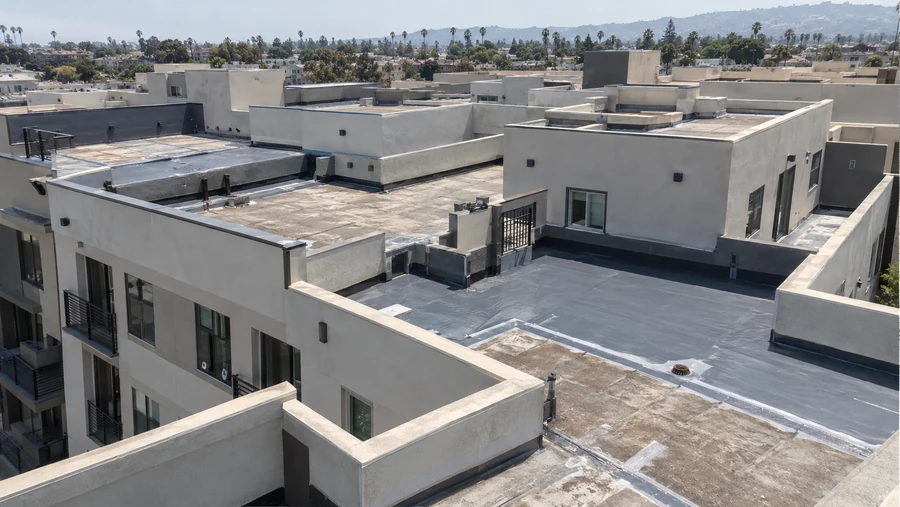
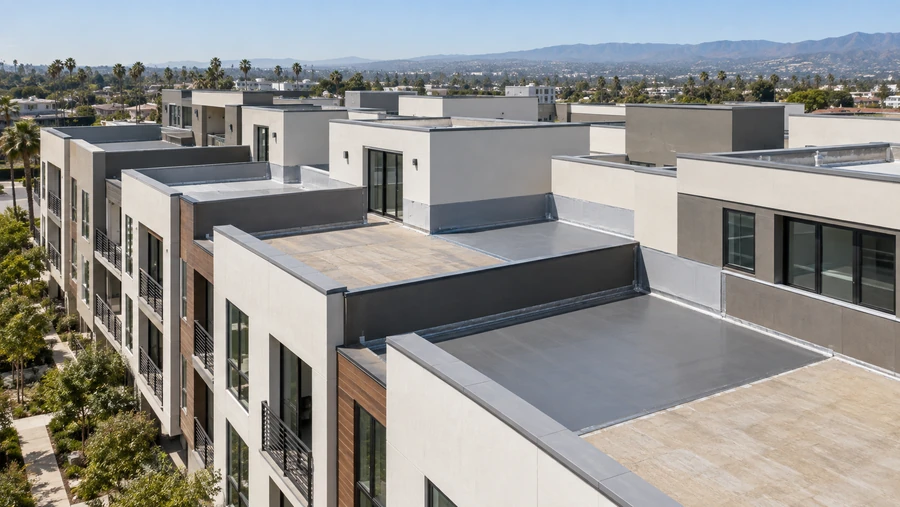
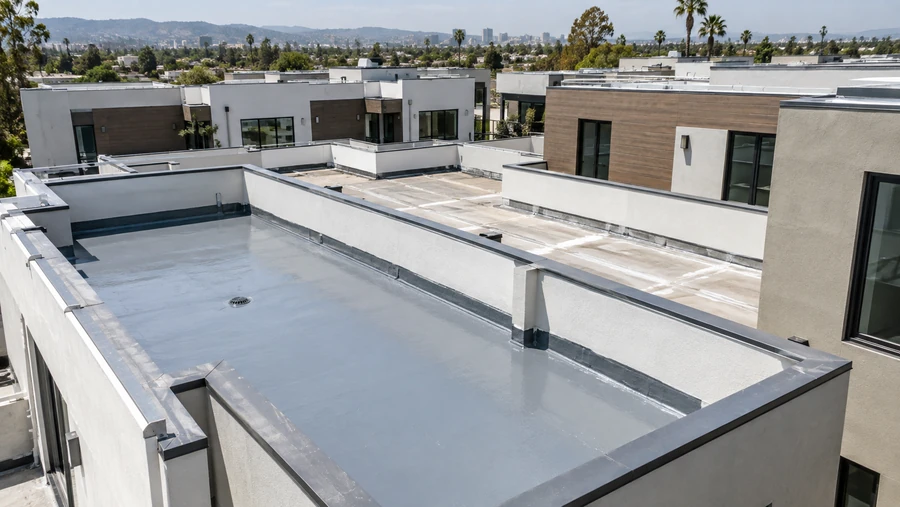
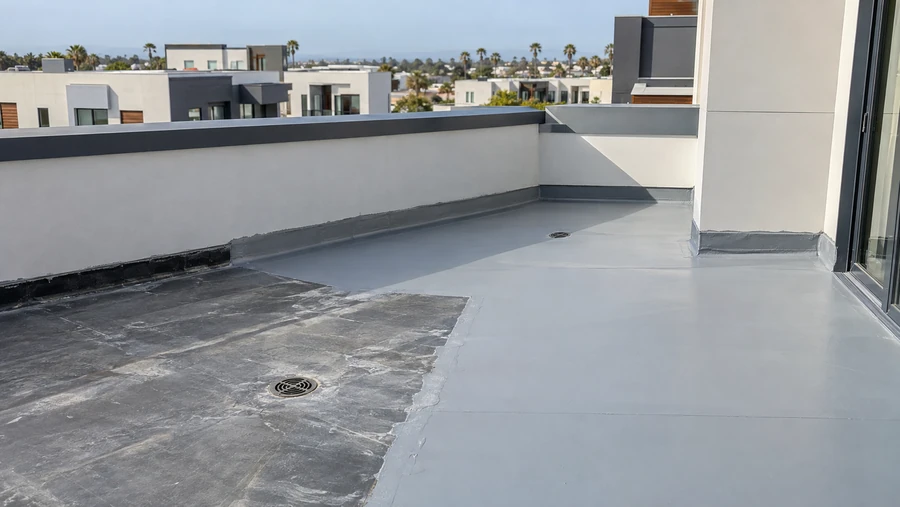
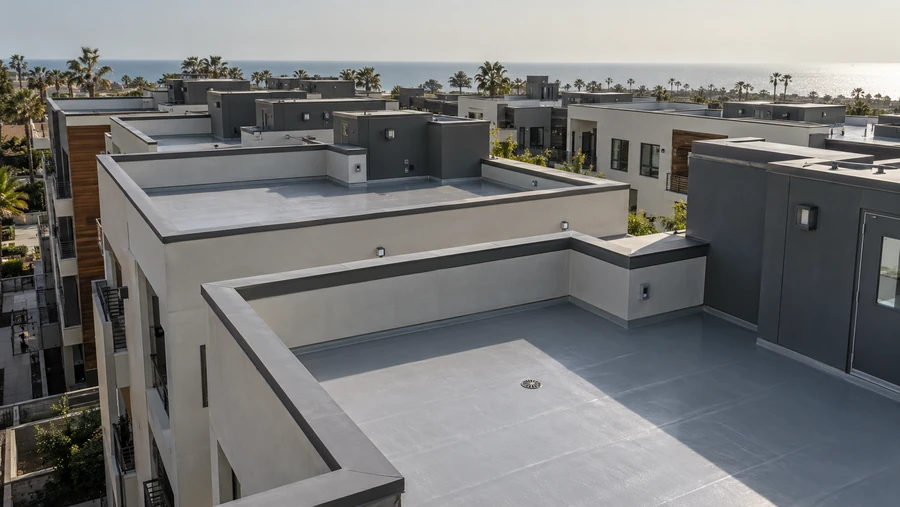
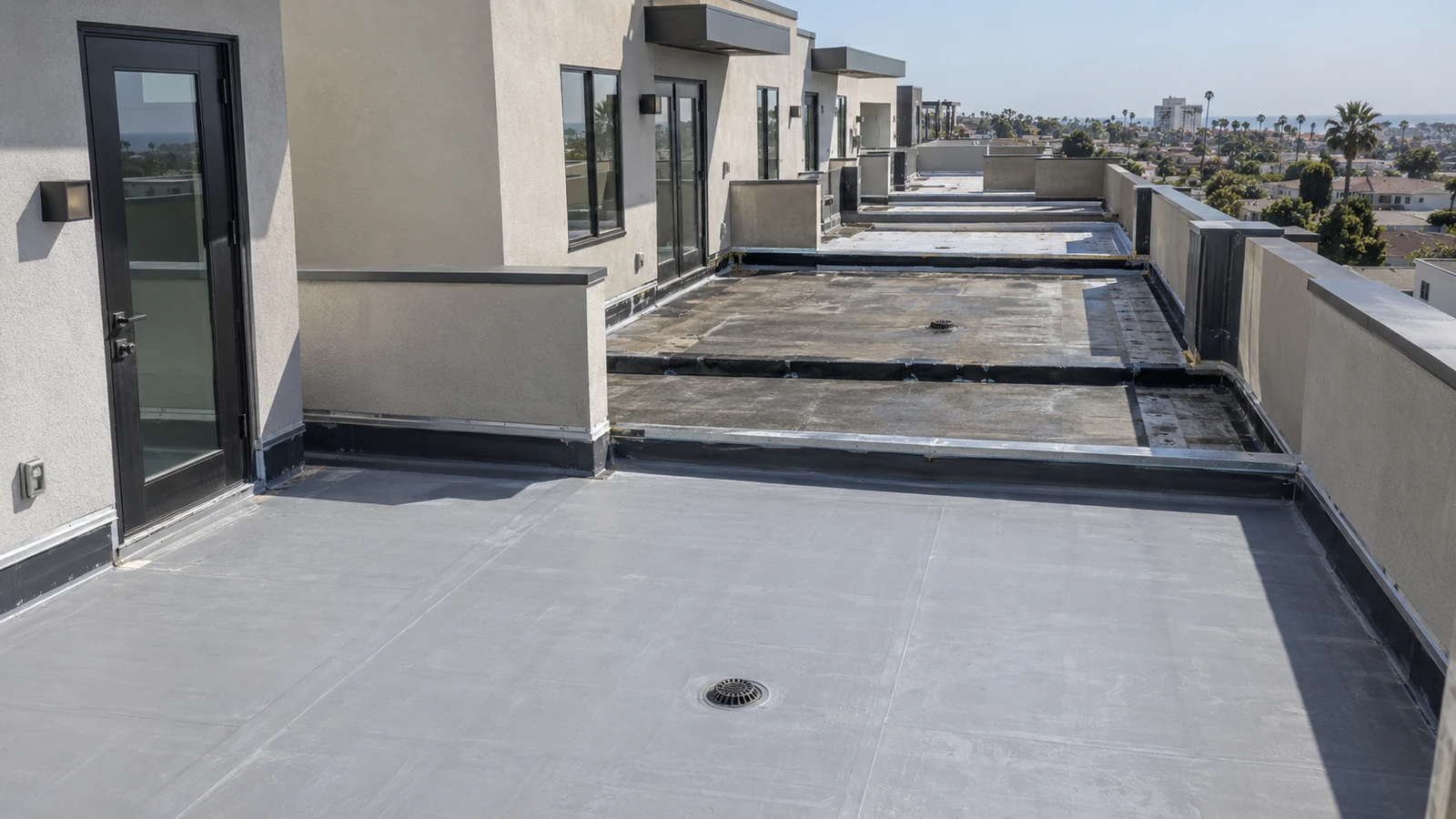
Rooftop deck membrane detail
Parapets wrapped, drains detailed, and the surface before anything went over it.
07 Project example
A recent roof deck waterproof project
A building had a rooftop amenity deck leaking into the units below, and nobody could say where. The deck had been screwed down through sleepers onto the roof — a fixed surface over a membrane, with the drains somewhere underneath it. Finding the leak meant demolishing most of the deck, and once it was off the picture was clear enough: the fasteners had been penetrating the membrane since installation, and two of the four roof drains were blocked solid with debris that had washed under the deck over several years. Water had been standing on the membrane for a long time with no way to show it. D&B stripped and renewed the membrane, detailed every drain and penetration, and rebuilt the deck on pedestals in liftable sections with the drain positions marked on the surface above them.
Two of our four drains had been blocked for years. Nothing had shown it, because nobody could see the roof. Community Manager · California multifamily building
08 Case studies
Recent Projects, Documented
Real commercial properties — what the building needed, what we did, and what it delivered.
 WaterproofingElevated Walkway Rebuild & Waterproofing — 96-Unit Apartment Community, Citrus HeightsThe walkways weren't leaking from the top. The low-slope roof above them had lost its edge metal and…View case study
  WaterproofingBalcony & Walkway Waterproofing — Sunset Park Apartments, SacramentoThe concrete had never been coated. Water sat on it, worked through the cracks and ran to the…View case study
  Deck RepairElevated Deck Reconstruction & Waterproofing — 24 Balconies, SacramentoOpen board decks sitting directly over enclosed garages. Every gap between the boards was a route for water…View case study
 09 Client feedback
What property managers say
Two of our four drains had been blocked for years. Nothing had shown it, because nobody could see the roof.
The old deck was screwed straight through the membrane. Every fastener was a hole, and there were hundreds of them.
They marked the drain positions on the deck surface. Small thing, and the first time our maintenance team could actually find them.
10 FAQ
Rooftop deck waterproofing questions
What’s the difference between a membrane under the deck and a coating you walk on?
They’re two different systems. A protected membrane is a roofing layer with the deck above it on pedestals — nothing touches the waterproofing, so sunlight and foot traffic don’t wear it and it lasts considerably longer. A traffic-bearing coating is the surface itself: simpler, cheaper up front, fully visible and accessible, but worn by everything that walks on it and by ultraviolet exposure, so it’s renewed on a shorter cycle. Neither is universally right; the choice depends on how the roof is used and how long you’re holding the building.
Which waterproof membrane is best for a roof deck?
The honest answer is that system selection matters more than brand. What decides it is the substrate, the slope, whether the surface will be walked on directly or protected under a deck, how many penetrations the roof has, and the climate at the address. We specify against those rather than defaulting to one product, and we’ll explain why a given system suits your roof rather than showing a datasheet.
Can the deck be fastened down to the roof?
Not through the membrane. Every fastener driven through a waterproofing layer is a penetration, and no sealant keeps that watertight for the life of a roof. Pedestal systems exist so a deck can carry load without making holes. Where a design genuinely requires a fixed element, it gets a proper curb built into the membrane — a detail, not a screw and a bead of mastic.
Our rooftop deck leaks but we can’t find where. Why?
Because on a pedestal deck the entry point and the appearance point are rarely in the same place. Water spreads across the membrane under a surface nobody can see and finds its way in wherever the roof allows. Locating it means lifting deck sections — quick if the deck was designed to lift, expensive if it was fixed down. That difference is decided at construction, years before anyone needs it.
What happens to the roof drains under a deck?
They end up underneath it, which is why access matters. Debris still washes across a roof and still reaches the drains, and a blocked drain beneath a pedestal deck produces no visible symptom at all — water simply stands on the membrane until something below gets wet. We design sections to lift, record the drain positions, and mark them on the surface above so maintenance can actually reach them.
How long does a rooftop deck membrane last?
Substantially longer when it’s protected under a deck than when it’s exposed, because what degrades a waterproofing layer is mostly sunlight and traffic. The practical figure depends on the system, the climate, and whether the drainage works — a membrane sitting under standing water for years fails early regardless of specification. The maintenance schedule we hand over reflects the system actually installed.
Can you waterproof a roof deck while the building is occupied?
Yes, and it’s most of what we do. Work is phased across roof levels and sections, with access maintained and residents given dates. Where an amenity roof has to close, we sequence so the closure is as short as the system’s cure times allow rather than as long as the programme is convenient.
Do we need to remove the deck to renew the membrane?
If the deck lifts, no — sections come up, the membrane is renewed beneath them, and they go back. If the deck was fixed down, then yes, and that cost belongs to the original construction decision rather than to the membrane. It’s the single strongest argument for building liftable in the first place.
Are you roof deck waterproofing contractors in California?
We’re a CSLB-licensed contractor (#1060736) working across the Bay Area, Central Valley, and Sacramento on commercial, multifamily, and HOA property. Roof assessment, membrane, drainage, and the deck above come from one crew — which matters here, because the most expensive failures on a roof deck happen exactly at the interface between those trades.
11 Start here
Start with the roof — free assessment
Tell us what’s happening: a leak nobody can locate, a membrane approaching the end of its life, or a roof you want to turn into usable space. We’ll assess what’s there, set out both systems with the trade-offs, and price them separately.
CSLB #1060736 · 9+ years · Insured & Bonded · Commercial, multifamily & HOA properties across the Bay Area, Central Valley & Sacramento