HOA Balcony Compliance & Repair · CSLB #1060736
HOA & Commercial Balcony Inspection, Repair & Compliance for California Condominium Associations
Balconies are usually the largest structural liability a condominium association carries, and the one item where the board’s obligations, the reserve study, and the repair budget all meet. We work exclusively with commercial multifamily and HOA properties across California — coordinating SB 326 inspection, carrying out the repairs it produces, and handing your board documentation that closes findings on the record.
- CSLB #1060736 Licensed California contractor
- 9+ yrs Balcony programs for HOA associations
- SB 326 compliance Findings closed & documented for the file
- HOA & condo boards Condominium associations & management companies
01 Why it matters
For an HOA, balconies are a governance problem before they’re a construction problem
Most associations discover the same thing in the same order. The SB 326 inspection produces findings. The findings carry a repair obligation on a defined timeline. And then the board learns that the reserve line for balconies was set years ago against an assumption nobody has revisited since — because until the inspection, nobody had opened one up.
What makes balconies different from every other capital item an association manages is that the deterioration is invisible until it’s expensive. A roof shows its age. A parking lot shows its age. A balcony that has been feeding water into the ledger connection behind the wall for twenty years looks exactly like one that hasn’t, right up to the day an engineer probes it.
That’s the reason California wrote a separate law for them. SB 326 — Civil Code §5551 — requires condominium associations to have their wood-framed elevated elements inspected by a licensed structural engineer or architect on a nine-year cycle, and it requires the resulting report to be incorporated into the association’s reserve study. It exists because a balcony is the one element on the property where waiting for a visible symptom means waiting too long.
Every other capital item shows the board it’s aging. A balcony gives no warning at all — which is why the law made looking mandatory.

02 The D&B difference
What HOA balcony work involves beyond the repair itself
We work with association boards and their management companies on the whole arc — not just the construction window. That means the findings get closed, the file is complete, and the board can show its members what was decided and why.
One contractor from finding to closure
The engineer identifies the problem; someone still has to open the balcony, repair what’s behind it, and document it. We handle the structural repair, the waterproofing, and the guardrails in-house, so findings don’t sit open while three trades coordinate between themselves.
Documentation built for the association’s file
A photo record of what was behind every balcony, as-built documentation, and a repair record that maps to the inspection findings — the material a board needs for its reserve study, its disclosure obligations, and its next nine-year cycle.
Work phased around residents who own their homes
Condominium residents aren’t tenants who can be relocated. We phase balcony by balcony, keep unit access open, and coordinate notices with your management company so owners know what’s happening at their own unit and when.
03 · Service Areas
Where We Work in California
Every city links to a dedicated local page — crews, recent projects and compliance details for that area.
Sacramento Metro
14 cities
East Bay
21 cities
Don’t see your city? We likely still cover it — call (916) 848-2728.
04 How a project runs
How an HOA balcony program runs, start to finish
-
01
Board consultation
We meet with the board or management company, review the inspection report if one exists, and establish what the association is actually facing before anyone talks about budget.
-
02
Survey & scope
We document every balcony, probe framing and ledger connections, and produce a written scope with photographs and a firm price — per balcony and in total, so the board can weigh options against reserves.
-
03
Phasing & owner notices
We build the schedule around resident access and hand your management company the notice material, so owners know when work reaches their unit.
-
04
Repair & waterproofing
Framing repaired or rebuilt, ledger connections flashed to current code, continuous membrane installed, guardrails brought to standard.
-
05
Documentation
Photo record of what was found behind every balcony, as-built records, and a repair log mapped to the original findings.
-
06
Cycle planning
A schedule for the next nine-year inspection and a maintenance plan the board can carry into its reserve study.
05 Scope
What we handle for HOA properties
Everything from the inspection findings through the repaired, documented balcony — delivered by one CSLB-licensed crew so the association has a single point of accountability.
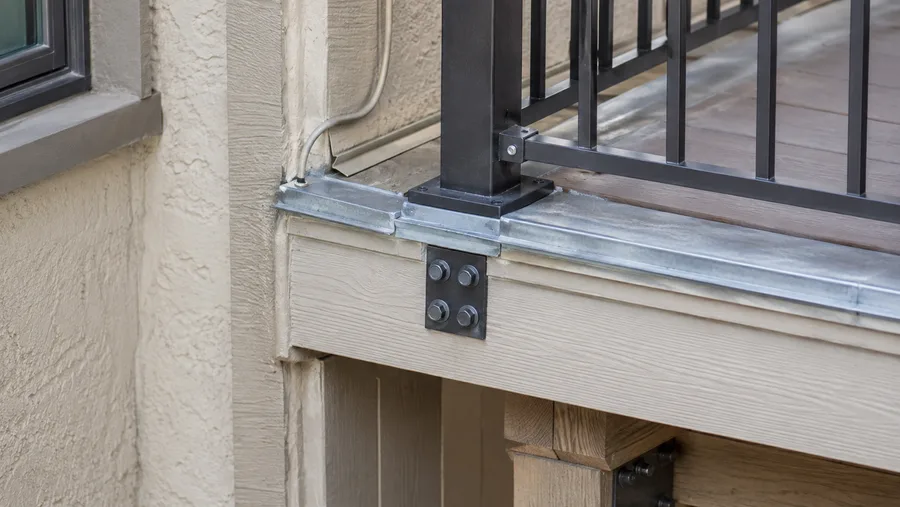
- SB 326 inspection coordination with a licensed structural engineer or architect
- Property-wide balcony survey and condition documentation
- Repair of inspection findings — framing, ledger connections, posts, and beams
- Waterproofing — membrane, flashing, slope, and drainage restored as one assembly
- Guardrails brought to the 42″ height and 4″ sphere standard on solid blocking
- Full balcony reconstruction where repair no longer makes economic sense
- Dry rot remediation and repainting of exposed framing and undersides
- Emergency shoring and access restriction where an immediate hazard is identified
- Phasing plans and owner notices coordinated with your management company
- Photo documentation and as-built records for the association’s file
- Condition input for reserve study updates and long-range balcony planning
- Nine-year cycle scheduling so the next inspection isn’t a surprise
Built to current code: CBC 1604.8.1 ledger connections · ASCE 7 load criteria · 42″ / 4″ guardrail standard · SB 326 (Civil Code §5551) documentation
06 Investment
What an HOA balcony program costs
Balcony work is priced after a property survey, because the cost depends on how many balconies there are, how far water has reached into the framing, and how the work has to be phased — none of which is visible before balconies are opened.
What drives the number
- Number of balconies across the association
- Whether balconies are repaired, rebuilt from the framing, or replaced
- Framing and ledger condition once surfaces come off
- Guardrail replacement and how much of it is required
- Waterproofing scope — spot repair versus full re-membrane
- Phasing requirements and resident access constraints
- Building height, access, and staging
- Whether repairs are tied to inspection findings on a deadline
Reserves, assessments, and timing: for many associations a balcony program is the largest single capital item they will fund, and how it’s paid for shapes how it’s scoped. We’ll give you per-balcony pricing so the board can model doing the property in one program versus phasing it across budget years — with the honest caveat that phasing almost always costs more in total, because crew mobilisation, staging, and material runs are paid for each time rather than once. Final pricing follows a property survey. Request a free consultation — no obligation.
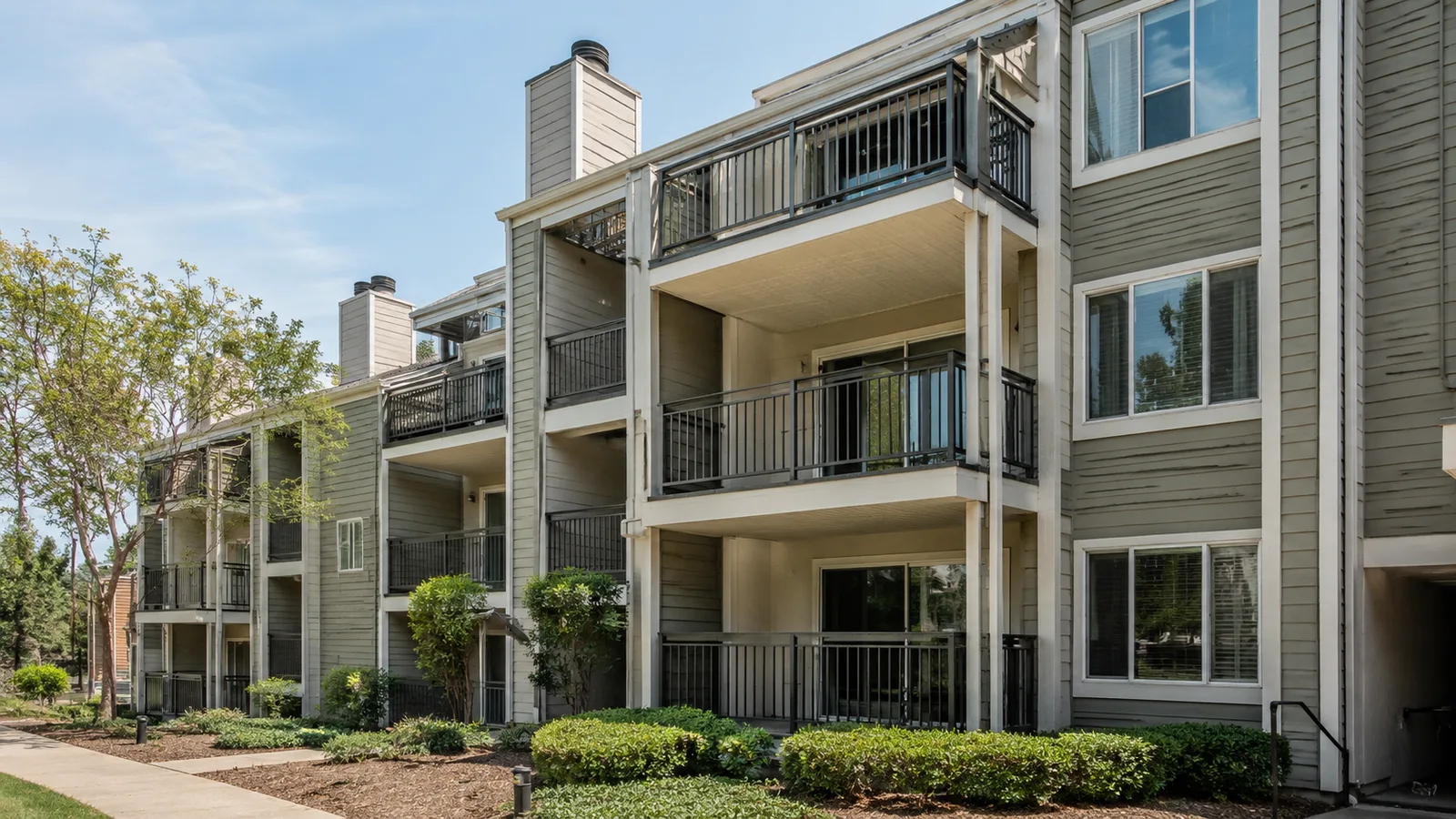
In the field
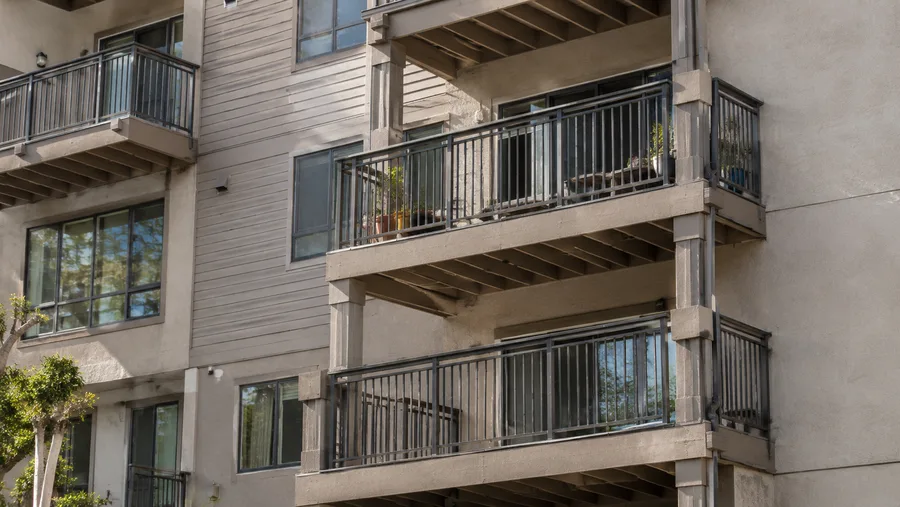
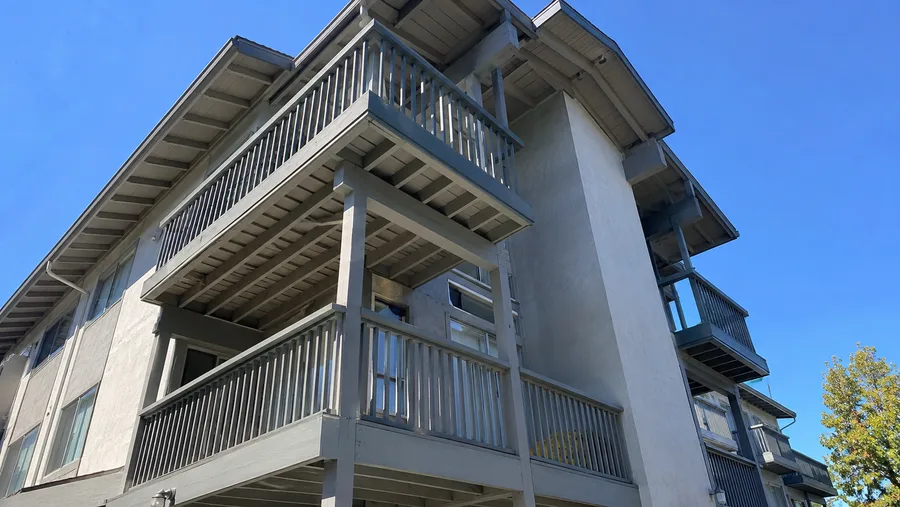
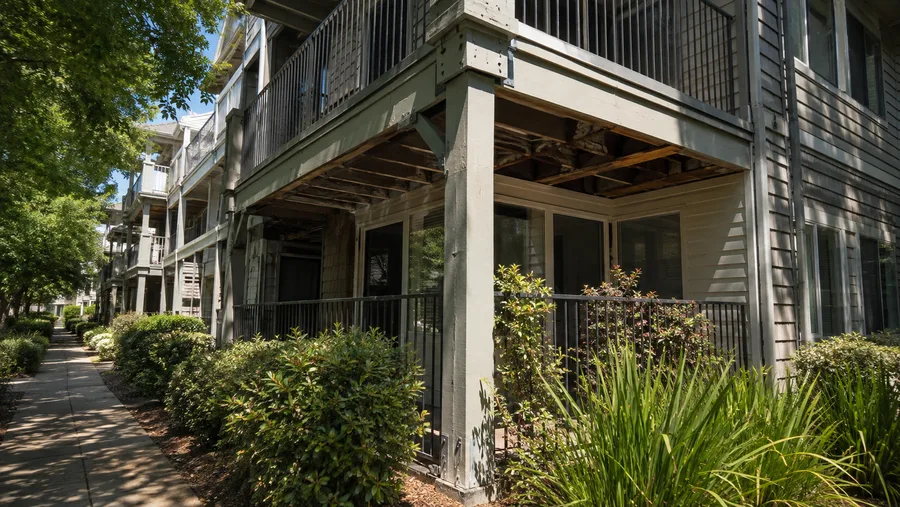
What inspections find
The conditions behind a balcony that looks perfectly serviceable from the surface.
07 Project example
A recent HOA balcony program
A condominium association came to D&B with an SB 326 report it didn’t know how to act on: findings across most of the property, a nine-year clock already running, and a reserve line that had been set against a much smaller assumption. We surveyed every balcony, priced the work per balcony so the board could model its options against reserves, and phased the program so no owner lost access to their unit. Framing was repaired at the ledger where water had been tracking in behind the wall, membranes and flashing were restored, and guardrails were brought to current height on solid blocking. The board received a photo record of what was behind each balcony and a condition summary its reserve analyst could use directly.
The report told us we had a problem. What we needed was someone to tell us what it would cost and in what order — per balcony, so we could take it to the members. HOA Board President · California condominium association
08 Case studies
Recent Projects, Documented
Real commercial properties — what the building needed, what we did, and what it delivered.
 WaterproofingBalcony & Walkway Waterproofing — Sunset Park Apartments, SacramentoThe concrete had never been coated. Water sat on it, worked through the cracks and ran to the…View case study
  Deck RepairElevated Deck Reconstruction & Waterproofing — 24 Balconies, SacramentoOpen board decks sitting directly over enclosed garages. Every gap between the boards was a route for water…View case study
  Balcony RepairBalcony & Elevated Walkway Replacement — 24 Balconies, LodiEvery balcony and second-floor walkway rebuilt from the framing up — new waterproof deck system, new code-height guardrails,…View case study
 09 Client feedback
What boards and managers say
We had a report full of findings and no idea what any of it would cost. Getting a price per balcony is what let the board actually make a decision.
Owners were nervous about losing their balconies for a whole summer. It was a few days each, and every notice went out before the crew arrived.
The photo record of what was behind each balcony went straight to our reserve analyst. That’s the part I didn’t know we needed until we had it.
10 FAQ
HOA balcony questions
Who is responsible for repairing a balcony in a California condominium — the owner or the HOA?
In most California condominiums balconies are exclusive use common area: only one owner uses it, but it isn’t part of their separate interest. Under Civil Code §4775, unless the association’s declaration says otherwise, the owner is responsible for maintaining that area while the association is responsible for repairing and replacing it. In practice that means an owner keeps the balcony clean and clear, and the association pays when the structure or the waterproofing fails. Your CC&Rs can allocate this differently, so the governing documents are always the starting point — and this is general information rather than legal advice.
What does California HOA balcony law actually require?
SB 326, codified as Civil Code §5551, requires condominium associations to have their wood-framed exterior elevated elements — balconies, decks, stairways, and walkways more than six feet above ground — inspected by a licensed structural engineer or architect, on a nine-year cycle, using a statistically significant sample of the elements on the property. The report goes to the board and must be incorporated into the association’s reserve study. Where an inspector finds a condition posing an immediate threat, the association has to restrict access to that element and the inspector notifies the local enforcement agency.
How often does an HOA balcony inspection have to happen?
Every nine years under SB 326, with the first round already required. The report has to be retained for two full inspection cycles, so associations end up holding roughly eighteen years of records — which is exactly why the documentation from any repair work matters as much as the repair.
What happens if the inspection finds a problem?
Findings carry a repair obligation. Conditions posing an immediate threat require the association to prevent access to the element until repairs are made. Other findings are repaired on a defined timeline, and the board is expected to act on what the report tells it — a known defect that sits unaddressed is a materially different position for a board than one nobody knew about.
Can the association use reserves, or does this mean a special assessment?
That depends entirely on how the reserve study treated balconies, and many were funded against assumptions set before anyone had opened one. Because SB 326 requires the inspection report to feed the reserve study, most associations end up revising that line after their first inspection. We give per-balcony pricing specifically so boards can model reserves versus assessment versus phasing before committing to a scope.
What balcony rules should an HOA actually enforce?
The rules worth having are the ones that protect the structure rather than the view. Three matter most from a construction standpoint: no drilling or anchoring into the balcony surface, because a single fastener through the waterproofing membrane creates a path straight into the framing and the association pays for the rot; no planters sitting directly on the deck, since standing moisture underneath a pot is one of the most reliable ways to fail a coating; and no screens, shade sails, or privacy panels attached to guardrails, which load a railing far beyond what it was designed to resist. Storage limits and grill restrictions usually already exist for fire reasons and are worth keeping for weight reasons too.
Do balconies at our association fall under SB 326 or SB 721?
SB 326 applies to condominium and community associations; SB 721 applies to rental properties with three or more units. If your association has buildings held as rentals, it’s possible for both to be in play on the same site. Concrete balconies cast as part of the structural slab fall outside both statutes, since the laws address elements supported substantially by wood — but they still require maintenance and typically show a different failure pattern, with corroded reinforcing steel rather than rot.
Can you do the inspection and the repairs?
The inspection itself must be performed by a licensed structural engineer or architect, which keeps it independent of the contractor doing the work. We coordinate that inspection for associations that need it, then carry out the repairs the report produces and document them for the file. Boards get one point of contact across both without compromising the independence the statute requires.
Do owners have to move out during balcony work?
No. We phase balcony by balcony so an owner loses access to their own balcony for a matter of days rather than the whole program, and units stay occupied throughout. Where balconies also serve as the walkway to a front door, we sequence work so every unit keeps its route in and out.
11 Start here
Talk to us about your association’s balconies
Whether you have an inspection report you need priced, balconies approaching the end of their life, or a nine-year cycle coming up, we’ll survey what’s there and give the board a free written estimate — per balcony and in total, with phasing options.
CSLB #1060736 · 9+ years · Insured & Bonded · Serving the Bay Area, Central Valley & Sacramento