Thermally Modified Wood Decking · CSLB #1060736
Commercial Thermally Modified Wood Decking in California
We install thermally modified wood decking across California — real timber, made stable and decay-resistant by heat rather than by chemicals. It’s the closest thing to a hardwood deck without the price or the sourcing questions, and like every decking material it has trade-offs worth understanding before you choose it rather than after.
- CSLB #1060736 Licensed California contractor
- 9+ yrs Installing real-timber decking materials
- No preservatives Decay resistance from heat, not chemicals
- Commercial Bay Area, Central Valley & Sacramento properties
01 Why it matters
It’s cooked, not treated — and that changes what it can and can’t do
Thermal modification is a simple idea done precisely. Timber is heated to high temperature in a low-oxygen chamber, which breaks down the hemicellulose in the wood. That matters twice over: hemicellulose is the component that absorbs most of the water wood takes on, and it’s also the sugar decay fungi feed on. Remove it and you get timber that barely moves with humidity and that rot has very little interest in — achieved with heat and steam rather than with preservative chemistry.
Two consequences follow, and both are genuine advantages. The change goes all the way through the board rather than sitting on the surface, so a cut end or a deep scratch behaves exactly like the face. And because there’s no copper-based preservative in it, there’s none of the fastener corrosion that treated lumber chemistry causes and nothing to leach.
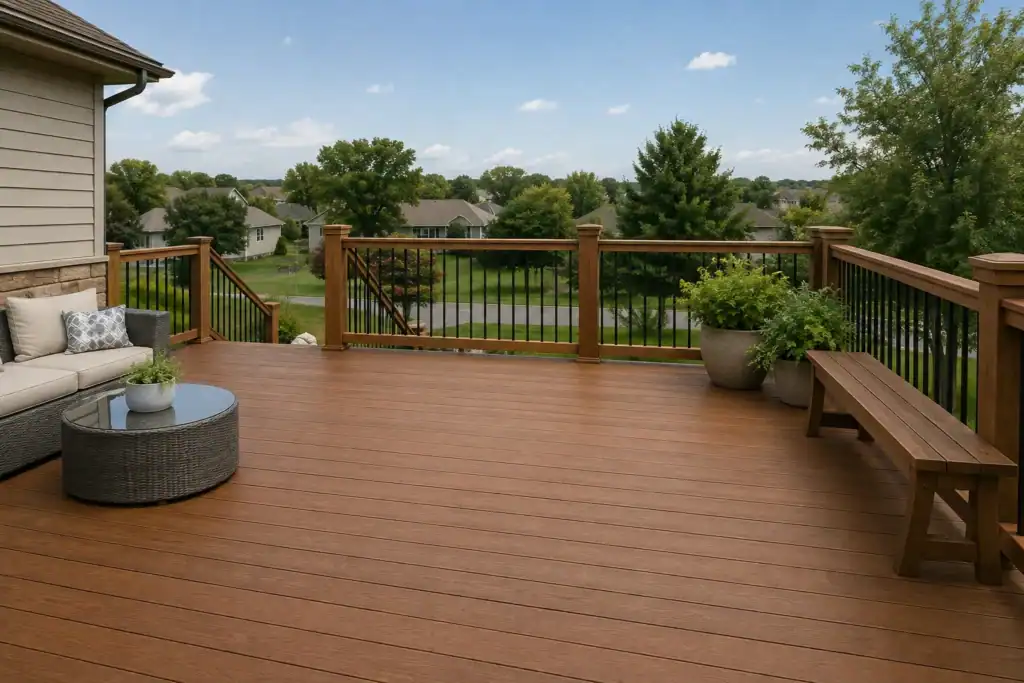
The trade-off is the part that rarely appears in the marketing. Cooking the wood also makes it more brittle and reduces its bending strength, which is why thermally modified timber is a decking, cladding, and trim material rather than a structural one. A modified wood deck still sits on a pressure-treated frame, and it wants pre-drilling and a careful hand at the fastener. The other honest caveat is colour: modification gives decay resistance, not UV resistance. Left unfinished, that deep caramel weathers to silver-grey exactly like any other timber, which surprises people who bought it for the colour.
It resists rot because there’s nothing left in it for fungi to eat. It still goes grey in the sun, because that was never what the heat was for.
02 The D&B difference
What installing modified wood decking properly involves
We install it as what it is — a premium surface on a conventional structure — and we tell you the limits before you commit.
Installed on a frame built to carry it
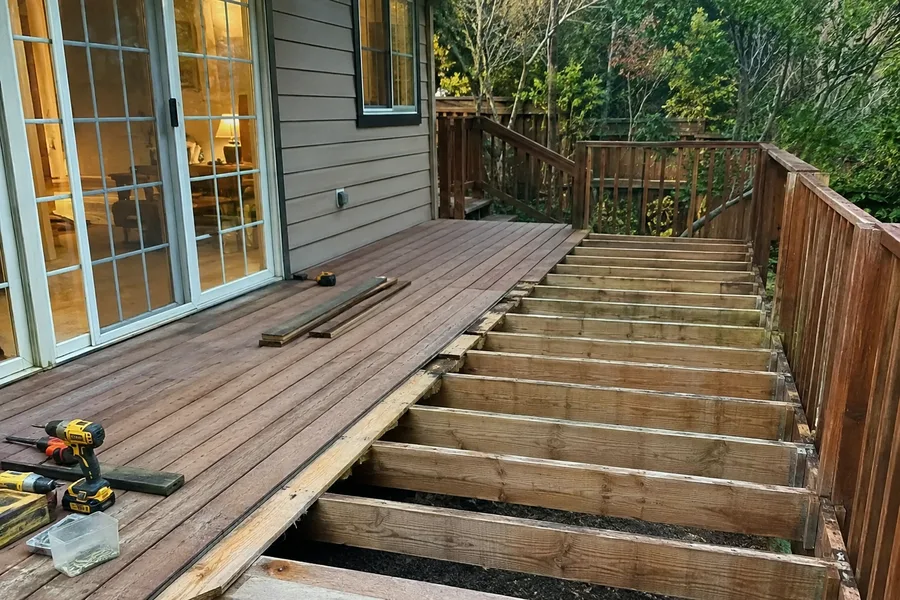
Modified timber is a decking material, not a framing one. The joists, beams, and ledger underneath are pressure-treated, flashed, and joist-taped exactly as they would be under any other surface, because that’s the part that determines how long the deck lasts.
Fastened for a more brittle board
Pre-drilled where the material requires it, with fastener type and spacing matched to the board rather than to habit. Modified timber splits more readily than untreated wood if it’s driven like ordinary decking.
Honest about the colour
We’ll tell you at the quote that it greys without a finish, show you both outcomes, and put the maintenance interval in writing. Nobody should discover that after the first summer.
03 · Service Areas
Where We Work in California
Every city links to a dedicated local page — crews, recent projects and compliance details for that area.
Sacramento Metro
11 cities
East Bay
18 cities
Don’t see your city? We likely still cover it — call (916) 848-2728.
04 How a project runs
How a modified wood deck project runs, start to finish
-
01
Assessment & brief
Site, span, exposure, and how the deck will be used, plus whether you want the colour maintained or are happy for it to silver.
-
02
Material selection
Species, profile, and grade chosen against the exposure and the look, with lead time confirmed, since modified timber is a specified order rather than a stock item.
-
03
Frame
Pressure-treated framing built or corrected for the board’s span requirement, with ledger flashed per current code.
-
04
Protection
Joist tape and flashing over joist tops and beams before any board goes down.
-
05
Installation
Boards laid with pre-drilling where required, fastener type and spacing matched to the material, and gaps set for the conditions.
-
06
Finish
UV-protective finish applied where the colour is being maintained, or the surface left to weather by choice rather than by default.
-
07
Handover
Maintenance schedule written for the material and the finish decision you made.
05 Scope
What’s included in a D&B modified wood deck
Complete installation — frame, protection, surface — from one CSLB-licensed crew.
- Assessment and material selection, with lead time confirmed before commitment
- Pressure-treated framing built or corrected to the board’s span requirement
- Ground-contact treatment ratings on framing near grade
- Ledger connections flashed and fastened per CBC 1604.8.1
- Joist tape and flashing over joist tops and beams
- Thermally modified decking installed with pre-drilling where required
- Fastener type and spacing matched to the material
- Corrosion-rated hardware throughout
- Picture-frame borders, fascia, and matching stair treads
- Guardrails to code height and spacing, in matching timber or aluminum
- UV-protective finish where the colour is being maintained
- Written maintenance schedule reflecting the finish decision
- As-built documentation, plus SB 721 / SB 326 material on commercial property
Built to current code: CBC 1604.8.1 ledger connections · ASCE 7 load criteria · guardrail and stair requirements · manufacturer span and fastening requirements for the material
06 Investment
What thermally modified decking costs
Modified wood is quoted after a site assessment. As a material it sits between pressure-treated and tropical hardwood — above composite in most cases, below dense tropical species.
What drives the number
- Deck area and layout, including borders and any diagonal runs
- Species and profile selected, and current lead time
- Frame condition on a re-deck, and whether joist spacing suits the boards
- Whether you’re maintaining the colour or letting it weather, which changes the maintenance line rather than the build
- Railings, stairs, and fascia in matching material
- Access, staging, and phasing
What you’re actually paying for: stability. Modified timber moves far less with humidity than ordinary wood, which in California’s dry-summer, wet-winter cycle is the difference between a deck that stays flat and one that cups, checks, and opens up at the ends. That’s the honest case for it — not that it lasts forever, but that it stays the shape you laid it. Where we’d point you elsewhere: if the priority is zero maintenance and the appearance of wood matters less than not thinking about it, composite is the better answer and costs less. If the deck takes heavy impact — a busy commercial amenity deck with furniture being dragged — the brittleness is a real consideration. We’d rather say that at the quote than have you find out. Final pricing follows a site assessment — request a free estimate, no obligation.
In the field
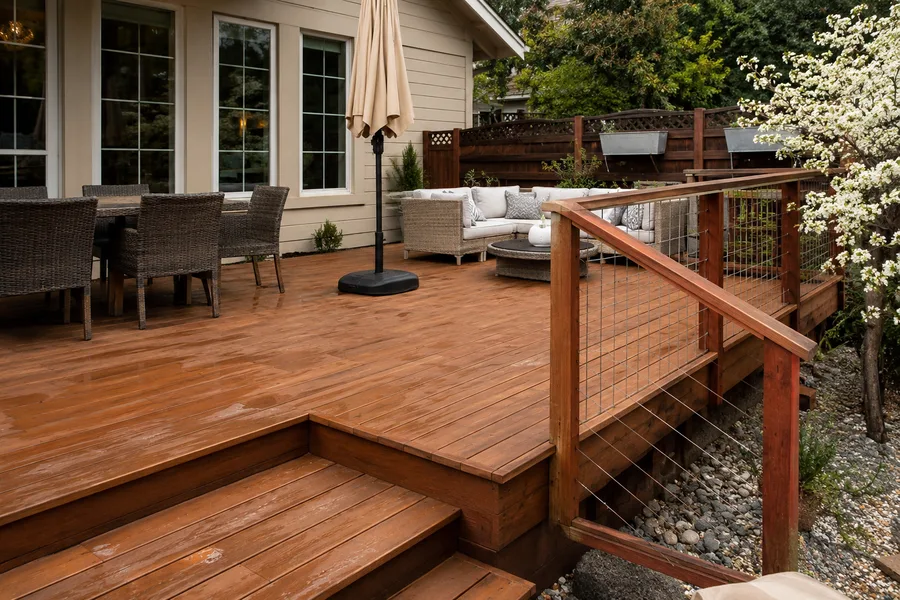
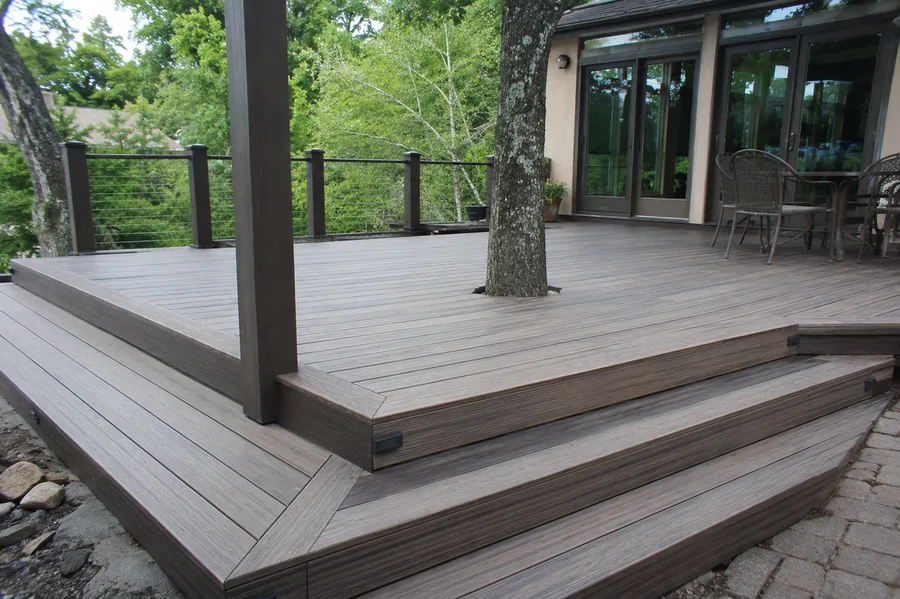
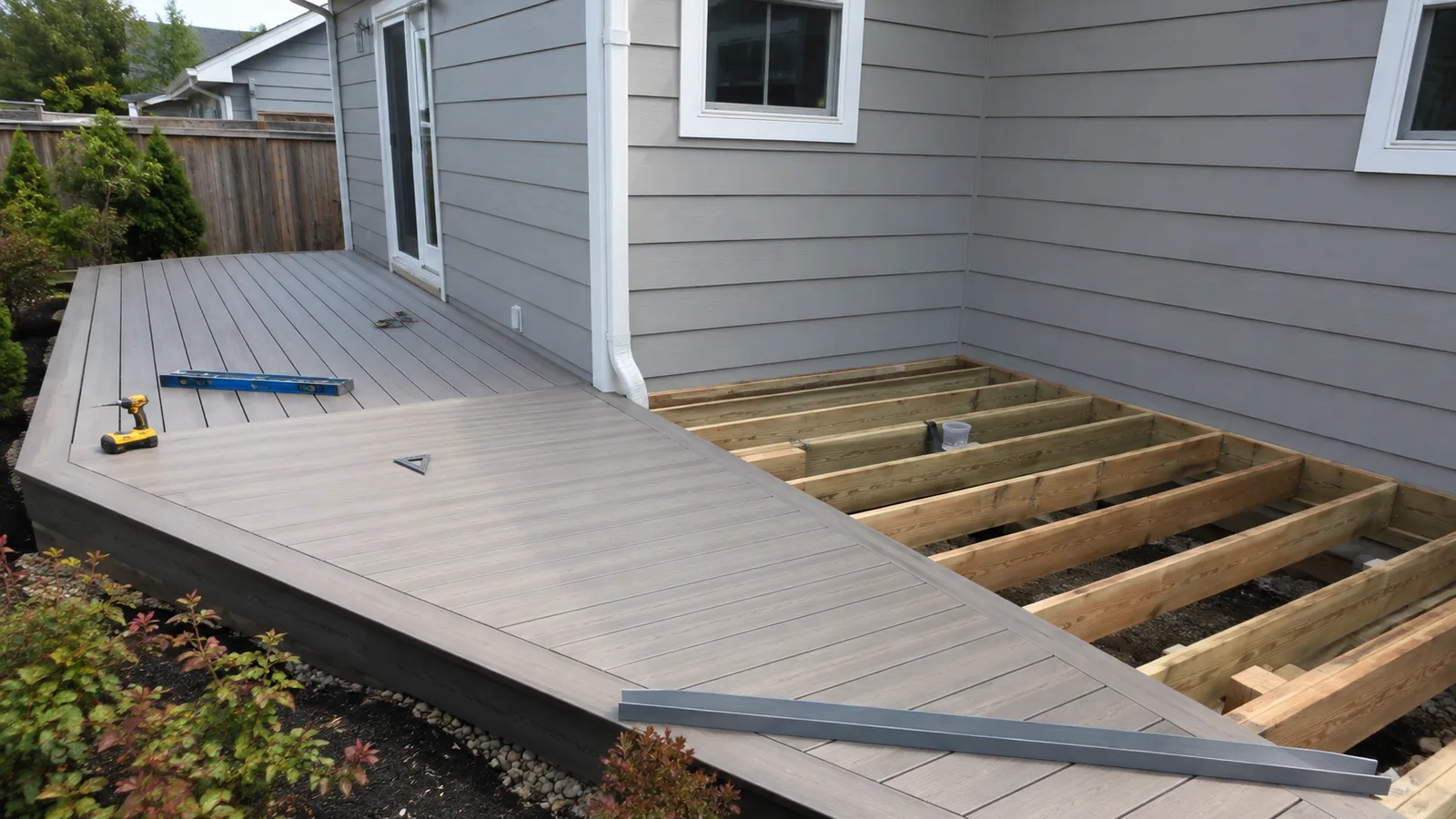
Modified wood decking detail
Real timber that stays where you laid it.
07 Project example
A recent modified wood deck
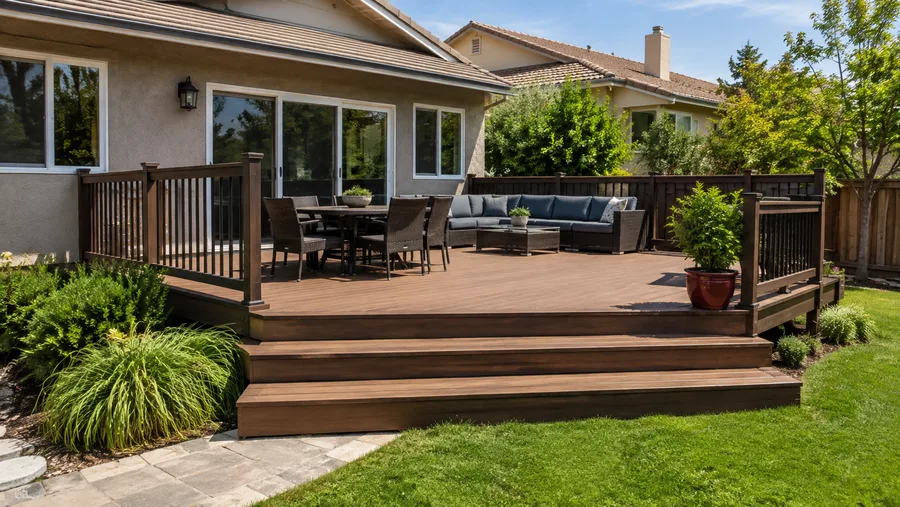
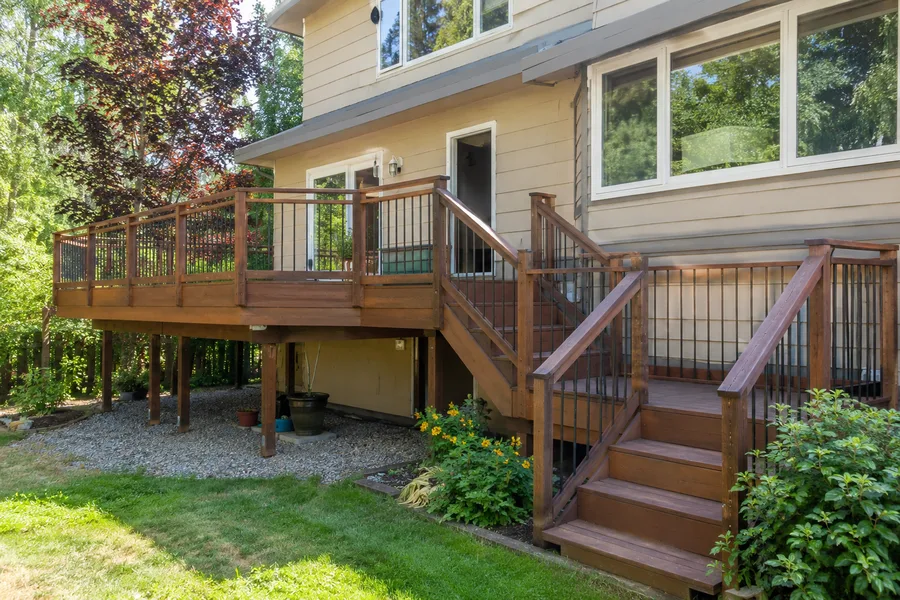
A client wanted a real-timber deck without tropical hardwood pricing and without the maintenance cycle of cedar. Thermally modified wood suited the brief, with two things settled before the order went in. The existing frame was re-joisted where spacing was wide, taped, and the ledger re-flashed, because the material’s advantages sit entirely above a frame that has to be sound regardless. And the client was shown both outcomes for colour — maintained with a UV finish, or left to silver — and chose to maintain it, with the re-coating interval written into the handover rather than discovered later. Boards were pre-drilled at the ends, which on this material is the difference between a clean job and split board ends.
They showed us a photo of what it looks like in three years unfinished. We’d have been upset if we’d found that out ourselves. Client · California
08 Case studies
Recent Projects, Documented
Real commercial properties — what the building needed, what we did, and what it delivered.
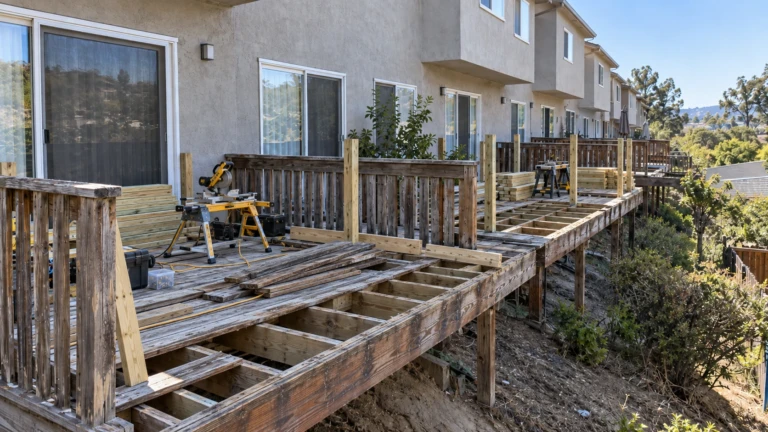 Deck ConstructionCommunity-Wide Elevated Deck Replacement — San RamonEvery elevated deck across a hillside townhome community rebuilt to a single spec in one managed program —…View case study
 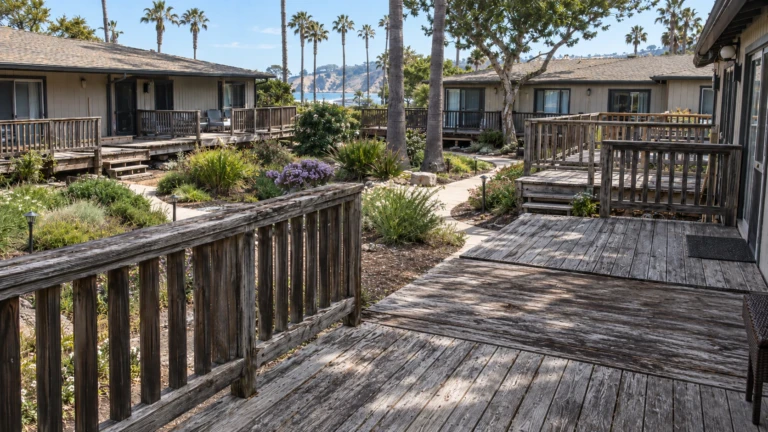 Deck ConstructionPatio Deck & Post Base Replacement Across a Bungalow Community — San RafaelDeck-by-deck replacement across a courtyard community, driven by the one detail that failed first — posts set straight…View case study
 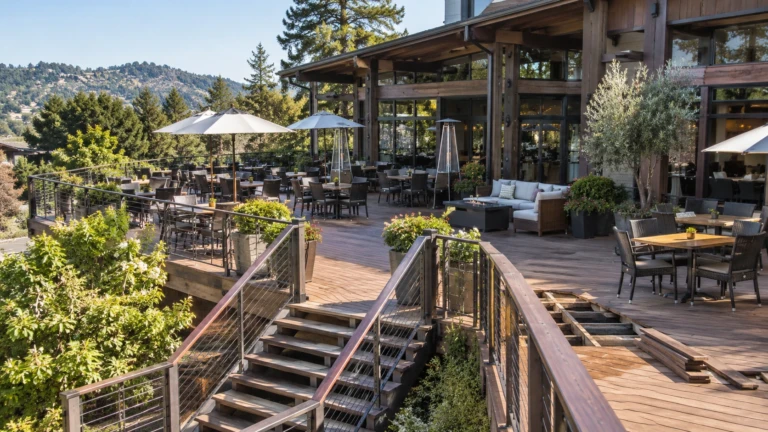 Deck Repair & RestorationElevated Restaurant Dining Deck Restoration — SaratogaA multi-level hillside dining deck taken from failing boards and moisture-damaged connections back to a sound, sealed structure…View case study
 09 Client feedback
What clients say
They explained that it goes grey without a finish before we ordered anything. Every other quote just showed us the brochure colour.
Two summers and the boards haven’t cupped or opened up at the ends. That’s the whole reason we paid the difference.
They pre-drilled the ends. The last deck we had built in a similar material split at half the board ends within a year.
10 FAQ
Modified wood decking questions
What is thermally modified wood?
Timber heated to high temperature in a low-oxygen chamber, which breaks down the hemicellulose in the wood. That’s the component responsible for most of the water the wood absorbs, and it’s also what decay fungi feed on — so removing it leaves timber that’s dimensionally stable and highly resistant to rot, without any preservative chemistry. The colour darkens as part of the process, all the way through the board rather than on the surface.
Is it treated with chemicals?
No. That’s the main distinction from pressure-treated lumber. There’s no copper-based preservative, nothing to leach, and none of the fastener corrosion that treatment chemistry causes on ordinary treated wood. It’s heat and steam, and the durability is a change in the wood itself rather than something added to it.
Will it stay that dark brown colour?
Not without a finish. Thermal modification gives decay resistance and stability — it doesn’t confer UV resistance. Left unprotected, the deep caramel weathers to a silver-grey exactly like cedar or redwood does. That’s a legitimate look and many owners prefer it, but it’s a choice worth making deliberately. We show both before the order goes in.
Can it be used for the deck framing as well?
No, and this is the important limitation. The heat treatment reduces bending strength and makes the timber more brittle, which is why it’s a decking, cladding, and trim material rather than a structural one. A modified wood deck sits on a pressure-treated frame — and everything that determines the deck’s life happens in that frame, exactly as it does under composite or any other surface.
How does it compare with composite?
It’s real wood, so it looks and feels like wood rather than like an imitation of it, and it doesn’t get as hot underfoot as dark composite does. Composite needs less maintenance and doesn’t grey. If low maintenance is the priority, composite wins; if you want timber and want it to stay flat, this is the material. We’ll price both.
How does it compare with cedar or redwood?
Considerably more stable — much less cupping, checking, and end-splitting through California’s dry-summer and wet-winter cycle — and more decay-resistant, because the durability is through the whole board rather than concentrated in heartwood. It costs more than cedar, and it’s more brittle, so it needs pre-drilling where cedar wouldn’t.
Is it suitable for ground contact?
Generally no. Thermally modified timber is specified for above-ground applications, which covers decking, cladding, railings, and trim. Anything in contact with soil should be pressure-treated material rated for ground contact — which on a deck means the posts and any framing near grade regardless of what the surface is.
Does it need special installation?
Some care, yes. It’s more brittle than untreated timber, so board ends are pre-drilled where required, and fastener type and spacing are matched to the material rather than assumed. Installed like ordinary decking, it splits at the ends — which is the most common complaint about the material and is an installation issue rather than a fault in it.
Does it work on commercial and multifamily property?
It does, with one consideration: brittleness matters more on a heavily used amenity deck where furniture gets dragged and traffic is constant. Where that’s the case we’d talk through composite as well. On balconies and decks over occupied space, the frame and the waterproofing remain the compliance items regardless of the surface, and SB 721 or SB 326 obligations are unchanged.
Do you install thermally modified decking in California?
We’re a CSLB-licensed contractor (#1060736) working across the Bay Area, Central Valley, and Sacramento. Frame, protection, decking, railings, and finish come from one crew — and because the material is a specified order rather than a stock item, we confirm lead time before you commit.
11 Start here
Ask us about modified wood — free consultation
Tell us about the deck and what matters most: appearance, maintenance, or how it holds up underfoot. We’ll tell you honestly whether modified wood is the right material for your project — and what it will look like in three years with and without a finish.
CSLB #1060736 · 9+ years · Insured & Bonded · Serving the Bay Area, Central Valley & Sacramento