What Is The Law SB721 In California?
If you own a multifamily rental building in California, the abbreviation SB 721 isn’t an abstract legal formality but a very concrete obligation with real deadlines and fines. The law requires regular inspection of balconies and other exterior elevated structures by a licensed professional, so they don’t collapse under the people living there. And the first inspection deadline has already passed.
The law didn’t appear out of nowhere. After tragic balcony collapses that cost lives, California decided the safety of these structures couldn’t be left to chance. In this article we’ll work through it in order: what exactly SB 721 requires, who it applies to, what the deadlines are now, who’s allowed to perform the inspection, what inaction can cost you, and what to do next — all the way to the repair itself.
What the Law Requires
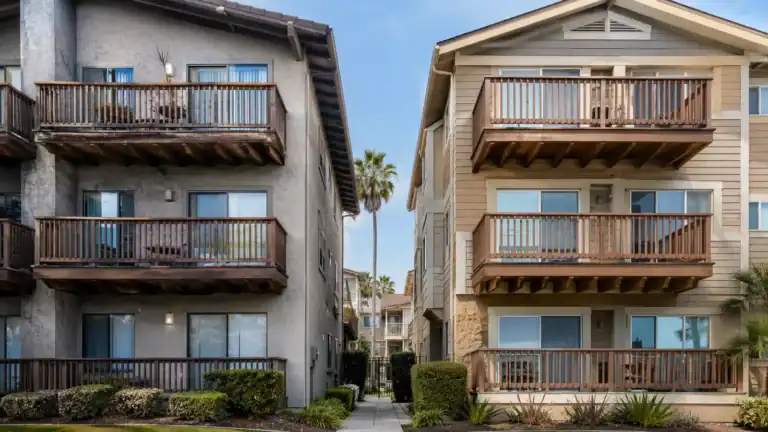
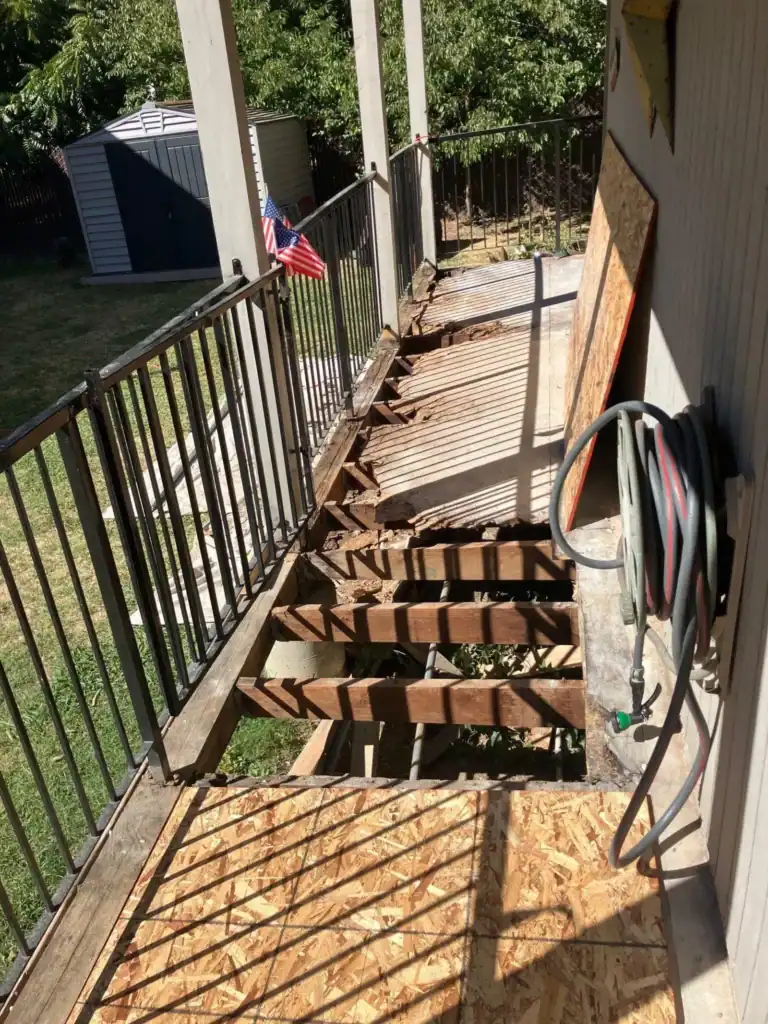
SB 721 is set out in the Health & Safety Code (§17973) and requires owners of rental buildings to inspect exterior elevated elements — balconies, stair landings, walkways, stairways — that rest on wood supports and are raised more than six feet off the ground. It’s not just the surface that gets checked, but the load-bearing frame, the connections to the building, and the waterproofing: it’s hidden rot in the joists that most often leads to accidents.
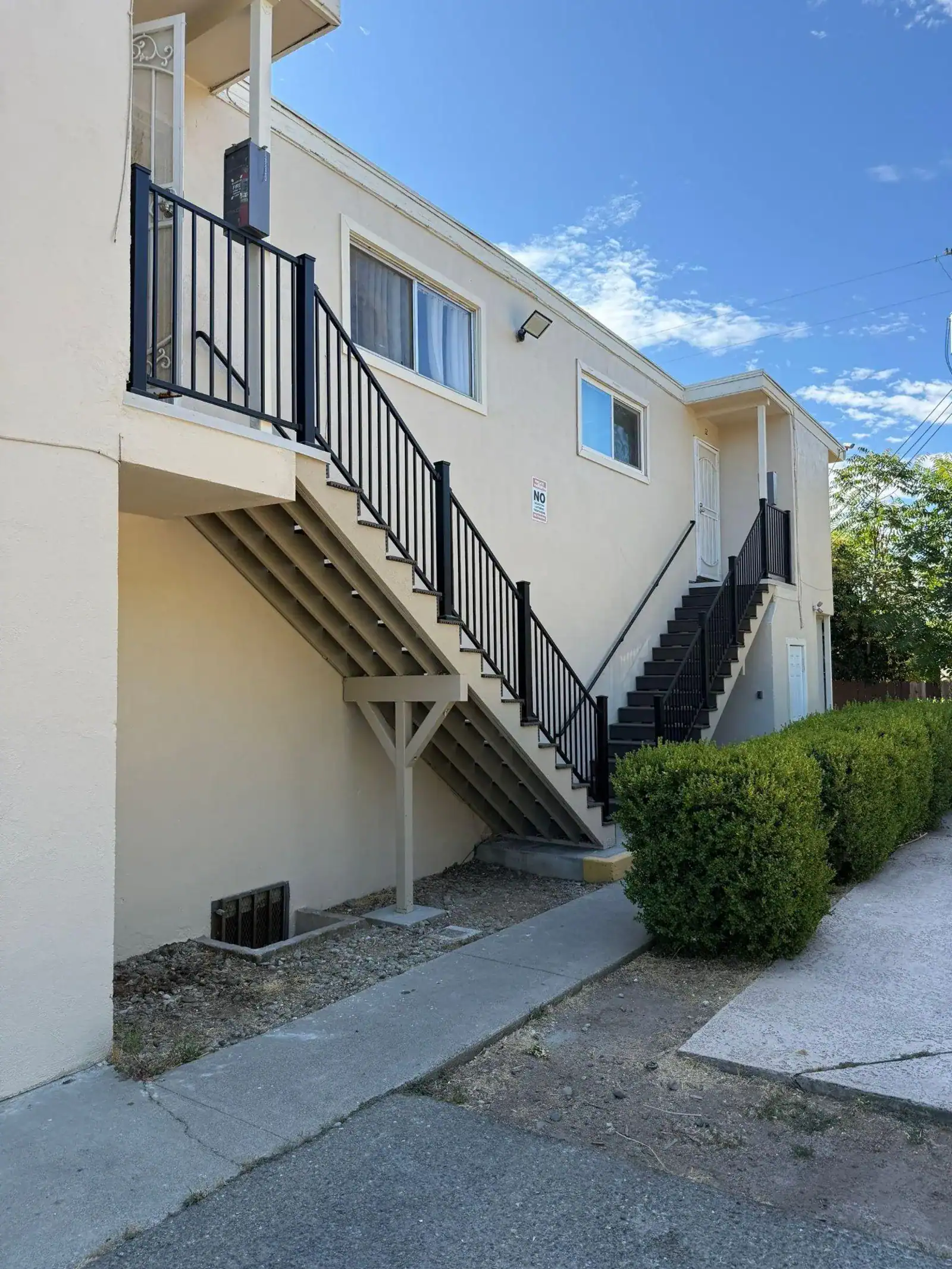
Not only balconies in the usual sense fall under inspection. The law covers any exterior elevated elements whose load-bearing part is made of wood: open stairways and their landings, porches, raised walkways and passages. The inspector evaluates not the appearance but the condition of the load-bearing connections, their joints with the building, and whether the waterproofing is doing its job — the things that determine whether the structure will hold the load.
The law applies to residential buildings with three or more units. An important caveat: condominiums managed by a homeowners association don’t fall under SB 721 — a separate law, SB 326, applies to them, with its own rules and deadlines. If you’re not sure which one applies to your building, the difference is covered in detail in our piece on the differences between SB 721 and SB 326.
Deadlines and Assembly Bill 2579
There’s some confusion around the dates for SB 721 that’s worth clearing up once and for all. Originally the first inspection had to be completed by January 1, 2025. Then Assembly Bill 2579 was passed, which pushed that deadline to January 1, 2026 — and that’s the date that applies now. As of today it has come and gone, so for most owners the question isn’t “when” but “how to catch up.”
After that, inspections repeat on a set cycle: every six years. So a completed inspection isn’t a one-off event but the start of a regular cycle, one that’s convenient to fold straight into the building’s maintenance schedule. If you put the next date on the calendar right after the first inspection, it’ll spare you the scramble and the fines down the road.
Who Is Allowed to Perform the Inspection
One of the advantages of SB 721 for an owner is the broad circle of professionals the law allows to perform the inspection. It’s not only designers but also experienced contractors, which in practice widens the choice and makes finding someone easier. The full list looks like this.
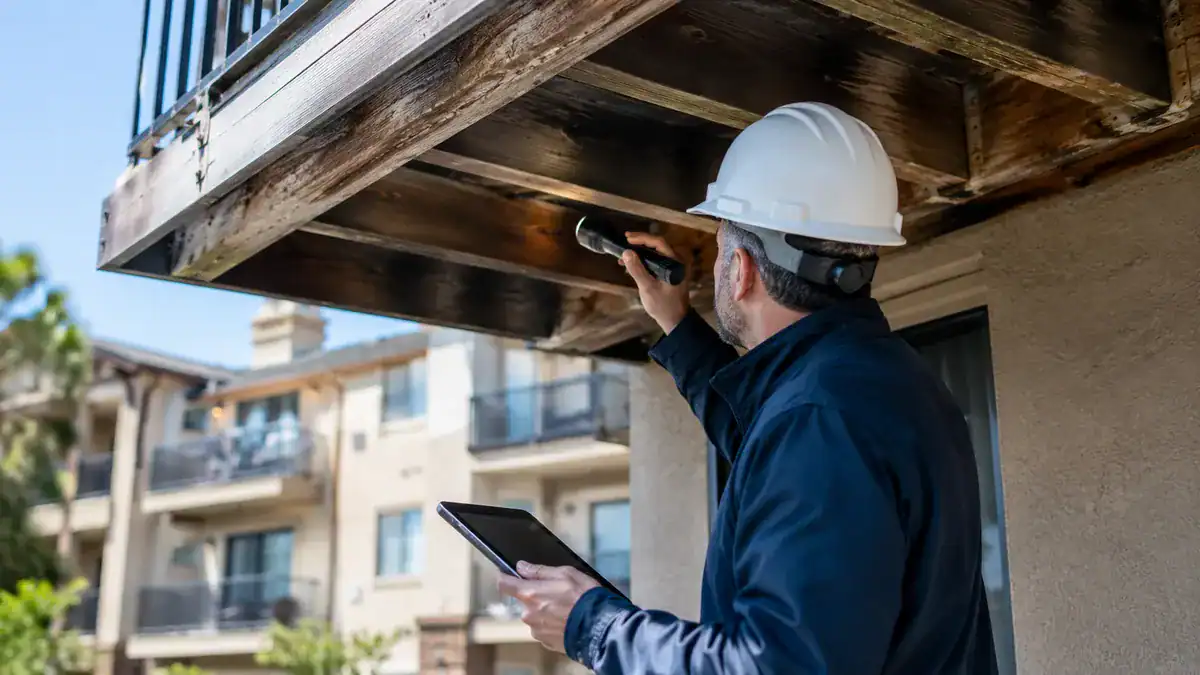
- A licensed architect. A professional authorized for design work.
- A licensed engineer — structural or civil. Assesses the load-bearing capacity of the structures.
- A contractor with an A, B, or C-5 license. Provided they have at least five years’ experience in the relevant field.
- A certified building inspector. A professional accredited to inspect building structures.
This broad circle is a notable difference from SB 326, where only an architect or engineer may sign the report. For a rental building it’s convenient: the inspection can be done by an experienced contractor who then takes on fixing the defects found, without handing the property off to other parties.
What Inaction Can Cost You
Here it’s important to speak plainly, but without alarmism. The mere fact that you missed the inspection date isn’t penalized — the law works differently. Sanctions arise for unresolved defects: if the inspection found a hazard and the owner didn’t fix it within the allotted time, daily charges begin. The amount runs from one hundred to five hundred dollars a day, and sums like that pile up fast.
The law allows a specific window to fix the defects — as a rule, 120 days from the report, with the possibility of an extension if the work genuinely needs more time. If the inspector found an immediate safety hazard, they’re obligated to notify the local building enforcement office promptly, and then access to the dangerous structure may be restricted right away.
If nothing has been done even after the allotted time, a lien may be placed on the property, complicating its sale or refinancing. Beyond the direct fines there are other risks: insurers are reluctant to work with buildings that have open safety violations, and if a tenant is injured, a failed inspection becomes a heavy argument against the owner in court. What all these consequences have in common is that they arise not from the fact of being late, but from inaction — and almost all of them can be avoided simply by getting to work on the repair.
Not sure how this applies to your building?
A licensed contractor answers — free, same-day callback.
The Impact on Tenants
The law affects not only the owner but also the people living in the building, and that’s worth keeping in mind. Tenants are entitled to a safe balcony and to being informed in good time of the inspection results, especially if the structure was deemed dangerous and access temporarily closed. That’s a normal part of the process, not grounds for conflict.
During the repair some temporary inconvenience is possible — restricted balcony access, noise, the presence of workers. A sensible owner gives advance notice and arranges the schedule to cause tenants as little disruption as possible. Open communication here saves both sides the aggravation and, at the same time, shows tenants that their safety is being taken seriously.
The Repair Stage: What Happens After the Inspection
Many people think the main thing is to pass the inspection, but the inspector’s report is only half the journey. The real work begins where defects are found: it’s the repair that turns a “balcony with problems” into a safe, code-compliant structure. And it’s at this stage that many inspection-only companies leave the owner on their own — with a list of problems but no solution.
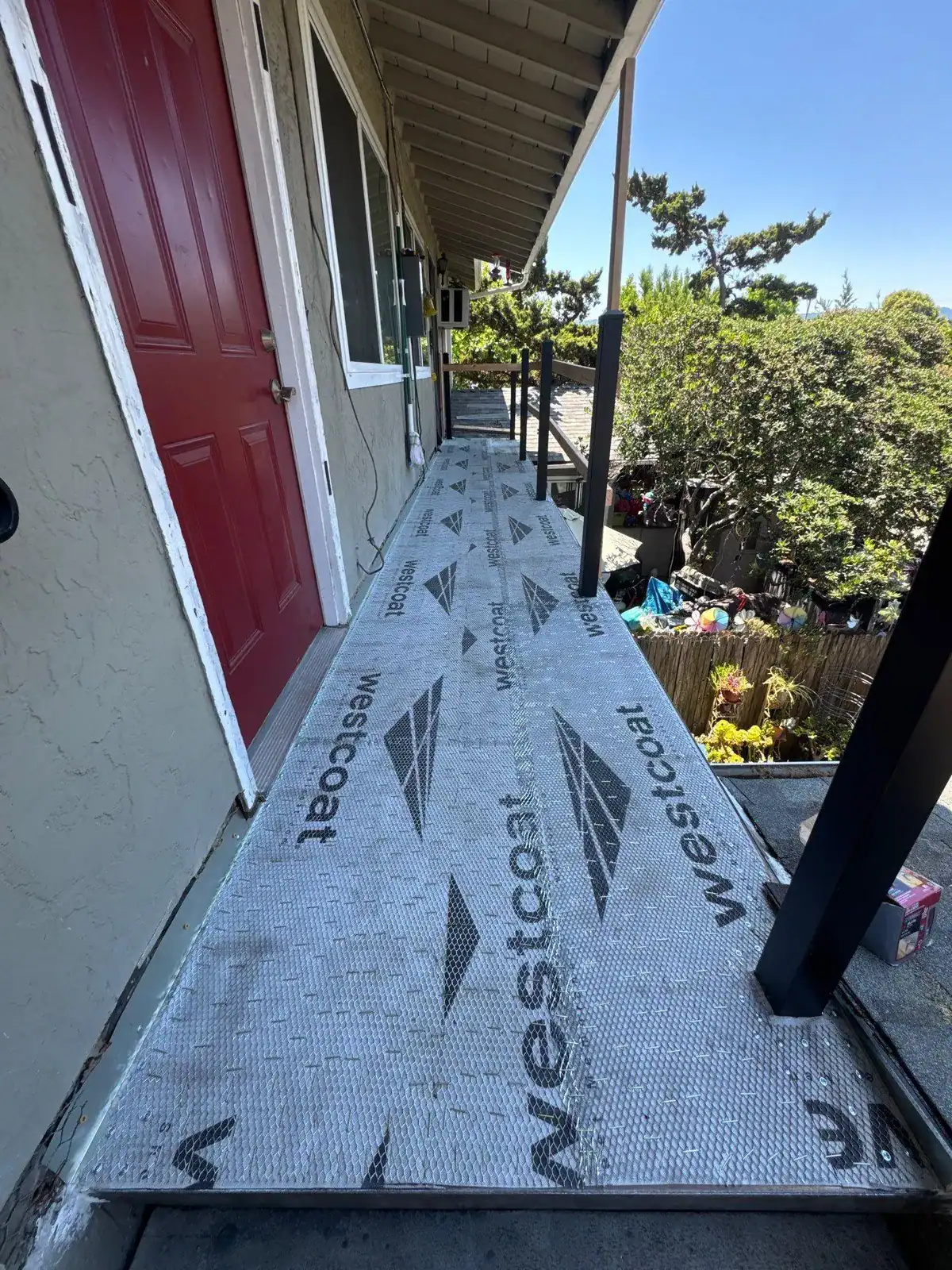
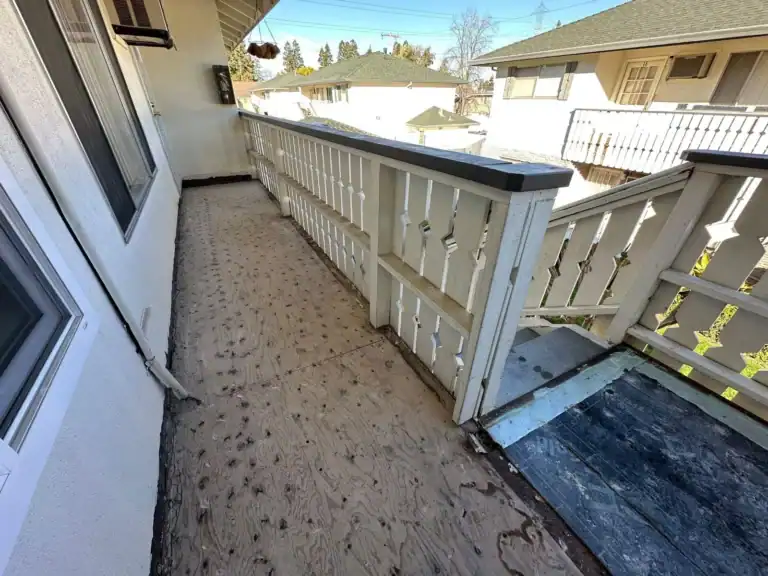
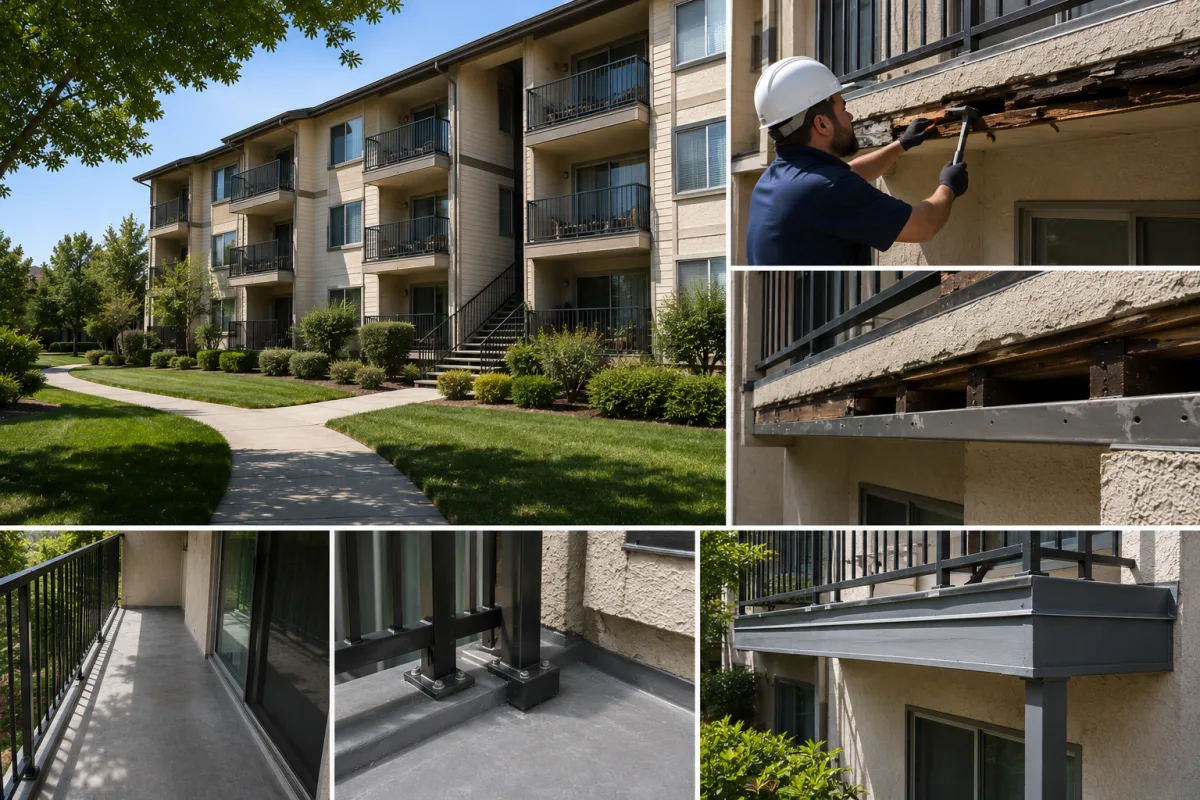
A balcony repair after an inspection usually follows a clear logic. First the trouble areas are opened up to assess the true extent of the hidden damage — which often turns out to be larger than what’s visible from outside. Then the rot-affected frame elements are replaced, and the connections and load-bearing capacity are restored. After that the waterproofing is redone: a new membrane, the right slope, sealed transitions and flashing. And only at the end are the surface and the railing returned to clean, working order.
An exact estimate for such a repair can’t be given in advance: the cost depends on the number of balconies, how accessible they are, and how much hidden damage turns up along the way. An honest ballpark is only possible after an assessment. Our advantage is that we keep the inspection and the repair in one set of hands: we perform the SB 721 inspection ourselves, as a licensed contractor within the permitted circle, and the same team fixes what’s found — without passing the property between different parties. There’s more on the repair work on our Sacramento services page, and on protecting the structure from water in our Waterproofing section.
The Deadline Has Passed — Where to Start Now
If your building hasn’t been inspected yet, there’s no need to panic over the date that’s gone by — you need to act. A calm sequence of steps closes the matter faster than it seems and lowers the risks along the way.
- Schedule the inspection and record the date you reached out. This shows you’ve taken up the cure rather than ignoring the requirements.
- Get the report and review it. Single out the hazardous defects that need immediate action and plan out the rest.
- Restrict access where there’s a hazard. A dangerous balcony is better closed off temporarily, without waiting for a citation.
- Arrange the repair. Hazardous areas first, the rest within a reasonable time.
- Keep the documents. The reports and records will be useful at the next cycle six years out and during property transactions.
This sequence works even for those who are significantly late: what matters is showing movement toward a fix, not flawless compliance with a date that’s already passed.
Safety First, Paperwork Second
SB 721 is easier to see not as one more bureaucratic obligation but as a formalized way to keep a balcony from coming to grief. Behind the law’s dry requirements is a simple idea: rot found in time and renewed waterproofing save the structure, lives, and the owner’s budget — for whom a planned repair always costs less than an emergency one. Regular inspections turn balcony safety from a one-time campaign into an ordinary part of running the building.
If your rental building needs an SB 721 inspection or a repair based on its findings across Sacramento or the Bay Area, we’ll take the whole cycle on ourselves — from the inspection to fixing the defects, all in one set of hands, with no extra middlemen and no passing of responsibility. The deadline has passed, but it’s a solvable task, and the sooner you take it on, the calmer and cheaper it closes out.
Related service
SB 721 Inspection
Licensed, insured and SB 721/326-fluent — from assessment to sign-off, one accountable team.
About the author
Tom Marsden
Retired Property Inspector · Reviewed under CSLB #1060736
Tom Marsden is a retired property inspector with 20 years of experience. Starting as a general contractor, he transitioned to inspections, specializing in multi-family dwellings. Known for his straightforward approach and ability to simplify complex regulations, Tom became a respected figure in the local property management community. Now retired, he mentors new inspectors and writes about building safety, focusing on balcony inspections and maintenance. In his free time, Tom enjoys restoring vintage sailboats and volunteering at the local community center.
More from Tom Marsden